by Yes Getaways Team
June 02, 2026 • 11 min read
The difference between a smooth France trip and a frustrating one is rarely the destination. It is the small operational details that nobody mentions until you have already missed lunch, gotten the dress code wrong, or driven into a Low Emission Zone you did not know existed.
Here are 17 things that will save you time, money, and friction on your first France trip — and a few that will make the trip more enjoyable on every subsequent visit.
Money and payments
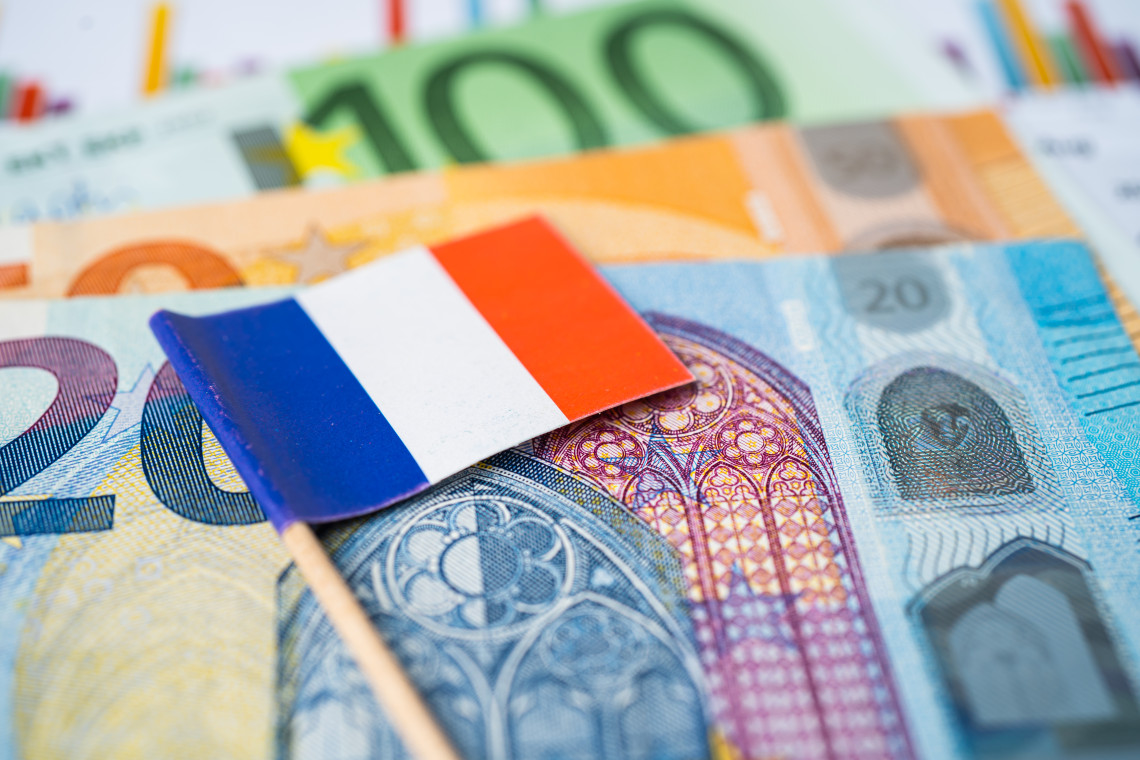
1. France uses the euro, and you should bring some cash
France is firmly part of the eurozone. ATMs are everywhere and give the best exchange rate (use a bank-network ATM rather than a Euronet or independent kiosk). Most major banks no longer charge withdrawal fees abroad if you use a partner network — check with your bank before you fly.
Bring about 100 euros in cash for the first 48 hours: small village restaurants and bakeries, market stalls, parking machines, taxis, public toilets in some train stations, and tips.
2. Tap-to-pay works almost everywhere, but bring chip and pin cards
Contactless payments via card or phone work in 95 percent of French shops and restaurants. The exception is small village shops, market stalls, and some older taxi systems. Bring at least one card that is set up for chip and PIN (not just signature) — a small number of unattended terminals (parking, fuel pumps, train ticket machines) require a chip and PIN card, not a tap.
3. Tell your bank you are traveling
This sounds obvious but a high percentage of first time France travelers see at least one card blocked for "suspicious activity" within the first three days. Set a travel notice with each card issuer and bring a backup card stored separately from your wallet.
4. Tipping is built into the bill
By French law, restaurant prices already include service ("service compris"). You do not need to tip 18 to 20 percent. A small additional gratuity is appreciated for good service: rounding up the bill or leaving 1 to 2 euros per person at a casual meal, 5 to 10 euros at a nicer restaurant. For taxis, round up. For hotel porters, 1 to 2 euros per bag.
What is not okay: leaving nothing for genuinely good service. The "service compris" rule does not mean a tip is unwelcome, only that it is not expected at U.S. levels.
Language
5. Learn six French phrases, use them every day
You do not need to speak French to travel France well. You do need to use the following six phrases consistently, in this order, every time you interact with a French person:
- Bonjour (BON-zhoor) — Good morning / hello, used before noon and into early afternoon
- Bonsoir (BON-swahr) — Good evening, used from late afternoon
- Excusez-moi (ex-koo-ZAY mwah) — Excuse me, to start a question
- S'il vous plaît (SEEL voo PLAY) — Please
- Merci (mehr-SEE) — Thank you
- Au revoir (oh ruh-VWAHR) — Goodbye
The single biggest mistake U.S. and Canadian travelers make is opening a conversation in English without "bonjour." Walking into a shop and saying "do you speak English?" without a greeting first is read as rude. Walking in and saying "bonjour, excusez-moi, do you speak English?" gets a friendly response almost every time.
6. English coverage varies by region
In Paris, on the Riviera, in tourist-heavy parts of Provence, and in major hotel chains, English is widely spoken. In the Loire, Burgundy, Alsace, the Dordogne, Brittany, and rural Provence, the percentage of English speakers drops. A translation app on your phone is enough for almost any practical situation. Google Translate's camera mode is genuinely useful for restaurant menus.
Meal times and food rules
7. France eats at fixed hours
Most French restaurants serve lunch from 12 to 2 PM and dinner from 7:30 to 10 PM. Between 2 and 7:30 PM, almost no restaurant in a small town is serving food. In Paris and tourist cities, you can find non-stop service at brasseries and tourist restaurants, but it is the exception.
Plan around it. If you are touring in the countryside, find your lunch spot by 1 PM at the latest. If you want a casual late afternoon snack, find a bakery (boulangerie) or a café — they remain open.
8. Breakfast in France is small
French breakfast is bread (croissant, baguette, pain au chocolat), butter, jam, and coffee. Not eggs, not bacon, not pancakes. Hotel buffets often include fruit, yogurt, cheese, and cold cuts. American-style breakfasts are available in some Paris hotels and at chain hotels but they are not the cultural norm. If you need a substantial morning meal, eat at your hotel and order a coffee and a pastry later as a second breakfast.
9. Restaurant water is free, on request
Bottled water is automatically offered in most restaurants, but tap water is free and equally fine in France. Ask for "une carafe d'eau" (a jug of water) at the start of the meal. Wine is often cheaper than soft drinks. Restaurant bread is free and refilled on request.
10. The cheese course exists, and it comes before dessert
In a traditional French meal, the cheese course comes between the main and the dessert. In good restaurants you will be offered a cheese trolley (chariot de fromages) with 6 to 20 cheeses to choose from. Ask for 3 to 4 (the waiter will guide you), eat them with bread, no butter.
Transport
11. Validate your TER train ticket before boarding
If you have a regional TER ticket (not TGV — TGV tickets have seat numbers and don't require validation), you must stamp it at one of the small yellow machines on the platform before boarding. Failing to validate is treated as ticket evasion and the fine is 50 to 250 euros even if you have a valid ticket.
E-tickets bought online and shown on a phone do not need validation. Paper tickets do.
12. The Paris Métro and the Paris RER are different
The Métro is the local subway (16 lines, runs about every 2 to 5 minutes, covers central Paris). The RER is a separate regional rail network (5 lines, runs every 5 to 15 minutes, covers Paris plus the suburbs including Versailles and CDG airport). They share some stations but are physically separate. A standard Métro ticket does not cover all RER zones.
For trips to Versailles, use RER C. For trips to CDG airport, use RER B. For Disneyland Paris, use RER A. Inside central Paris, Métro is faster.
13. CDG airport is not a fast airport
Charles de Gaulle is one of the world's largest airports, and inter-terminal transfers can take 30 to 60 minutes. If you have a connection, build in at least 90 minutes for international-to-international and 2 hours for international-to-Schengen. If you are flying in from North America and connecting to a French domestic flight, take the train instead — it is often faster door to door than the connection.
For a Paris arrival via CDG, you have four options to reach the city: RER B (35 minutes to central Paris, 11 euros), Roissybus (60 to 75 minutes, 16 euros), taxi (45 to 90 minutes depending on traffic, fixed flat rate of about 55 euros to right bank, 62 euros to left bank), or Uber (similar to taxi, sometimes cheaper). Pre-booked private transfer through your travel agent is the most stress-free option.
14. Driving in France: roundabouts, ZFE, and tolls
If you are driving, three things to internalize: roundabouts are everywhere and the rule is yield to traffic already in the roundabout; Low Emission Zones (ZFE) apply in 10+ cities and require a Crit'Air sticker (rental cars usually have one); autoroute tolls are mostly paid by card at the booth and can add up to 90 euros for a Paris to Nice drive.
Speed cameras are heavily enforced. Fines arrive at the rental agency and are forwarded to you, plus an admin fee.
Practical logistics
15. Toilets
Public toilets are scarcer in France than in the U.S. In Paris and major tourist sites, the strategy is to use cafés (always order a small espresso first), museums (free for ticketed visitors), department stores, and the public Sanisette automatic toilets (free, found across central Paris). Train station toilets are sometimes paid (50 cents to 1 euro). Many small village shops have no public toilet at all.
16. Plugs, sockets, and electronics
France uses 220 volt power and Type E plugs (round prongs). You need a plug adapter. Most modern electronics (laptops, phone chargers, hair dryers labeled "100-240V") work without a voltage converter. Older U.S. electronics that say only "120V" will need a converter (rare; check the label).
17. Pack for the weather you actually expect, not the average
France's weather range is wide. In June, Paris can be 22°C / 72°F with sun and the Riviera can be 28°C / 82°F with humid heat. In November, Paris can be 6°C / 43°F with rain and the Alps already have snow. Pack layers, a light rain jacket, and at least one slightly nicer outfit for restaurants. For summer Provence and the Riviera, sunhat and sunscreen are essential — the sun is stronger than it looks.
Bonus: The August closure problem
Many small French family-run businesses close for two to four weeks in August. This includes restaurants, bakeries, and shops in Paris and across the countryside. If you are traveling in late July or August, check that the specific restaurants and shops you want are open. Major museums and tourist sites stay open year-round.
The thing that catches everyone
The single most common first time France misstep we see: arriving exhausted, planning a Versailles half-day or an early TGV departure for day 2, and burning out before the trip is fully started. France rewards a slow first 24 hours. Walk a neighborhood, eat early, sleep, and you will have a much better trip starting on day 3.
Frequently asked questions
What should I not do in France? The top five: do not skip the bonjour greeting in shops, do not order a cappuccino after breakfast, do not wear beach clothes into a village, do not tip at U.S. rates, do not assume restaurants are open between 2 and 7:30 PM.
How much cash should I bring to France? About 100 euros in cash for the first 48 hours is plenty. After that, ATMs are everywhere and contactless cards work in most places.
Is France expensive? Mid-range. Paris is more expensive than most U.S. cities for hotels and equivalent for restaurants. Rural France (Loire, Burgundy, Dordogne) is meaningfully cheaper than U.S. equivalents. The Riviera in July and August is at European peak prices.
Can I drink the tap water in France? Yes, tap water is excellent across France. Some regions (parts of Brittany, the Loire) have slightly mineral-tasting tap water; if you prefer, bottled is universally available.
Are credit cards accepted everywhere in France? Almost. Contactless and chip cards work in 95 percent of shops and restaurants. Small village shops, market stalls, and some taxis are still cash only.
What clothes should I wear in France? French casual is more put-together than U.S. casual. Dark jeans, collared shirts or simple blouses, leather or canvas shoes. For nicer restaurants, a button-down or a dress. Beach clothes only on the beach.
Do I need a visa for France? U.S. and Canadian citizens do not need a visa for short stays (under 90 days). From late 2026 onward, ETIAS (a 7 euro online pre-authorization) will be required.
Is it safe to walk around Paris at night? Generally yes. Central Paris (1st through 8th arrondissements) is safe at night for most travelers. Pickpockets work the metro and tourist sites at all hours. Outer arrondissements and the area around major train stations (Gare du Nord especially) require more caution at night.
Can I use my U.S. cell phone in France? Yes. Most U.S. carriers (Verizon, T-Mobile, AT&T) offer international roaming. T-Mobile typically includes Europe data at no extra charge; Verizon and AT&T charge daily fees. A French SIM or an eSIM (Airalo, Holafly) is usually cheaper for stays over 3 days.
What is the most useful French word to learn beyond hello and thank you? "S'il vous plaît" (please). Used at the end of nearly every request, it transforms the tone of the interaction and is the single phrase that most reliably distinguishes a polite traveler from a rude one.
Should I rent a car in France? Depends on the region. For Paris, no. For Loire, Provence villages, Dordogne, Burgundy, Alsace wine route, yes. For Riviera coastal towns, no (use the train). See our France by Train vs Car guide for the region-by-region breakdown.
What is the biggest myth about traveling in France? That French people are rude to tourists. They are not — they are formal. The greeting protocol (bonjour, s'il vous plaît, merci, au revoir) is the difference between being received as a polite visitor and being received as a rude one. Use it consistently and almost every interaction goes well.
All the practical details, handled for you.
Our France travel experts brief you on every tip and book every transfer, hotel, and reservation.
See France Packages Tailor-Made Trip
.jpg)