July 28, 2026 • 12 min read
Austria has more ski resorts than any country in Europe. Six of them are in the top 25 worldwide. Kitzbühel hosts the world's most famous downhill race. St. Anton invented the modern ski school. Sölden hosts the World Cup opening. Ischgl is where Europe parties. Zell am See combines lake and glacier.
Which resort is right for you? This guide compares the six essential Austrian ski destinations honestly. Terrain, difficulty, party scene, family friendliness, cost, and which resort fits which traveler.
The short answer
Kitzbühel if you want glamour, medieval town, celebrities, moderate skiing.
St. Anton if you want serious off-piste, ski-town depth, expert terrain.
Sölden if you want glacier reliability, high altitude, dependable snow into May.
Ischgl if you want the biggest party scene in the Alps, big interconnected lift system, cross-border skiing into Switzerland.
Zell am See-Kaprun if you want family skiing, lake plus glacier combo, mid-range difficulty.
Obergurgl-Hochgurgl if you want the highest, snowiest resort with quiet Alpine village atmosphere.
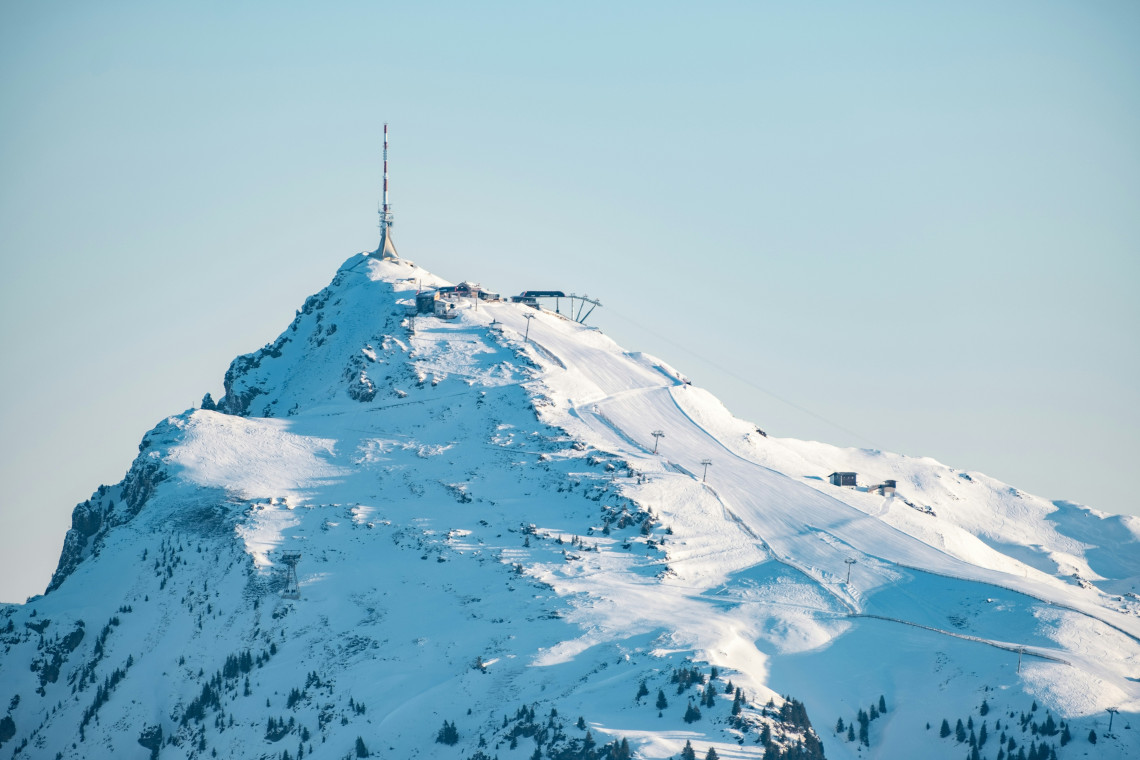
1. Kitzbühel: glamour and medieval charm
Location: Tyrolean Alps, 1h15m from Innsbruck, 1h20m from Salzburg.
Elevation: Village at 762m, top ski area at 2,000m.
Skiable terrain: 231 km of pistes, 57 lifts, 30% easy / 46% intermediate / 24% expert.
What Kitzbühel delivers. The world's most famous ski town. Kitzbühel is the celebrity resort of the Alps — hosts the Hahnenkamm race in late January (the "world's most dangerous downhill"), attracts European royalty and Hollywood stars, and preserves a genuinely medieval town at the base. Not a purpose-built ski resort. A 700-year-old Tyrolean town that happens to also have world-class skiing.
The ski area is excellent for intermediates. The Streif (the Hahnenkamm race course) is legendary for advanced skiers — public access when not racing. The KitzSki interconnected system covers 231 km of pistes across the town and neighboring Kirchberg, with the Ski Circus connection into Saalbach adding 270 km more (605 km total accessible via day tickets).
Best for: Intermediate to advanced skiers who want a beautiful town base. Non-skiers or hybrid travelers (Kitzbühel town is worth visiting even without ski gear). Après-ski elegance rather than chaos.
Honest tradeoffs:
- Kitzbühel is expensive. Hotel prices in central town rival Zurich or St. Moritz.
- Lower altitude than Sölden or Obergurgl — snow reliability is good but not exceptional. Some seasons see thin coverage in December.
- Very crowded during Hahnenkamm race week (late January).
- The town itself is a genuine attraction, so ski trips often include half-days off-mountain.
Getting there: Fly to Innsbruck (1h15m drive) or Munich (2h drive). Rail: ÖBB Railjet to Wörgl, regional train to Kitzbühel (total 4h from Vienna).
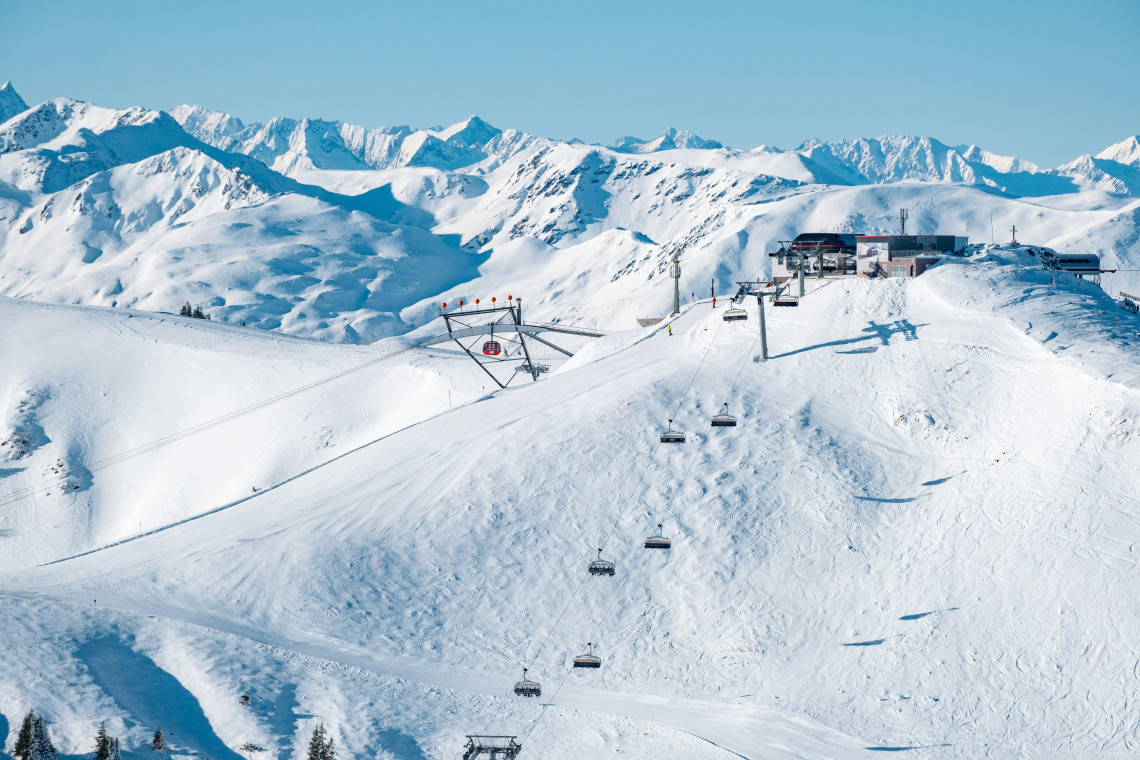
2. St. Anton am Arlberg: expert paradise
Location: Tyrolean Alps, Arlberg region, 1h15m from Innsbruck.
Elevation: Village at 1,304m, top ski area at 2,811m.
Skiable terrain: 305 km on the Arlberg (interconnected with Lech-Zürs, Warth-Schröcken, Stuben — total 340 km).
What St. Anton delivers. Serious skiing in a serious ski town. St. Anton is where the modern ski school was invented in 1921 (by Hannes Schneider). The village is smaller and rowdier than Kitzbühel, dominated by ski culture rather than town culture. Après-ski at the MooserWirt and the Krazy Kanguruh is legendary — DJ, bench-dancing, glühwein at 4pm.
The terrain is Austria's most expert-friendly. Off-piste opportunities are extensive. The Rendl area and the Valluga (accessed by cable car) offer freeride territory. The interconnected Arlberg lift system links St. Anton to Lech (more upscale) and Zürs (family focused).
Best for: Advanced and expert skiers. Serious off-piste enthusiasts. Group trips where skiing is the point. Traditional Austrian ski culture (this is where it all comes from).
Honest tradeoffs:
- Rowdy village nightlife. Not the destination for a quiet family evening.
- Beginner terrain is limited. Not a first-time-skier resort.
- Expensive, though not Kitzbühel-level.
- Village is smaller than Kitzbühel; if you want a town to walk when not skiing, this is less of one.
Getting there: Fly to Innsbruck (1h15m drive) or Munich (2h30m drive). Rail: ÖBB Railjet direct to St. Anton am Arlberg station (in the village).
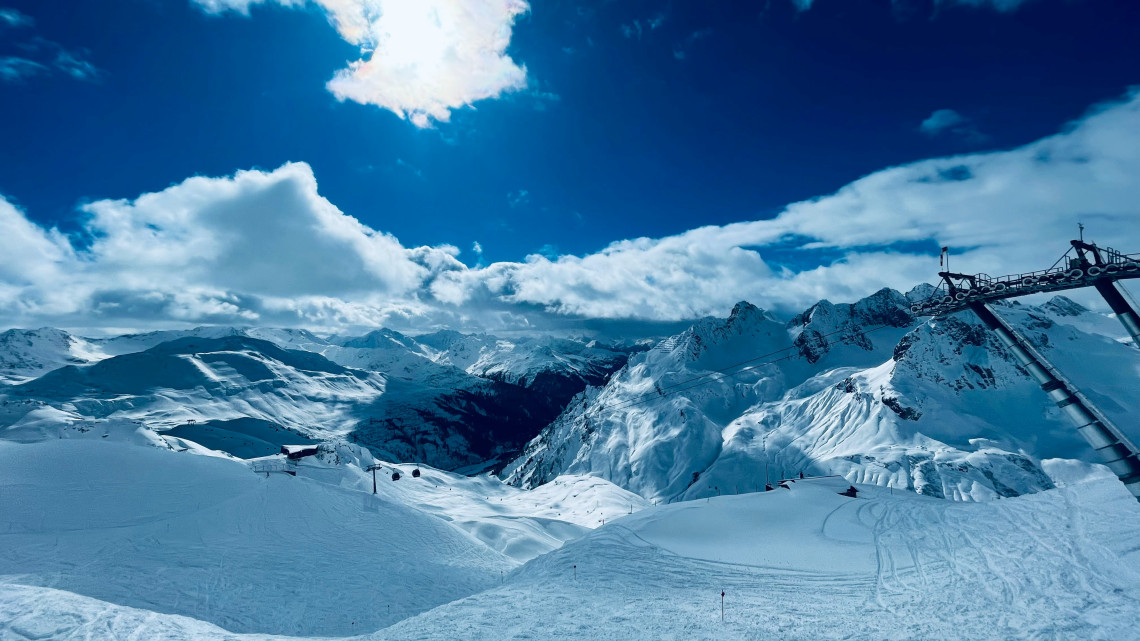
3. Sölden: glacier reliability
Location: Ötztal, western Tyrol, 1h30m from Innsbruck.
Elevation: Village at 1,368m, top ski area at 3,340m (on Rettenbach Glacier).
Skiable terrain: 144 km of pistes, 34 lifts, 50% intermediate / 35% easy / 15% expert.
What Sölden delivers. The FIS World Cup opens here in late October each year on the Rettenbach Glacier — Sölden's guarantee that ski season starts before anyone else's. Two glaciers (Rettenbach and Tiefenbach) give Sölden year-round skiing on a glacier from September onwards. Peak season December to April with excellent snow reliability.
Sölden also plays big-brand. James Bond's "Spectre" filmed the Q Lab scene here at the ice-modernist Ice Q restaurant. The "007 Elements" museum on top of the mountain celebrates it.
The village is modern and less picturesque than Kitzbühel or St. Anton — designed for skiers, not tourists. Nightlife is big and boisterous but not quite Ischgl level.
Best for: Skiers who want snow reliability above all. Early-season (October-November) or late-season (April-May) skiers. Intermediate skiers (largest share of terrain).
Honest tradeoffs:
- Village is functional rather than beautiful.
- Very crowded during World Cup week (late October).
- Can feel like a big ski factory rather than a village experience.
Getting there: Fly to Innsbruck (1h30m drive to Sölden). Munich (3h drive). Rail: Innsbruck by Railjet, then bus 1h to Sölden.
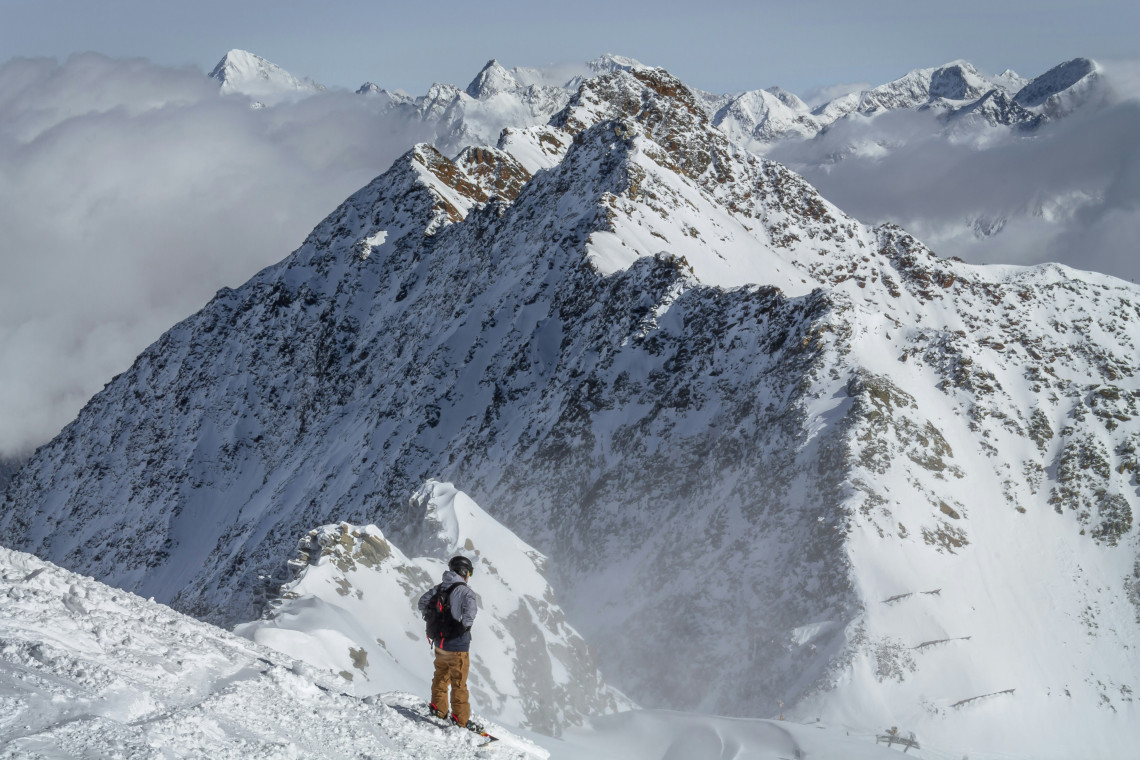
4. Ischgl: the party capital
Location: Paznaun Valley, western Tyrol, near Swiss border, 1h30m from Innsbruck.
Elevation: Village at 1,376m, top ski area at 2,872m.
Skiable terrain: 239 km (Ischgl-Samnaun interconnected system, crossing into Switzerland).
What Ischgl delivers. The most legendary party scene in the Alps. Ischgl's après-ski at the Kuhstall, Nikis, and Trofana Alm has global fame. Season-opening and closing concerts feature Elton John, Bob Dylan, Kylie Minogue, Rihanna, and others each year. The village at 5pm looks like a nightclub with skis.
Beyond the party, Ischgl has one of the largest interconnected lift systems in the Alps. The Silvretta Arena spans the border into Switzerland (Samnaun), so you can lunch in one country and afternoon ski in another. Terrain is excellent for intermediates and advanced skiers.
Best for: Party skiers. Groups of friends 25-45. Cross-border skiing enthusiasts. Advanced intermediates.
Honest tradeoffs:
- Not family-friendly. Village nightlife runs late and loud.
- Ischgl became famous for a superspreader event in 2020. The resort has aggressive testing now but some travelers remain uneasy. Legacy is a real thing.
- Village architecture is not traditional Tyrolean charm — designed as a modern ski town.
- Beginner terrain is limited.
Getting there: Fly to Innsbruck (1h30m drive) or Zurich (2h drive). No direct train — bus from Landeck (30 min).
5. Zell am See-Kaprun: family and lake
Location: Salzburg province, 1h30m from Salzburg, 2h from Munich.
Elevation: Zell am See village at 758m (lake level), Kaprun glacier top at 3,029m.
Skiable terrain: 138 km across Zell am See (Schmittenhöhe) + Kaprun (Kitzsteinhorn glacier).
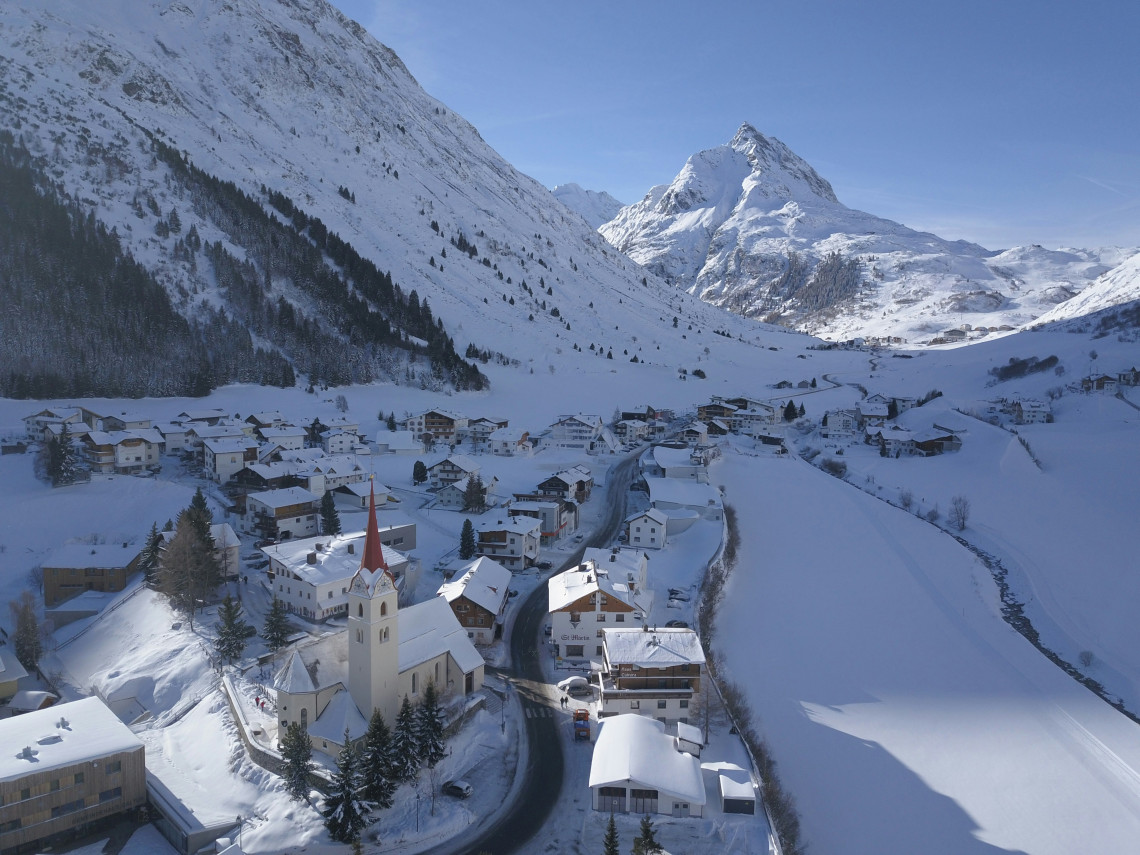
What Zell am See-Kaprun delivers. The most family-friendly of Austria's major ski resorts. Zell am See sits on the shore of Zeller See lake (frozen in winter, warm in summer), with the medieval town center offering non-ski activities. The Schmittenhöhe ski area above the town is intermediate-friendly. The Kaprun Kitzsteinhorn glacier (10 minutes' drive) adds year-round glacier skiing.
Zell am See is Austria's easiest ski trip logistically. Salzburg airport is 1h30m by road. The town has multiple family hotels, ski schools with English-speaking instructors, and non-ski activities (ice-skating on the lake, spa town Bad Gastein 45 minutes away).
Best for: Families with children. First-time ski trips. Ski trips that combine mountain skiing with a picturesque town base. Multi-generational groups.
Honest tradeoffs:
- Terrain is smaller and less challenging than St. Anton, Ischgl, or Kitzbühel.
- Lower altitude Schmittenhöhe pistes can suffer thin snow in early or late season.
- Less "ski culture" than Kitzbühel or St. Anton. It feels like a lakeside town with skiing, not a ski town.
Getting there: Fly to Salzburg (1h30m drive) or Munich (2h drive). Rail: ÖBB Railjet direct to Zell am See (in the town).
6. Obergurgl-Hochgurgl: highest and snowiest
Location: Ötztal, upper end (above Sölden), 1h45m from Innsbruck.
Elevation: Village at 1,930m (Obergurgl) and 2,150m (Hochgurgl), top ski area at 3,080m.
Skiable terrain: 112 km of pistes, 25 lifts, 47% intermediate / 32% easy / 21% expert.
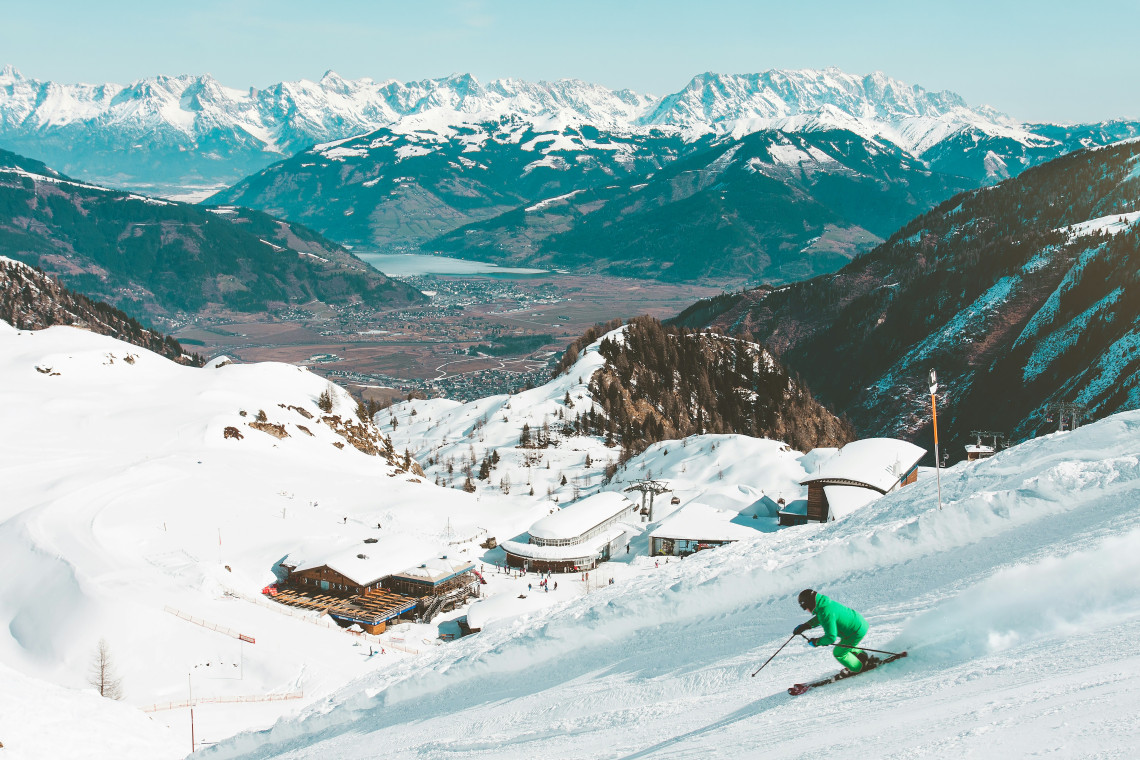
What Obergurgl-Hochgurgl delivers. The highest ski resort village in Austria. Snow reliability is Austria's best. Season runs mid-November to early May reliably. Village is small (600 inhabitants), traditional Tyrolean, and blissfully free of the Ischgl party or the Sölden factory feel.
The ski area is compact but well-designed. Terrain is intermediate-friendly with meaningful expert options. The Hochgurgl area offers longer, higher pistes; Obergurgl the more traditional Alpine feel.
Best for: Skiers who want the highest, snowiest, quietest Austrian resort. Repeat Austrian ski travelers who want an alternative to the big names. Couples on quieter ski holidays.
Honest tradeoffs:
- Smaller terrain than St. Anton, Ischgl, or Kitzbühel.
- Very expensive (small village, limited hotels, high demand for reliability).
- Village is quiet — no big après-ski scene. This is a pro for many, a con for others.
- Long drive from Innsbruck (1h45m) — the deepest into the Alps of Austria's major resorts.
Getting there: Fly to Innsbruck (1h45m drive) or Munich (3h30m drive). Rail: Innsbruck by Railjet, then bus 2h to Obergurgl.
Which one for which traveler
Beginner or first-time skier: Zell am See-Kaprun (family lessons + gentle Schmittenhöhe).
Intermediate skier: Kitzbühel (biggest interconnected intermediate terrain) or Sölden (great intermediate glacier).
Advanced skier: St. Anton (off-piste paradise) or Ischgl (Silvretta Arena cross-border).
Expert skier: St. Anton for off-piste, Kitzbühel for the Streif.
Family with kids: Zell am See-Kaprun (best family infrastructure) or Obergurgl (safe, quiet, snowy).
Party seekers (25-40): Ischgl (biggest party) or St. Anton (traditional après at MooserWirt).
Snow guarantee travelers: Sölden or Obergurgl (highest altitude, most reliable).
Non-skier partners: Kitzbühel (medieval town) or Zell am See-Kaprun (lakeside town).
Group of friends without kids: Ischgl, St. Anton, or Sölden.
Multi-generational family: Zell am See-Kaprun.
When to ski Austria
Late October to early December (early season): Only glacier resorts (Sölden, Kaprun Kitzsteinhorn). Sölden World Cup opens the season late October.
Mid December to early January: Christmas and New Year peak. Book 6+ months ahead. Prices doubled.
Mid January to mid February (sweet spot): Best snow, less crowded than Christmas or half-term. Best value for money.
Mid February to early March (half-term): European school holidays. Crowded and expensive again.
Mid March to mid April (spring skiing): Excellent snow at high resorts (Sölden, Obergurgl), warm sunny days at lower resorts. Good value.
Mid April to early May: Only Sölden and Obergurgl are still fully operational. Great for expert skiers wanting empty pistes.
Rough total per person for 7 nights, mid-range:
- Kitzbühel: €3,000-5,000
- St. Anton: €2,900-4,700
- Sölden: €2,500-4,200
- Ischgl: €3,000-5,000
- Zell am See: €2,300-3,900
- Obergurgl: €3,100-4,900
Zell am See is the most affordable major Austrian resort. Kitzbühel, Ischgl, and Obergurgl are the most expensive.
Honest tradeoffs
The pros of Austrian skiing:
- Best value in the major Alpine countries (cheaper than Switzerland, comparable to France, better food than either).
- Traditional Tyrolean culture is genuinely preserved (Kitzbühel, St. Anton, Obergurgl).
- Après-ski culture at its best (Austria essentially invented it).
- Direct flights to Innsbruck and Salzburg from major U.S. hubs (via Frankfurt or Vienna).
- Snow reliability at high resorts is excellent.
The cons:
- Peak weeks (Christmas, New Year, half-term) are extremely crowded and expensive.
- Getting to the resorts from U.S. requires at least one plane connection plus a 1.5-2h drive.
- Ski week prices for a family of four can easily exceed 15,000 dollars.
- Some resorts (Ischgl, Sölden) feel commercial rather than traditional.
Frequently asked questions
Which Austrian ski resort is best? No single best. St. Anton for experts, Kitzbühel for glamour, Sölden for snow, Ischgl for party, Zell am See for families, Obergurgl for quiet snowy weeks.
Which is the cheapest Austrian ski resort? Among major resorts, Zell am See-Kaprun is the most affordable. Smaller resorts (Serfaus, Nauders, Fieberbrunn) can be cheaper again.
When is the best time to ski in Austria? Mid January to mid February for best snow and lower crowds. December for Christmas atmosphere at premium prices. March-April for spring skiing.
Which resort has the best snow guarantee? Sölden and Obergurgl (both above 3,000m at top). Sölden has year-round glacier skiing.
Can I ski in Austria in November? Only at glacier resorts: Sölden (Rettenbach, Tiefenbach glaciers) and Kaprun (Kitzsteinhorn). Lower resorts don't open until mid-December typically.
Is Kitzbühel worth the expense? For skiers who value the town experience alongside the skiing, yes. For skiers focused purely on terrain, St. Anton or Sölden deliver more at lower cost.
Which Austrian ski resort is best for beginners? Zell am See-Kaprun (excellent ski schools, gentle Schmittenhöhe terrain). Obergurgl also has good beginner terrain but expensive.
Which is best for families? Zell am See-Kaprun by a wide margin. Family-focused infrastructure, English-speaking instructors, lakeside town amenities.
Which has the best off-piste? St. Anton (Rendl and Valluga areas). Second: Ischgl (Silvretta Arena).
How do I get from Vienna to Kitzbühel? Railjet from Vienna to Wörgl (4h), then regional train to Kitzbühel (30 min). Or drive (4h30m). Or fly Innsbruck (1h flight) + 1h15m drive.
Are lift tickets cheaper if I book in advance? Yes on some resorts (Ischgl, Sölden offer season pass and discount cards). Others (Kitzbühel, St. Anton) charge fixed prices. Multi-day tickets are always better value than daily.
Which resort is best for a first-time Austrian ski trip? Kitzbühel for the classic experience, or Zell am See-Kaprun for the easier logistics and family-friendly setup.
Skiing Austria, hand-built.
Our Austria travel experts have skied all six. Tell us your level and style, we will match you to the right resort.
See Austria Ski Packages Tailor-Made Trip