by Yes Getaways Team
June 11, 2026 • 13 min read
Hidden France: 10 Small Towns Most Tourists Miss
Most first time France travelers see the same places: Paris, the Eiffel Tower, Versailles, maybe Provence in lavender season, maybe Nice if there's beach budget. All wonderful, all extremely well-trodden.
But the most memorable France trips, the ones travelers tell us about a year later, almost always include at least one small town that was not on the original wish list. The kind of place that makes you wonder why nobody told you about it before.
This guide is 10 of those towns. Not "hidden" in the sense of secret (Google Maps knows them) but hidden in the sense that most North American travelers leave France without stopping at any of them. Each is reachable, each is worth a day or two, and each gives a different version of France than the famous routes do.
The France that travelers remember most often is not the France they planned to see.
The short answer
The 10 towns to know:
- Annecy — the lakeside town in the French Alps that looks like a fairy tale postcard
- Colmar — Alsace's most photographed town, timber-framed and canal-laced
- Eguisheim — the postcard-perfect Alsace wine village
- Saint-Émilion — UNESCO Bordeaux wine village built around medieval limestone caves
- Sarlat-la-Canéda — the perfectly preserved medieval town of the Dordogne
- Honfleur — the Norman fishing port that inspired the Impressionists
- Riquewihr — the Alsace village inside Renaissance walls
- Beynac and Castelnaud — paired medieval fortresses on the Dordogne river
- Èze — the clifftop village of the French Riviera back country
- Pérouges — the medieval walled village near Lyon almost nobody visits
The rest of this article walks through each one in detail.
1. Annecy: the lakeside town in the Alps
Where it is. In the Haute-Savoie region of the French Alps, about 40 km south of Geneva. On the northern tip of Lake Annecy, one of Europe's cleanest mountain lakes.
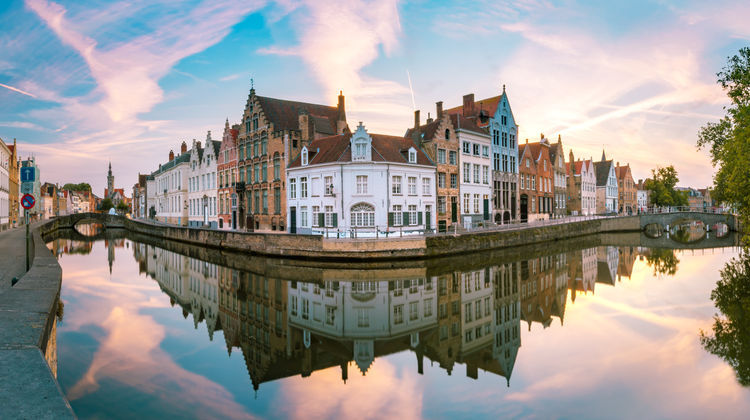
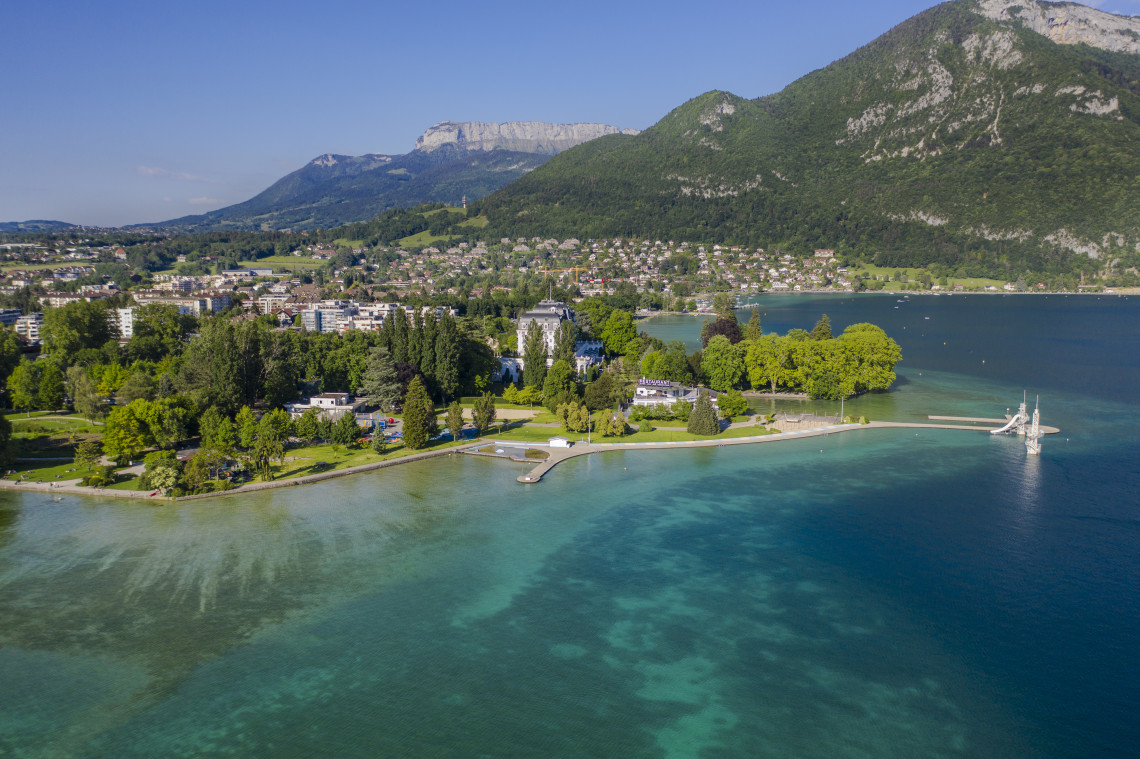
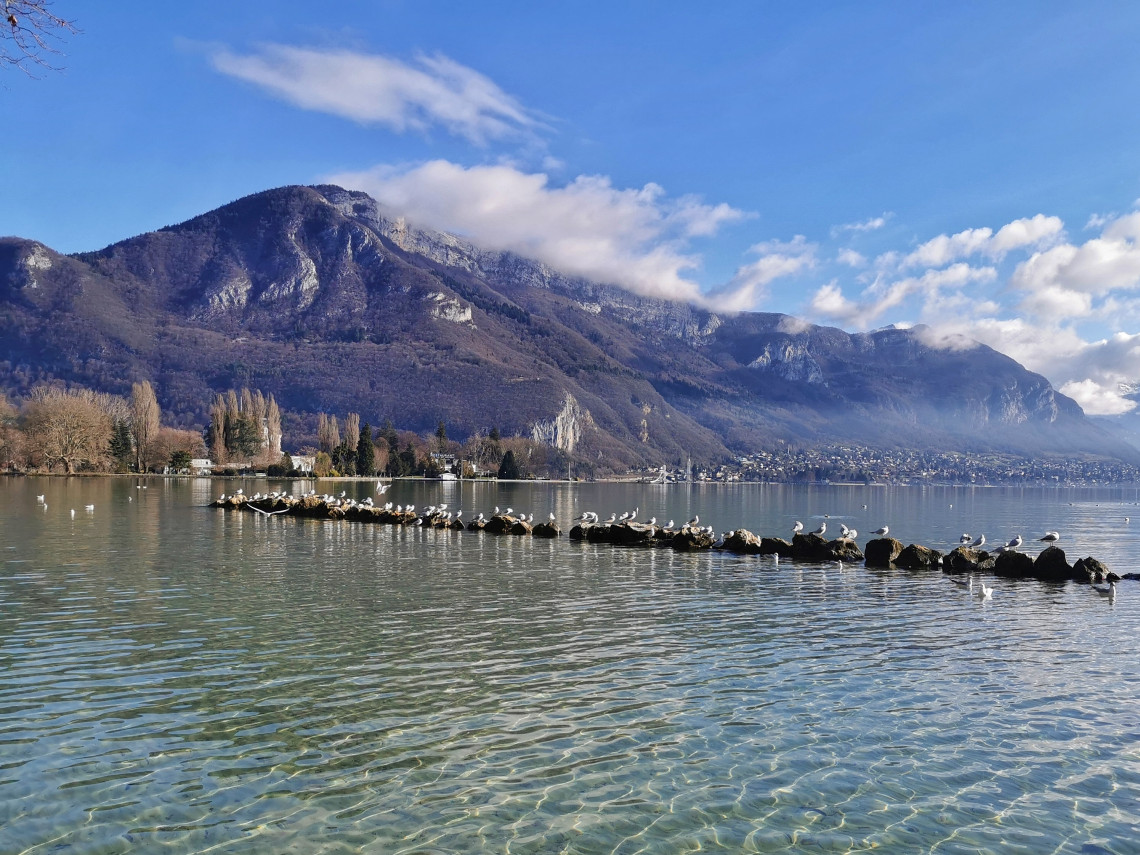
Why it's worth a stop. The old town of Annecy is a maze of narrow stone streets cut through by canals, with the Palais de l'Isle (a 12th century stone island fortress) at its heart. Color-washed houses line the canals. The lake itself, surrounded by Alpine peaks, is one of the most photogenic in Europe. Summer swimming is excellent (water temperatures of 22 to 25°C / 72 to 77°F in July to August).
What to do. Walk the old town in the early morning before the day-trippers arrive. Rent paddleboards or kayaks on the lake. Bike the lakeshore path (40 km round trip, mostly flat). Hike to the Roc de Chère viewpoint. Eat tartiflette at a lakeside restaurant in Talloires.
Where to base. Annecy itself for the old town, or Talloires across the lake for a quieter waterfront base.
How to reach. TGV from Paris Gare de Lyon to Annecy in 3h45m (often with one change at Lyon). Or 35 minutes by train from Geneva.
Best time of year. May to early July and September. July and August are warmest but most crowded.
Suits travelers who: love mountain scenery combined with lake water, want a non-Riviera French summer experience, like quiet old towns at the edge of nature.
2. Colmar: the Alsace capital you have probably seen in photos
Where it is. In Alsace, about 70 km south of Strasbourg, near the German border. On the Alsace Wine Route.
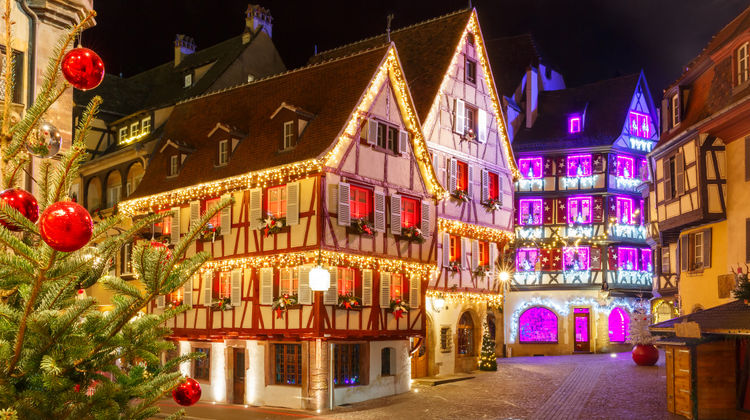
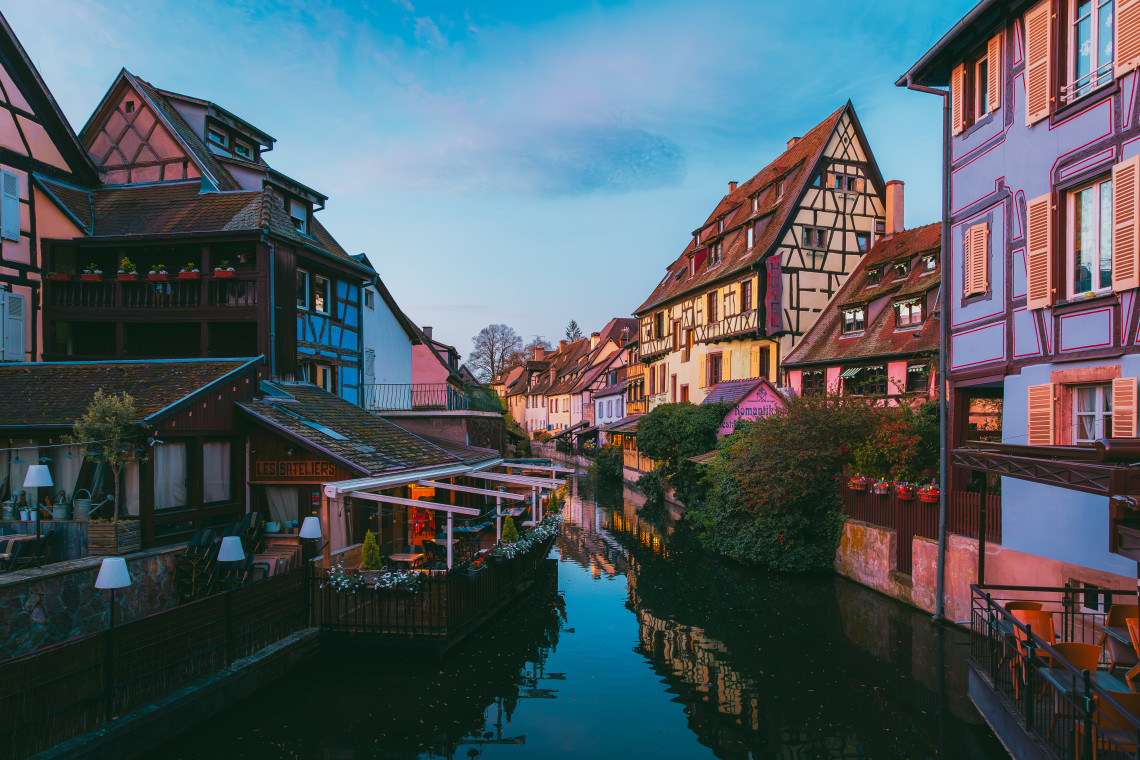
Why it's worth a stop. Colmar is the timber-framed, canal-laced, flower-bedecked Alsace town that has launched a thousand Instagram posts. The Petite Venise district feels like a film set. The town survived both World Wars largely intact, so the centuries of half-timbered buildings stand as they did when built. Colmar is also home to the Unterlinden Museum, with Grünewald's Isenheim Altarpiece (one of the most powerful religious paintings ever made).
What to do. Walk Petite Venise at dawn or after dinner for the photos without the crowds. Visit the Unterlinden Museum. Take a boat ride through the canals (touristy but pleasant). Eat tarte flambée at a winstub. Day trip to nearby Eguisheim and Riquewihr.
Where to base. Colmar itself is well set up for visitors, with hotels in the old town and excellent restaurants.
How to reach. TGV from Paris Gare de l'Est to Colmar (via Strasbourg) in about 2h45m. Or 30 minutes from Strasbourg by TER.
Best time of year. Late April to early July, September to early October, and late November to late December for the Christmas markets (Colmar's are among the most beautiful in Europe).
Suits travelers who: love half-timbered architecture, want an Alsace base, are visiting for Christmas markets, combine France with a German trip.
3. Eguisheim: the postcard-perfect wine village
Where it is. 7 km south of Colmar, on the Alsace Wine Route.
Why it's worth a stop. Officially classified as one of the "most beautiful villages of France" (Plus Beaux Villages de France), Eguisheim is a concentric ring of pastel houses around a small central square, with the village built inside two circular rings of wine cellars. The flowers, the timber framing, the wine signs on every building — it is, plainly, almost too beautiful to be real.
What to do. Walk the entire village in 90 minutes following the circular street pattern. Taste wine at any of the 30+ cellars open to walk-ins (Riesling, Gewürztraminer, Pinot Gris). Eat lunch at one of the village restaurants (Caveau d'Eguisheim or Auberge Alsacienne). Do not stay only an hour — it does not absorb in less than half a day.
Where to base. Stay in nearby Colmar or in Eguisheim itself if you want to walk the village at dawn.
How to reach. From Colmar by bus (30 min) or taxi (10 min). With a rental car, easy stop on a wine route loop.
Best time of year. May to early July, September to early October. Wine harvest in September is the most atmospheric.
Suits travelers who: want the prettiest Alsace village, love wine, are doing an Alsace wine route trip.
4. Saint-Émilion: the medieval wine village built on caves
Where it is. 35 km east of Bordeaux, in the Right Bank Bordeaux wine region.
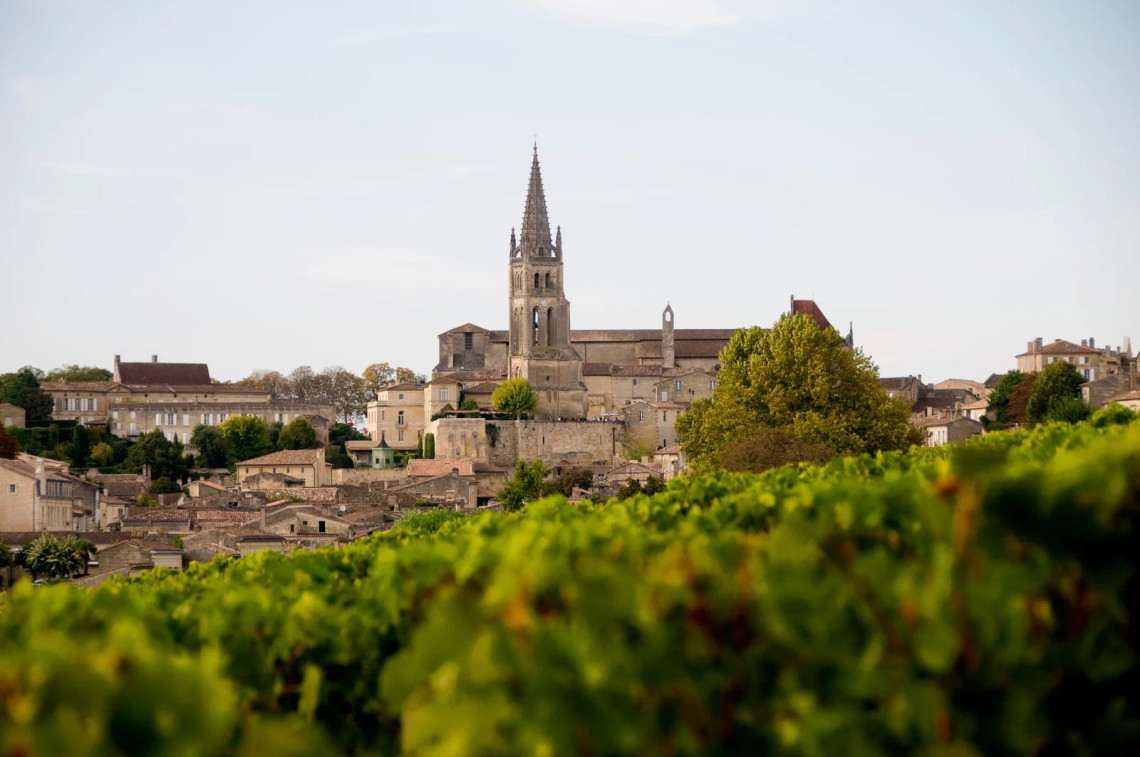
Why it's worth a stop. Saint-Émilion is what happens when a medieval village, a UNESCO site, and one of France's most famous wine appellations occupy the same square kilometer. The village rises up a limestone hillside, with the famous Église Monolithe (a 12th century church carved entirely out of the limestone bedrock, the largest such church in Europe) at its center. Below the town are kilometers of limestone caves, originally quarried to build the village, now used as wine cellars.
What to do. Tour the monolithic church and the catacombs (advance booking through the tourist office). Walk the cobbled streets to the Tour du Roy for the best view across the vineyards. Taste at a town wine merchant or arrange visits at nearby châteaux (Château Pavie, Château Angélus, Château Cheval Blanc — these last two require advance appointments and serious money). Buy macarons at the Maison Blanchez (the recipe dates from 1620). Eat lunch at L'Envers du Décor.
Where to base. Saint-Émilion has small hotels inside the village. Most travelers base in Bordeaux city (35 minutes by train) and day trip.
How to reach. TGV from Paris Montparnasse to Bordeaux in 2h05m, then 35 minutes by TER to Saint-Émilion station, then 1 km walk uphill.
Best time of year. May to early July and September (harvest).
Suits travelers who: love wine and medieval history together, want a Bordeaux day trip, like underground architecture.
5. Sarlat-la-Canéda: the medieval Dordogne capital
Where it is. In the Dordogne (Périgord Noir), 200 km east of Bordeaux.
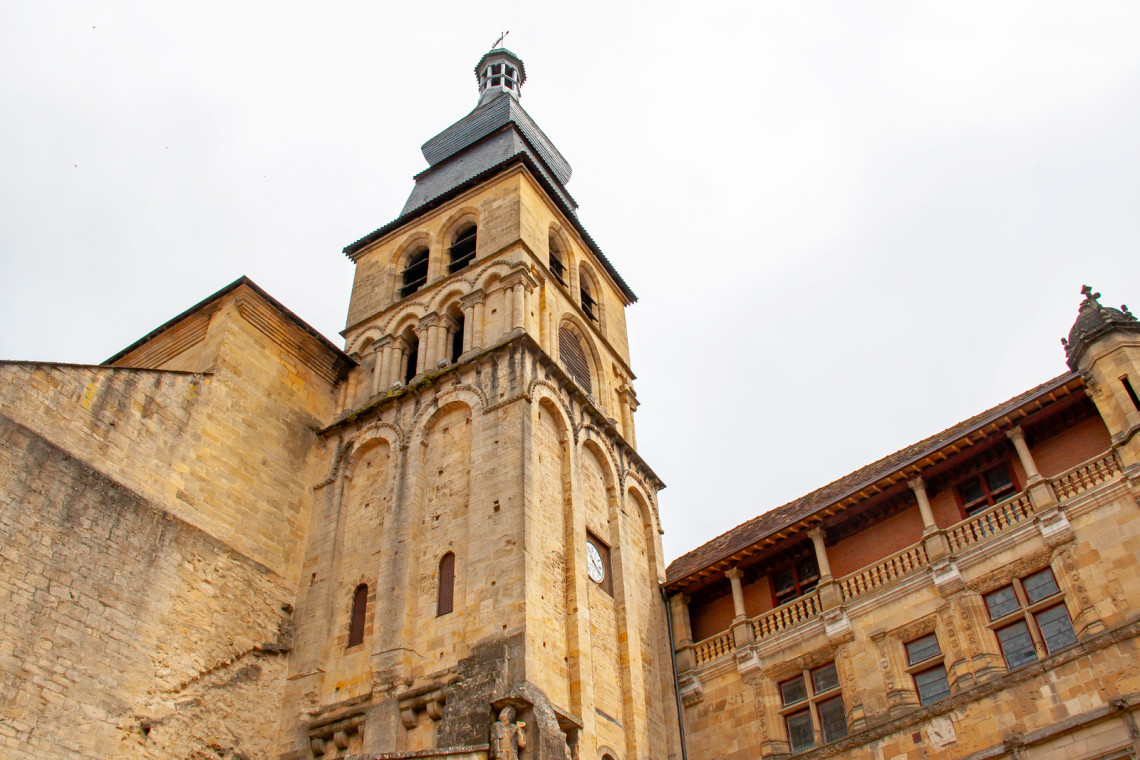
Why it's worth a stop. Sarlat is the best-preserved medieval and Renaissance market town in France, with 65 listed historical buildings in a tiny old town. The golden limestone walls glow at sunset. The Saturday morning market is one of the great French regional markets, with stalls selling foie gras, walnut oil, truffles, duck confit, and Cabécou goat cheese. Sarlat also functions as the gateway to the Dordogne valley with its prehistoric caves, medieval fortresses, and bastide villages.
What to do. Walk the medieval streets at night when they are lit by gas lamps and almost empty. Eat foie gras and duck at every meal (this is the world capital of both). Visit the Saturday market. Day trip to Beynac and Castelnaud (see #8 below), Rocamadour, the Lascaux cave replicas, and the prehistoric Vézère valley sites.
Where to base. Sarlat itself for the medieval atmosphere, or Saint-Cyprien or La Roque-Gageac as quieter river villages.
How to reach. TGV from Paris Montparnasse to Souillac (or Bordeaux), then 1 hour drive. Or fly to Bergerac (Ryanair) and drive 1 hour. The Dordogne is hard to reach without a car.
Best time of year. May to early July and September. July and August are warm and increasingly busy.
Suits travelers who: love medieval atmosphere, are serious about food (especially duck and foie gras), want a France region nearly no North American travelers know.
6. Honfleur: the Norman port that inspired Impressionism
Where it is. On the Normandy coast at the mouth of the Seine, opposite Le Havre. 200 km west of Paris.
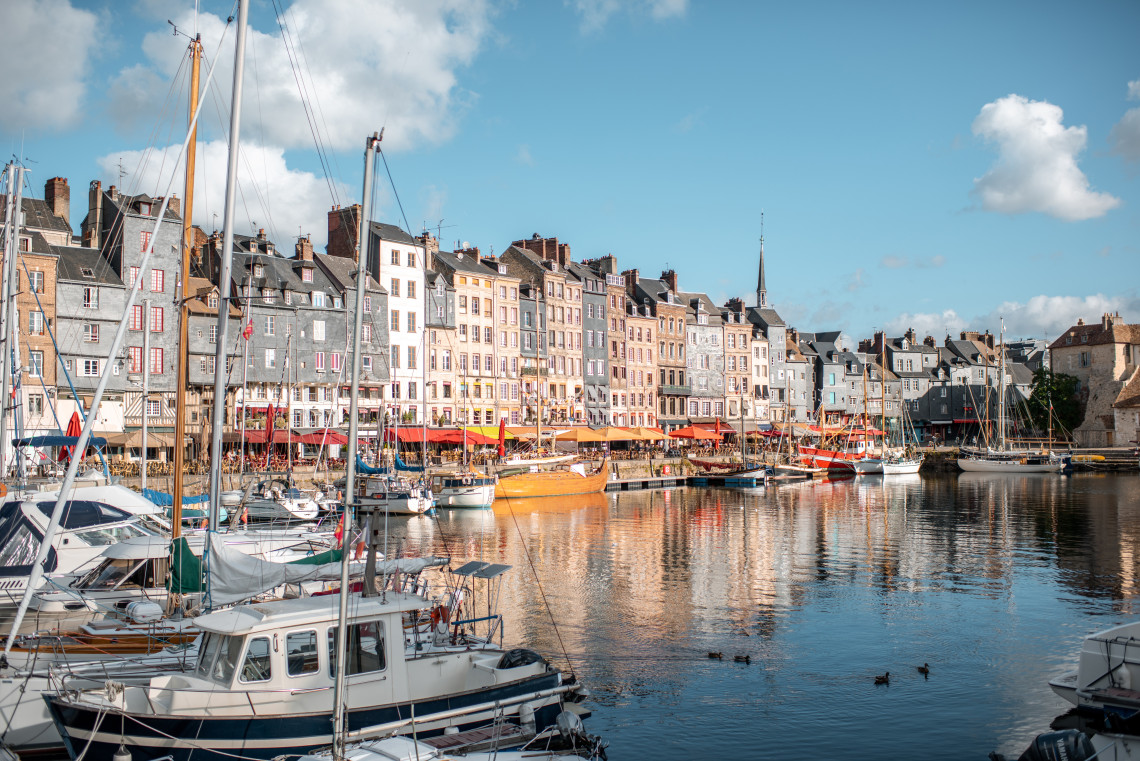
Why it's worth a stop. The Vieux Bassin of Honfleur (the inner harbor) is one of the most painted scenes in art history. Boudin, Monet, Jongkind, and the early Impressionists drew the high tilting Norman half-timbered houses around the still water of the harbor. Today the harbor is much as it was in 1860, though now ringed with restaurants and galleries rather than fishing boats. Honfleur's Sainte-Catherine church is one of France's largest wooden churches, built by shipbuilders in the 15th century without nails.
What to do. Walk the Vieux Bassin at golden hour (the light Monet painted). Visit the Eugène Boudin Museum (Boudin was born here and is considered the bridge between traditional and Impressionist landscape). Eat mussels and Calvados in a harbor restaurant. Drive 25 km west to the cliffs of Étretat, also in Normandy, for a different coastal experience.
Where to base. Honfleur itself, or Deauville-Trouville (15 km west) for a glossier Belle Époque resort base.
How to reach. From Paris, train to Lisieux (2 hours) then bus or rental car. Most travelers drive from Paris (2h30m) or arrive as part of a Normandy circuit.
Best time of year. May to October. June and September for the best light and fewer crowds.
Suits travelers who: love painting (especially Impressionism), like ports and seafood, are doing a Normandy or Paris-Normandy combination trip.
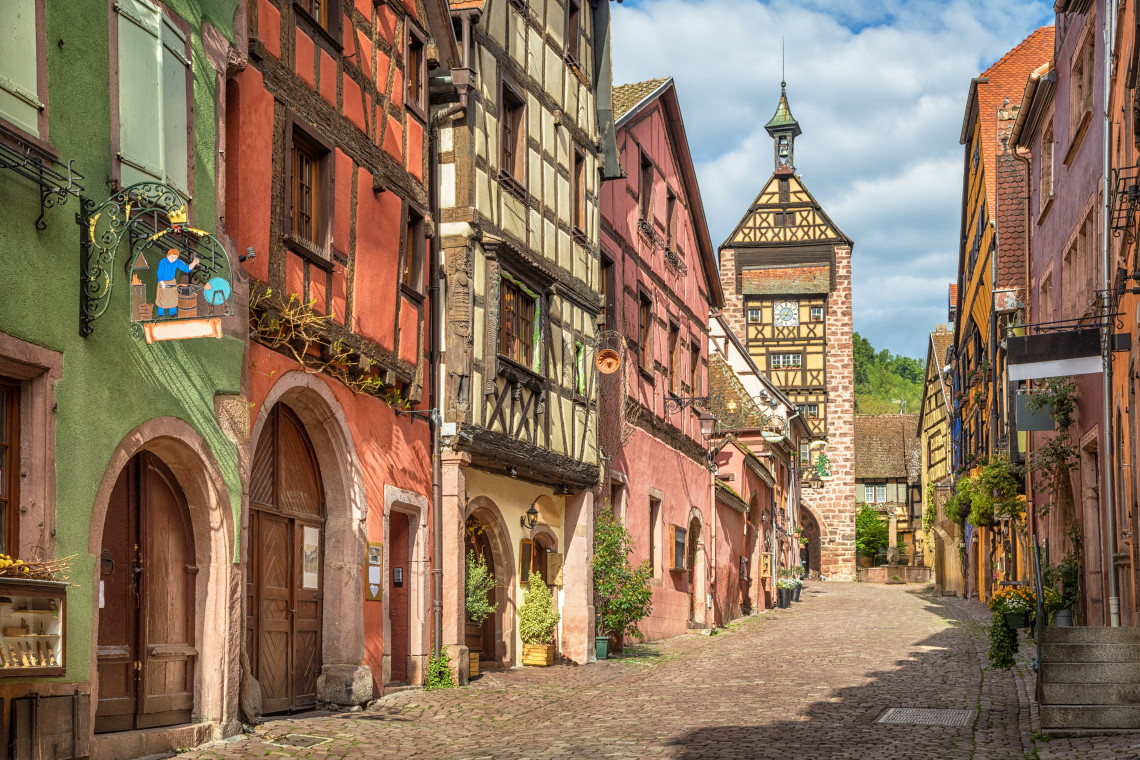
7. Riquewihr: the Alsace village inside Renaissance walls
Where it is. 12 km north of Colmar, on the Alsace Wine Route between Colmar and Strasbourg.
Why it's worth a stop. Riquewihr is preserved inside its original 13th century walls. Walking in through the medieval gate is a transition into a small enclosed town that has been operating as a wine village for 700 years. The Dolder (the medieval bell tower from the original walls) anchors the village. Many of Alsace's most famous wineries are based here (Hugel, Trimbach, Faller, Domaine Weinbach).
What to do. Walk the entire walled village in 90 minutes. Taste at Hugel (one of Alsace's oldest wineries, family-owned since 1639). Day trip to nearby Ribeauvillé (5 km north, also on the wine route, equally beautiful) and Kaysersberg (8 km west). Eat at La Table du Gourmet for serious Alsatian cooking.
Where to base. Stay in Colmar (12 km south) and day trip, or in Riquewihr itself if you can find a small hotel.
How to reach. From Colmar by bus (30 min) or rental car (15 min).
Best time of year. May to early July, September to mid October, late November to late December for Christmas markets.
Suits travelers who: want a serious Alsace wine experience, love walled medieval villages, are combining several Alsace stops.
8. Beynac and Castelnaud: the paired fortresses of the Dordogne
Where it is. Facing each other across the Dordogne river, 10 km west of Sarlat.
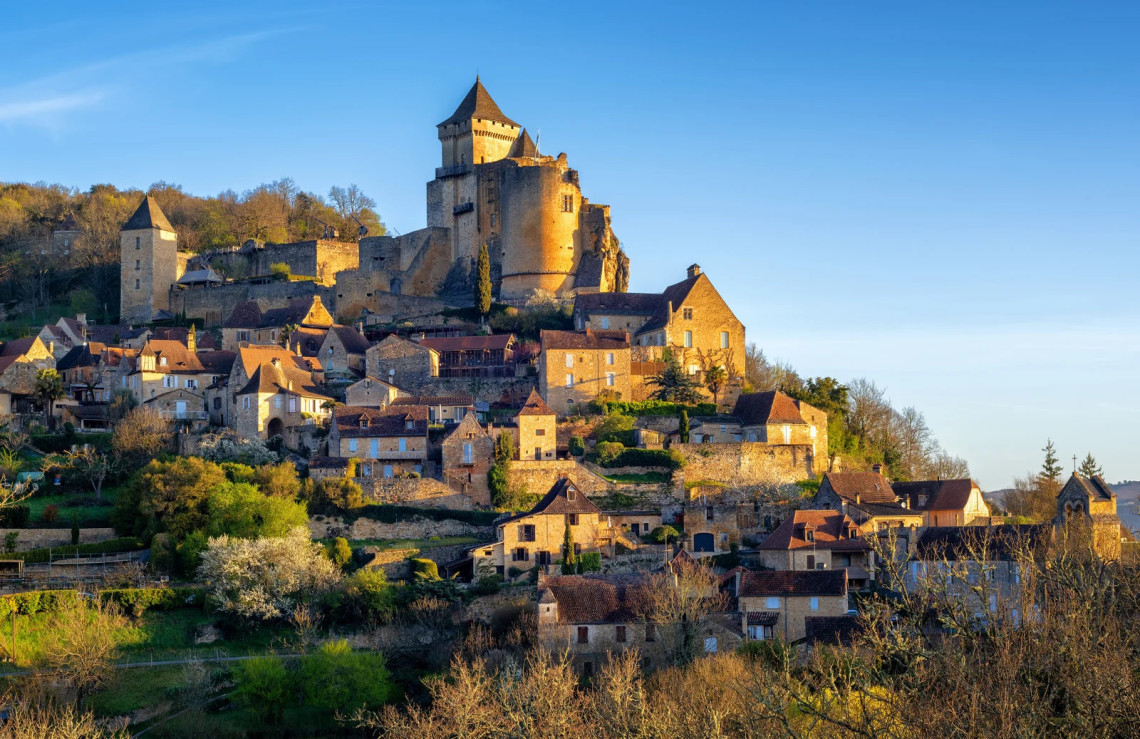
Why they're worth a stop. These two medieval fortresses are perhaps the most photogenic pair of castles in France. They sit on opposite limestone cliffs overlooking the Dordogne river, originally built to control the river trade and during the 12th century Hundred Years War were on opposing sides (Beynac for the French, Castelnaud for the English). Today both are open for visits, and the view of either from the river or from the opposite castle is among the most cinematic in France.
What to do. Visit one fortress in the morning (Beynac is the more atmospheric, Castelnaud has the better military history museum), the other in the afternoon. Canoe down the Dordogne river between them (rentals at La Roque-Gageac, 5 km away). Eat lunch at La Belle Étoile in La Roque-Gageac on the riverbank. Visit the prehistoric Font-de-Gaume cave (the only original prehistoric painted cave in France still open to visitors, advance booking essential).
Where to base. Sarlat (#5 above) is the natural base for this entire area.
How to reach. A car is required. From Sarlat to Beynac is 15 minutes' drive.
Best time of year. May to early July and September.
Suits travelers who: love medieval history, want the most dramatic French castle landscapes, are doing a Dordogne road trip.
9. Èze: the clifftop village of the Riviera back country
Where it is. Between Nice and Monaco on the Moyenne Corniche road, 427 m above the Mediterranean.
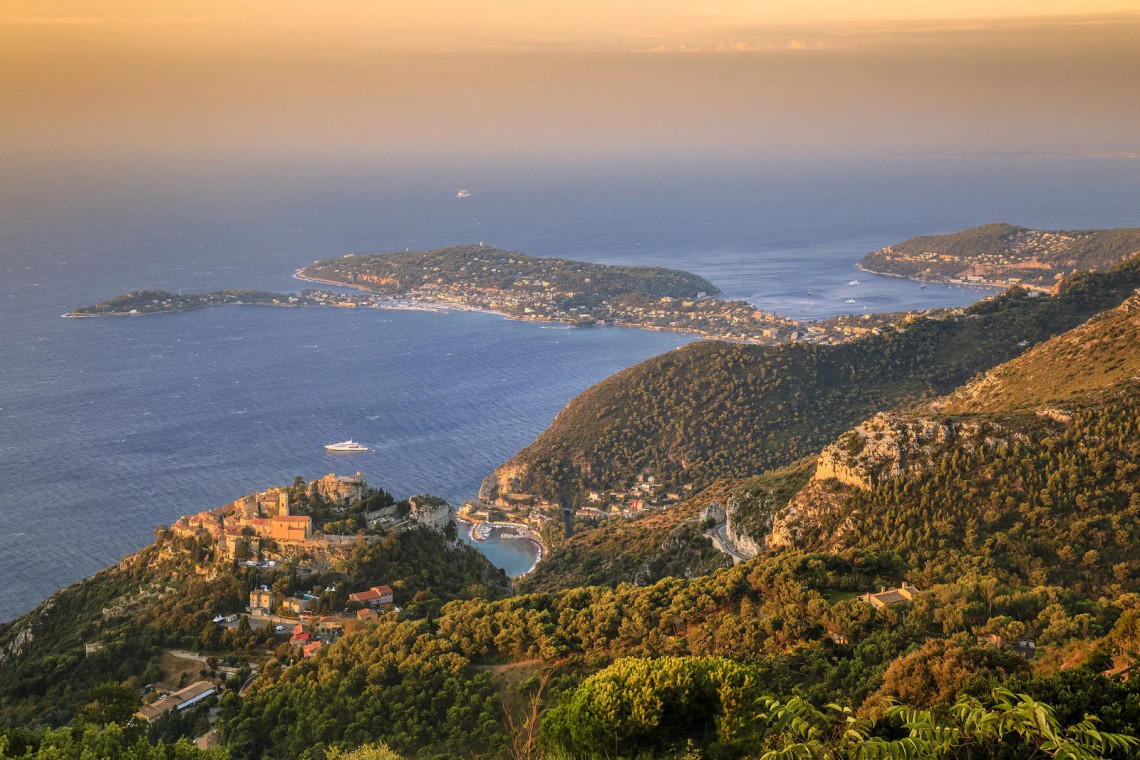
Why it's worth a stop. Èze (sometimes called Èze Village to distinguish from Èze-sur-Mer below) is a medieval village built around a now-ruined castle on a sheer rock outcrop. The view from the village across the Mediterranean is one of the great Riviera views — on a clear day, you can see Corsica, 200 km away. The village itself is essentially a vertical maze of stone alleys and shops, with the Jardin Exotique at the top (a cactus garden built into the old castle ruins). The Chèvre d'Or hotel inside the village is one of the most spectacular hotel locations on the Riviera.
What to do. Walk the village in 90 minutes. Climb to the Jardin Exotique for the view. Walk down the Nietzsche Path (the steep trail from Èze Village to Èze-sur-Mer on the coast, supposedly walked by Nietzsche while writing Thus Spoke Zarathustra) — about 45 minutes downhill. Eat at the Chèvre d'Or or at the more modest La Bergerie.
Where to base. Stay in Nice and day trip, or Cap Ferrat / Villefranche for a more luxurious base.
How to reach. Bus 82 or 83 from Nice (Vauban station) to Èze Village in 20 minutes. The train station (Èze-sur-Mer) is at sea level and requires either the 45 minute uphill walk or the bus.
Best time of year. May to early July and September. Avoid weekend day-trippers from Nice and Monaco.
Suits travelers who: want the iconic Riviera view, are based on the Riviera and want a 4-hour back country excursion.
10. Pérouges: the medieval village near Lyon almost nobody visits
Where it is. 35 km northeast of Lyon, in the Ain region.
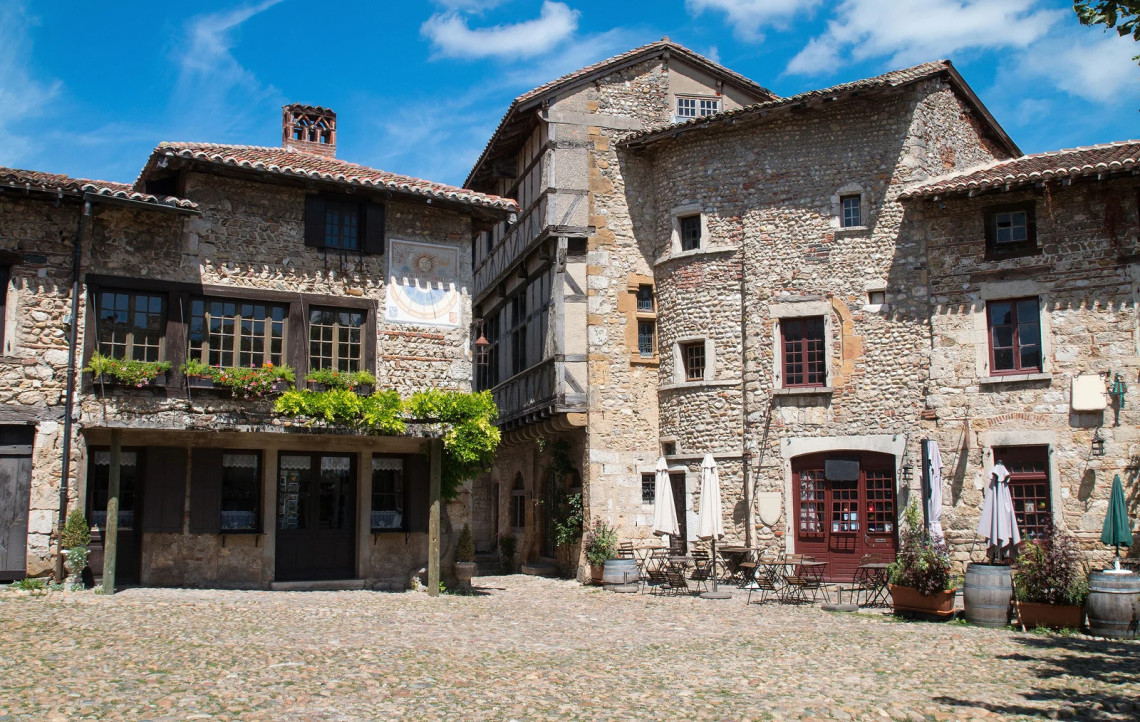
Why it's worth a stop. Pérouges is a complete medieval walled village preserved on a small hilltop, with cobbled streets so unchanged that several films have been shot here (including The Three Musketeers). Unlike the famous medieval towns of southern France, Pérouges has remained largely off the tourist circuit. The galette de Pérouges (a sweet flatbread with sugar and butter, served warm) is the local specialty.
What to do. Walk the entire village in 60 minutes. Eat the galette at the Hostellerie du Vieux Pérouges (which also operates as a hotel inside the walls). Combine with a day in Lyon, France's gastronomic capital.
Where to base. Stay in Lyon and day trip. Pérouges is more a half-day stop than an overnight.
How to reach. Train from Lyon Part-Dieu to Meximieux-Pérouges in 35 minutes, then 15 minute walk uphill.
Best time of year. Year-round, though spring and autumn have the best light.
Suits travelers who: are spending time in Lyon and want a unique day-trip side dish, love medieval villages without the famous-town crowds.
How to combine them
The 10 towns above cluster geographically. The natural combinations:
Alsace cluster: Colmar + Eguisheim + Riquewihr. 4 to 5 days based in Colmar, doable as an Alsace wine route trip.
Dordogne cluster: Sarlat + Beynac + Castelnaud + Rocamadour. 4 to 5 days based in Sarlat or a river village.
Bordeaux + Dordogne: Saint-Émilion + Sarlat + Beynac. 6 to 7 days starting in Bordeaux city, ending in the Dordogne countryside.
Alpine cluster: Annecy alone, 3 to 4 days, possibly with Lyon.
Normandy + Paris: Honfleur + Étretat + Mont-Saint-Michel. 4 days based in Honfleur or Bayeux.
Riviera back country: Èze + Saint-Paul-de-Vence + Gourdon. 1 to 2 days from a Nice base.
Why this matters
The famous France (Paris, Provence, the Riviera, Versailles) is famous because it is excellent. Skipping it on a first trip is usually a mistake. But the second-trip France (or the layered first trip with a 4 day side detour) is where the most interesting memories live.
A 10 day France trip that includes 1 to 2 of these towns is, almost without exception, the trip travelers remember more vividly years later.
The famous France gives you the postcard. The hidden France gives you the story.
Frequently asked questions
What is the most beautiful small town in France?
Among the most often cited: Annecy for lakeside Alpine, Eguisheim for Alsace, Saint-Émilion for wine country, Sarlat for medieval Dordogne, Honfleur for the Norman coast. Beauty is region-specific.
Which small French town is best for first time visitors?
Honfleur (close to Paris, easy to combine, photogenic without remoteness) or Annecy (alpine and lakeside, distinct from Paris/Provence/Riviera).
Are these towns crowded?
Some are (Eguisheim, Riquewihr, Honfleur, Èze in summer can be busy with day-trippers). Some remain genuinely quiet (Pérouges, the inland Dordogne villages, Annecy in shoulder season).
Can I reach these towns without a car?
Annecy, Colmar, Honfleur (partly), Saint-Émilion, Pérouges yes — all have train stations or accessible buses. Eguisheim, Riquewihr, Sarlat, Beynac, Castelnaud require a car or organized tours.
What is the most under-the-radar French town?
Pérouges, almost certainly. Most North American travelers have never heard of it, despite being 35 km from Lyon.
Are these towns safe to visit?
All ten are very safe small French towns with low crime rates. Standard travel precautions apply.
Which town is best for food?
Sarlat for foie gras, duck, and truffles. Saint-Émilion for Bordeaux wine country cooking. Lyon (near Pérouges) is France's gastronomic capital. Honfleur for seafood and Calvados.
Can I do a multi-town French village trip?
Yes. A Dordogne road trip (Sarlat + Beynac + Castelnaud + Rocamadour) takes 4 days. An Alsace wine route trip (Colmar + Eguisheim + Riquewihr + Ribeauvillé) takes 4 days. These are some of the best regional trips in France.
What is the best month for hidden France?
Late May to early July and September. Tourist density is lower than peak summer; weather is generally good across all the regions.
Where do French people themselves go for small towns?
The Pyrenees foothills, the Cévennes, inland Brittany, the Vercors and Chartreuse regions. Most are even less visited than the ones above.
Should I include hidden France on a first trip?
For most first time France travelers with 9+ days, adding 1 to 2 of these towns improves the trip noticeably. For under 7 days, focus on the famous regions first and save the hidden towns for a second visit.
The France travelers remember most.
Our travel experts route hidden France stops into trips of every length.
See France Packages Tailor-Made Trip