by Yes Getaways Team
September 24, 2026 • 12 min read
Cologne (Köln) is Germany's fourth-largest city, its most Roman by origin, its most Catholic by tradition, and its most cheerful by personality. It has one of the two or three most iconic Gothic cathedrals in Europe, seven simultaneous Christmas markets in December, a beer culture that exists nowhere else in the country, and easy day-trip access to Aachen (Charlemagne's capital) and Bonn (Beethoven's birthplace). Most American travelers know Cologne only as a river cruise stop or a name on a perfume bottle. This guide is what to see, when to visit, and why Cologne is a bigger reason to fly to Germany than most first-timers realize.
The short answer
- How many days: Two full days is the minimum for Cologne itself. Three days lets you add one day trip (Aachen or Bonn). Four days makes a proper Rhineland trip with the Middle Rhine castles or Düsseldorf added.
- Best time to visit: Late April to early October for the outdoor Cologne. Late November through Christmas Eve for the seven Christmas markets, which are the city's biggest annual draw. February for Karneval (the massive pre-Lenten street festival).
- The must-see block: Cologne Cathedral (inside and up the tower), the Old Town along the Rhine, the Roman-Germanic Museum, the Hohenzollern Bridge with its love locks, and one proper Kölsch brewery for dinner.
- How to get around: Cologne is compact enough that most first-timers walk. The KVB (public transport) system covers longer distances. A KölnCard covers transport plus attraction discounts.
- What to eat: Rheinischer Sauerbraten, Himmel un Ääd (Heaven and Earth potato-and-apple dish), Halve Hahn (a rye roll with cheese, misleadingly named "half chicken"), and Kölsch beer at a proper brewery.
- Best day trip: Aachen (40 minutes by train, Charlemagne's UNESCO cathedral), Bonn (30 minutes, Beethoven's birthplace and a serious museum mile), or the Middle Rhine castles (1 hour to Koblenz).
Cologne Christmas Market: Germany's Rising Star — Cologne plus Frankfurt, flights, hotels, and the seven-market Christmas experience.
See the Cologne Christmas package →Understanding Cologne
Cologne sits on the Rhine in North Rhine-Westphalia, Germany's most populous state, about 40 minutes south of Düsseldorf and an hour north of Koblenz (where the Middle Rhine castles begin). The city has a population of just over a million, which makes it the fourth-largest in Germany after Berlin, Hamburg, and Munich.
Three things shape the city's character. First, it was founded by the Romans in 50 AD, which makes it one of the oldest German cities and gives it a Roman archaeological layer that shows up under half of the central buildings. Second, it has been a Catholic ecclesiastical center for 1,700 years, home to the Archbishop of Cologne and the pilgrimage relics that made the medieval cathedral necessary. Third, it was almost completely destroyed by Allied bombing in World War II. What you see in the old town today is largely a postwar reconstruction, faithful to the medieval layout but visibly rebuilt. The cathedral, remarkably, survived (though it was hit by 14 bombs, which local mythology attributes to Allied pilots using the twin spires as a landmark for navigation).
The city's personality is different from Munich (formal, Bavarian) or Berlin (edgy, historical). Cologne is more open, more informal, and more centered on shared meals and beer than most German cities. A Kölner will strike up a conversation at a beer hall in a way a Munich local rarely will. This shows up in the language too; the local dialect (Kölsch) is used in songs and in the city's massive annual Karneval festival, which brings a million costumed celebrants into the streets in February.
What to See in Cologne
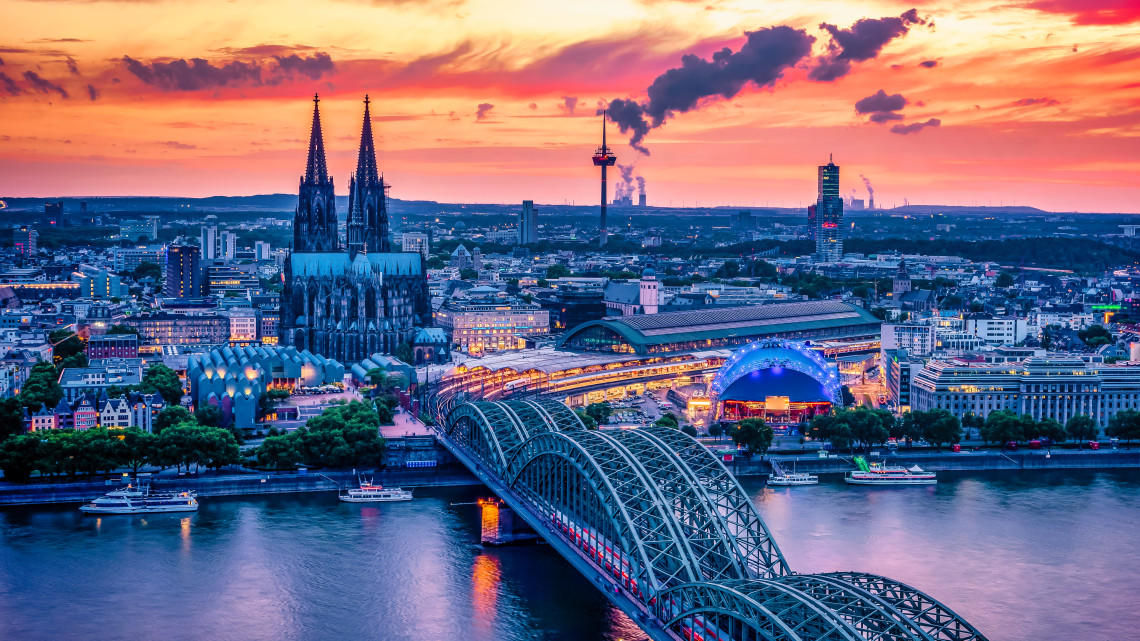
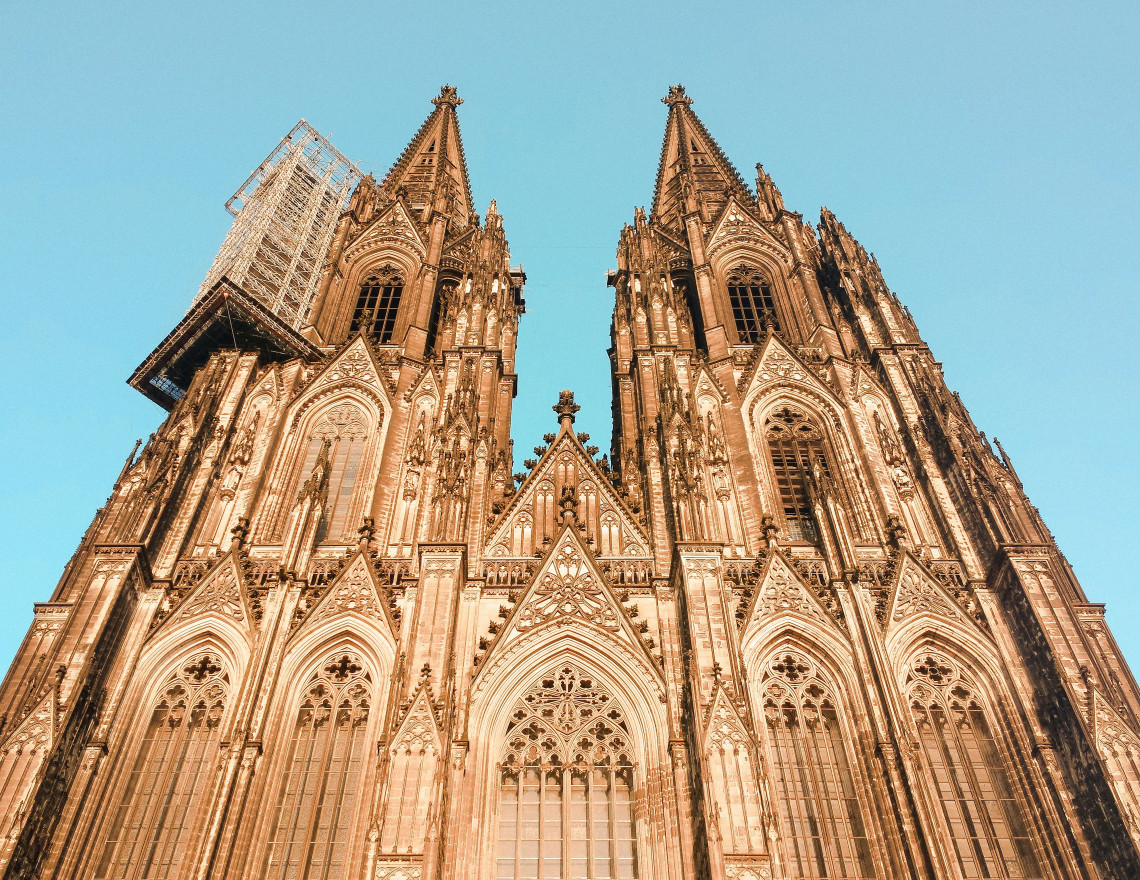
Cologne Cathedral (Kölner Dom). The single most visited landmark in Germany, and one of the great Gothic cathedrals in Europe. Construction began in 1248 and was not completed until 1880 (a 632-year build). The twin spires are 157 meters tall. Free entry to the nave. The Treasury (Domschatzkammer) and the tower climb (533 steps, no elevator, one of the best views in the Rhineland) both charge separately. Give it at least 90 minutes, half a day if you climb the tower and visit the Treasury.
Inside the cathedral, the two things not to miss are the Shrine of the Three Kings (the gilded reliquary said to contain the bones of the Biblical Magi, brought here in 1164 from Milan) and the Gero Cross (an oak crucifix from around 970, the oldest large monumental sculpture of the crucified Christ in the Western world).
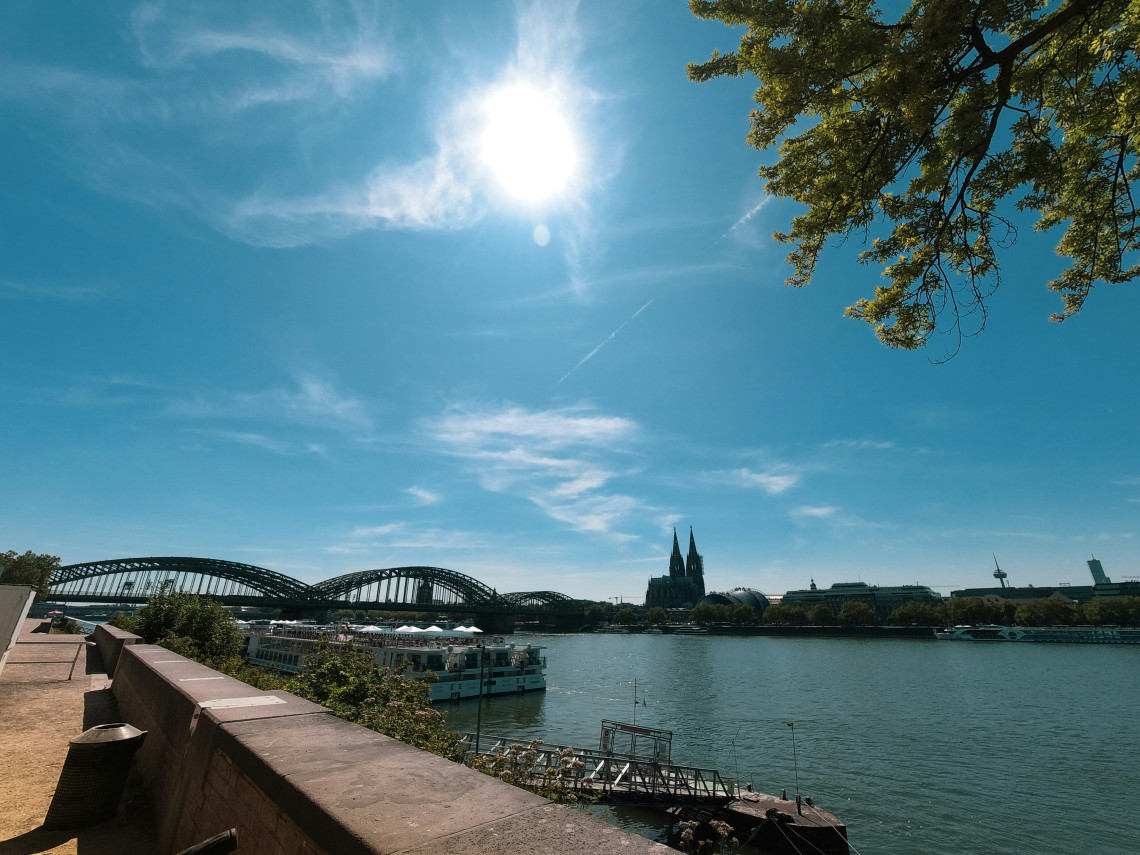
Hohenzollern Bridge. The pedestrian and rail bridge directly next to the cathedral, spanning the Rhine. Covered on both sides with hundreds of thousands of love locks. Walk across it once for the panoramic view of the cathedral from the far bank. The best evening photograph of Cologne is from the Kennedy-Ufer promenade on the opposite side.
Roman-Germanic Museum (Römisch-Germanisches Museum). Excellent archaeological museum built directly on top of a Roman villa's mosaic floor (still in situ). Roman glass, ceramics, sculpture. Currently in a temporary building during renovations; check current location before visiting.
Ludwig Museum. Modern art, on the same square as the cathedral. Picasso, Warhol, and one of the world's most complete pop-art collections. Half a day.
Cologne Old Town (Altstadt). The compact medieval-and-reconstructed core along the Rhine, south of the cathedral. Fischmarkt is the most photographed square. Great Saint Martin's Church is the second-most visible landmark after the cathedral. Traditional Brauhaus restaurants line the streets.
Chocolate Museum (Schokoladenmuseum). On a small peninsula in the Rhine, funded by the Stollwerck chocolate family. More interesting than it sounds, with a working production line and a chocolate fountain. Kid-friendly. Half a day.
Belgian Quarter (Belgisches Viertel). The trendy neighborhood west of the ring roads, with independent boutiques, third-wave coffee shops, and the best modern restaurants in the city. Come for lunch or dinner even if you stay elsewhere.
Cologne Zoo. Small but well-regarded, on the Rhine north of the center. Worth half a day if you are traveling with kids.
Kölsch Beer Culture
Cologne is one of two German cities (the other is Düsseldorf, with Altbier) that has a beer named after the city itself and served in a specific traditional way. Understanding Kölsch is understanding Cologne.
What Kölsch is. A light, crisp, top-fermented beer, 4.8 percent alcohol, brewed only within the Cologne city area under a 1985 legal agreement (the Kölsch Konvention) between the local breweries. There are 13 official Kölsch breweries in the city, and each has its own affiliated Brauhaus restaurant.
How it is served. In a Stange, a small (0.2 liter) cylindrical glass. Never in a full-liter Maß like in Bavaria. The reason: Kölsch loses freshness quickly, and small glasses mean each pour is drunk quickly and stays cold.
Who serves it. A Köbes. The waiters in traditional Brauhaus restaurants are called Köbes, wear blue aprons, and are famously curt and comedic in a way that is central to the Kölsch drinking experience. They will keep bringing you fresh Stangen without asking, adding a tally mark to your beer coaster (Deckel) each time. To stop, put the coaster on top of the empty glass. Do not try to order politely; the transaction is fast and abrupt by design.
Where to drink it. The four most famous Kölsch brewery Brauhäuser in Cologne are Früh am Dom (right next to the cathedral, the tourist-heavy classic), Päffgen (in the Belgian Quarter, more local), Malzmühle (south of the old town, quieter), and Sion (near the cathedral, known for the food). Any of the four is a proper Cologne experience. Pick one and go.
What to eat with Kölsch. Halve Hahn (a rye roll with cheese, mustard, and pickles, ironically named "half chicken"), Himmel un Ääd (blood sausage on mashed potato and apple, the city's signature dish), or Rheinischer Sauerbraten (marinated beef with raisins and gingerbread gravy).

Best of Germany's Christmas Markets: Cologne, Nuremberg & Munich
Three completely different versions of a German Christmas, all reachable by direct ICE train, in one bundled trip: flights, hotels in each city, and rail connections.
See the three-city Christmas package →The Seven Christmas Markets
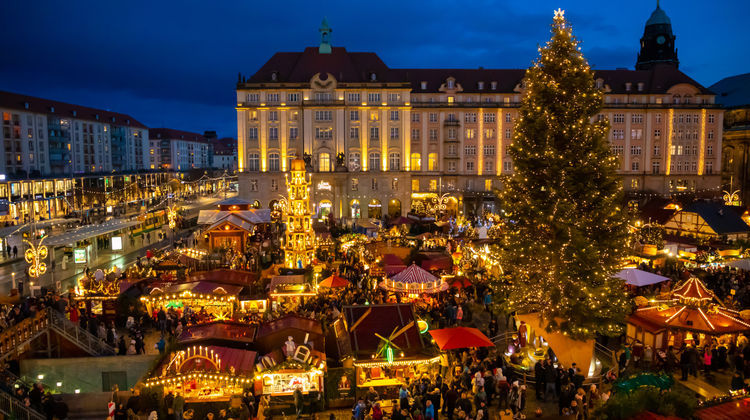
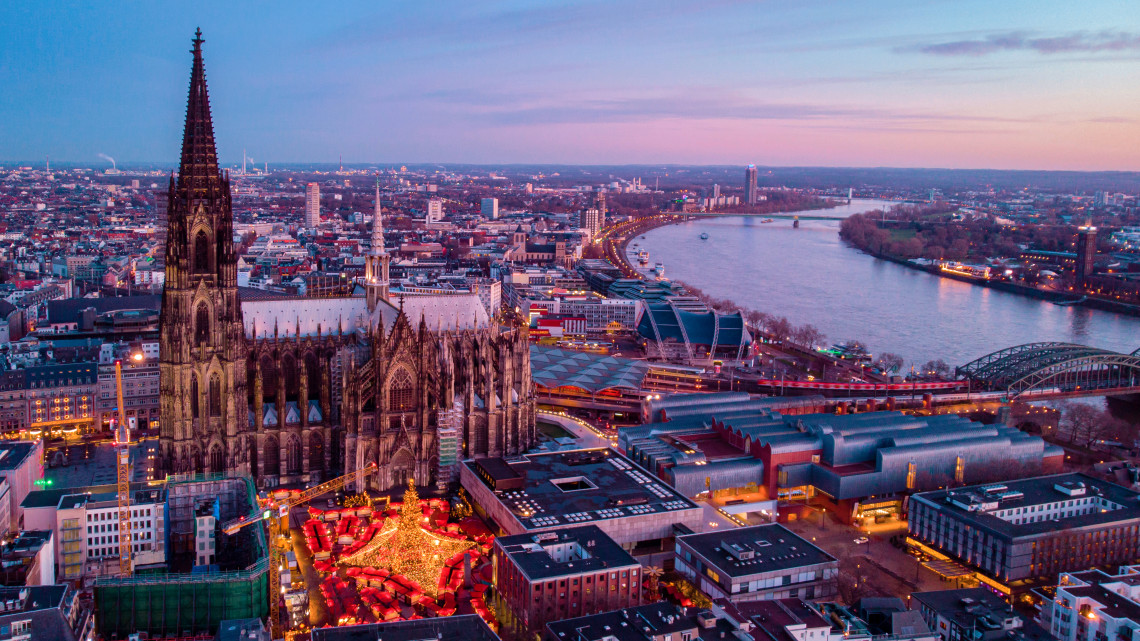
Cologne runs one of the largest concentrations of Christmas markets in any European city: seven separate markets, each with a distinct character, all within walking distance of the cathedral. They open in late November and run through December 23. The city's Christmas market visitor volume ranks near the top nationally, and increasingly rivals Nuremberg's for international travelers.
Cathedral Market (Markt der Engel, at Neumarkt or Dom). The biggest and most photographed, in the shadow of the cathedral. Traditional German food, mulled wine (Glühwein), and the largest Christmas tree in the Rhineland at the center. This is the one everyone visits first.
Old Town Market (Altstadt Weihnachtsmarkt). In the old town squares along the Rhine. Traditional, atmospheric, with the classic timber huts and small artisan stalls. Best photographed at dusk.
Home of the Elves Market (Heinzels Wintermärchen). Family-oriented, on the Heumarkt square. Small ice-skating rink in the middle, elf-themed decorations, and a curling lane.
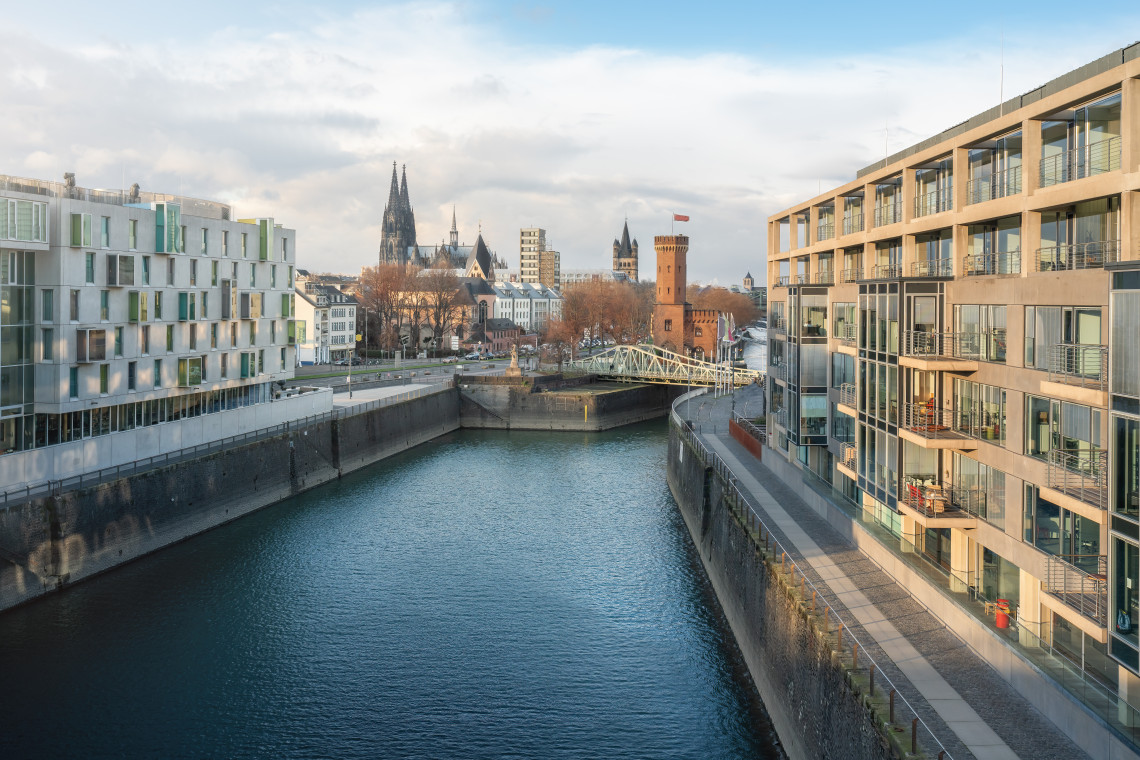
Harbor Market (Hafen-Weihnachtsmarkt). On the Rheinauhafen peninsula, with maritime-themed stalls and views across the Rhine. Newer than the traditional markets, more design-forward.
Village of St. Nicholas (Nikolausdorf). Small, quiet, at the Rudolfplatz. Focus on children's activities and Saint Nicholas figures.
Stadtgarten Market. In a residential park in the Belgian Quarter, this is where locals go. Craft beer instead of mulled wine, alternative food, less tourist-focused.
Cologne Harbor Christmas Market at the Chocolate Museum. Combines the market with entry to the Chocolate Museum. Kid-friendly.
The tip most travelers wish they had known. All seven markets are walkable from a hotel near the cathedral, and the same city ticket covers unlimited transport if you want to hop between the more spread-out ones. Visit two or three per day rather than all seven at once. Weekday afternoons are less crowded than evenings and weekends.
Day Trips: The Western Rhineland
Cologne is the natural base for two of Germany's most historically important small cities plus the northern end of the Middle Rhine castle stretch.
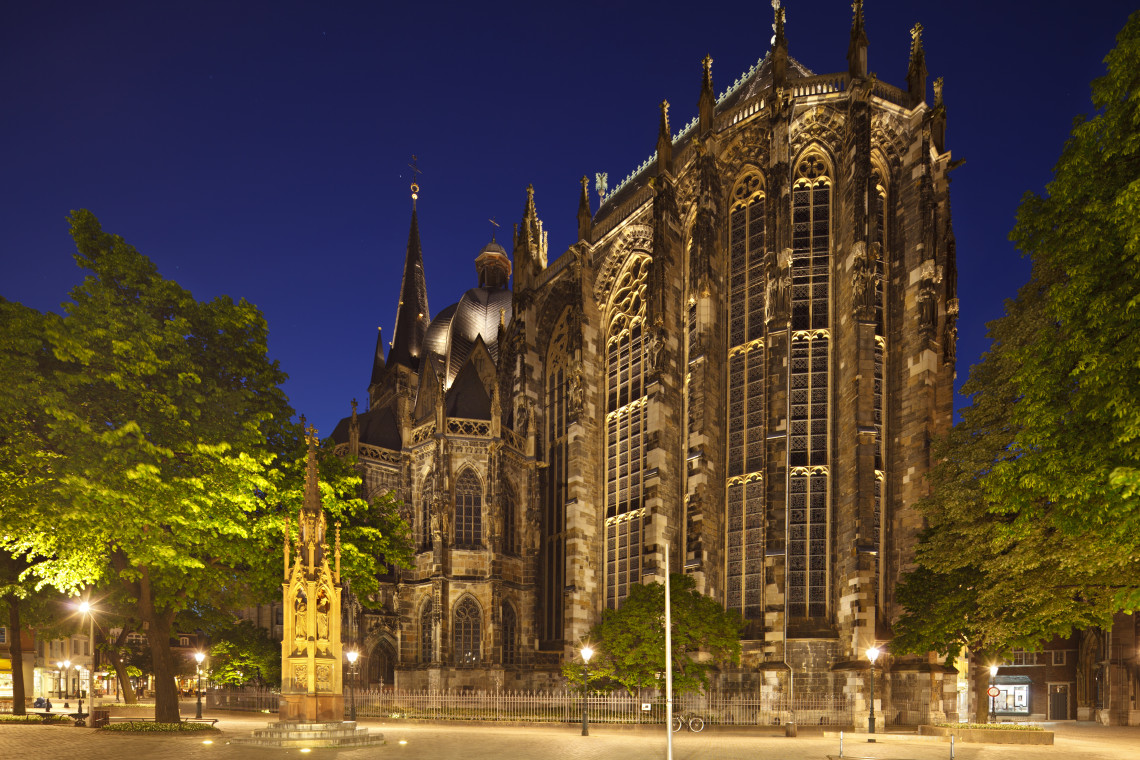
Aachen (40 minutes by ICE). Charlemagne's imperial capital and the coronation city of the Holy Roman Emperors for 600 years. The Aachen Cathedral is UNESCO-listed and contains Charlemagne's throne and tomb. Aachen also sits on the Belgian-Dutch-German border triple point and has a thermal bath tradition dating back to Roman times. Full day.
Bonn (30 minutes by train). The former capital of West Germany (1949-1990) and the birthplace of Ludwig van Beethoven in 1770. The Beethoven-Haus museum sits on the street where he was born. Bonn has a serious museum mile along the Rhine (Kunstmuseum Bonn, Haus der Geschichte, and the Kunst- und Ausstellungshalle). Full day, easily.
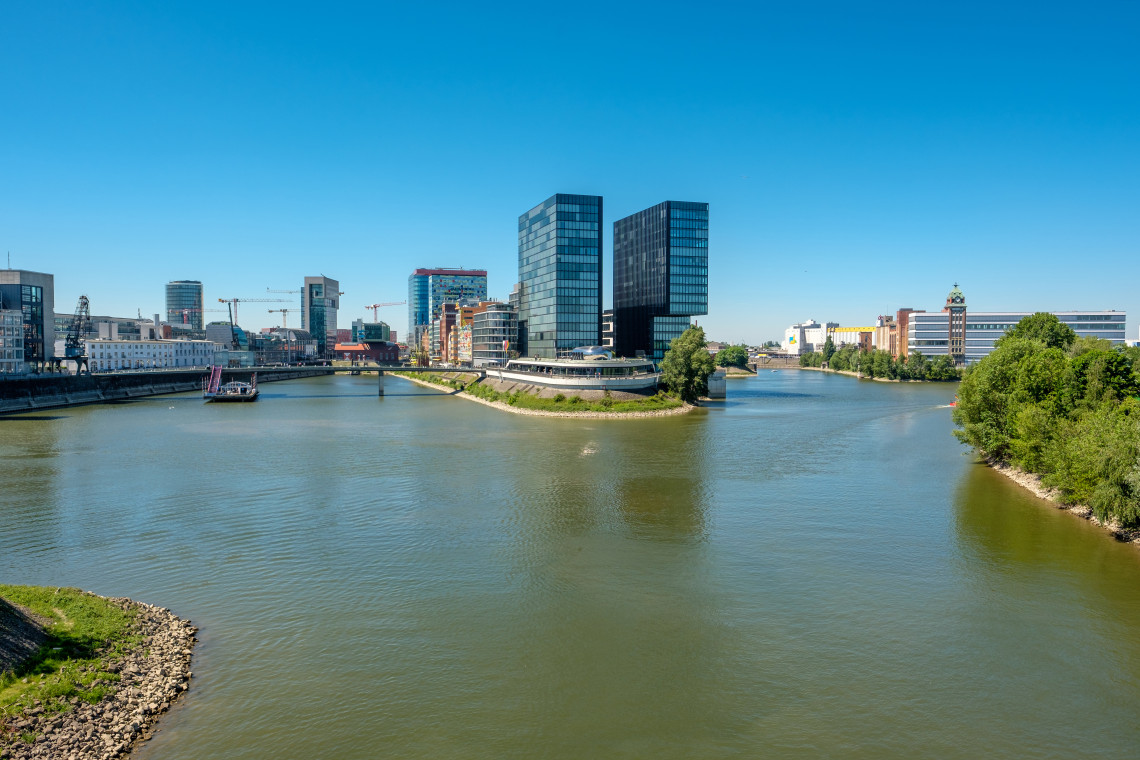
Düsseldorf (30 minutes by train). Cologne's rival city 40 km downstream, famous for the Altbier that competes with Kölsch, the Königsallee luxury shopping boulevard, and the Media Harbor architecture (Frank Gehry buildings). A day trip is fine; skip if you are short on time.
Koblenz and the Middle Rhine (1 hour by train). The gateway to the UNESCO Middle Rhine Valley, with its 32 castles between Koblenz and Bingen. Koblenz itself has the Deutsches Eck (German Corner, at the confluence of Rhine and Moselle) and the Ehrenbreitstein Fortress accessible by cable car. If your itinerary permits, add one night in Koblenz and take a day cruise up the Rhine.
Aachen, Bonn, or Middle Rhine, which one? For first-timers, Aachen for the history, Bonn for the culture, Middle Rhine for the landscape. If you have to pick one, Aachen edges out Bonn on originality; the cathedral is genuinely one of Europe's most important buildings.
Where to Stay
Altstadt (Old Town). The historical center along the Rhine, walking distance to the cathedral, the old town squares, and the Kölsch breweries. Most first-timers stay here. Hotels are the most expensive but the most convenient.
Belgian Quarter (Belgisches Viertel). West of the ring roads, more residential, best modern restaurants and independent shops. About 20 minutes on foot or one tram stop to the cathedral. Stay here for a base that feels lived-in.
Deutz (across the Rhine). The east bank, cheaper hotels, and the classic postcard view of the cathedral is from here. About 15 minutes walk over the Hohenzollern Bridge to the cathedral. Fine for a budget-conscious stay.
Ehrenfeld. Further west, more residential and alternative-scene. Fine if you want cheaper hotels and can handle the tram commute.
Around the Hauptbahnhof (main train station). Very close to the cathedral, but the immediate station area is less pleasant than the rest of central Cologne. Stay one or two streets away, not directly in front of the station.
A Suggested 3-Day Itinerary
Day 1: Cathedral and the Old Town
- Morning: Cologne Cathedral, tower climb, Treasury
- Lunch: Kölsch and Halve Hahn at Früh am Dom or a Brauhaus in the old town
- Afternoon: Old town walk (Fischmarkt, Great Saint Martin's Church), walk across the Hohenzollern Bridge and back
- Late afternoon: Roman-Germanic Museum or the Ludwig Museum
- Evening: Dinner at a proper Brauhaus with Rheinischer Sauerbraten
Day 2: Belgian Quarter and a Cathedral Return
- Morning: Coffee in the Belgian Quarter, wander the independent shops
- Lunch: Belgian Quarter restaurant
- Afternoon: Chocolate Museum, riverside walk to the Rheinauhafen
- Evening: Cathedral by night from the Deutz side of the river, then dinner at Päffgen in the Belgian Quarter
Day 3: Day Trip (Aachen or Bonn)
- Full day at Aachen (Charlemagne's cathedral, thermal baths area, Printen gingerbread tasting) or Bonn (Beethoven-Haus, museum mile, riverside walk)
- Return to Cologne for dinner and a final Kölsch
If Christmas markets are the reason you came, compress the sightseeing into daytime and dedicate the late afternoons and evenings to the seven markets. Two markets per evening is a comfortable pace.
When to Visit
Late April to early June. Spring is quiet, mild, and green. Cathedral photographs beautifully. Beer garden terraces open by May. Ideal weather for walking the old town.
Mid-June to late August. Warm summer, long daylight, and outdoor terrace culture at its peak. The old town squares stay lively until midnight. Book hotels ahead in July especially.
September to early October. The traveler's sweet spot. Warm days, cool evenings, thinning summer crowds. The city's food festivals (Cologne Food Week, Restaurant Week) fall in early autumn.
Late November to Christmas Eve. Christmas market season, the city's busiest. Cologne's seven markets attract international visitors from mid-November through December 23. Weekends are packed; weekday afternoons are the comfortable window. Weather is cold (30 to 40°F) but well-lit and atmospheric.
February. Karneval season. The week before Ash Wednesday, culminating in Rose Monday (Rosenmontag), is Cologne's biggest festival: a million costumed revelers in the streets, a massive parade, and beer flowing freely. If you love a party, come for this. If you want a quiet cultural trip, avoid Karneval week entirely.
January. Cold, grey, and quiet. Cathedral and museums are open but the outdoor city is largely closed. Not the strongest month for a trip.
Practical Details
Getting to Cologne. Cologne Bonn Airport (CGN) is small but has connections to Frankfurt, Amsterdam, and some direct international flights. Most US travelers fly into Frankfurt (FRA) or Düsseldorf (DUS) and take the ICE train to Cologne (1 hour from Frankfurt, 30 minutes from Düsseldorf). Cologne is one of Germany's biggest rail hubs, with direct trains to Amsterdam, Brussels, Paris, and every major German city.
Getting around. Cologne's KVB network (U-Bahn, tram, bus) covers everything. A KölnCard covers unlimited transport plus museum discounts. Walking is fine for the compact center.
Language. German, plus the local Kölsch dialect used in songs and at Karneval. English is widely spoken at hotels, restaurants, and museums.
Currency and payment. Euro. Cologne is card-friendly, but Brauhaus restaurants and Christmas market stalls often still take only cash. Carry 30 to 50 EUR at all times.
Tipping. Not obligatory but appreciated. Round up at cafés, 5 to 10 percent at proper restaurants. Tell the Köbes the total amount as you pay.
Frequently Asked Questions
How many days do I need in Cologne? Two full days for Cologne itself. Three days lets you add one day trip. Four to five days makes a proper Rhineland trip with the Middle Rhine castles.
Is Cologne worth visiting? Yes. The cathedral alone justifies the trip. The Christmas markets, Kölsch culture, Roman archaeology, and day-trip access to Aachen and Bonn make it a strong 3 to 4 day stop.
Where should I stay for a first trip? Central Altstadt if you want to walk to everything. Belgian Quarter if you want a lived-in feel and are willing to tram to the cathedral.
Is Cologne expensive? Mid-range by German standards. More expensive than Berlin, cheaper than Munich or Frankfurt.
Do I need to speak German? No. Cologne is very English-friendly.
How does Cologne compare to Munich or Berlin? Smaller, less famous, more informal. Munich has beer gardens and the Alps. Berlin has the 20th century history. Cologne has the cathedral, the Kölsch culture, and access to the Rhineland.
Is Cologne good for a Christmas trip? Yes, among the best in Germany. Seven markets in walking distance, one of Europe's most famous cathedral backdrops, and easy rail access from major hubs.
Can I combine Cologne with the Rhine river castles? Yes, easily. Koblenz (start of the Middle Rhine castle stretch) is 1 hour by ICE. A day cruise from Koblenz to Bingen and back is possible from a Cologne base.
Should I visit Aachen or Bonn if I only have time for one? Aachen. Charlemagne's cathedral is one of Europe's most historically important buildings and the town has more visual character than Bonn's.
What is Kölsch and how is it different from other German beers? A light, crisp, top-fermented beer served in small 0.2-liter glasses and only brewed within Cologne under a 1985 legal agreement. Different in style, in glassware, and in service etiquette from any other German beer.
Is Cologne family-friendly? Yes. The cathedral tower climb, the Chocolate Museum, the Cologne Zoo, and the Christmas markets all work with kids.
When is Karneval in Cologne? The week before Ash Wednesday, typically in February. Rose Monday (Rosenmontag) is the peak day. Book hotels months ahead if you plan to attend.
Can I do Cologne as a day trip from Frankfurt? Yes, technically (1 hour by ICE). But the cathedral, museums, and Kölsch culture deserve at least one overnight, ideally two.
What is the best photograph spot in Cologne? The cathedral from the Deutz side of the Hohenzollern Bridge at blue hour (30 minutes after sunset). Second best: the Roman-Germanic Museum steps looking up at the cathedral.
Is Cologne good in winter outside Christmas? January and February (outside Karneval week) are the tough months for a first-time visitor. Museums stay open but the outdoor city is quiet. Best avoided unless you specifically want the quiet and are museum-focused.
Cologne & the Rhineland, Sorted
Flights, a central Altstadt hotel, and day-trip planning to Aachen, Bonn, or the Middle Rhine. Add Frankfurt at the end for easy US departure, or combine with Nuremberg and Munich for the three-market Christmas trip.
Keep reading
Rhine River Castles: The Complete Guide
The 32 castles of the UNESCO Middle Rhine, day-trippable from Cologne.
Rhine River Cruise: The Complete Guide
Amsterdam to Basel by ship, with Cologne as a key port.
German Christmas Markets Complete Guide
10 cities compared, dates, food, and how to combine them.