by Yes Getaways Team
September 24, 2026 • 13 min read
The Fairytale Road (Deutsche Märchenstraße) is Germany's less-known scenic route: 600 kilometers north from Hanau (near Frankfurt) to Bremen, following the life of Jacob and Wilhelm Grimm through the towns and forests where they were born, studied, and collected the fairy tales that made them famous. Snow White, Sleeping Beauty, Rapunzel, Cinderella, Little Red Riding Hood, and the Pied Piper all trace back to specific villages on this route. Most Americans have never heard of it. That is why the towns are quiet, the castles are uncrowded, and the whole trip feels like walking into a storybook without the tour buses.
The short answer
- The route: Hanau → Steinau → Marburg → Kassel → Sababurg → Göttingen → Hamelin → Bodenwerder → Bremen. About 600 km end to end, mostly through central Germany's Hessen, Lower Saxony, and Bremen states.
- Direction: South to north (Hanau to Bremen) is the standard. Starts near Frankfurt, ends in a proper Hanseatic port city with easy US flight connections.
- How many days: 10 days is the honest sweet spot. 7 days is possible if you skip the smaller towns. 14 days lets you slow down at every stop.
- Best time to drive: May to early October. September is the traveler's sweet spot. December works for the Christmas market versions of Kassel, Marburg, and Bremen; expect cold and short daylight.
- Airport in / airport out: Fly into Frankfurt (30 minutes from Hanau) or Munich (train up). Fly out of Bremen, Hamburg (1h from Bremen), or Hannover (1h30 from Bremen).
- Who should do this trip: Travelers who have already been to Bavaria and want a second-visit Germany, families with kids, literary travelers, and anyone tired of the Romantic Road bus crowds who wants the equivalent experience without them.
Enchanting Germany: 10-Day Fairytale Road Trip — flights, hotels in Hanau, Marburg, Kassel, Göttingen, Hamelin, and Bremen, rental car, and the route ready to drive.
See the Fairytale Road package →Why the Fairytale Road Exists
Jacob (born 1785) and Wilhelm (born 1786) Grimm were German linguists, folklorists, and academics who spent their working lives collecting the oral folk tales of central German villages. Their first collection, "Children's and Household Tales" (Kinder- und Hausmärchen), was published in 1812 and eventually ran to more than 200 stories across seven editions. It is one of the most influential books in Western literary history. Almost every fairy tale that shows up in a Disney film, a children's book, or a bedtime story that begins "once upon a time" traces back to a Grimm version.
The Grimms lived along a specific corridor of central Germany. They were born in Hanau, spent their childhood in Steinau an der Straße, studied law and philology at the University of Marburg, and worked most of their productive years in Kassel, at the court of the Elector of Hesse-Kassel. The stories they collected came from villages, farms, and manor houses within about a two-hour drive of Kassel. The landscape that appears in their tales, dark forests, walled towns, ruined castles on hilltops, is the actual landscape of Hessen and Lower Saxony.
The Fairytale Road was created in 1975 as a tourism route to connect these places. It runs 600 km from Hanau in the south to Bremen in the north (Bremen is included because the Grimms' story "The Bremen Town Musicians" ends there, even though the Grimms never lived in Bremen). Along the way it passes through castles that inspired specific tales, towns where specific stories happened, and museums that unpack the whole thing for modern visitors.
Unlike the Romantic Road, which is heavily marketed and moves 500,000+ tourists a year at Rothenburg alone, the Fairytale Road is essentially unknown to American travelers. The stops are quieter, the hotel prices are lower, and the guides at the smaller museums often speak to you individually rather than to a bus group. That is the whole appeal.

The 10-Day Itinerary
Distances given are driving distances on the Fairytale Road route. Times assume relaxed driving with stops.
Day 1: Arrive Frankfurt, drive to Hanau (30 minutes)
Start point: Frankfurt Airport (FRA). Pick up the rental car, drive 30 minutes east to Hanau.
Where to stay: Hanau center, walking distance to the Grimm monument and the Neustadt market square.
What to do:
- Grimm Monument at the Neustadt Market Square. Bronze statues of both brothers, in the town where they were born in 1785 and 1786.
- Philippsruhe Palace on the edge of town, the baroque summer palace of the Landgraves of Hessen, now home to the Historisches Museum Hanau. The park is a good jet-lag walk.
- German Fairy Tale Route Info Center, if you want maps and printed guides.
Evening: Dinner in the center, early night to reset from the flight.
Day 2: Hanau → Steinau → Marburg (170 km, 2h 30m)
Sub-stop: Steinau an der Straße (35 km from Hanau). The town where the Grimm brothers spent their childhood after their father was appointed local magistrate. The Brüder-Grimm-Haus museum is set in the actual house they lived in from 1791 to 1796, and it is arguably the most emotionally direct Grimm site on the whole route. Two hours minimum. Steinau also has a Renaissance castle and a puppet theatre (Marionettentheater) that performs Grimm fairy tales for adults in the evenings, worth checking if you have time.
Continue 130 km north to Marburg.
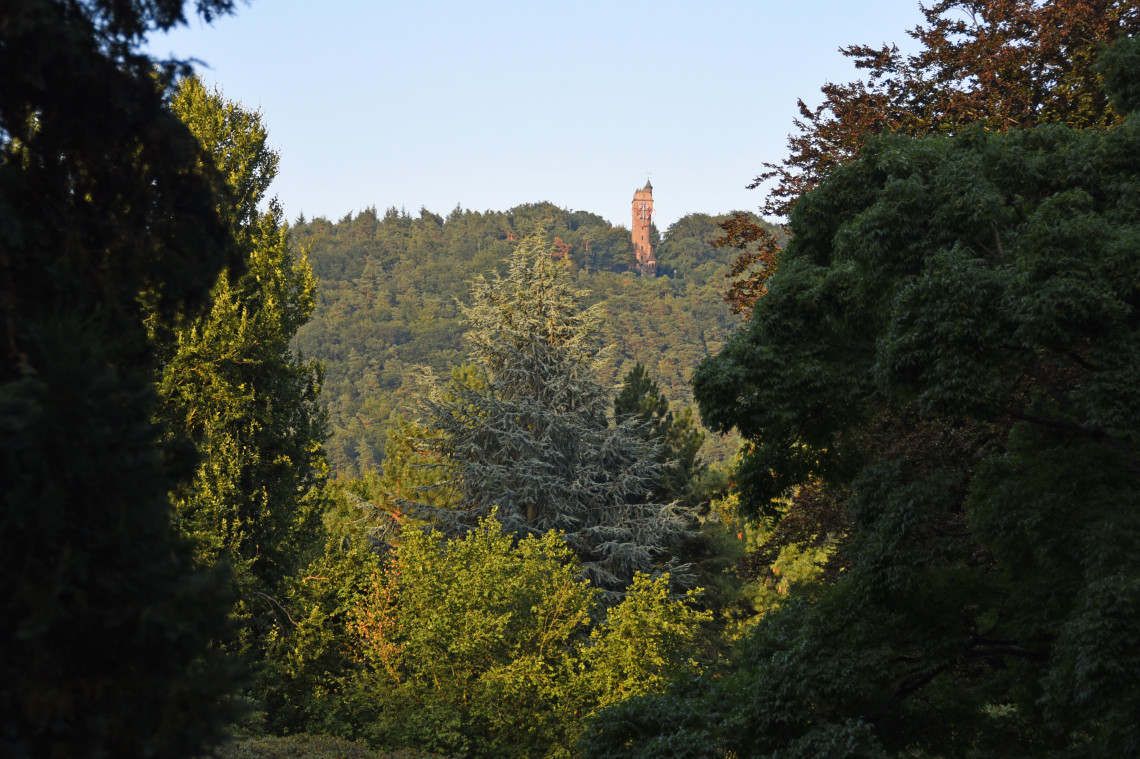
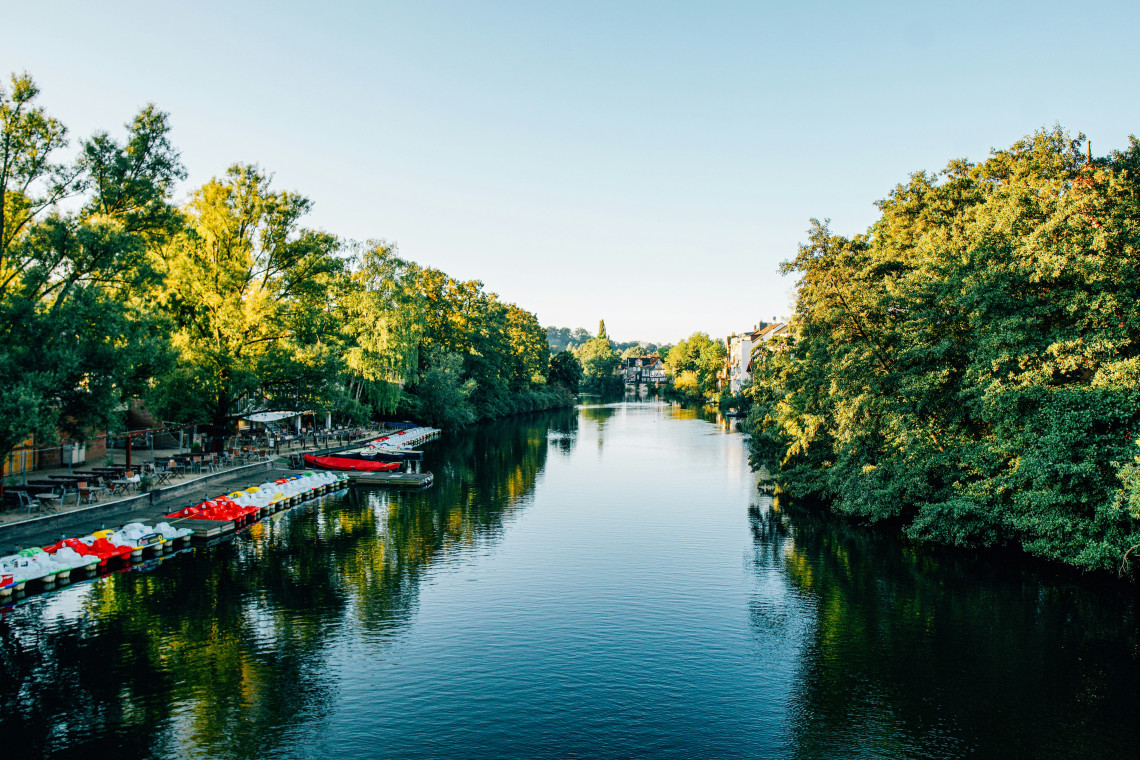
Arrive Marburg by late afternoon. Marburg is a university town on the Lahn river, and it is where the Grimm brothers studied law from 1802 to 1806. The old town spills down a hillside from the medieval Landgrave's Castle at the top to the Lahn river at the bottom, and it is one of the most vertical historic centers in Germany.
Where to stay: Central Marburg, in or near the Oberstadt (upper old town).
Evening in Marburg: Walk the Oberstadt at dusk. Dinner at a traditional Studentenkneipe (student pub) or a proper Wirtshaus in the Oberstadt.
Day 3: Marburg (full day)
Marburg deserves a full day for what it is: one of Germany's most atmospheric small university cities, and a working town where Grimm history is layered on top of a still-active daily life.
Morning:
- The Landgrave's Castle (Landgrafenschloss) at the top of the hill. Views over the whole Lahn valley. About an hour.
- St. Elizabeth's Church (Elisabethkirche), the first purely Gothic church in Germany, built for the shrine of Saint Elizabeth of Hungary. Late Gothic on the outside, glowing on the inside.
- The Grimm plaques scattered through the Oberstadt marking their student boarding houses and lecture halls.
Lunch: Somewhere in the Oberstadt, one of the small squares.
Afternoon:
- Marburg University museum or the Museum of Cultural History
- Wander the Oberstadt properly, especially the small cobbled streets around the market square
Evening: Cocktail at a rooftop bar looking over the Lahn, or a boat rental on the river in warm weather.
Day 4: Marburg → Kassel (100 km, 1h 30m)
Drive north to Kassel, arriving by lunchtime. Kassel is the Fairytale Road's central town, where the Grimm brothers lived from 1798 to 1830 (as students returning home, then as librarians, then as senior court officials) and where they wrote and published the fairy tale collection.
Where to stay: Central Kassel, near the Königsplatz or Friedrichsplatz.
Afternoon:
- GRIMMWELT (Grimm World). The main modern museum dedicated to the Brothers Grimm, on a hill above the city with a rooftop viewing terrace. Excellent interactive exhibits covering the brothers' linguistic work and the fairy tale collection. 2 to 3 hours.
Evening: Dinner in the Vorderer Westen neighborhood, Kassel's most vibrant food district.
Day 5: Kassel (full day)
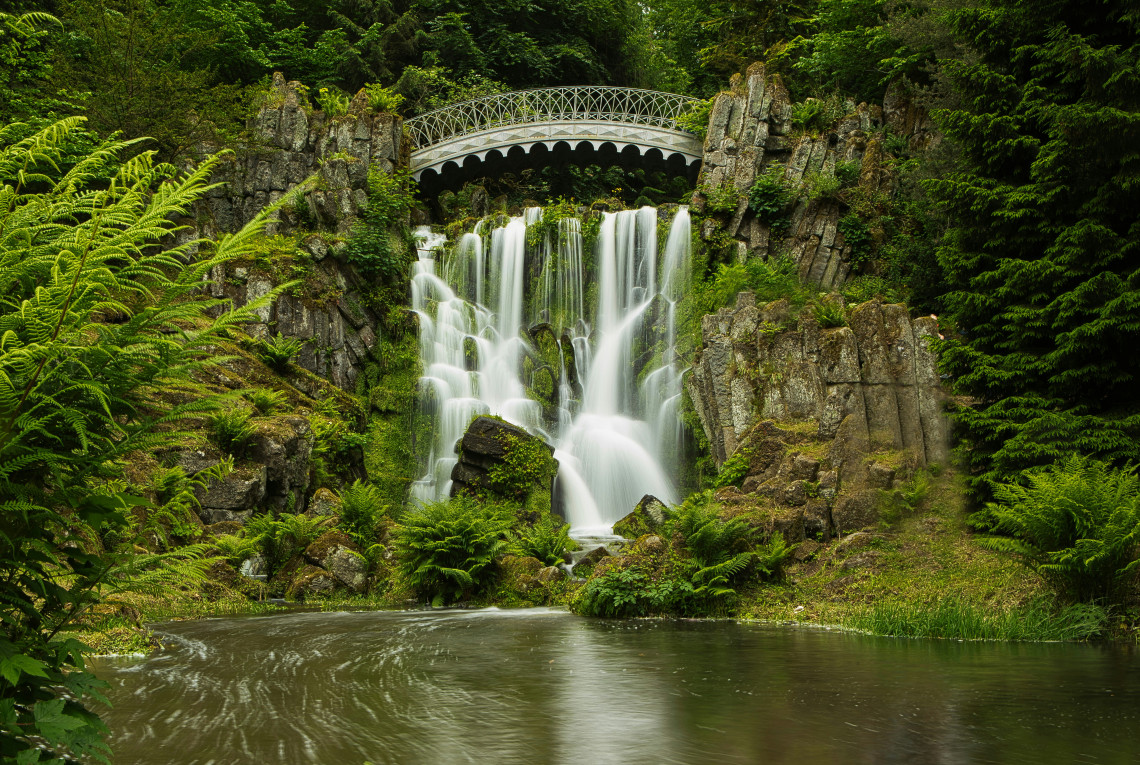
Morning: Bergpark Wilhelmshöhe. The largest hillside park in Europe, a UNESCO site, capped by the Hercules Monument. The Baroque water features (Wasserspiele) run on Wednesdays, Sundays, and holidays from May through early October: water cascades down the entire hillside for 90 minutes. Time your visit for a water day if possible. Half a day.
Lunch: In the Bergpark or back in central Kassel.
Afternoon:
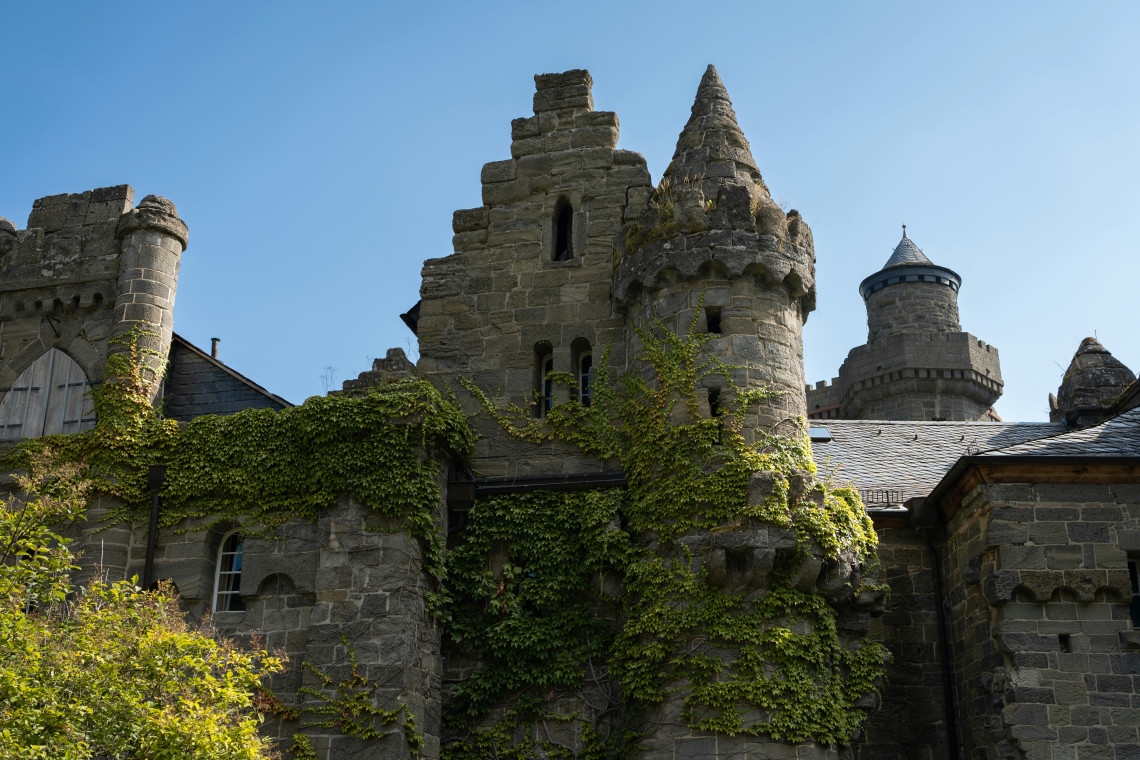
- Löwenburg (the artificial ruined castle) inside the Bergpark
- Wilhelmshöhe Palace at the base of the park, home to Old Masters paintings (Rembrandt, Rubens)
- Documenta archive if you happen to visit in a Documenta year (every 5 years, next in 2027)
Evening: Dinner at a traditional Hessian restaurant. Try Ahle Wurscht, the regional cured sausage.
Enchanting Germany: 10-Day Fairytale Road Trip
The Fairytale Road as a ready-to-drive package: flights, rental car, and hotels in Hanau, Marburg, Kassel, Göttingen, Hamelin, and Bremen.
See the package →Day 6: Kassel → Sababurg → Göttingen (110 km, 2h with stops)
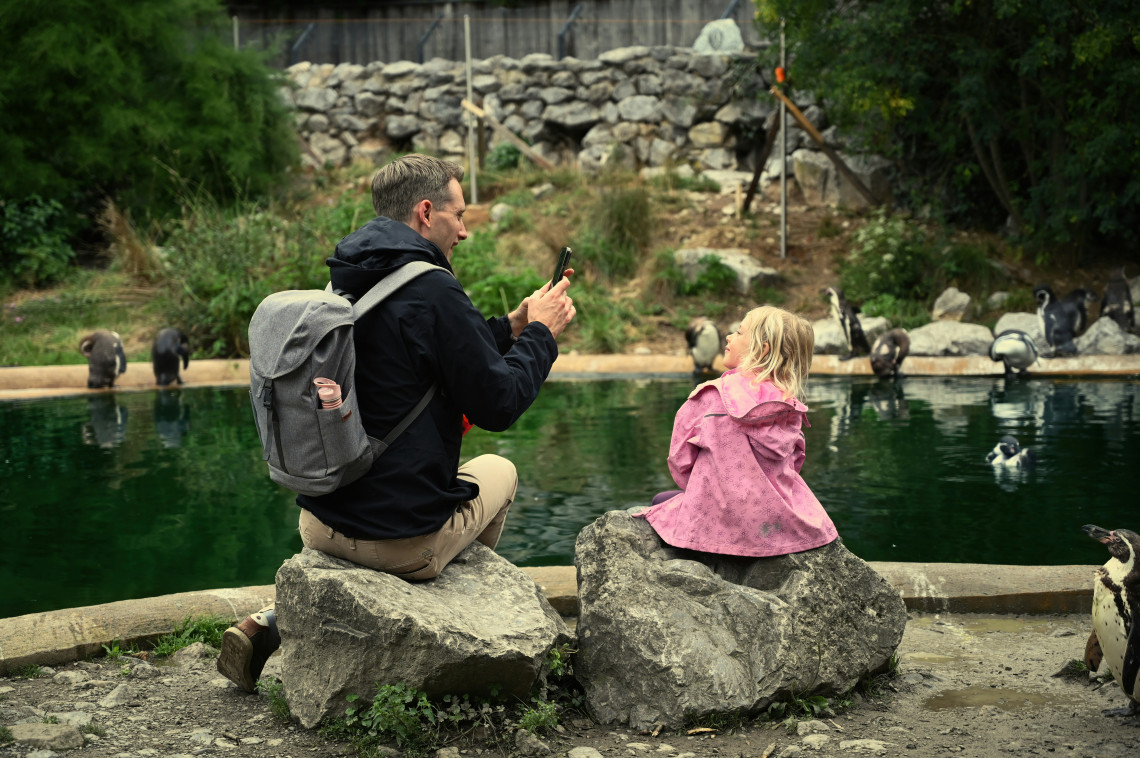
Sub-stop: Sababurg Castle. The castle that inspired Sleeping Beauty (Dornröschen). A partially ruined hilltop castle in the Reinhardswald forest north of Kassel, surrounded by centuries-old oaks and now home to a small hotel and restaurant. Even if you do not stay, the drive up through the forest and the walk around the castle grounds is one of the more atmospheric hours on the whole route.
Nearby: the Tierpark Sababurg, one of the oldest zoos in Europe, in the same forest.
Continue to Göttingen (60 km east).
Göttingen is another university town, and it is where the Grimm brothers taught as professors from 1830 to 1837, until they were dismissed as part of the "Göttingen Seven" protest against the King of Hanover. The university is one of Germany's oldest and most academically prestigious.
Where to stay: Central Göttingen, near the market square.
Afternoon and evening:
- Marktplatz and the Old Town Hall with its Gänseliesel fountain (the goose girl statue, which every new PhD graduate traditionally kisses)
- The Auditorium building (Aula) where the Grimm brothers lectured
- Dinner in central Göttingen, ideally at a Ratskeller or Studentenkneipe
Day 7: Göttingen → Hamelin (100 km, 1h 30m)
Drive north to Hamelin (Hameln), the town of the Pied Piper (Rattenfänger).
Arrive Hamelin by late morning. Hamelin is a compact old town on the Weser river, dense with timber-framed houses in the Weser Renaissance style. The Pied Piper story, in which a piper leads first the rats and then the children out of town after the mayor refuses to pay him, is dramatized in every corner of the old town: statues, plaques, brass rats set into the sidewalks marking the route, and a live open-air Pied Piper play performed on the Hochzeitshaus terrace every Sunday from mid-May to mid-September.
Where to stay: Central Hamelin, walking distance to the Bungelosenstraße (the street where, per the legend, the children were led out of town) and the Rattenfängerhaus.
What to do:
- Walk the old town, follow the brass rat markers, photograph the Rattenfängerhaus and the Hochzeitshaus
- The Museum Hameln for the historical background of the Pied Piper legend
- If your visit falls on a Sunday from May to September, the open-air Pied Piper play at noon in front of the Hochzeitshaus (free, in German but easy to follow)
Evening: Dinner at a traditional Weserküche restaurant. Rattenschwänze (rat tails), which are actually pork strips, are the local specialty joke.
Day 8: Hamelin → Bodenwerder → Bremen (200 km, 3h with stops)
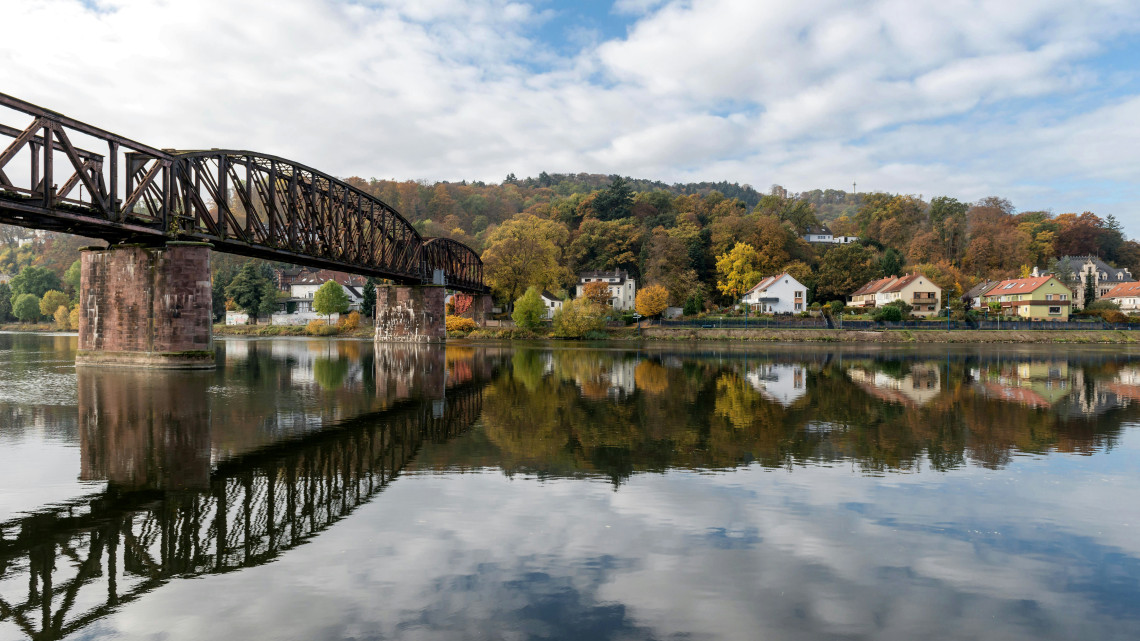
Sub-stop: Bodenwerder (30 km from Hamelin). The birthplace of Baron Münchhausen, the 18th-century soldier and storyteller whose exaggerated tales inspired the "Adventures of Baron Munchausen" and countless film adaptations. Small town on the Weser, worth a coffee stop, a walk along the river, and 45 minutes at the Münchhausen Museum.
Sub-stop options:
- Trendelburg (50 km from Hamelin, off-route). The castle that inspired Rapunzel. Now a hotel-restaurant. Detour worthwhile only if Rapunzel is your specific hook or if you plan to overnight.
- Polle (25 km from Hamelin). Castle ruins associated with the Cinderella story.
Continue 170 km north to Bremen.
Arrive Bremen by early evening.
Day 9: Bremen (full day)
Bremen is the northern anchor of the Fairytale Road and one of Germany's most underrated cities. A proper Hanseatic port with a magnificent medieval market square, more than 1,200 years of urban history, and the Weser river running through it.
Where to stay: Central Bremen, near the Marktplatz or in the Schnoor Quarter.
Morning:
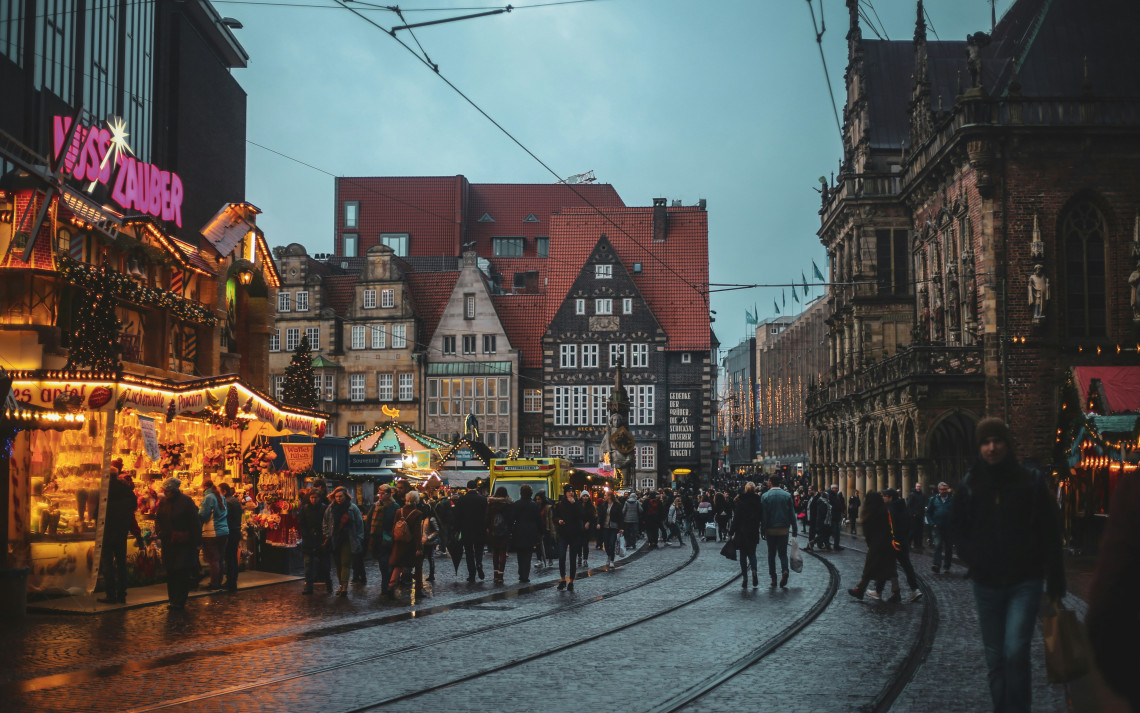
- Marktplatz with the UNESCO-listed Town Hall and Roland statue
- Bremen Cathedral (St. Petri Dom) for the interior and the Bleikeller (lead cellar) with its preserved medieval mummies
- The Bremen Town Musicians statue at the corner of the Town Hall. Small, easily missed, but the traditional Fairytale Road photo. Touch the front hooves of the donkey for luck.
Lunch: In the Schnoor Quarter, Bremen's oldest neighborhood, a warren of tiny 15th and 16th century houses.
Afternoon:
- Böttcherstraße, the early 20th century art nouveau street between the market square and the river
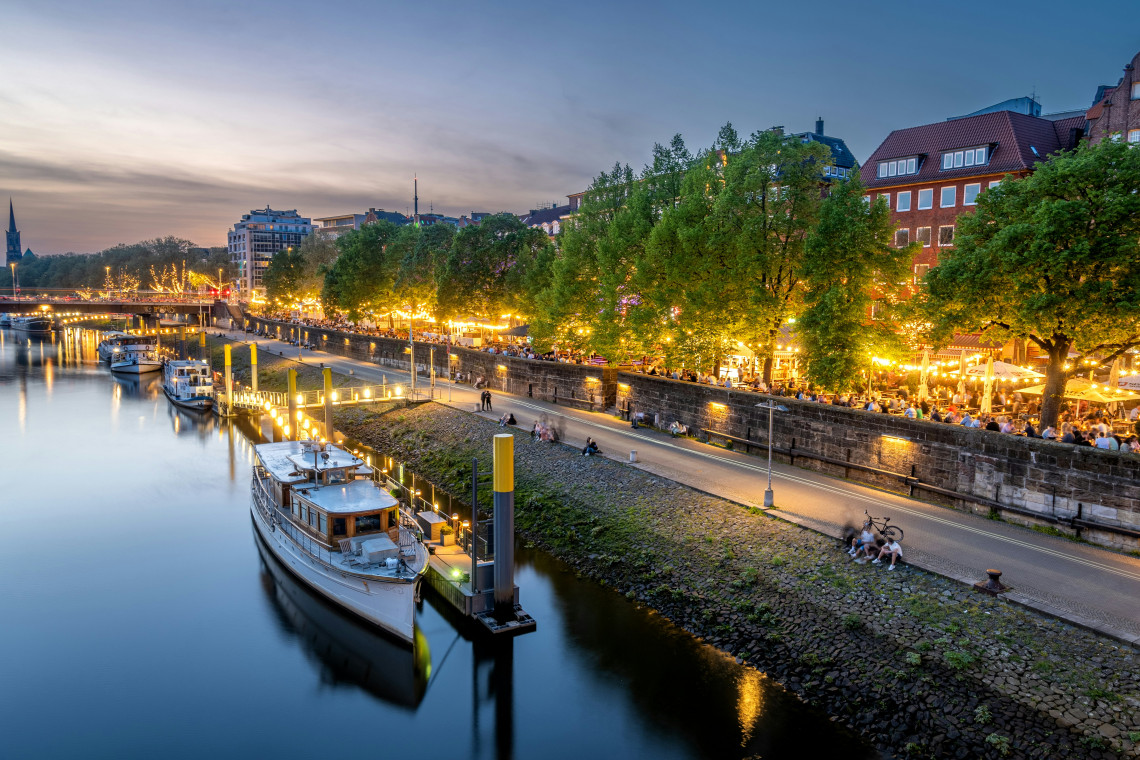
- Schlachte promenade along the Weser
- Beck's Brewery tour if beer interests you (Beck's is the biggest Bremen brand and one of Germany's most exported beers)
Evening: Dinner at a proper Bremer Ratskeller (the wine cellar under the Town Hall has been operating continuously since 1405) or at a Schnoor Quarter restaurant.
Day 10: Depart
Options:
- Fly out of Bremen Airport (BRE), which has flights to Frankfurt, Munich, and some other European hubs (rarely direct to the US; usually a connection)
- Drive or train 1 hour north to Hamburg and fly out of Hamburg (HAM) with more direct US options
- Drive or train 1 hour south to Hannover and fly out (HAJ)
If you extend one more day, use it for either Hamburg (2 hours as a day trip or overnight) or the Wattenmeer coast, which is the North Sea tidal flats reachable in under an hour from Bremen.
Prefer to Extend into Hamburg?
Add 2 or 3 nights in Hamburg after Bremen. Germany's second city has the harbor, the Speicherstadt, and easier direct US flight connections than Bremen.
See all Germany packages →Which Fairy Tales Trace to Which Stop
For travelers who want to plan the trip around specific stories.
- Little Red Riding Hood, Hansel and Gretel, and the Frog Prince. General central Hessen forests. Kassel and the Reinhardswald forest between Kassel and Sababurg are the atmospheric core.
- Sleeping Beauty (Dornröschen). Sababurg Castle, in the Reinhardswald forest north of Kassel.
- Rapunzel. Trendelburg Castle, north of Kassel.
- Cinderella (Aschenputtel). Polle Castle ruins on the Weser, near Hamelin.
- The Pied Piper (Rattenfänger). Hamelin. The legend is documented in town records dating to 1284.
- The Bremen Town Musicians (Bremer Stadtmusikanten). Bremen. Statue at the Town Hall.
- Snow White (Schneewittchen). Bad Wildungen, off the main route to the west of Kassel. Local claim disputed but well-established as the traditional Snow White town.
When to Drive the Fairytale Road
Late April to early June. Spring is quiet and green. The forests around Sababurg and Kassel come alive. Bergpark Wilhelmshöhe's water features start running in May. Ideal weather for driving and walking the towns.
Mid-June to late August. Peak summer, warm days, long daylight until 9:30 PM. The Bergpark water features run on schedule, the Hamelin Pied Piper play performs every Sunday, and the small town festivals fill the summer calendar. Book hotels ahead in the university cities (Marburg, Göttingen) during graduation weeks.
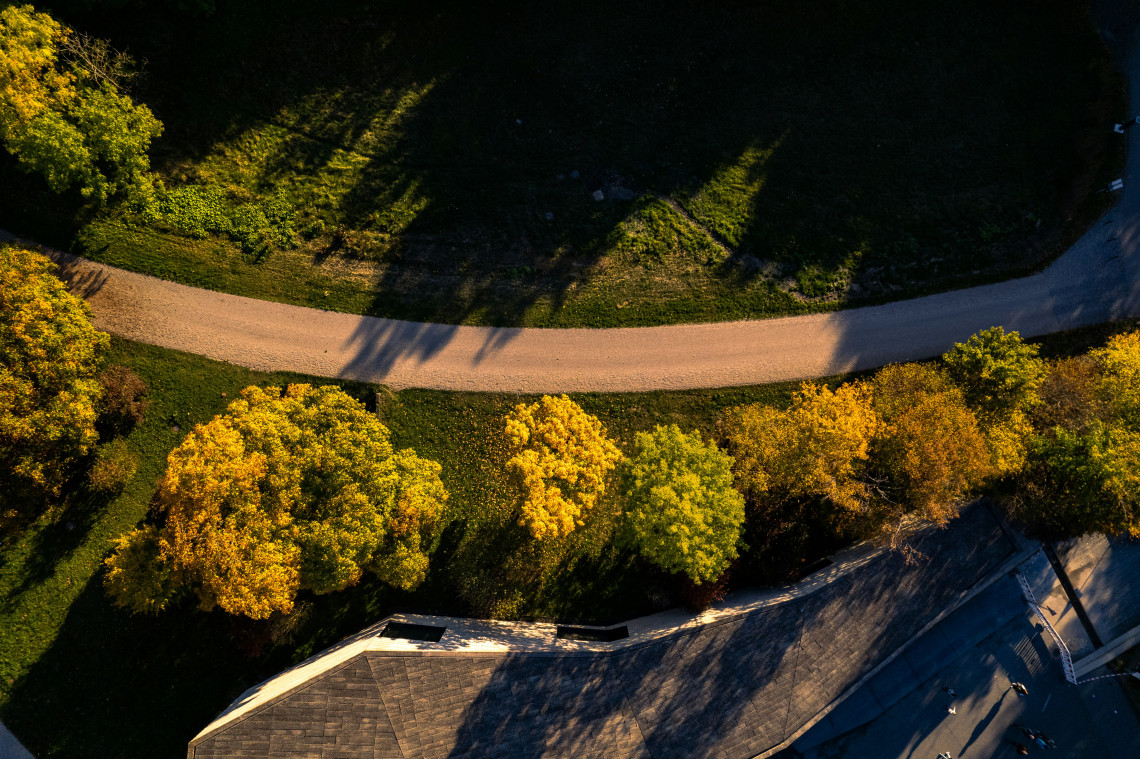
September and early October. The traveler's sweet spot. Autumn colors start in the Reinhardswald forest by late September. The Bergpark is at its most photographable. Thinner crowds.
Late November to Christmas. Christmas market season transforms Marburg, Kassel, Göttingen, Hamelin, and Bremen into a fairy tale version of themselves. Weather is cold and dark by 4 PM; drive daytime only. Some smaller castle hotels close for the season. Bremen's Marktplatz market is one of northern Germany's best.
When not to drive. January through mid-March. Cold, dark, and many countryside attractions closed.
Driving and Practical Details
License and rental. US and Canadian drivers rent with a valid home license. An International Driving Permit is a nice-to-have but not legally required. Automatic transmissions are more expensive; book ahead if you cannot drive manual.
Fuel. Diesel and petrol both available at every station. Rental cars are frequently diesel; confirm at pickup. Fill up before returning.
Parking. Every town on the Fairytale Road has central lots outside the pedestrianized old town cores. Marburg's Oberstadt is particularly restrictive; use the P+R lots at the base of the hill and walk up.
Hotels. Book ahead in Marburg and Göttingen during university event weeks (October-November graduations, April-May festivals). Rural stops like Sababurg have limited inventory; book several weeks out for weekend nights.
Cash vs card. Germany is card-friendly but small cafés, some Wirtshäuser, and Christmas market stalls are still cash-only. Carry 30 to 50 EUR at all times.
Language. German. English is widely spoken at any tourist-facing business in the bigger towns (Kassel, Göttingen, Bremen) and reliably at hotels everywhere on the route. Rural signs are German-only.
Frequently Asked Questions
How long does the Fairytale Road take to drive? End to end without stops, about 8 hours of driving. Realistically, 7 to 10 days as a trip. Ten is the sweet spot.
Is the Fairytale Road worth doing? Yes, especially as a second-visit-to-Germany trip. It is quieter, more literary, and more atmospheric than the Romantic Road. Not the trip for a first-timer who has never seen Bavaria or Berlin.
Can I do the Fairytale Road in reverse? Yes. Bremen to Hanau works, ending near Frankfurt for the US flight home. Slightly less common; the standard is south to north.
How does the Fairytale Road compare to the Romantic Road? Both are 500 to 600 km self-drive routes through southern (Romantic) or central (Fairytale) Germany. The Romantic Road is heavily marketed, more touristed, and centered on medieval walled towns and Neuschwanstein. The Fairytale Road is quieter, more literary, and connects Brothers Grimm sites plus real cities like Kassel and Bremen.
Do I need to know the Grimm fairy tales to enjoy it? No, but it helps. Read a summary of the main tales (Snow White, Sleeping Beauty, Cinderella, Rapunzel, Little Red Riding Hood, Hansel and Gretel, the Pied Piper, the Bremen Town Musicians) before you go. Enough to catch the references.
Is the Fairytale Road good for families with kids? Excellent for kids. Castles, Pied Piper plays, puppet theatres, and enough fairy tale association at every stop to keep young children engaged. Age 5 and up is the sweet spot.
Can I do this trip without a car? Difficult but not impossible. Marburg, Kassel, Göttingen, Hamelin, and Bremen all have train stations and are connected by regional rail. The sub-stops (Steinau, Sababurg, Bodenwerder) are hard to reach without a car. If you do it by train, plan to skip the smaller stops.
What is the best base if I only have 3 or 4 days? Kassel. It sits at the geographic and historical center of the route, has good rail connections, and puts you within day-trip range of Steinau, Sababurg, and Marburg.
Can I combine the Fairytale Road with the Rhine or the Romantic Road? Yes. Fairytale Road + Rhine works because Hanau (start) is about 1 hour from the Rhine river cities. Fairytale Road + Romantic Road is a bigger trip (2 weeks minimum) but doable, ending in Bavaria for a Munich flight.
Which stop should I not skip? Sababurg (for the atmosphere), Marburg (for the town), and Bremen (for the finale). Everything else can flex depending on your time.
Is Bremen worth the drive north? Yes. Bremen is a real Hanseatic port city with 1,200 years of history and a genuinely magnificent market square. Ending here is a much better trip finale than turning around at Kassel.
What is the Grimm fairy tale that most people miss the connection to? The Pied Piper of Hamelin is technically not a Grimm fairy tale, it is a separate German legend documented from the 1300s. But Hamelin is included on the route because of the literary and folkloric parallel.
Are the castles all inside on the tour? Some are (Sababurg, Trendelburg have small museum interiors). Others are exterior-only or partial ruins. Do not expect Neuschwanstein-scale interior tours; the Fairytale Road is more about landscape and story than palace interior.
Best month for photographs? Late September to early October for the autumn colors in the Reinhardswald forest. Late April to mid-May for the spring greens and cherry blossoms. December for the Christmas market night shots.
Is this a good honeymoon trip? Yes, especially for literary or bookish couples. Slower pace than the Romantic Road, atmospheric small hotels, and the Sleeping Beauty castle really does sit alone in the forest.
Germany, Once Upon a Time
Flights, rental car, and hotels in every stop from Hanau to Bremen. Add Hamburg at the end, or extend into a Rhine or Romantic Road combination.
Keep reading
Germany's Romantic Road: 7-Day Self-Drive
The other great German scenic route, through Bavaria.
Hidden Germany: 10 Small Towns Tourists Miss
Off-the-beaten-path Germany beyond Berlin and Munich.
How Many Days Do You Need in Germany?
Itineraries from 5 to 14 days, honestly paced.