by Yes Getaways Team
September 23, 2026 • 12 min read
Munich is the version of Germany most first-time visitors have in their head before they realize it. Baroque squares, beer gardens under chestnut trees, Bavarian brass bands, the Alps visible on a clear day, and enough Wittelsbach royal history to fill a museum wing. It is Germany's most polished big city, the country's cleanest and quietest by feel, and the natural base for Neuschwanstein, Salzburg, and the Bavarian Alps. This guide is what we tell first-timers before they land.
The short answer
- How many days: Three full days is the minimum. Four is better if you want a day trip. Five if you want two day trips (Neuschwanstein and Salzburg both work).
- Best neighborhoods to stay: Altstadt (Old Town) for first-timers who want to walk to everything, Maxvorstadt for the museum-and-café version, Haidhausen for a lived-in feel with easy tram access to the center.
- The must-see block: Marienplatz and the Rathaus glockenspiel, the Residenz palace, Nymphenburg Palace, the English Garden, the Viktualienmarkt, a proper beer hall (Hofbräuhaus or Augustiner), and the BMW Museum if you like cars.
- Best time to visit: May to early October for the outdoor Munich (beer gardens, English Garden, Alps day trips). Late November through mid-December for Christkindlmarkt. Late September for Oktoberfest (book far ahead).
- How to get around: Munich's U-Bahn, S-Bahn, tram, and bus network is compact and clean. Buy a day ticket on arrival and use it for everything.
- What to eat: Weisswurst with sweet mustard and a pretzel for second breakfast, roast pork knuckle (Schweinshaxe) at a beer hall, and a Bavarian cream cake at a Konditorei.
- Money to plan for: Munich is one of the more expensive German cities, on par with Frankfurt and above Berlin. Not Paris expensive, but noticeably above the German average.
Munich City Break — flights, an Altstadt-area hotel, and a first-timer itinerary put together by Yes Getaways travel experts.
See the Munich City Break →Understanding Munich (Before You Try to See It)
Munich sits in the southeast of Germany, on the Isar river, about 30 miles north of the Bavarian Alps. It is 1.5 million people, spread across 12 districts, and it feels smaller than that on the ground because the historical core is compact and the outer districts are quiet and residential.
The single most useful framing for a Munich first-timer is this: Munich is a Bavarian city, and Bavaria is culturally distinct from the rest of Germany. Bavarians speak their own dialect, have their own food traditions, wear the traditional dress (Lederhosen and Dirndl) more or less unironically in the countryside, and have a Catholic-Baroque architectural aesthetic that has more in common with Salzburg or Prague than with Berlin. When you land in Munich, you are landing in the capital of a region that used to be its own kingdom until 1871 and still behaves like one in a lot of ways.
The other useful framing is the geographic one. Munich is the natural southeast base for a large chunk of central Europe. The Alps are 30 minutes away by train. Salzburg is 90 minutes. Neuschwanstein is 2 hours. Nuremberg is an hour by ICE. Innsbruck and Zurich are half a day. If you are building a longer German or Alpine trip, Munich is the hinge city that connects a lot of the region together.
What to See on a First Trip
The list below is what we send first-timers to before they build an itinerary. It is not exhaustive, and it is not ordered by importance. It is a full day and a half of walking if you compress it.
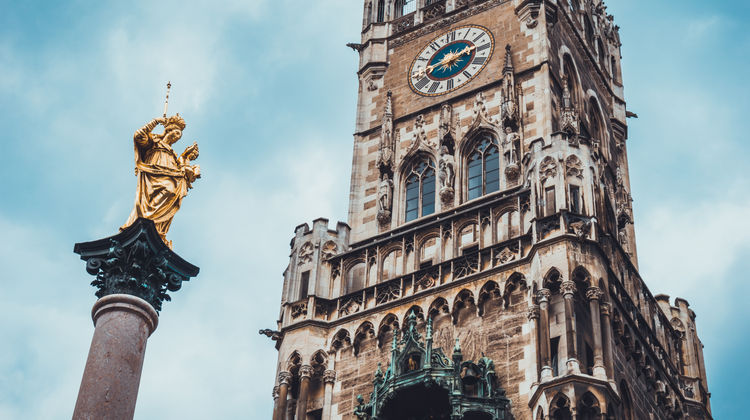
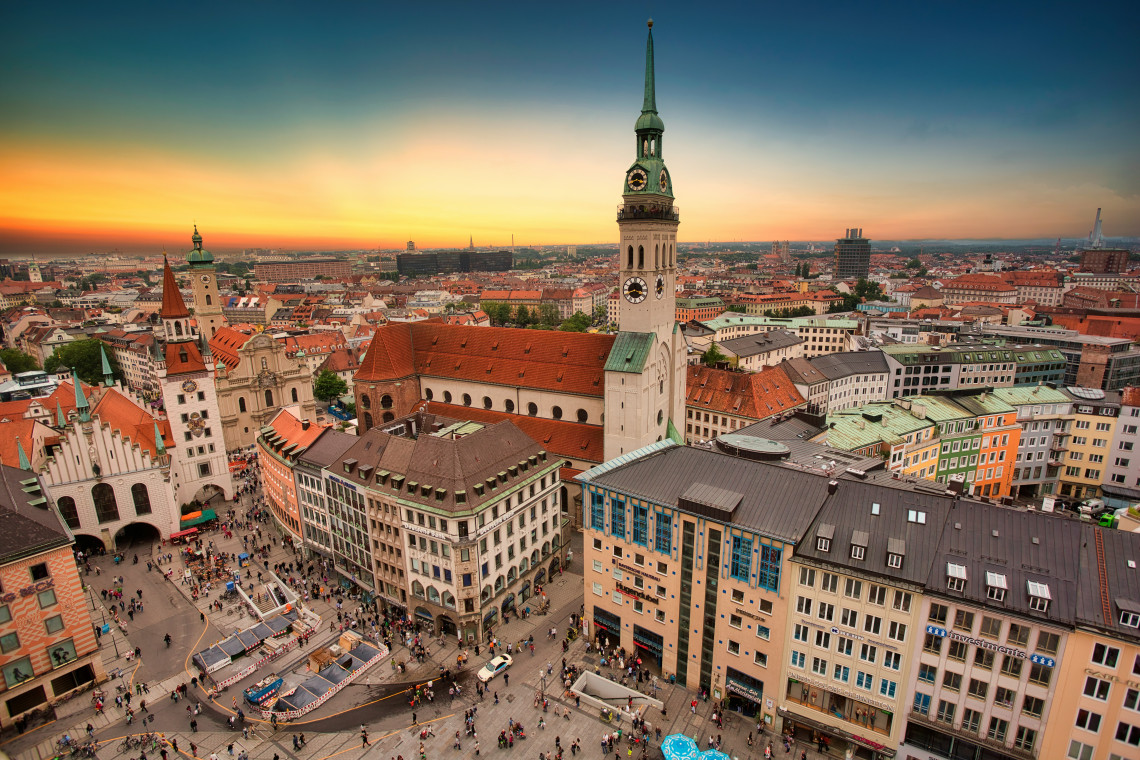
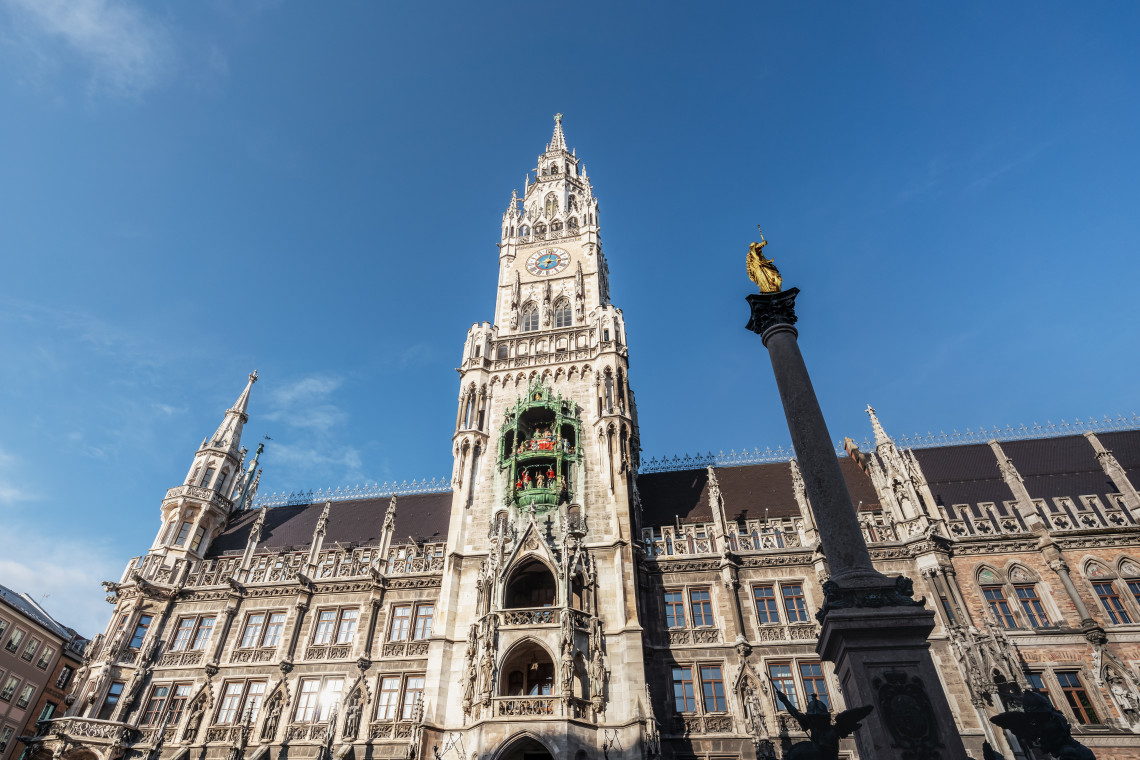
Marienplatz. Munich's central square, framed by the Neues Rathaus (New Town Hall) and the Frauenkirche's twin domes visible above the rooftops. The Rathaus glockenspiel performs at 11 AM and 12 PM daily, plus 5 PM in summer. It takes 15 minutes, and it is worth seeing once. Everything in central Munich is walkable from here.
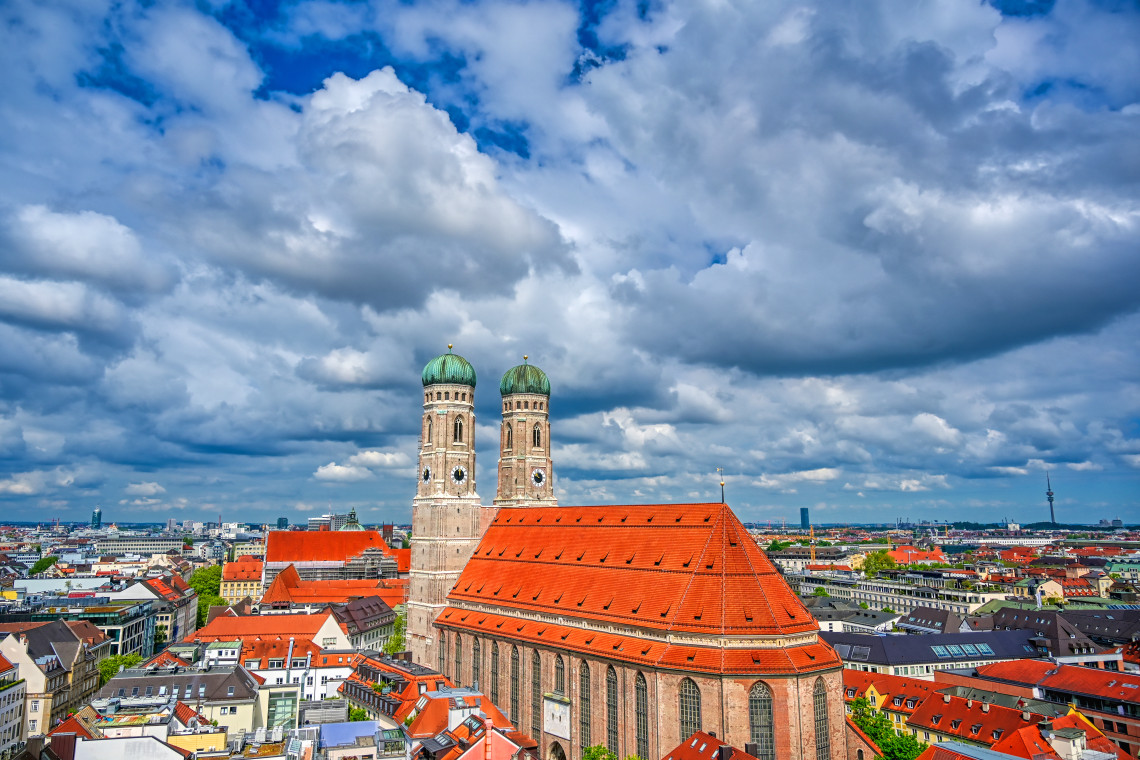
Frauenkirche. Munich's cathedral, the two-domed church that shows up on every skyline photo. Free to enter, worth 20 minutes for the interior. You can climb the south tower for one of the best views of Munich and, on clear days, the Alps.
The Residenz. The former royal palace of the Wittelsbach kings, the family that ruled Bavaria for over 700 years. Ten interconnected buildings, more than 130 rooms open to the public, including the Antiquarium hall and the Treasury. Give it two hours minimum, half a day if you love this kind of thing.
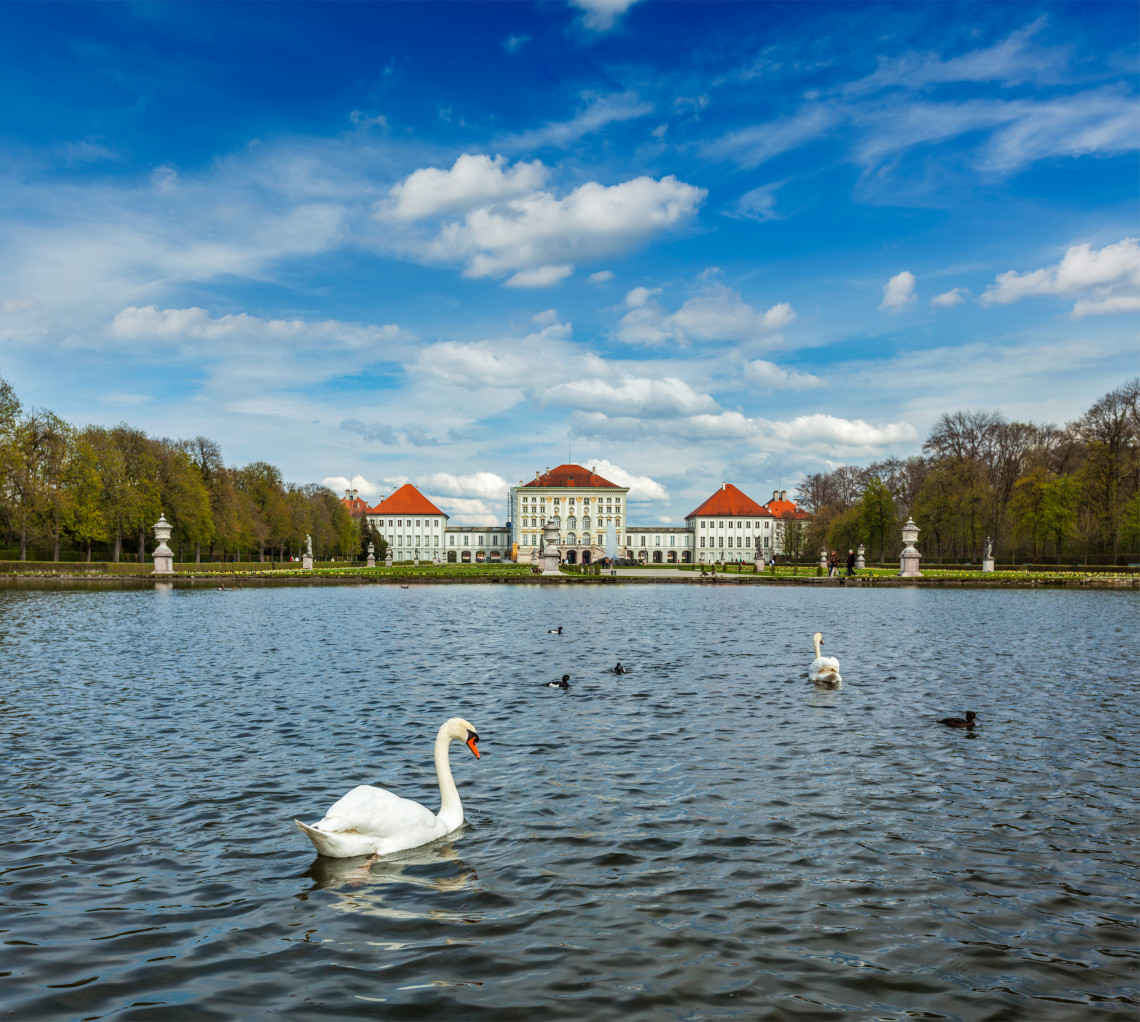
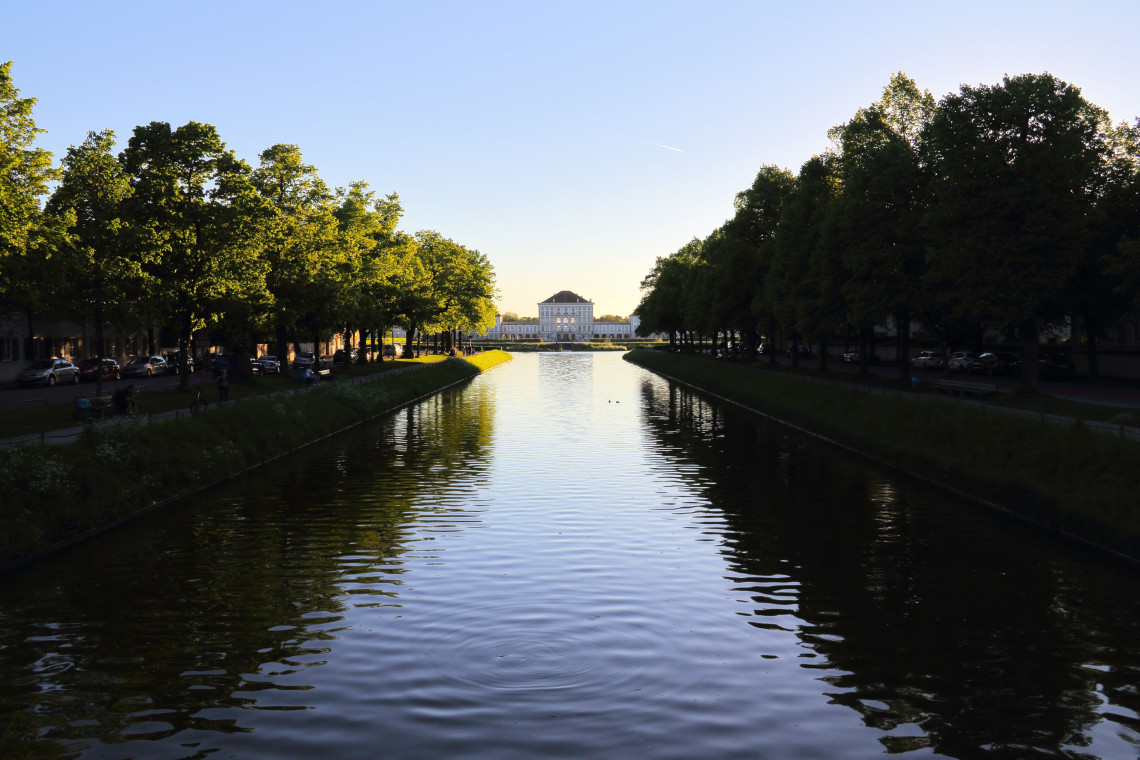
Nymphenburg Palace. The Wittelsbachs' summer palace, on the western edge of the city. Baroque, formal gardens, and a series of smaller pavilions (Amalienburg, Badenburg, Pagodenburg) in the park. Reachable by tram from the center in 20 minutes. A full half day.
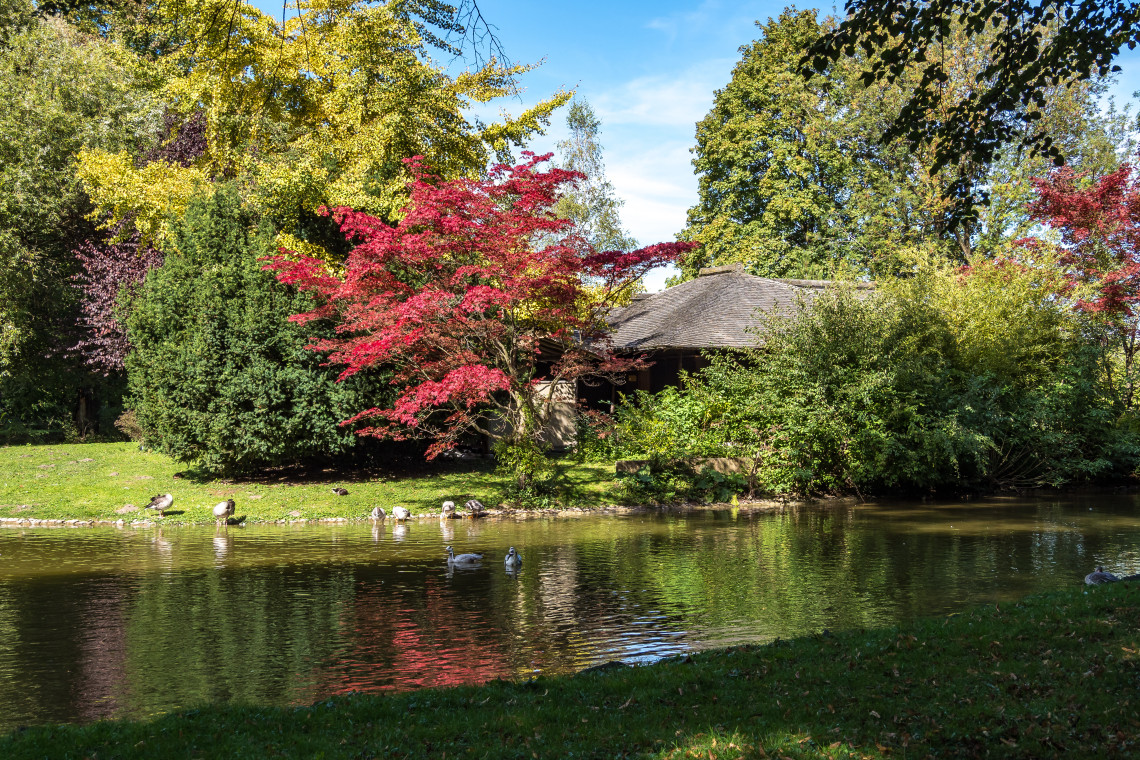
English Garden (Englischer Garten). Munich's central park, larger than Central Park in New York. The Chinese Tower beer garden is the classic destination. On warm days, half the city is here. The surf wave on the Eisbach at the southern edge of the park is genuinely worth photographing, real surfers use it year-round.
Viktualienmarkt. The permanent outdoor food market two blocks south of Marienplatz. Cheese, sausage, produce, flowers, and a beer garden in the middle. Grab lunch here at least once.
Hofbräuhaus. The most famous beer hall in the world, founded 1589. Touristy, loud, and still worth going for at least one meal or one Maß (a one-liter beer). The upstairs Festsaal is a different experience from the downstairs Schwemme.
Alte Pinakothek and Neue Pinakothek. The two most famous art museums in Munich, in the Kunstareal (museum quarter) of Maxvorstadt. Alte Pinakothek covers 14th to 18th century (Dürer, Rubens, Rembrandt). Neue Pinakothek covers 19th century (Van Gogh, Klimt, Monet). One is worth a morning; both, half a day.
Deutsches Museum. The largest science and technology museum in the world. Serious content, extremely deep. Half a day minimum, easily a full day if you enjoy museums of this type. On an island in the Isar.
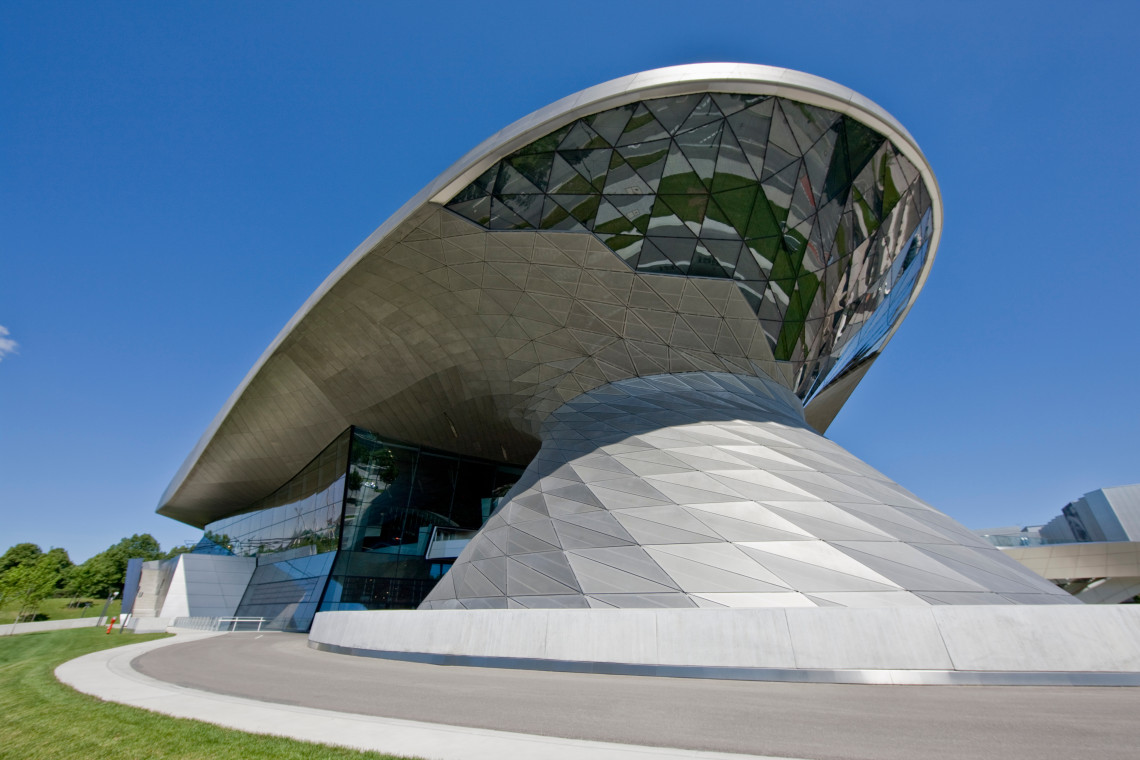
BMW Welt and BMW Museum. Next to the Olympic Park, in the northern part of the city. BMW Welt is free and functions as a giant showroom and brand experience. The BMW Museum next door covers the company's history and is genuinely interesting even for non-car people. Half a day.
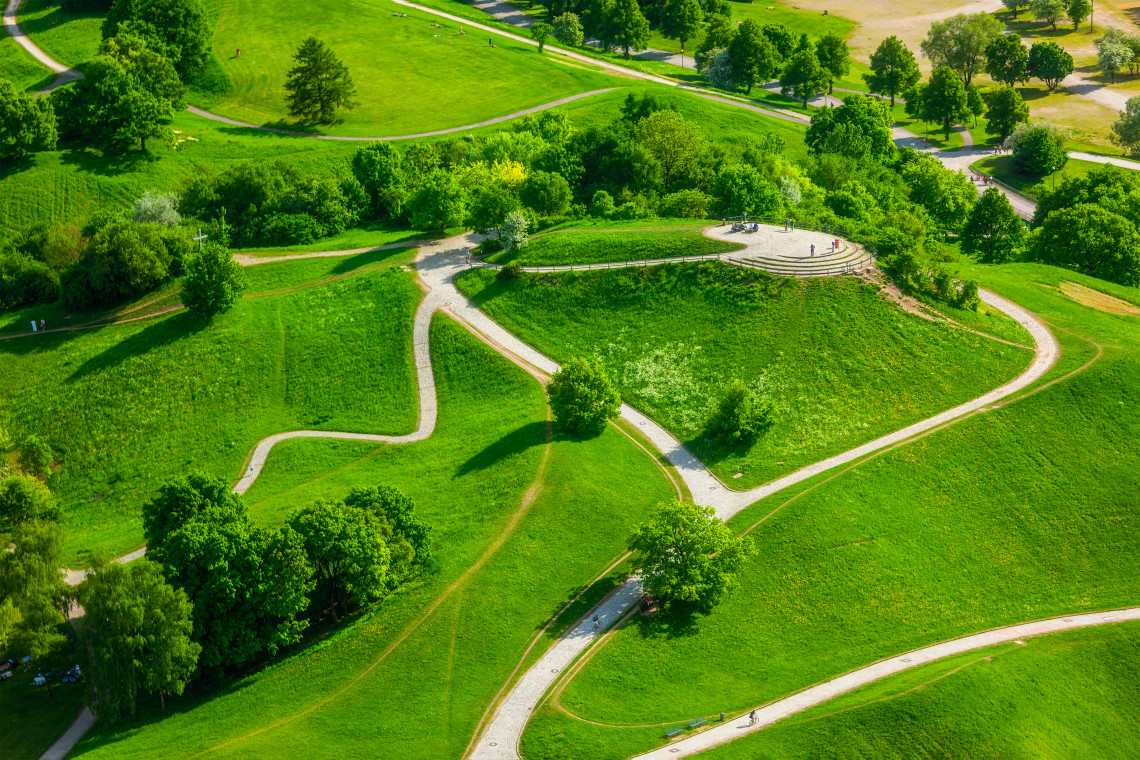
Olympic Park. Built for the 1972 Olympics, still one of the most architecturally ambitious sports complexes in Europe. Climb the Olympic Tower for the view. In summer, there are concerts at the Olympic Stadium. Combine with BMW Welt across the street.
Neighborhoods: Where to Stay and Where to Eat
Altstadt (Old Town). The historical center, walled until the 18th century, now the pedestrianized core around Marienplatz. Most first-timers stay here because you can walk to everything. Hotels are the most expensive in the city but also the most convenient. Restaurants around the immediate Marienplatz are tourist-priced; walk two blocks in any direction before you sit down.
Maxvorstadt. North of Altstadt, home to the two Pinakothek museums, the university, and a serious café scene. Younger, quieter than the tourist center, and about 15 minutes on foot to Marienplatz. Stay here if you want a base that feels lived-in.
Haidhausen. East of the Isar, across the river from the center. Haidhausen has some of the best restaurants in Munich, a village-like feel around Wienerplatz and Weißenburger Platz, and easy tram access to central Munich. Stay here if you want the local Munich rather than the tourist Munich.
Schwabing. North of Maxvorstadt, along Leopoldstraße. Historically the artistic and student neighborhood, still one of the more fun areas at night. The English Garden is at its doorstep. Good hotel options at a slight discount to Altstadt prices.
Glockenbachviertel. South of Altstadt, between Sendlinger Tor and the Isar. Munich's most active café-bar-nightlife neighborhood, with a strong LGBTQ+ scene and some of the best food in the city. Come for dinner even if you stay elsewhere.
Ludwigsvorstadt. The neighborhood around the Hauptbahnhof (main train station). Cheaper hotels but a less pleasant walk to Marienplatz. Fine for a short stay if budget is tight, less recommended if you want atmosphere.
Munich City Break: Flights, Hotel, Itinerary
Yes Getaways builds Munich city breaks around Altstadt-area hotels, direct flights from major US gateways, and a first-timer itinerary that covers the essentials plus one Alps day trip if you want it.
See the Munich City Break →A Suggested 3-Day Itinerary
Three full days on the ground is the honest minimum for Munich. This is a workable version.
Day 1: The Altstadt and the Royal Munich
- Morning: Marienplatz at 11 AM for the glockenspiel, walk around the square, Frauenkirche
- Late morning: The Residenz (2 to 3 hours)
- Lunch: Viktualienmarkt beer garden or a sausage stand
- Afternoon: Walk to the Hofbräuhaus for a beer (not necessarily a meal), then wander toward the Isartor and the Deutsches Museum island
- Evening: Dinner at a Wirtshaus in the Altstadt, or at Andechser am Dom (a proper Bavarian-monastery-brewery restaurant, right by the cathedral)
Day 2: Museums, Nymphenburg, and the English Garden
- Morning: Nymphenburg Palace and gardens (half day, tram from center takes 20 minutes)
- Lunch: Somewhere in Neuhausen or back toward Maxvorstadt
- Afternoon: Alte Pinakothek or Neue Pinakothek (pick one for a first trip; both take a full afternoon)
- Late afternoon: Walk into the English Garden, drink at the Chinese Tower beer garden, watch the surfers at the Eisbach wave
- Evening: Dinner in Schwabing or Maxvorstadt
Day 3: A Day Trip or a Local Munich Day
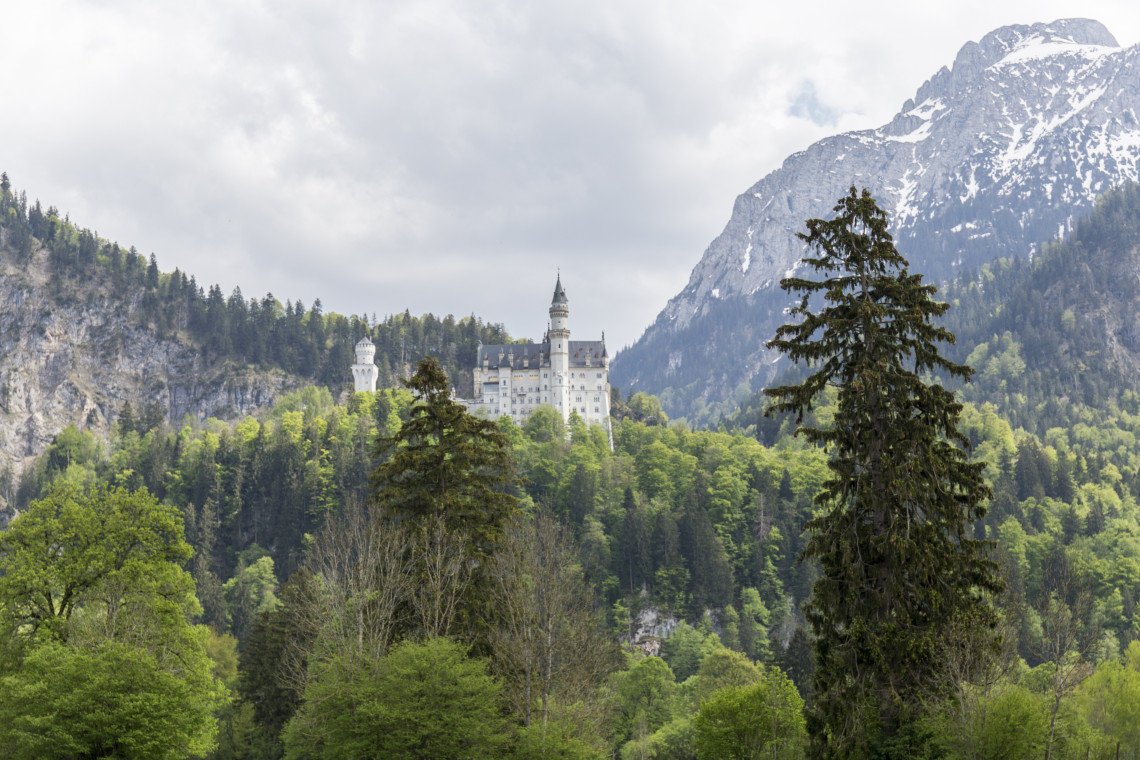
- Option A (Alps day trip): Full-day trip to Neuschwanstein Castle, or to the Zugspitze (Germany's highest peak, cable car from Garmisch-Partenkirchen), or to the Wieskirche and the Bavarian pre-Alps
- Option B (Salzburg day trip): 90 minutes each way by train, full day in Salzburg
- Option C (Munich local): BMW Welt and Museum in the morning, Olympic Park at midday, an afternoon in Haidhausen or Glockenbachviertel, dinner at a smaller local Wirtshaus in a residential neighborhood
If you have a 4th day. Do a second day trip. Munich makes this easy. Neuschwanstein and Salzburg are both excellent, and you can also add a day at one of the Bavarian lakes (Chiemsee, Starnberger See, or Tegernsee).
Beer Halls, Beer Gardens, and How to Actually Drink in Munich
Munich takes its beer culture seriously in a way that is different from the rest of Germany. Six local breweries (Augustiner, Hofbräu, Löwenbräu, Paulaner, Spaten, and Franziskaner) are the only ones legally allowed to be poured at Oktoberfest, and they anchor the city's beer identity. A first-timer should know the difference between the two forms of beer venue.
A beer hall (Bierhalle). Indoor. Waiter service. Traditional Bavarian food menu (schnitzel, sausage, pork knuckle, spätzle, sauerkraut). Live music some evenings. The Hofbräuhaus is the famous one. Augustiner Klosterwirt, the Löwenbräukeller, and the Paulaner am Nockherberg are locally preferred, less touristy alternatives.
A beer garden (Biergarten). Outdoor. Long communal tables under chestnut trees. Some are self-service (you queue at a counter, carry your food and beer to your table), some are half-table-service. You are usually allowed to bring your own food to a self-service beer garden, which is a Munich tradition. Bring bread, cheese, radishes, sausage, and pretzels; buy the beer. The three most famous beer gardens are the Chinese Tower in the English Garden, the Augustiner Keller near the Hauptbahnhof, and the Hirschgarten (which claims to be the largest beer garden in the world at 8,000 seats).
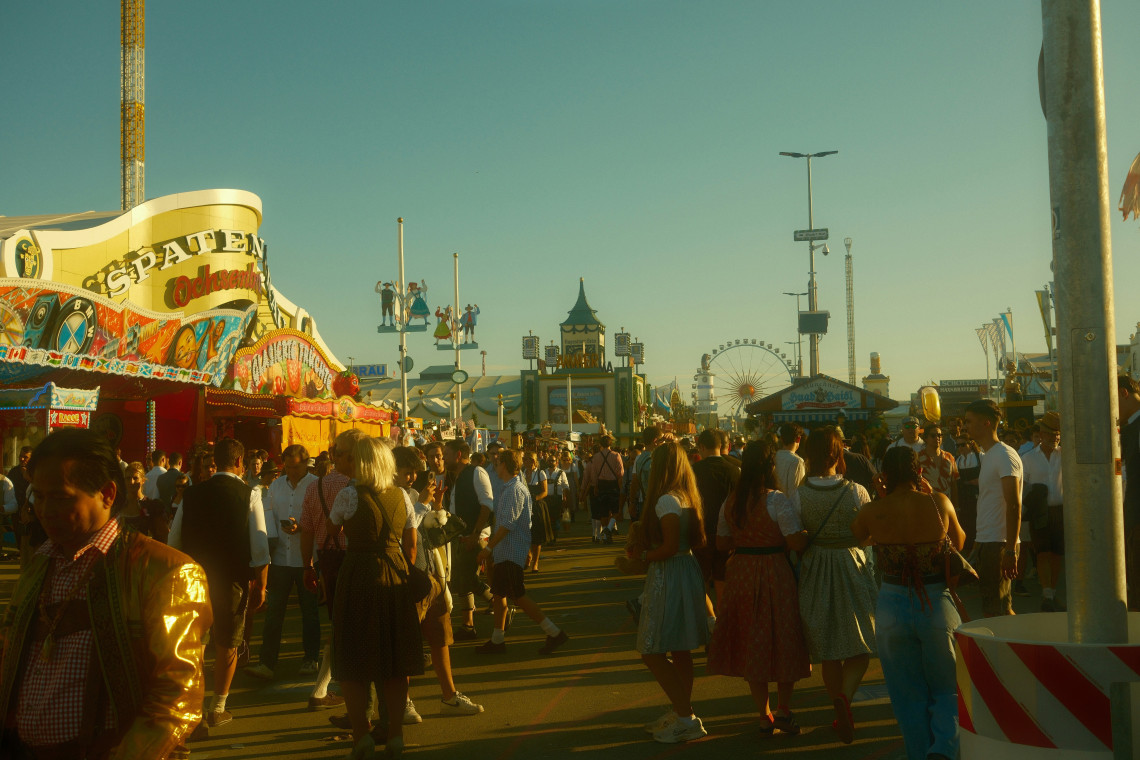
How to order. Ein Maß (a one-liter beer) is the standard beer garden pour. A halbe Maß or a Halbes is half a liter. Radler is beer with lemonade, refreshing on a hot day. Weissbier (wheat beer) is served in a tall glass, unlike everywhere else. Alkoholfrei (non-alcoholic) is widely available and taken seriously.
The etiquette. At a communal table, ask "Ist hier noch frei?" (is this still free?) before sitting. If people say yes, sit and mind your own conversation. Do not clink glasses aggressively; a soft touch of glasses with eye contact is the tradition. Tip by rounding up.
Visiting for Oktoberfest?
Oktoberfest is 16 to 18 days from late September into early October. Munich books out months in advance. Yes Getaways handles the hotel, flights, and (where included) the tent reservations.
Read the Oktoberfest guide →The Food to Actually Eat
Munich food is more distinct than most travelers expect. Bavarian cuisine is not "German food". It is a specific regional tradition, and Munich is where you get the definitive version.
Weisswurst with sweet mustard. The classic Munich second-breakfast dish. White veal-and-pork sausage, served with sweet mustard, a soft pretzel, and a Weissbier. Eaten before noon (the tradition says the sausage should never hear the church bells at midday). Try it at Weisses Bräuhaus in the Altstadt.
Schweinshaxe (roast pork knuckle). The signature dinner dish at a Munich beer hall. Crispy skin, tender meat inside, served with a knife and fork and usually a mountain of potato dumplings and sauerkraut. Order it at the Hofbräuhaus or, for the local version, at Wirtshaus in der Au in Haidhausen.
Obatzda. A soft cheese spread made from Camembert, butter, paprika, and beer. Served with pretzels and radishes at every beer garden. Order one to share as an appetizer.
Leberkäse. Not liver, not cheese. A baked meat loaf sliced thick and served hot in a Semmel (Bavarian roll). The Munich equivalent of a sandwich. Try it at any butcher-and-café combo in the Altstadt.
Spätzle. Egg noodles, sometimes served with cheese and fried onions (Käsespätzle), sometimes as a side dish with a meat course. Comfort food, Bavarian version.
Bavarian cream cake and Prinzregententorte. The Konditorei (pastry-and-coffee) tradition in Munich is on par with Vienna. Café Luitpold and Confiserie Rottenhöfer are two classics.
A pretzel from a real bakery. Not the tourist-stall ones. A properly baked Munich pretzel is dense, chewy, and browned on the outside. Eat one first thing in the morning at any neighborhood bakery.
Coffee. Munich's café scene is quieter than Berlin's but no less serious. Man Versus Machine (Maxvorstadt), Standl 20 at the Elisabethmarkt, and Café Frischhut for the classic Munich morning routine.

Getting Around
Munich's public transport is one of Europe's cleanest and most punctual systems. The MVV (Munich Verkehrsverbund) network has:
- U-Bahn (underground). 8 lines, cover the whole central and most of the outer city, run every 5 minutes.
- S-Bahn (suburban rail). Connects the airport, Neuschwanstein-area trains, and the outer districts.
- Tram (Straßenbahn). Useful for Nymphenburg, Haidhausen, and the north.
- Bus. Fills the gaps.
Ticketing. Zone-based. The M (Munich) zone covers the whole central city. The airport is in a further zone. A day ticket (Tageskarte) is the best value if you make more than three trips. A CityTourCard includes transport plus attraction discounts.
How to buy tickets. Ticket machines at every station, plus the MVV app on your phone. Validate paper tickets in the blue boxes at the platform before boarding.
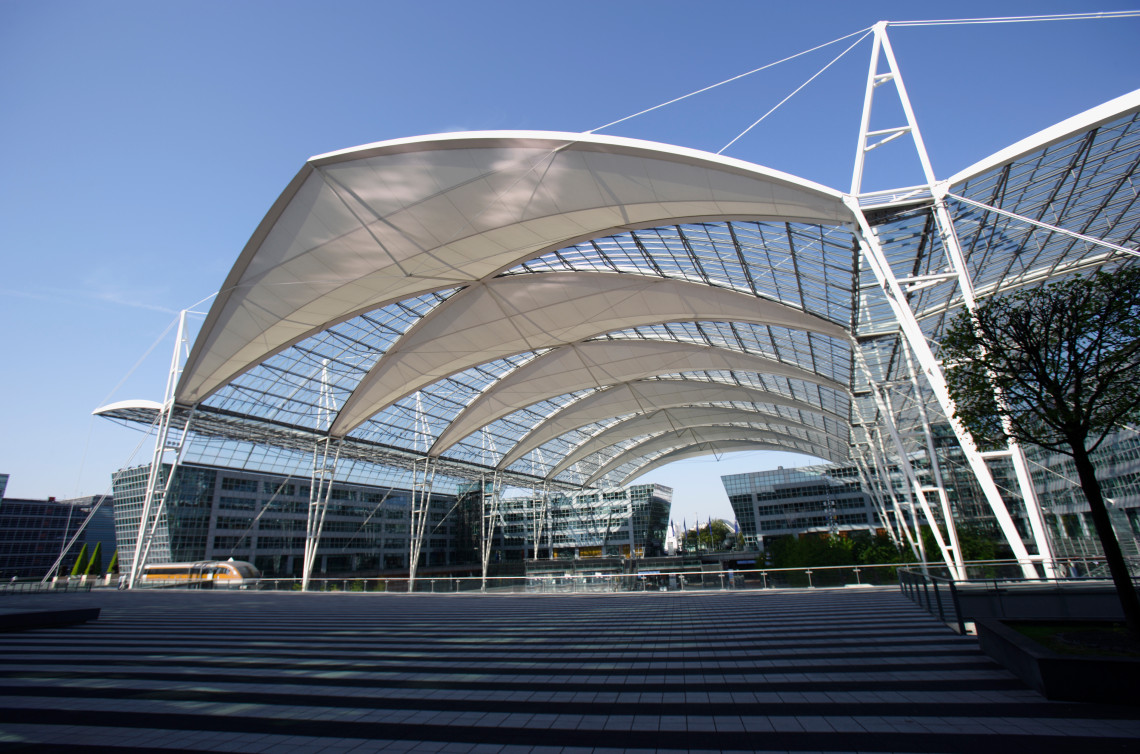
From the airport. Munich Airport (MUC) is 25 miles northeast of the center. The S1 or S8 S-Bahn takes about 40 minutes to Munich Hauptbahnhof or Marienplatz. Fare is the airport-inclusive zone price. Taxi is 70 to 80 EUR.
Cycling. Munich is flat and bike-friendly, more so than Berlin. Rentals are widely available. MVG Rad is the city bike share system.
Practical Details
Best time to visit. May, June, and September are the strongest windows. Summers are warm (75 to 85°F) but the beer gardens are alive. Winters are cold (25 to 40°F) and can be snowy, but the Christkindlmarkt at Marienplatz and the surrounding markets are one of Europe's best market experiences. Avoid February and early March: cold, grey, and low on things happening outdoors.
How many days you need. Three days is the minimum, four is comfortable and lets you add one day trip, five if you want two day trips.
What to book in advance. Hotels in general, especially for Oktoberfest (September-October) and Christmas markets (December). Any specific restaurant with a reputation. Neuschwanstein tickets if you plan to visit (buy the timed slot online).
Getting from the airport. S-Bahn is the standard. The S1 goes via the west, the S8 via the east; both take about 40 minutes to Marienplatz. The Lufthansa Airport Bus is a comparable alternative.
Money. Munich is a card-friendly city, but small cafés, sausage stands, beer gardens, and older Wirtshäuser often still take only cash. Carry 40 to 60 EUR at all times.
Language. German (with a Bavarian accent that can be strong in older residents). English is widely spoken at any tourist-facing business. Learning to say "Servus" instead of "Hallo" and "Grüß Gott" instead of "Guten Tag" is a small charm the locals appreciate.
Tipping. Not obligatory but appreciated. Round up at cafés, ten percent at proper restaurants. Tell the server the total amount as you pay.
Frequently Asked Questions
How many days do I need in Munich as a first-timer? Three full days is the minimum, four is more comfortable, five if you want to add two day trips.
Is Munich safe? Yes, one of the safest big cities in Europe. Standard urban precautions apply. Pickpocketing exists in the tourist zone around Marienplatz and at Oktoberfest, but violent crime affecting tourists is very rare.
Where should I stay for a first trip? Altstadt if you want to walk to the main sights, Maxvorstadt or Schwabing if you want a lived-in feel with easy access to the center.
Is Munich expensive? It is one of the more expensive German cities, on par with Frankfurt and above Berlin, but still cheaper than Paris, London, or Zurich.
Do I need to speak German? No. Munich is comfortable for English-only travelers.
How does Munich compare to Berlin? Different cities entirely. Munich is smaller, more polished, more traditionally German, more expensive, and closer to the Alps. Berlin is bigger, edgier, greener, more historical (in the 20th century sense), and cheaper. Most first-timers pick one; if you want beer gardens, mountains, and traditional Bavarian atmosphere, Munich is the pick.
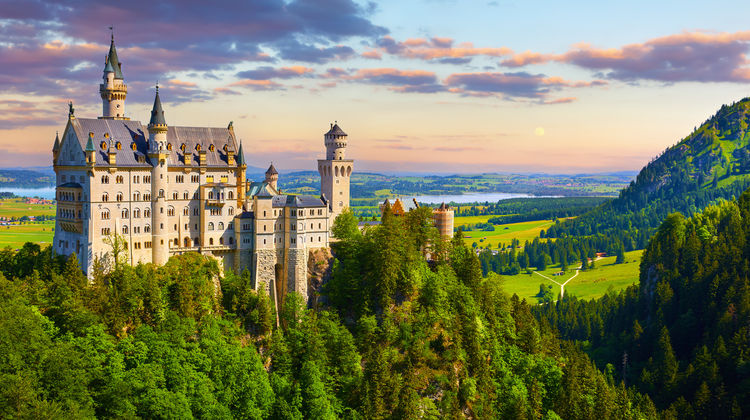
Can I do Neuschwanstein as a day trip from Munich? Yes. Two hours each way by train and bus. It is a full day but very doable. Buy your castle ticket for a specific timed slot before you travel.
Can I do Salzburg as a day trip from Munich? Yes. 90 minutes each way by direct train. Full day in Salzburg, back for dinner in Munich.
What is the best time for Oktoberfest? Oktoberfest runs from late September to the first Sunday in October (16 to 18 days total). The first weekend and the middle weekend are the busiest. The first Monday and Tuesday are relatively calm. Book hotels 6 to 9 months ahead if you plan to visit during the festival.
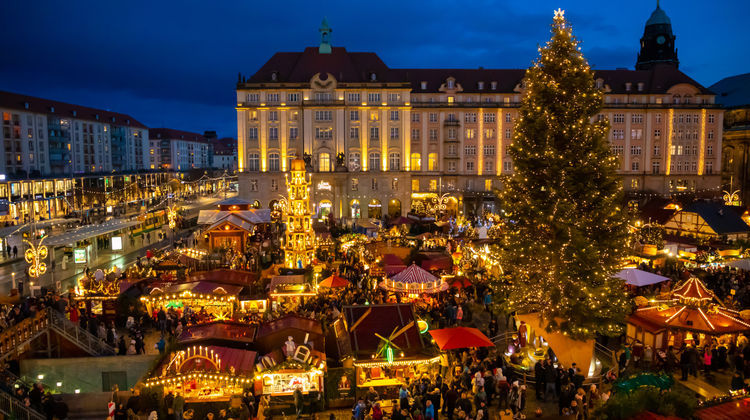
What is the Christkindlmarkt? Munich's traditional Christmas market at Marienplatz, plus smaller markets scattered across the city (Residenz, Chinese Tower in the English Garden, Sendlinger Tor, Weissenburger Platz in Haidhausen). Runs late November to December 24.
Do I need a car in Munich? No. Public transport is excellent and parking in the Altstadt is expensive and limited. If your trip continues into the Alps or the countryside, pick up a rental at the end of your Munich days.
Is Munich family-friendly? Yes. English Garden is a huge kids-friendly park, the Deutsches Museum has extensive interactive exhibits, Nymphenburg has room to run around, and beer gardens welcome children.
What is the best neighborhood for food? Haidhausen for local traditional and mid-scale modern, Glockenbachviertel for the modern Munich scene, Altstadt for beer halls and classic Bavarian, Maxvorstadt for cafés and university-scene food.
How do I get to Munich from the US? Direct flights from JFK, EWR, ORD, and increasingly other US hubs to Munich Airport. Otherwise, connect via Frankfurt, London, Amsterdam, or Zurich.
Should I combine Munich with another city? Yes. Munich + Salzburg is the most common. Munich + Nuremberg is a strong Christmas market pairing. Munich + Prague is a full trip. Munich + Berlin is possible but requires a flight or a long train.
Is Munich good in winter? Yes, especially late November through December for the Christkindlmarkt. The Alps day trips work in winter too, with skiing at Garmisch or the Zugspitze. January and February are the tough months for city sightseeing, cold and quieter, but the winter mountain trips are at their best then.
Munich, Your Way
A Munich City Break with Yes Getaways covers your flights, your Altstadt-area hotel, and a first-timer itinerary you can follow or adjust. Add Neuschwanstein, Salzburg, a Christmas market focus, or an Oktoberfest slot.
Keep reading
Neuschwanstein Castle: The Complete Visitor Guide
Tickets, viewpoints, best time, and how to visit from Munich.
Oktoberfest Munich: The Complete Guide
Dates, tents, beer prices, and how to actually enjoy it.
Munich vs Berlin: The First Timer's Decision
The honest comparison of Germany's two biggest cities.