by Yes Getaways Team
September 23, 2026 • 14 min read
The Romantic Road (Romantische Straße) is Germany's most famous scenic drive: 460 kilometers of medieval walled towns, baroque churches, and Bavarian countryside from Würzburg in Franconia to Füssen at the foot of the Alps, ending at Neuschwanstein Castle. It was invented as a tourism route in 1950 to help postwar southern Germany rebuild, and the stops along it were chosen because they had been spared the worst of Allied bombing. That is why so many of the towns still look 500 years old today. This is the complete self-drive itinerary, paced honestly across 7 days.
The short answer
- The route: Würzburg → Rothenburg ob der Tauber → Dinkelsbühl → Nördlingen → Augsburg → Wieskirche → Füssen (Neuschwanstein). About 460 km end to end.
- Direction: North to south (Würzburg to Füssen) is the standard, because you finish at Neuschwanstein and can fly out of Munich. South to north also works.
- How many days: 7 days is the honest minimum to see the highlights without rushing. 5 days is possible but tight. 10 days lets you slow down and add sub-stops.
- Best time to drive: May to early October. Peak beauty is May-June (flowers, long days) and September (harvest, thin crowds). Christmas markets from late November transform Rothenburg and Dinkelsbühl into fairy-tale winter versions.
- Car category: Any standard rental works. Automatic if you are not used to European manuals. GPS in the car or a phone with offline Google Maps. Toll-free.
- Airport in / airport out: Fly into Frankfurt (2h to Würzburg) or fly into Munich and take the train up to Würzburg. Fly out of Munich (2h from Füssen).
Germany's Romantic Journey: 7-Day Road Trip — flights, hotels in every stop, rental car, and the whole route ready to drive.
See the Romantic Road package →What the Romantic Road Actually Is
The Romantic Road is not one road. There is no single continuous route called Romantische Straße on the map. It is a signed touring itinerary that follows a series of small state highways and country roads through Bavaria and Baden-Württemberg, connecting 29 towns and villages between Würzburg and Füssen. Brown signs with the words "Romantische Straße" mark the route at every turn.
The road was created in 1950 by a group of tourism boards in southern Germany, hoping to draw American servicemen stationed in Bavaria (and later, American tourists) into the smaller towns that had survived World War II largely intact. The name was a marketing invention. Six decades later it works exactly as it was supposed to, which is why every rental car in a Frankfurt or Munich airport lot in summer has an American family in it heading south.
Why the towns still look medieval. Rothenburg, Dinkelsbühl, and Nördlingen were all walled cities in the Middle Ages, and all three still have their walls almost entirely intact. Rothenburg was actually damaged by American bombing in March 1945, but a US assistant secretary of war who had spent his childhood there ordered the town preserved during the final ground assault, and it was rebuilt sensitively after the war. Dinkelsbühl was saved by a group of children in 1632 who reportedly convinced Swedish forces during the Thirty Years' War not to sack the town. Nördlingen sits inside a 15-million-year-old meteor crater and looks like nowhere else in Germany.
The endpoints. Würzburg is a baroque wine city on the Main river, home to the UNESCO-listed Residenz palace. Füssen is a small alpine town at the foot of the Bavarian Alps, and it is the base for visiting Neuschwanstein Castle, which sits on a hill above the neighboring village of Schwangau. The road connects the two.
Which Direction to Drive
Both directions work, but 7 out of 10 travelers go north to south (Würzburg to Füssen). Three reasons.
First, the finale matters. Neuschwanstein at the end of the trip is a stronger emotional arc than starting with the fairy-tale castle and driving north into progressively smaller Franconian towns.
Second, the airport logistics are easier. You fly into Frankfurt (3.5 hours from most US East Coast cities), pick up the car, drive 1.5 hours to Würzburg, and start. At the end, you drop the car in Munich, spend a night, and fly home from Munich (better connections back to the US than Frankfurt for many routes).
Third, the weather calculus. Weather in Bavaria's mountains near Füssen is more variable than in Franconia. If you leave Neuschwanstein for the end, you have flexibility to adjust the visit day based on the forecast.
The south-to-north direction (Füssen to Würzburg) is fine for travelers who are combining the trip with a longer German itinerary starting in Munich, or for winter Christmas market travelers who want to end in Frankfurt for a shorter US flight.
The 7-Day Itinerary
Distances given are driving distances on the Romantic Road route, not autobahn shortcuts. Times assume relaxed driving with stops for photos. Add 30 minutes per leg if you plan to stop at any of the smaller towns not called out below.
Day 1: Würzburg (arrive, half day)
Start point: Frankfurt Airport (FRA), 1h 45m drive to Würzburg. Or fly into Munich, take the ICE train to Würzburg (2h), and pick up the car in Würzburg.
Where to stay: Central Würzburg, walking distance to the Residenz and the Alte Mainbrücke. Hotel Rebstock and Hotel Würzburger Hof are two central options.
What to do:
- The Würzburg Residenz (UNESCO). One of the great baroque palaces in Europe, home to the largest fresco ever painted (by Tiepolo, above the grand staircase). 90 minutes minimum, half a day if you love baroque interiors.
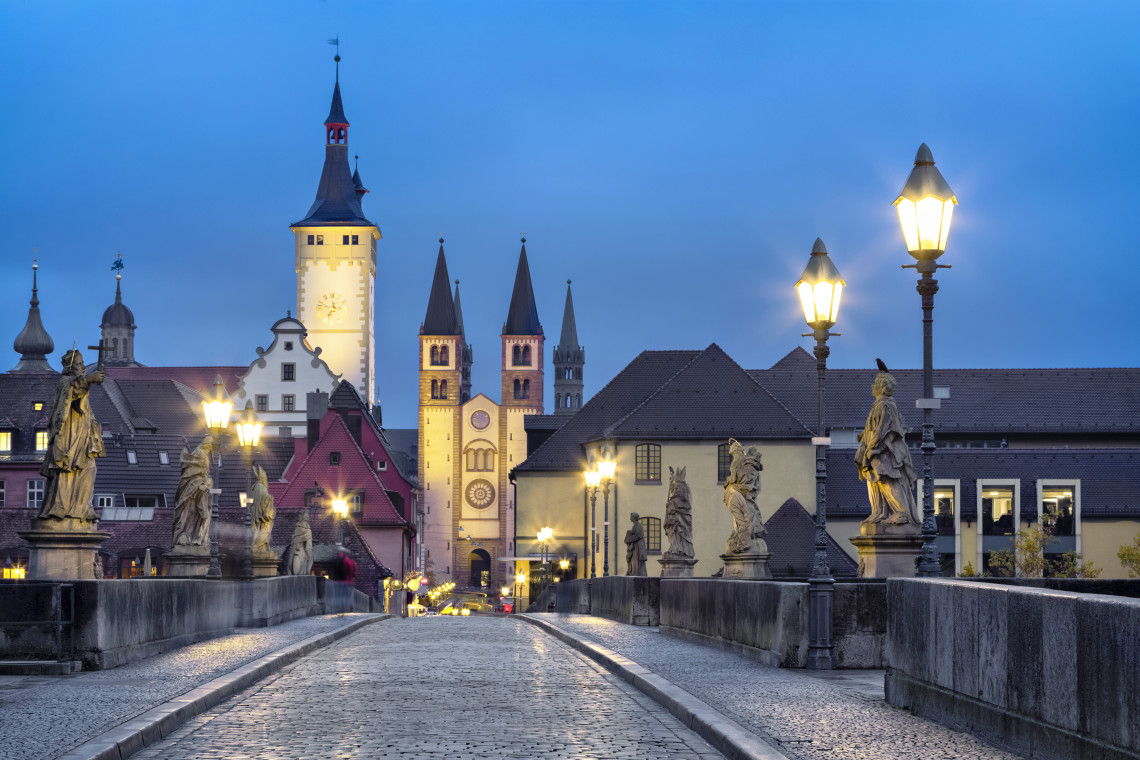
- The Alte Mainbrücke (Old Main Bridge). Lined with baroque saints, closed to cars, lively at aperitivo hour. Locals drink Franconian wine on the bridge itself in warm weather.
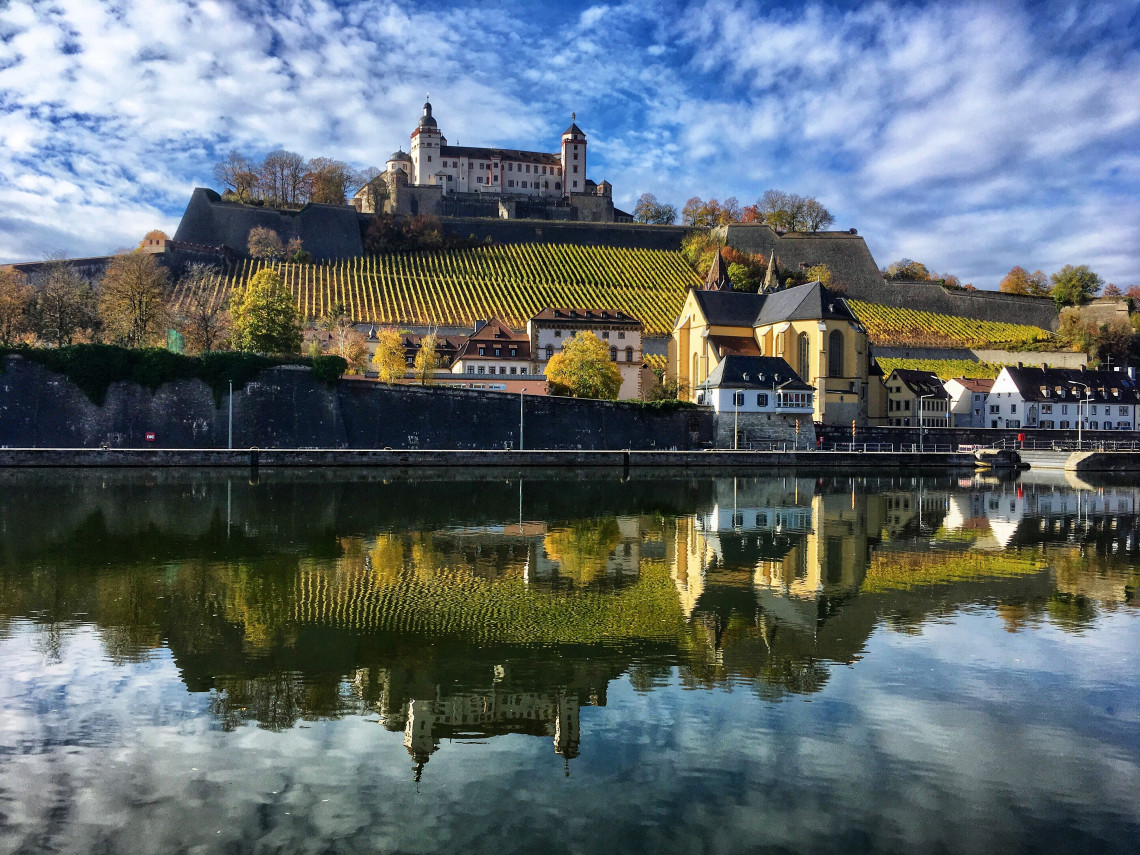
- Marienberg Fortress. Across the Main from the old town, on a vineyard-covered hill. The Franconian Museum inside is worth an hour.
- Dinner in the Altstadt. Bürgerspital or Juliusspital, two 700-year-old charitable wine estates that also run restaurants.
Franconian wine. Würzburg sits in Germany's Franconian wine region, which specializes in dry Silvaner served in the traditional flat-round Bocksbeutel bottle. Order one glass at dinner. Franconian wine barely leaves the region, so this is your window.
Day 2: Würzburg → Rothenburg ob der Tauber (100 km, 2h)
Leave Würzburg mid-morning. The route drops south through Tauberbischofsheim and Bad Mergentheim, both worth a brief stop.
Sub-stops worth taking:
- Tauberbischofsheim (30 km from Würzburg). A small Franconian town with a picturesque medieval center. Coffee stop.
- Weikersheim (60 km from Würzburg). Renaissance palace and gardens, less crowded than the big-name palaces. Worth an hour if palaces are your thing.
- Bad Mergentheim (55 km). Spa town with a Teutonic Order palace. Skip if the schedule is tight.
- Creglingen (75 km). A tiny village with the extraordinary Herrgottskirche and its Tilman Riemenschneider altarpiece, one of the most important late-medieval wood carvings in Germany. If Renaissance art matters to you, this is worth the 20-minute detour.
Arrive Rothenburg early afternoon. Check into your hotel inside the walls.
Where to stay: Inside the medieval walls, ideally. Hotel Eisenhut or Hotel Reichsküchenmeister are two atmospheric central options. Book well ahead in summer.
What to do on afternoon 1:
- Walk the medieval city walls. About 45 minutes at a moderate pace. The walkway is covered in many sections.
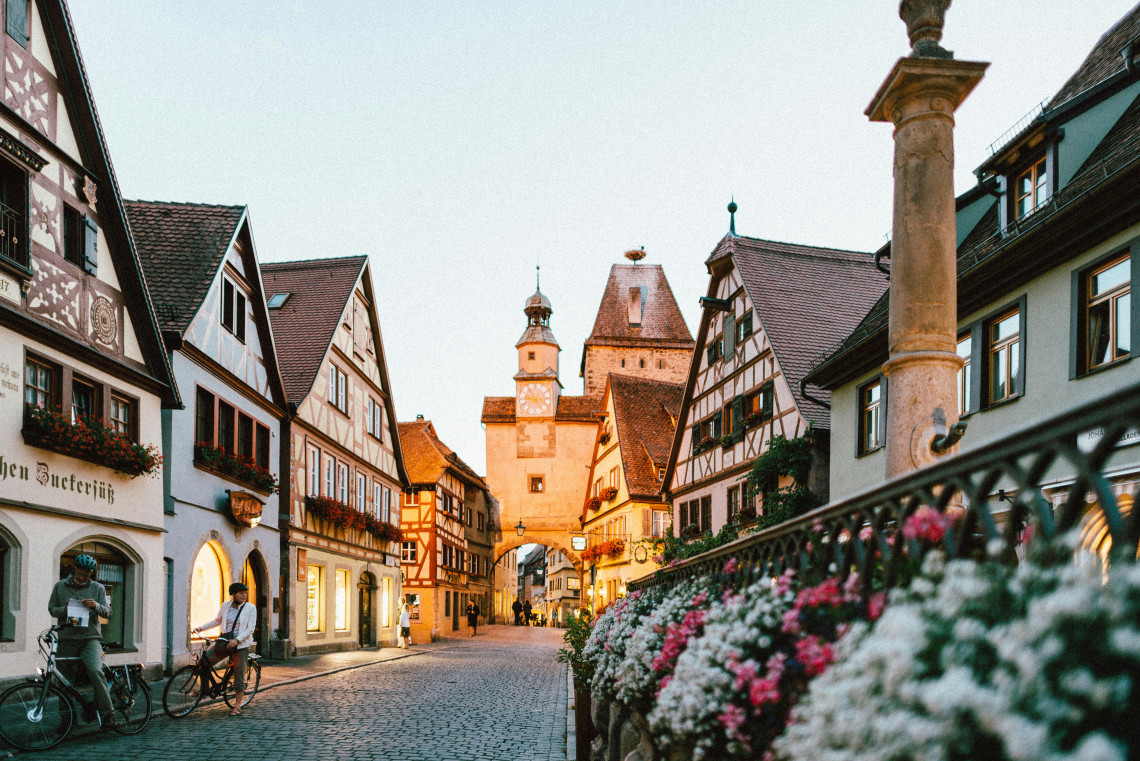
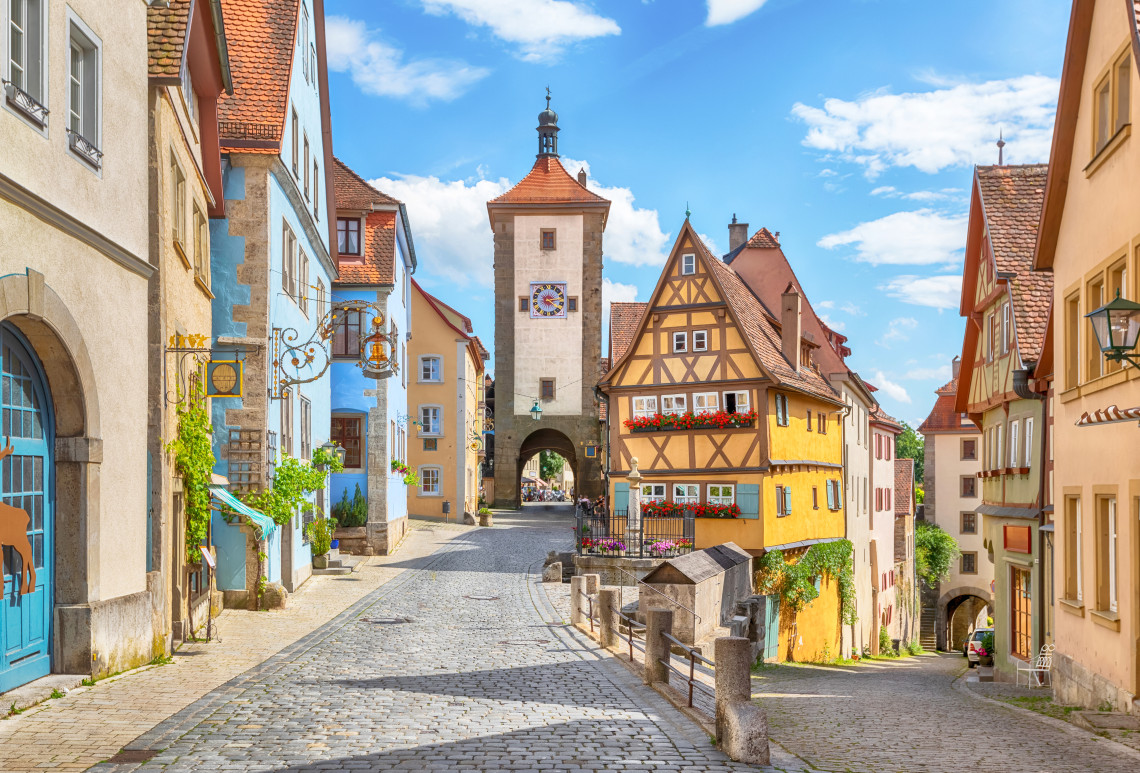
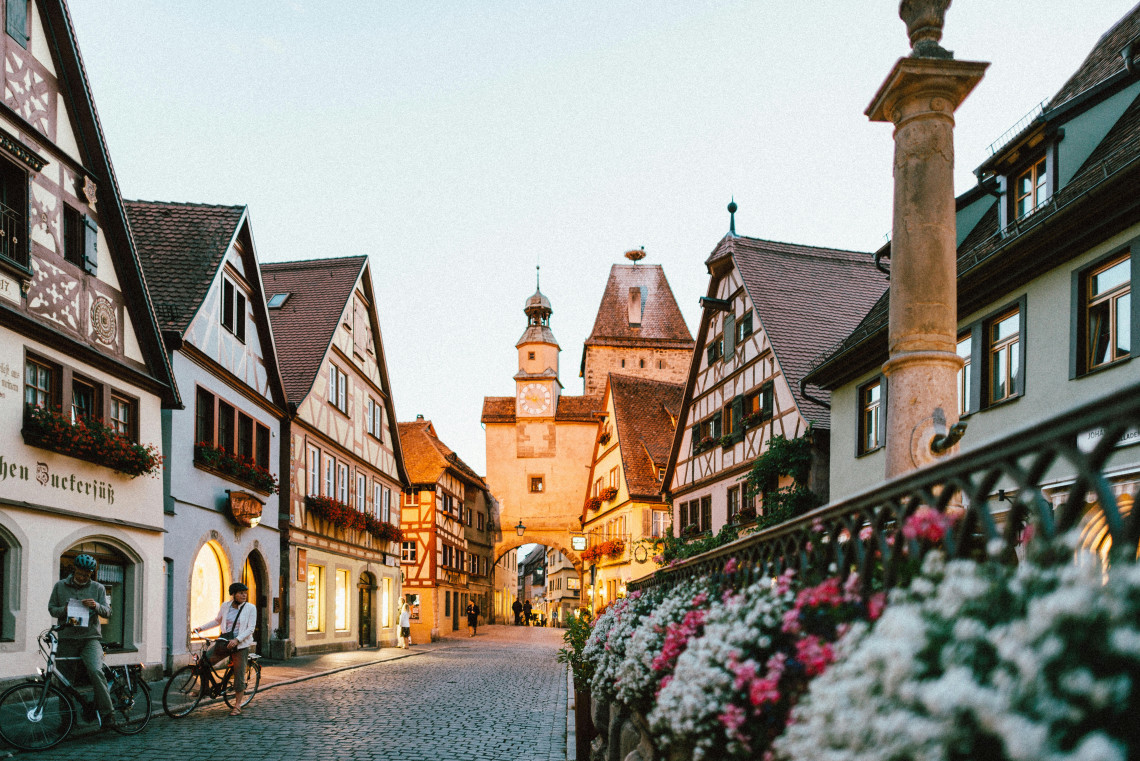
- Plönlein corner. The most photographed corner in Germany, with the timber-framed house and the twin gates. Photograph it late afternoon.
- The Rathaus tower climb for the view over the town.
- Wander. Rothenburg is small enough that you should get lost in it once.
Day 3: Rothenburg (full day)
Rothenburg deserves a full day. Half a day is a mistake.
Morning:
- The Night Watchman Tour if you did not do it the previous evening (English tour at 8 PM daily April through December, meets at the market square).
- The Kriminalmuseum. Medieval crime and punishment museum. Weirder and more interesting than it sounds.
- St. Jakob's Church, home to Tilman Riemenschneider's Holy Blood Altar, one of the great masterpieces of late Gothic wood carving.
Lunch: Try a Schneeball, Rothenburg's signature pastry. A crumbly ball of dough dusted with sugar. Sold everywhere in the old town. Buy one, break it into pieces before you eat.
Afternoon:
- The Rothenburg Museum in the former Dominican convent.
- Late-afternoon walk on the walls again, this time from a different section for a different view.
- Sunset from the terrace at Burggarten (the former castle grounds, at the western edge of the walls).
Evening: Dinner at a traditional Bavarian Wirtshaus. The town is quiet after 9 PM in a way that big cities are not, which is part of the point.
Germany's Romantic Journey: 7-Day Road Trip
The Romantic Road as a ready-to-drive package: flights, hotels in Würzburg, Rothenburg, Nördlingen, Augsburg, and Füssen, rental car, and route notes.
See the package →Day 4: Rothenburg → Dinkelsbühl → Nördlingen (85 km, 2h with stops)
The middle stretch of the Romantic Road runs through the three walled towns that make the strongest case for the whole route: Rothenburg, Dinkelsbühl, and Nördlingen. Today covers the second two.
Leave Rothenburg after breakfast. About 45 km south to Dinkelsbühl.
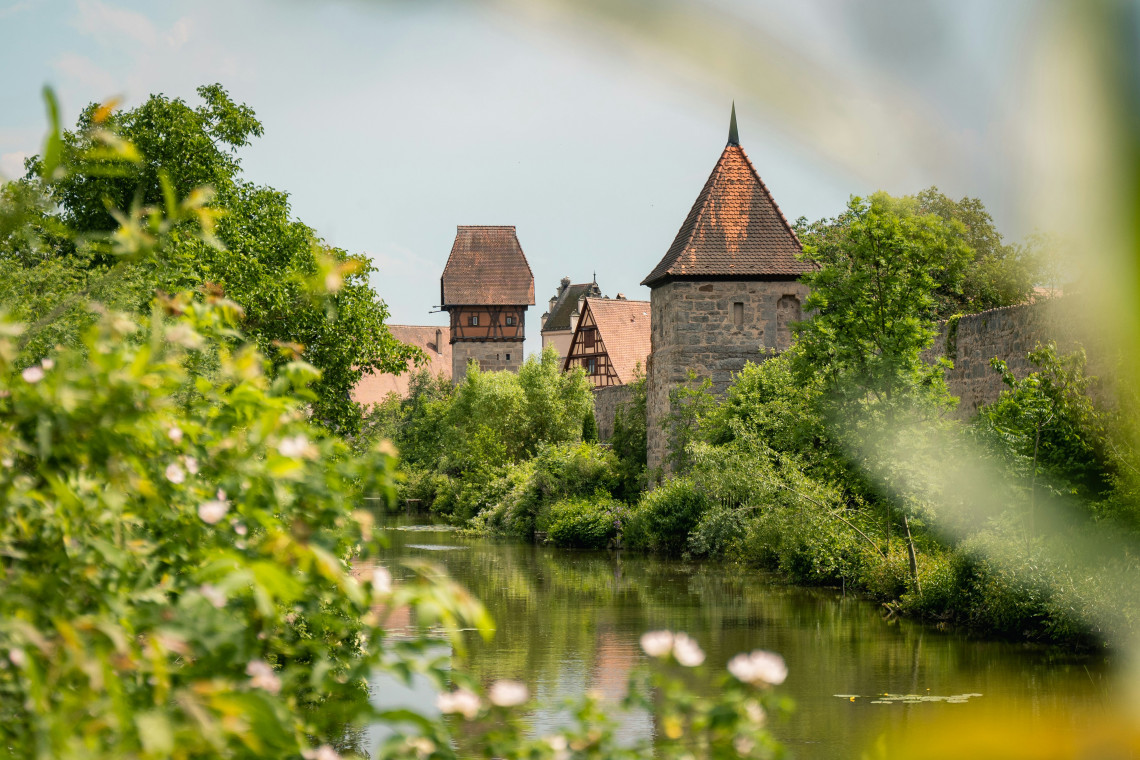
Dinkelsbühl. Rothenburg's quieter twin. The medieval walls are almost as complete, the timber-framed houses are just as colorful, and the tourist density is a fraction. Spend two to three hours: walk the walls, visit St. Georg's Minster (one of the great late Gothic hall churches in southern Germany), and have lunch on the market square. Kinderzeche Festival in July is the town's famous historical festival; if your dates align, plan around it.
Continue 35 km south to Nördlingen.
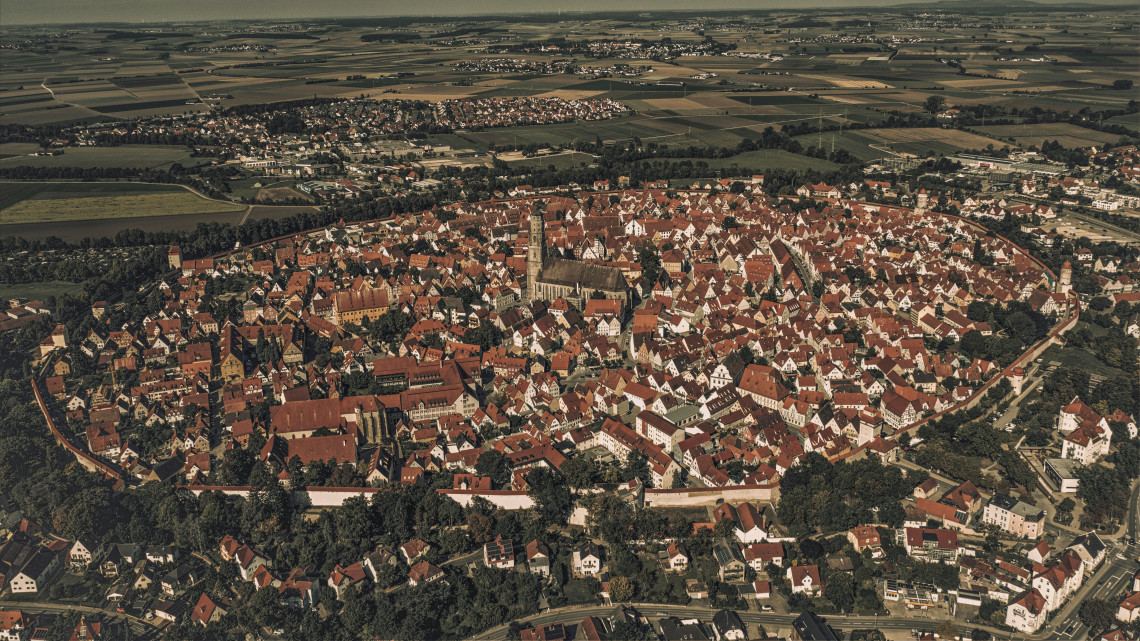
Nördlingen is different from every other town on the road because it sits inside a meteor impact crater 25 km across, formed 15 million years ago. The old town is circular, following the crater's rim. The Daniel (the tower of St. George's Church) is the town's landmark, climbable for a full 360° view of the crater basin. The Rieskrater Museum is genuinely interesting even if you did not think geology was your thing.
Where to stay: Inside the walls. Nördlingen has fewer hotel options than Rothenburg. Book ahead. Hotel Kaiser Hotel Sonne and Hotel Am Ring are two central choices.
Evening in Nördlingen: The town empties out after day-trippers leave. Walk the walls at sunset. Have dinner at a Wirtshaus on the ring.
Day 5: Nördlingen → Augsburg (85 km, 1h 30m)
Leave Nördlingen after breakfast. Route continues south through Donauwörth, which crosses the Danube and is worth a brief coffee stop for the scale change (this is the first time on the route you have crossed a major river since the Main in Würzburg).
Sub-stop: Donauwörth. 30-minute walk of the historic Reichsstraße and a coffee at the Fuggerei.
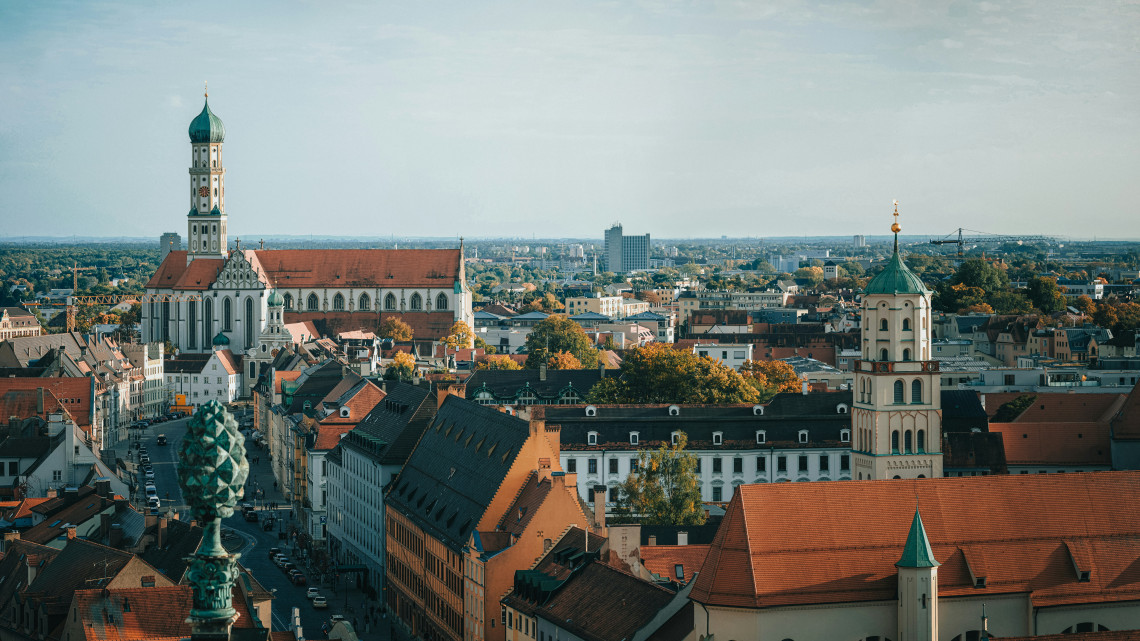
Arrive Augsburg by lunchtime. Augsburg is the biggest city on the Romantic Road besides Würzburg, and one of the oldest cities in Bavaria (founded by the Romans in 15 BC). It has more urban energy than any of the walled towns before it and a much richer museum scene.
Where to stay: Central Augsburg, near the Rathausplatz or Maximilianstraße. Steigenberger Drei Mohren is the historic five-star; Hotel am Rathaus is a comfortable mid-range option.
What to do:
- The Fuggerei. The oldest social housing complex in the world, founded 1521 by the Fugger family (the richest bankers in Renaissance Europe). Still functioning as low-income housing. Rent is 0.88 EUR per year plus three daily prayers. Half-day visit including the small museum.
- Rathausplatz and the Perlach Tower. The Rathaus (city hall) is a Renaissance masterpiece with the famous Goldener Saal (Golden Hall). Climb the neighboring Perlach Tower for the view.
- The Augsburg Cathedral (Dom). Some of the oldest stained glass in the world (11th century).
- Maximilianstraße. The wide central boulevard, lined with palaces and fountains.
Evening: Dinner at a proper Wirtshaus. Augsburg has a particularly strong food scene compared to the smaller towns on the road.
Day 6: Augsburg → Wieskirche → Füssen (135 km, 2h 30m with stops)
The last driving day is the longest and one of the most scenic, because the road climbs toward the Alps.
Leave Augsburg after breakfast. Route goes south through Landsberg am Lech, an under-visited walled town on the Lech river, worth a 45-minute walk.
Sub-stops:
- Landsberg am Lech (65 km from Augsburg). Colorful painted houses on the market square, a working waterfall in the town center (the Karolinenwehr), and a historic tower. Coffee stop.
- Steingaden (90 km). The starting point for the small road that leads to the Wieskirche. Do not skip this.
- The Wieskirche (Church in the Meadow) (95 km from Augsburg). One of the great Bavarian Rococo churches, alone in a field, UNESCO listed. From the outside a simple white church with an onion dome. Inside a riot of color, gold, and painted plaster. Fifteen minutes if you rush, an hour if you sit and let it do what it does. Free entry.
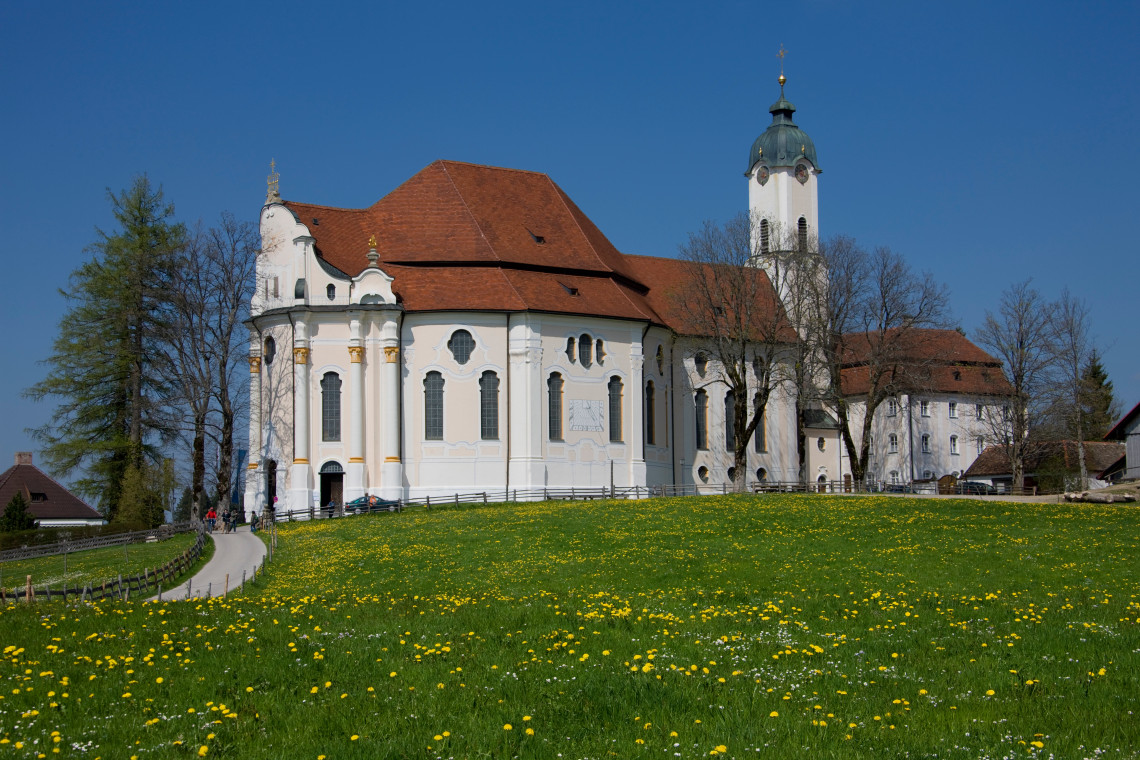
Continue 45 km south to Füssen. The Alps come into view as you approach.
Where to stay: In Füssen or in the neighboring village of Schwangau. Schwangau is at the foot of Neuschwanstein hill, which makes for a shorter walk on the castle day. Hotel Sonne (Füssen) and Hotel Schlosskrone (Füssen) are two central options; Hotel Müller (Hohenschwangau) is at the base of the castle path.
Evening: Walk the old town of Füssen. Small but atmospheric. The Hohes Schloss on the hill above town is worth a photograph. Dinner at a traditional Bavarian Wirtshaus.
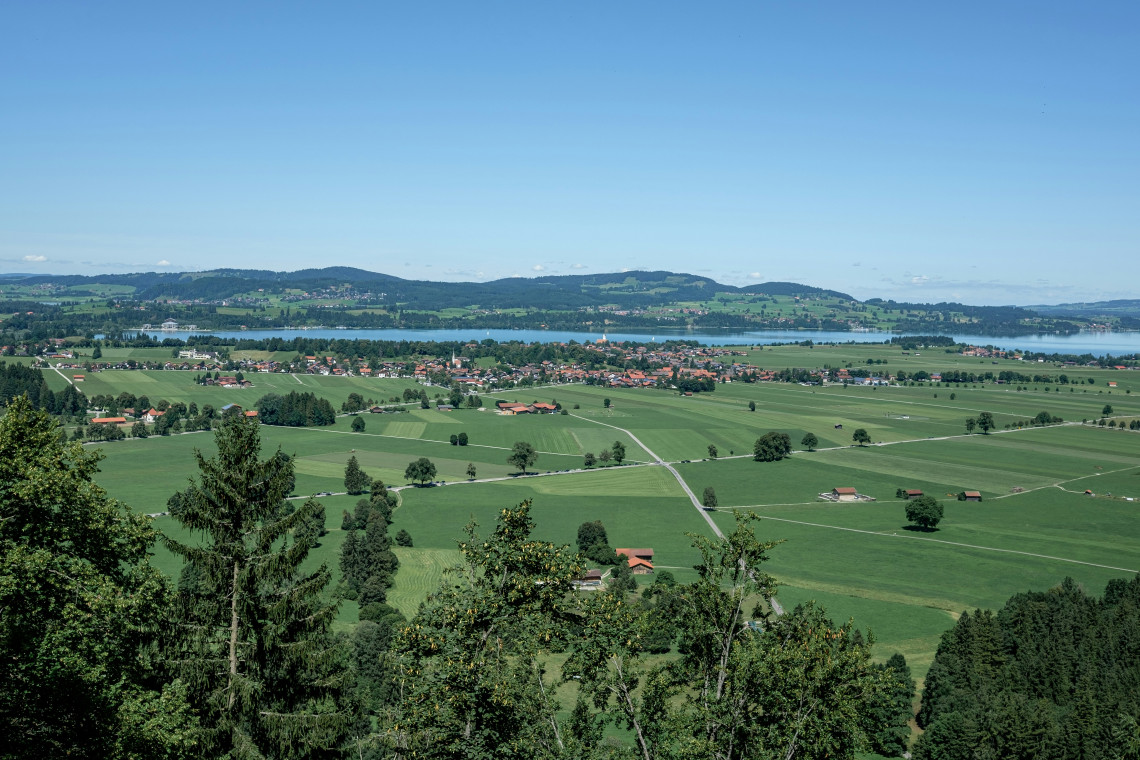
Day 7: Neuschwanstein Castle and depart
The final day is the payoff.
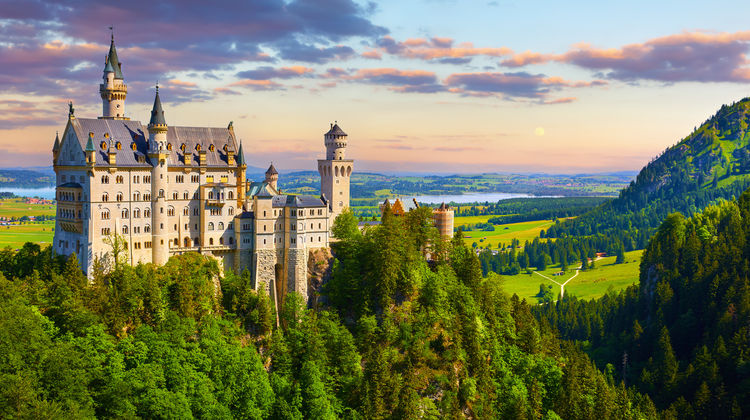
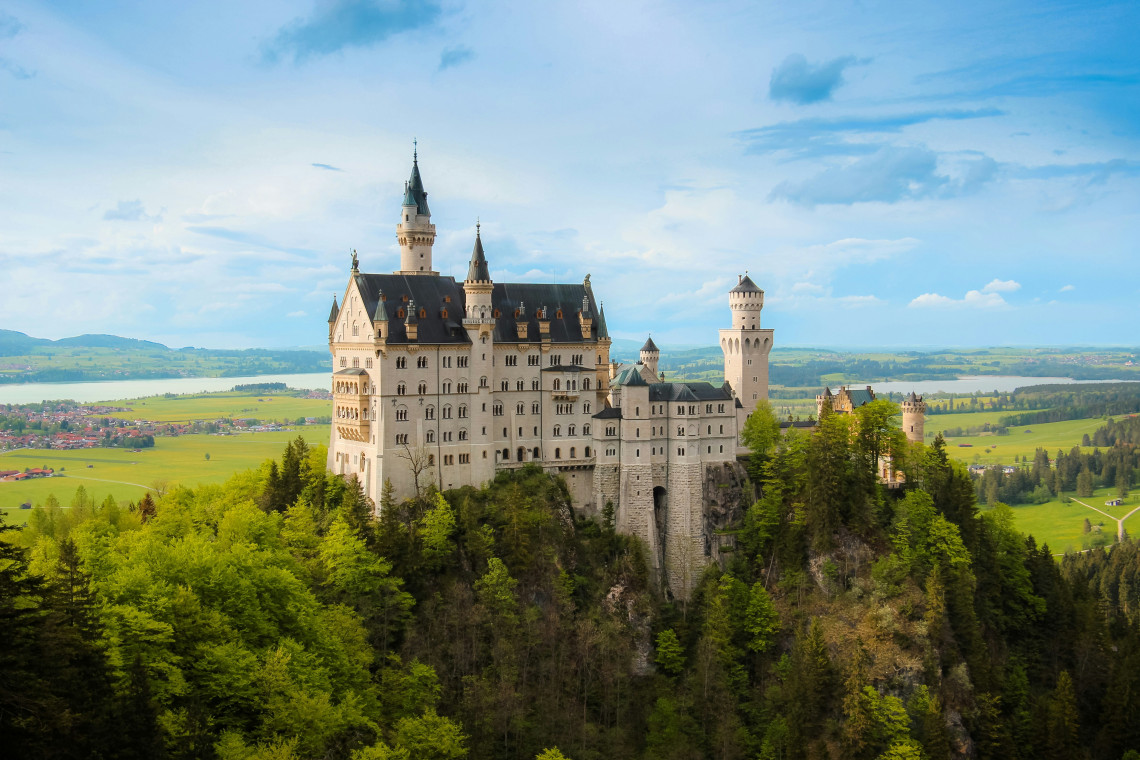
Neuschwanstein Castle sits above the village of Hohenschwangau, a 5-minute drive from Füssen. Buy your castle ticket in advance for a specific timed slot; walk-up tickets are not reliable, especially in high season. Every ticket is for a guided tour that lasts about 30 minutes inside the castle.
The castle is on a hill about 30 minutes' walk up from the ticket center. There is a shuttle bus and a horse-drawn carriage as alternatives. The Marienbrücke (Mary's Bridge), a suspension bridge over the gorge behind the castle, is the classic photo spot; it is 15 minutes' walk from the castle itself.
Combine with Hohenschwangau Castle if you have time. Hohenschwangau is at the base of the hill, was the childhood summer home of Ludwig II (the king who commissioned Neuschwanstein), and offers a completely different (more lived-in, more human) experience of Bavarian royal history. Half-day between the two castles is realistic.
After the castle, drive 2 hours to Munich, drop the rental car at Munich Airport (MUC) or in the city, and spend the night in Munich before flying home. If you have time in Munich, extend one extra day before flying out; the city rewards a couple of days.
Prefer to End with Munich?
Extend the Romantic Road with 2 or 3 nights in Munich after the castle day. Neuschwanstein, then the beer gardens, museums, and Marienplatz.
See Munich City Break →Driving Practicalities
License. US and Canadian drivers can rent and drive in Germany with a valid home license. An International Driving Permit is a nice-to-have but not legally required for stays under six months. Some rental companies still ask for one, so bringing one is worth the $20.
Automatic vs manual. Automatic transmissions are more expensive to rent in Germany (sometimes double) and less available. If you can drive manual, save the money and take the manual. If you cannot, request the automatic well in advance and confirm at pickup.
Fuel. Diesel is common in Germany and often cheaper than petrol. Most rental cars are diesel; check when you pick up. Fill up before returning the car (self-service, cards work at all pumps).
Autobahn vs Romantic Road. The point of this trip is to stay on the Romantic Road, which follows small state highways. But if you need to skip a stretch (weather, tight schedule), the parallel A7 autobahn is faster. There is no toll for cars in Germany.
Parking. Every town on the Romantic Road has parking outside the walls. Rothenburg has three main lots (P1, P2, P3) marked from the highway; walk in through the gates. Nördlingen and Dinkelsbühl work the same way. Do not attempt to drive inside the walls unless your hotel confirms parking access.
Speed limits. 30 or 50 km/h in towns, 70 to 100 km/h on country roads, unlimited on some autobahn stretches (though most have posted limits now). Speed cameras are enforced. Fines arrive at your home address for rental car violations.
GPS. Every rental has satnav available (sometimes included, sometimes an add-on). A phone with Google Maps offline maps downloaded for Bavaria works just as well. The Romantic Road brown signs are also reliable and, if you can follow them, more atmospheric than turn-by-turn navigation.
When to Drive the Romantic Road
Late April to early June. Spring is quiet, green, and cool. The towns feel local. Rothenburg is not yet overwhelmed by tour buses. Best light for photography at these latitudes.
Mid-June to late August. Peak season. Long daylight (light until 9:30 PM), warm weather, and the busiest tourist volumes at Rothenburg and Neuschwanstein. Book hotels well ahead.
September and early October. Arguably the best month. Warm days, cool nights, harvest colors in the vineyards around Würzburg, and the tourist volumes drop noticeably after the first week of September.
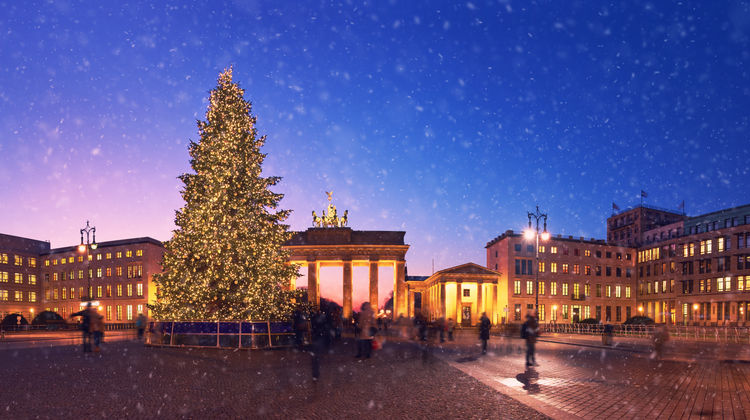
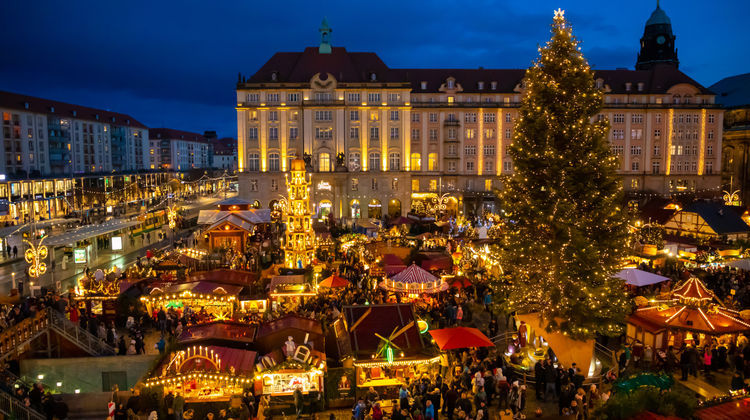
Late November to late December: Christmas market season. The Romantic Road in December is a different trip. Rothenburg has one of Germany's most atmospheric Christmas markets (Reiterlesmarkt), Dinkelsbühl and Nördlingen add their own smaller versions, and the walled towns take on a fairy-tale winter character. Weather is cold and daylight is short; drive during daylight hours only and layer your itinerary accordingly.
When not to drive. January through mid-March. Cold, grey, and many smaller hotels close. Some sub-stops on the route are effectively shut for winter.
Frequently Asked Questions
How long does it take to drive the Romantic Road? End to end, without stops, about 5 to 6 hours of driving. Realistically as a trip, 5 to 10 days depending on how deeply you want to explore each town. Seven is the honest sweet spot.
Can I do the Romantic Road in 3 days? Yes, but you will only see the highlights and it will feel rushed. If 3 days is all you have, prioritize Würzburg (half day), Rothenburg (full day and a night), and Neuschwanstein (half day), and skip everything in between.
Do I need a car for the Romantic Road? The classic version of the trip is a self-drive. A tour bus (Romantic Road Coach) does run seasonally from Frankfurt to Füssen, but it is one-way, once daily, and only stops briefly. The car version gives you the full flexibility.
Is the Romantic Road actually romantic? In the marketing sense (small towns, timber-framed houses, castle at the end), yes. In the atmospheric sense, yes in September or December, less so in July when the day-tripper crowds at Rothenburg peak. The route was named for the romanticism movement, not for couples travel specifically, but couples do love the trip.
Where does the Romantic Road end? In Füssen, at the base of Neuschwanstein Castle. The last few kilometers of the signed route are through Schwangau village, ending at the castle ticket center.
Can I drive the Romantic Road in winter? Yes, especially the Christmas market season (late November to Christmas Eve). Weather can include snow. Drive during daylight, allow more time per leg, and confirm hotel opening dates because some smaller ones close in deep winter.
What is the best base if I only have one night in the middle? Rothenburg. Full stop.
How much does the Romantic Road cost? Highly variable. As a self-drive, the biggest expenses are the rental car (one-way rentals cost more), hotels (Rothenburg and Füssen are the most expensive stops), and any castle tickets. A Yes Getaways package bundles the car, hotels, and flights at operator rates.
Which side of the Romantic Road has the best views? Neither side wins. The stretch between Landsberg and Füssen (Day 6) is the most scenic in the traditional sense (Alps coming into view). The stretch between Rothenburg and Nördlingen (Day 4) is the most consistently pretty.
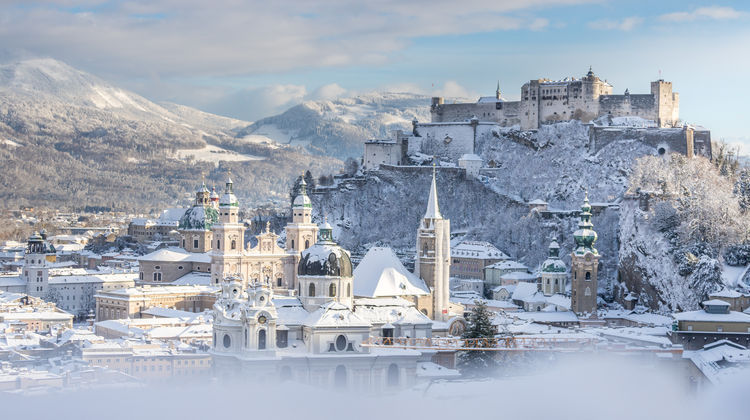
Can I combine the Romantic Road with Salzburg or Prague? Yes. Salzburg is 2 hours from Füssen; add it after Neuschwanstein. Prague is 4 hours from Nuremberg (a short detour off the Romantic Road at Rothenburg); add it as a bookend to the trip.
Should I stay inside the walls in Rothenburg and Dinkelsbühl? Yes if you can. Rothenburg's daytime tourist volume drains out around 5 PM when the day-tripper buses leave, and staying inside means you have the town largely to yourself in the evening.
Is Neuschwanstein worth it? Yes, once. The interior tour is short and the tour groups are big, but the exterior views (especially from the Marienbrücke) genuinely are among the best photographs in central Europe.
What about the Wieskirche? Yes, do not skip it. Fifteen minutes off the main route, arguably the single most beautiful individual building on the entire road, alone in a Bavarian meadow.
Can I combine the Romantic Road with a Rhine River trip? Yes, and it works well. Do the Rhine River (Amsterdam to Basel) as a river cruise or as land travel first, then drive to Würzburg and start the Romantic Road. About 3 to 4 hours between the Rhine and Würzburg by car.
Can I do the Romantic Road with kids? Yes, easily. Castles, walled cities, and beer gardens (children are welcome) all work for families. Rothenburg is particularly kid-friendly in atmosphere.
Germany's Romantic Road, Sorted
Flights, rental car, hotels in every stop, and the route ready to follow. Add Munich or Neuschwanstein extra days, or extend into Salzburg, without rebuilding the trip.