July 28, 2026 • 12 min read
Germany has one of the best train networks in Europe and the most famous highway system in the world (the autobahn, with unrestricted-speed sections). Which means your transport question is not "is the train good" or "are the roads good," it is "where, exactly, am I going, and what kind of trip do I want this to be."
This guide compares the two honestly, region by region, with the costs, the journey times, and the tradeoffs that nobody puts in the brochure.
The short answer
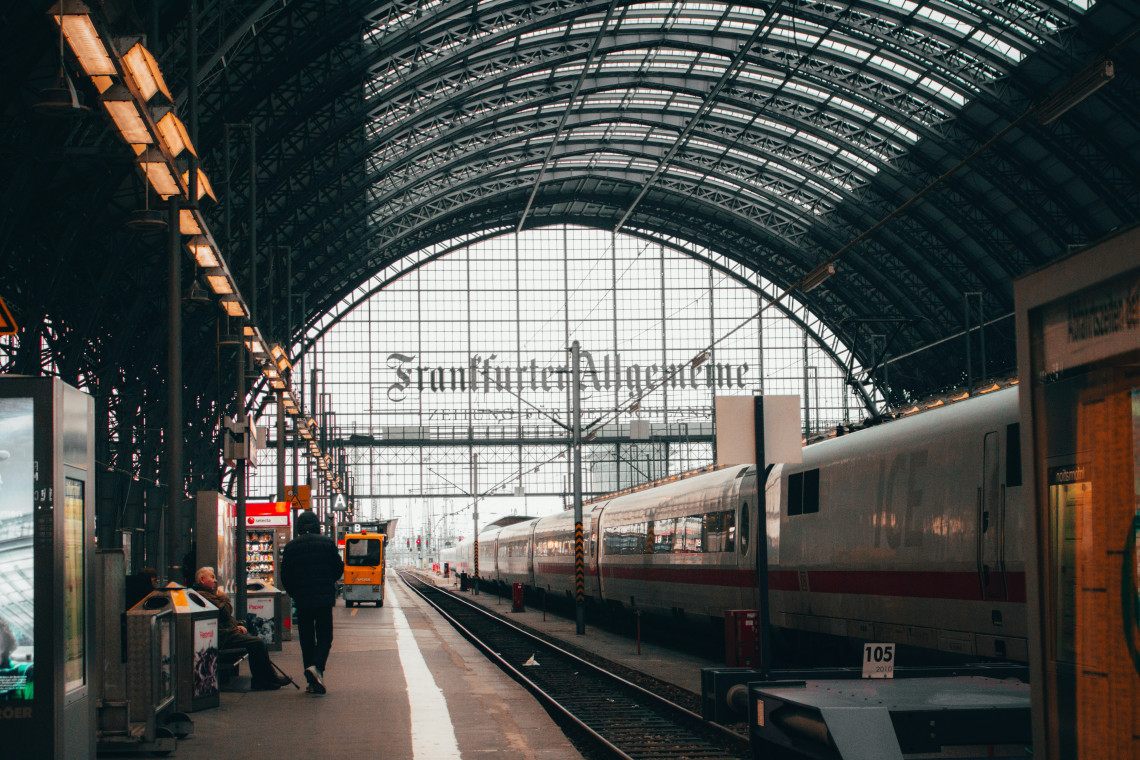
If your trip is Berlin plus one or two major cities (Munich, Hamburg, Cologne, Frankfurt, Dresden), take the train. Deutsche Bahn's ICE high speed network connects Germany's cities faster than driving and drops you in the city center.
If your trip is the Romantic Road (Würzburg to Füssen), Bavarian Alps village-hopping, the Black Forest, or Rhine River castle drives on the Bundestrasse 9, rent a car. Public transport reaches the main towns but the villages and scenic loops require driving.
If your trip is both, do what most experienced Germany travelers do: take the ICE between cities, rent a car for the rural section, return the car before re-entering Berlin or Munich.
How German trains actually work
Deutsche Bahn (DB) is the national rail operator. Three classes of train that matter:
ICE (InterCity Express) is the flagship high-speed service. Runs at up to 300 km/h (186 mph) on selected lines. ICE connects Germany's cities in tight timings: Berlin to Munich in 4h, Berlin to Frankfurt in 4h, Berlin to Cologne in 4h20m, Berlin to Hamburg in 1h40m, Munich to Frankfurt in 3h05m, Munich to Nuremberg in 1h05m, Cologne to Frankfurt in 1h05m, Cologne to Munich in 4h30m. Reservations are optional in second class but strongly recommended on peak-hour trains.
IC (InterCity) and EC (EuroCity) run parallel to ICE on many routes at slightly slower speeds. Same comfort tier. EC crosses borders (to Switzerland, Austria, Italy, Denmark, Netherlands).
RE (Regional Express) and RB (Regionalbahn) are the regional trains. Slower, no reservation needed, fixed prices. These connect smaller towns within a region and reach Rothenburg, Füssen (for Neuschwanstein), Baden-Baden, Cochem, and the Bavarian ski resorts.
Nightjet is ÖBB's (Austrian) overnight train network that also runs through Germany, connecting to Vienna, Zurich, Rome, and Amsterdam.
A few practical notes that catch first time Germany travelers off guard:
- Deutschland-Ticket is a monthly pass (€58/month) covering all regional trains (not ICE/IC/EC) plus urban transit across Germany. Excellent for month-long stays; not worth it for short trips.
- Sparpreis fares on ICE start at €19 for major routes, but sell out fast. Book on the DB Navigator app 60-180 days ahead.
- Punctuality: Deutsche Bahn has struggled with delays in recent years. About 65-70% of ICE trains arrive on time (within 6 min of schedule). Build 30 minutes of buffer into tight connections.
- Berlin's main station (Berlin Hauptbahnhof) is a huge glass cathedral of a station where all Berlin ICE routes terminate. Munich Hauptbahnhof is being rebuilt through 2027; check platforms.
- Second class on ICE is genuinely excellent. Comfortable seats, power outlets, free Wi-Fi (usually), decent dining car.
- Buy tickets on the DB Navigator app. No paper needed; QR code scanned onboard. Save the offline ticket in case Wi-Fi drops.
- Bicycles on ICE require advance reservation (limited slots per train).
How German roads actually work
Germany's road network is Europe's most extensive. The autobahns (motorways) are largely toll-free for cars (heavy trucks pay), well maintained, and famous for the sections without a general speed limit.
A few practical notes:
- Autobahn speed limits: Roughly 40% of the autobahn network has no general speed limit (the recommended speed is 130 km/h / 81 mph). The other 60% is limited to 100, 120, or 130 km/h depending on the section. Speed changes are signposted constantly. Radar enforcement in speed-limited sections is aggressive.
- Motorway tolls for cars: None in Germany (as of 2026). Just fuel and parking costs.
- Umweltzone (environmental zone) stickers: All cars entering environmental zones in Berlin, Munich, Cologne, Stuttgart, Frankfurt, and 50+ other German cities need a green (Grüne Plakette) environmental sticker on the windshield. Rental cars always have one. If you drive your own car, buy a sticker (€6) online before entering these cities.
- Speed limits (non-autobahn): 100 km/h on rural roads, 50 km/h in towns, 30 km/h in residential zones. Enforcement is heavy.
- Fuel in Germany costs about 1.75-1.95 euros per liter for petrol, 1.65-1.85 for diesel. Diesel is meaningfully cheaper for long drives.
- Winter tire law: From October to April, cars must have winter tires or all-season tires with M+S marking whenever winter conditions exist. Rental cars in Germany come equipped in winter.
- Roundabouts are common on rural roads. Traffic in the roundabout has priority.
- Right of way: German drivers are strict about right-of-way rules. Understand "priority to the right" at unmarked intersections.
- Parking in Berlin, Munich, Frankfurt, and Hamburg is expensive and limited. Most central hotels charge 25 to 40 euros a night at a nearby garage. The single best reason not to drive into German cities.
- Alcohol limit: 0.5 g/L (0.05% BAC). Zero tolerance for drivers under 21 or in the probationary period.
Region by region: where each really wins
Berlin and the north
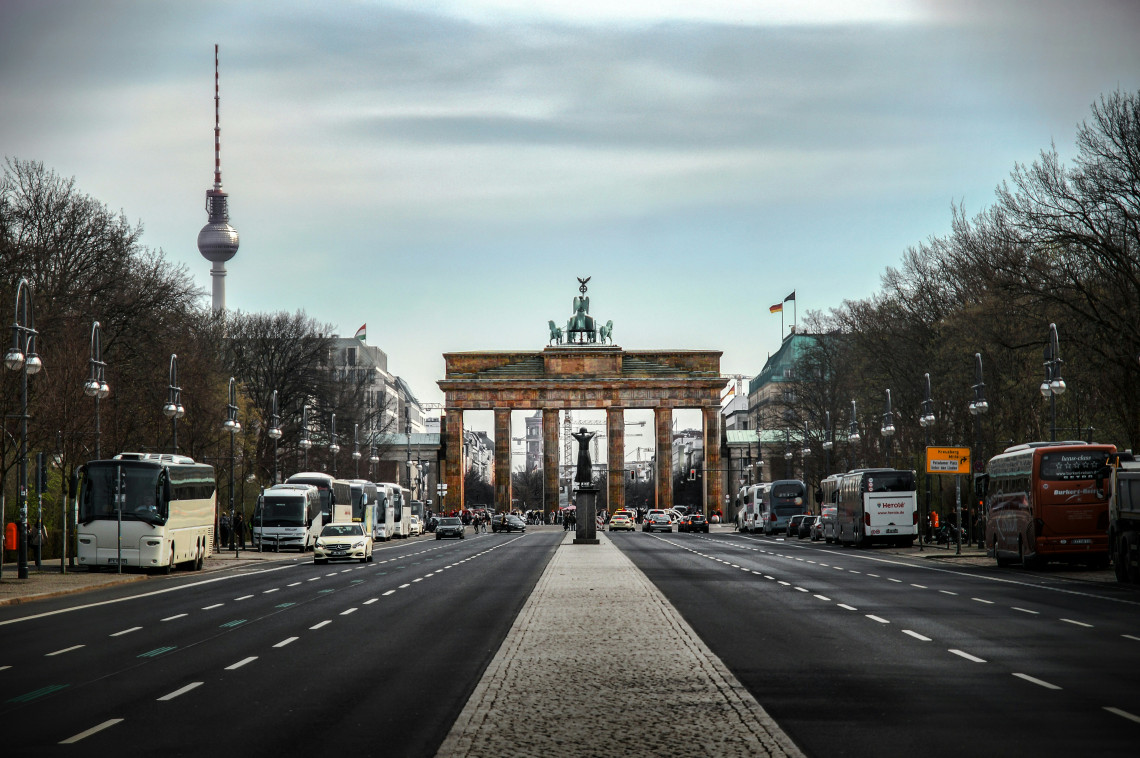
Train, always. Driving into Berlin is unpleasant, parking is expensive, and the U-Bahn plus S-Bahn plus tram network covers everything you would want to see. Day trips to Potsdam, Sachsenhausen, and even Dresden are easy by train. If you rent a car in Berlin, you will spend the first day looking for parking.
Berlin to Munich (or Munich to Berlin)
Train, decisively. ICE does the 500 km route in 4h at €25-90 depending on advance booking. Driving takes 6-7h with fuel costs, and Munich parking. Almost no reason to drive this segment. Sparpreis fares booked 60 days ahead are typically €19-39.
Munich and Bavaria (day trips)
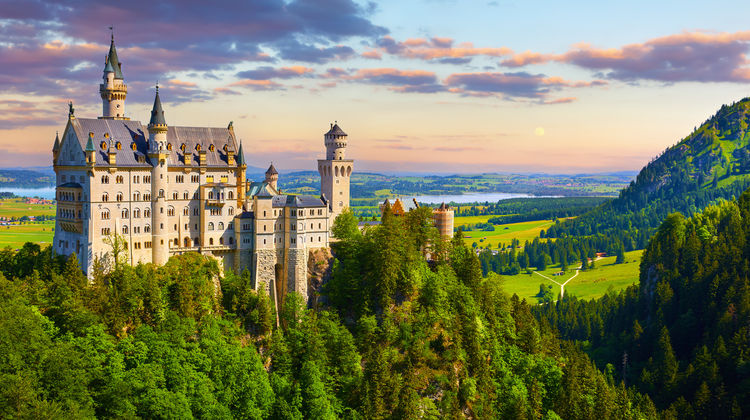
Mix. Munich itself is easy by train and walkable. But the Bavarian Alps villages (Berchtesgaden, Garmisch-Partenkirchen, Oberammergau, Mittenwald) are best by car. Neuschwanstein is reachable by regional train + bus (2h30m from Munich) or car (2h). For a proper Bavarian Alps and Neuschwanstein trip, rent a car from Munich for 3-5 days.
Rothenburg and the Romantic Road
Car, always. The Romantic Road (Würzburg to Füssen, 460 km) is designed as a driving route. Regional trains reach Rothenburg (via Steinach), Nördlingen, Dinkelsbühl, and Würzburg, but the classic Romantic Road experience is a rental car covering 4-5 towns in 3-4 days. The B25 and B308 pass through some of Germany's most beautiful landscapes.
The Rhine Valley (Cologne to Mainz)
Both work, differently. The regional train from Cologne to Mainz (via Koblenz) runs along the Rhine and is one of Europe's most scenic train rides — you'll pass 30+ castles from the train window. But the drive on the Bundestrasse 9 (B9) is even more scenic, allows stops at wine villages (Bacharach, Assmannshausen, Rüdesheim), and requires a car for the wine tastings. Rhine cruises are the third option (April-October).
Frankfurt
Train. Frankfurt airport (FRA) is Germany's main U.S./Canada hub. From FRA, ICE trains reach Frankfurt central station in 12 min, then onward to any German city. Frankfurt itself is walkable. Drive only if extending into the Rhineland or Taunus mountains.
Hamburg and northern coast (Sylt, Rügen)
Train + specialty. Hamburg is walkable and reached by ICE. For Sylt (island, 2h30m ICE from Hamburg by rail-ferry), the train continues onto the ferry. For Rügen (Baltic island), rent a car in Rostock.
Cologne and the west
Train. Cologne is a walkable city with 7 Christmas markets in walking distance. ICE from Frankfurt (1h05m), Berlin (4h20m), Hamburg (4h). No car needed. Extending into Aachen, Bonn, or Düsseldorf: all reachable by regional train in under 1h.
Dresden and Saxony
Train. Dresden is walkable. ICE from Berlin (1h45m), Prague (2h15m). Regional train to Meissen (30 min, porcelain city), Bastei (Saxon Switzerland cliffs). Car only useful for exploring Saxon Switzerland National Park in depth.
The Bavarian Alps (Berchtesgaden, Zugspitze, Oberstdorf)
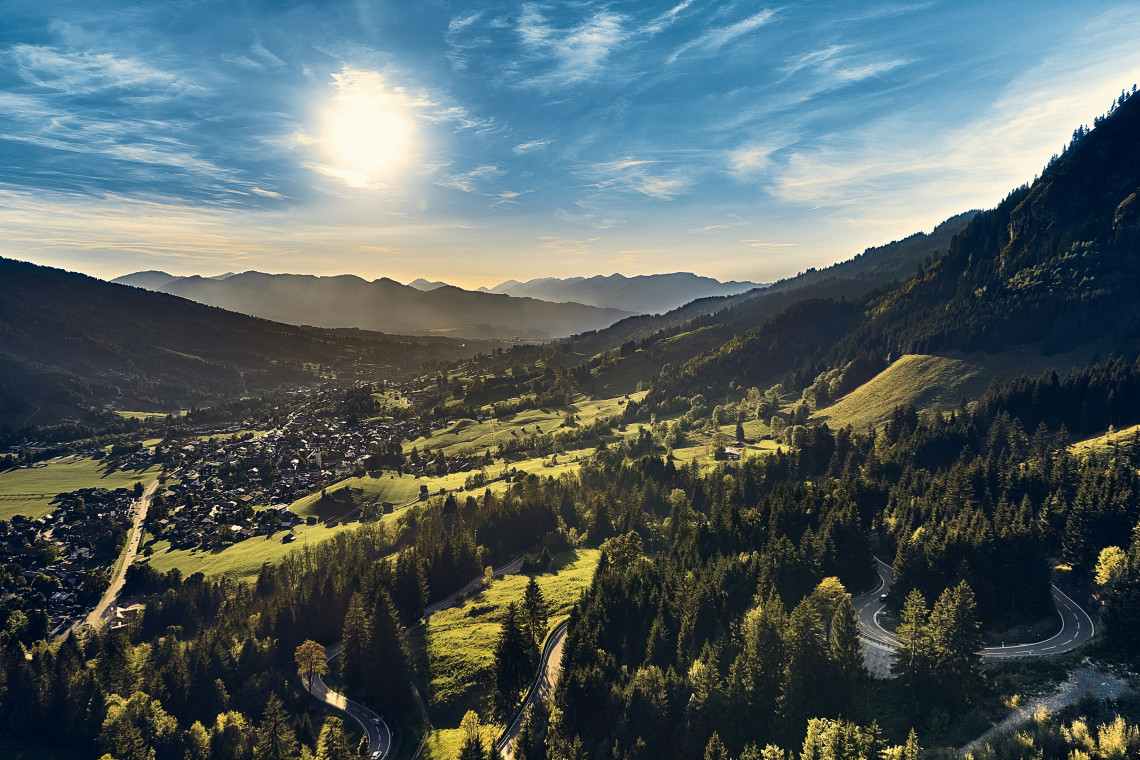
Car, mostly. Some ski villages reachable by regional train (Garmisch-Partenkirchen has good rail access) but summer village-hopping and full valley exploration requires driving.
The Black Forest
Car, entirely. The Schwarzwaldhochstrasse (Black Forest High Road) is 60 km of forest driving from Baden-Baden to Freudenstadt. Villages (Triberg, Titisee-Neustadt, Baiersbronn, Hornberg) are all connected by winding rural roads. Regional trains reach some hubs but the region is designed for driving.
What does it actually cost?
For a 10 day Germany trip covering Berlin + Munich + Neuschwanstein + Romantic Road (the most common multi-region first trip), here is the rough cost comparison for two travelers:
Train only:
- Berlin to Munich ICE (both): €60 (booked 60 days ahead, 2 people)
- Munich to Füssen regional trains (Neuschwanstein): €80
- Munich to Rothenburg via Nuremberg (2 people, return): €140
- Local trains within Bavaria: €80
- Taxis and organized day tours where trains do not reach: €300-450
- Return Munich to Berlin: €60
- Total: roughly 720 to 870 euros
Train + car combo (recommended):
- Berlin to Munich ICE: €60
- 5 days car rental from Munich, dropped in Munich: €280
- Fuel (about 900 km total): €120
- Parking at 5-6 hotels and Neuschwanstein: €90
- Munich back to Berlin ICE: €60
- Total: roughly 610 euros
Car only (Berlin to Munich to Bavaria, returned in Berlin):
- 10 days car rental from Berlin, returned at Berlin: €500
- Fuel (about 1,800 km total): €260
- Berlin parking (5 nights at hotel garage): €150
- Parking on the road: €80
- Total: roughly 990 euros
The car only approach is the most expensive because of Berlin parking and because the Berlin-Munich segment is fast and cheap by train while slow by car.
Honest tradeoffs
Train pros: Faster between cities. No parking stress. You can drink at lunch. You arrive in city centers. Comfortable seats and Wi-Fi. Environmentally friendlier.
Train cons: Bad for rural regions off the main lines. Last-mile to a country hotel often needs a taxi. Less flexibility if you fall in love with a village. DB punctuality has been struggling. ICE fares spike close to departure.
Car pros: Reaches everywhere. Autobahn without speed limits is genuinely fun to drive (on the unrestricted sections). Trunk space for shopping. Critical for the Romantic Road, Bavarian Alps villages, Black Forest, Rhine wine drives.
Car cons: Umweltzone stickers required for cities. Parking in cities is expensive. Winter driving requires equipment. Fuel costs add up on long drives. Cannot drink at lunch. Some regions (central Berlin) genuinely worse by car.
The setup most experienced Germany travelers use
The pattern that comes up again and again with returning Germany visitors:
- Fly into Frankfurt or Munich. Stay 3 to 4 nights (Munich) or short 1 night (Frankfurt, then transfer).
- ICE between cities. Munich to Berlin, or Frankfurt to Berlin, or Munich to Nuremberg to Berlin.
- Rent a car for the rural section. Bavaria (from Munich station), Rhine (from Frankfurt), Black Forest (from Baden-Baden).
- Drop car before returning to a major city. Return in the same rental agency chain to avoid one-way drop-off fees.
- Fly out from a different city if possible (Berlin, Munich, Frankfurt, Hamburg). Open-jaw flights save 4+ hours of backtracking.
Frequently asked questions
Is driving in Germany hard for Americans? No. Roads are excellent and signs are clear. Two things catch people out: the Umweltzone (environmental zone) sticker requirement for cities (green Grüne Plakette), and the concept of no-speed-limit autobahn sections (a section might be unrestricted, then suddenly 100 km/h, then unrestricted again). Watch the signs carefully.
Do I need an international driving permit for Germany? Officially yes for short term visitors. In practice, U.S. and Canadian licenses are accepted at every rental counter in Germany. An IDP from AAA or CAA costs about 20 dollars and avoids any risk if you are pulled over.
Are there tolls in Germany? Not for cars on autobahns (as of 2026). Buses and trucks pay tolls. Cars pay only fuel plus parking. Some Alpine tunnels and mountain passes near the Austrian border may charge small tolls.
What is the cheapest way to take the ICE? Book on DB Navigator or bahn.de 60-180 days ahead. Sparpreis fares start at €19. Super Sparpreis fares are non-refundable. Avoid buying at the station on the day of travel — walk-up prices are 2-3x higher.
Is there a train from Munich to Neuschwanstein? Yes. Regional train from Munich to Füssen (2h05m), then bus 78 from Füssen to Hohenschwangau (10 min). Or take a Neuschwanstein day tour from Munich (guided, includes transport).
Can I drive in Germany with a U.S. license? Yes for up to 6 months as a visitor. Longer stays require a German license or an EU exchange.
Is the autobahn really unlimited speed? On about 40% of autobahn sections, yes (no general speed limit; recommended 130 km/h / 81 mph). The other 60% is signposted at 100, 120, or 130 km/h. Speed cameras enforce the limited sections. Even in unrestricted sections, weather, traffic, and construction can trigger enforced limits.
Do I need snow chains for winter driving? Rarely for cars. Winter tires are legally required October to April when conditions exist. Snow chains are only required for specific Alpine passes with signage. Rental cars include chains only on request.
Should I rent a car at Frankfurt Airport? For a Rhine + Frankfurt trip, yes — pick up at FRA and drive west. For a Berlin or Munich focus, no — take the ICE to your destination and rent there instead.
What is a Deutschland-Ticket? A €58/month pass covering all regional trains (not ICE/IC/EC) plus urban transit across Germany. Valid for the calendar month. Excellent for 3+ week stays or backpacker trips. Not worth it for standard 7-14 day itineraries where you use ICE between cities.
Can I take the train from Berlin to Prague? Yes. ICE from Berlin to Prague in 4h20m (direct), or via Dresden (also direct). Sparpreis from €19. Nightjet option overnight.
Is the Rhine River scenic train ride worth it? Yes. The regional train from Koblenz to Mainz on the west bank of the Rhine passes 30+ castles in 90 minutes. Sit on the right side heading south for the best castle views. One of Europe's great free-with-a-ticket scenic rides.
Skip the logistics, keep the trip.
Our Germany travel experts handle ICE, rentals, parking, and the rural regions where trains will not go.
See Germany Packages Tailor-Made Trip