July 28, 2026 • 12 min read
Most first-time Germany travelers see the same places: Munich, Berlin, Neuschwanstein, Rothenburg. All wonderful. All extremely well-trodden. But the most memorable Germany trips, the ones travelers tell us about a year later, almost always include at least one small town that was not on the original wish list.
This guide is 10 of those towns. Each is reachable, each is worth a day or two, and each gives a different version of Germany than the famous routes do.
The short answer
The 10 hidden German towns to know:
- Bamberg — UNESCO old town + Franconia beer capital + smoked beer
- Regensburg — UNESCO Danube city + medieval bridge + Kepler's home
- Quedlinburg — UNESCO half-timbered town in the Harz mountains
- Görlitz — Germany's easternmost city, film location for Wes Anderson and Tarantino
- Meissen — porcelain capital + Elbe wine + baroque hilltop
- Erfurt — medieval bridge houses + Luther's town
- Wismar and Stralsund — Baltic Hanseatic UNESCO cities
- Cochem — Mosel River fairy-tale castle town
- Lübeck — UNESCO marzipan capital of the Baltic
- Passau — three rivers city on the Bavarian-Austrian border
The rest of this article walks through each in detail.
1. Bamberg: Franconia's beer capital
Where it is. Northern Bavaria (Franconia), 60 km north of Nuremberg. Population 77,000.
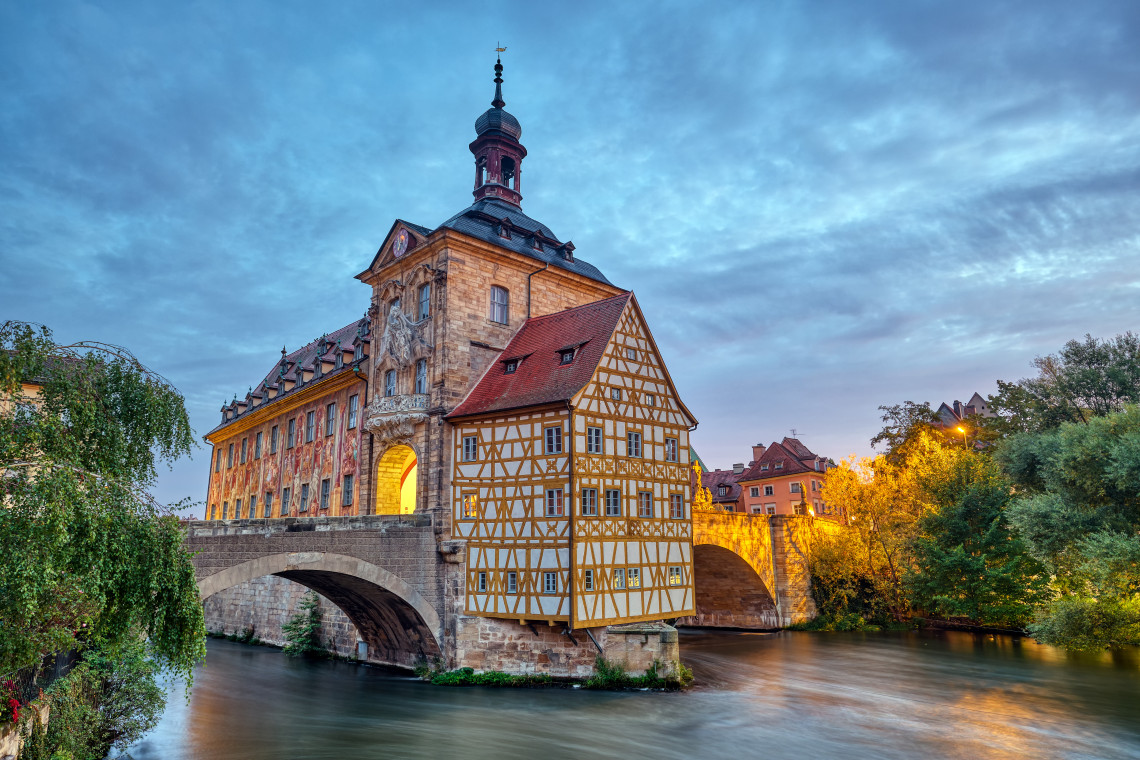
Why it's worth a stop. UNESCO listed since 1993. Bamberg has 2,300+ historic buildings, more than any other German city per capita. Built on seven hills, straddling two rivers (the Regnitz), with the Old Town Hall (Altes Rathaus) built directly on a bridge over the water. Home to nine active traditional breweries — the highest brewery-to-resident ratio in Germany. Famous for Rauchbier (smoked beer), a beer style unique to Bamberg (only Schlenkerla, Spezial, and a couple of other breweries make it).
What to do. Walk the "Little Venice" (Klein-Venedig) fisherman's cottages along the Regnitz river. Cross the Old Town Hall bridge (with the astonishing painted mural facade). Visit Bamberg Cathedral (Bamberger Dom, 11th century, home to the mysterious Bamberg Horseman statue). Beer garden and Rauchbier tasting at Schlenkerla. Bamberg Christmas Market in December.
Where to base. Bamberg itself. Small enough to walk end to end. Hotel Nepomuk (Little Venice riverside) or Hotel Barock (old town) are excellent.
How to reach. ICE from Munich (2h), Nuremberg (30 min), Berlin (3h30m). Regional trains from Würzburg (1h).
Best time. Late April to mid October. Christmas market late November to December 23. Bamberg's Sandkerwa festival (August) is a huge local beer/food festival.
Suits travelers who: Love beer culture, medieval architecture, UNESCO old towns, and off-the-beaten-path Germany.
2. Regensburg: the Danube medieval
Where it is. Eastern Bavaria on the Danube, 100 km northeast of Munich. Population 152,000.
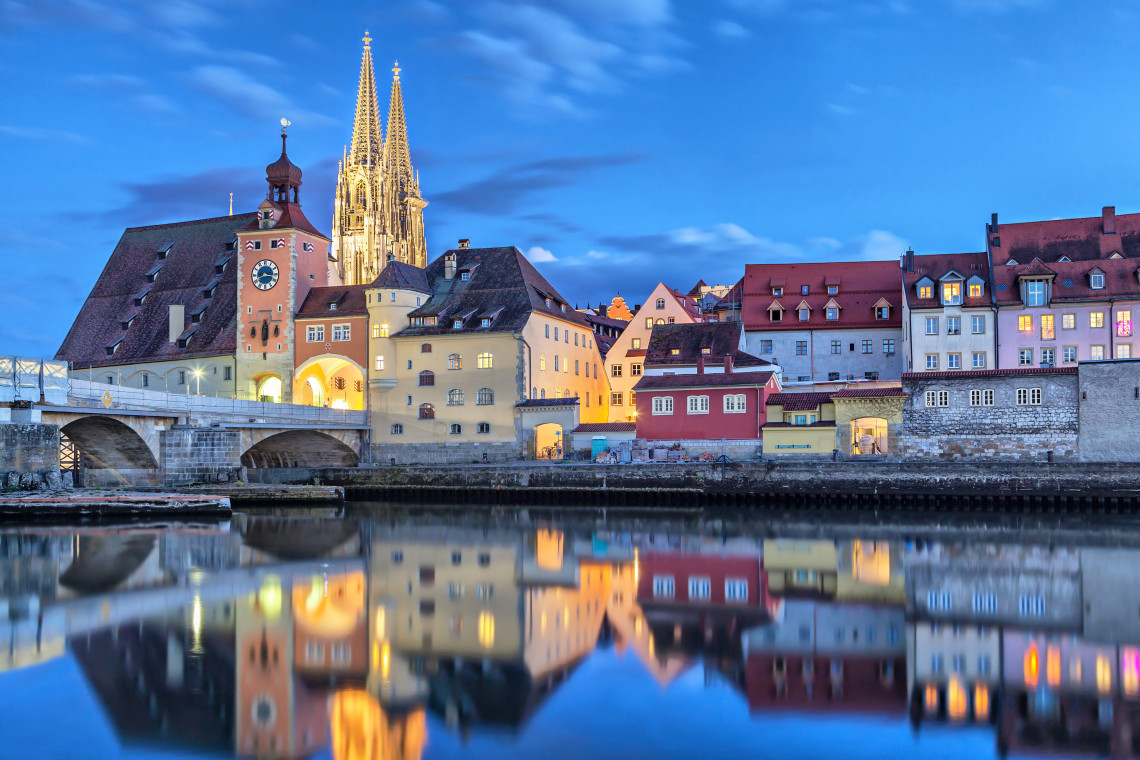
Why it's worth a stop. UNESCO listed since 2006. Regensburg has one of Germany's best-preserved medieval old towns because it was one of the few German cities not bombed heavily in WWII. The Stone Bridge (Steinerne Brücke) across the Danube is a 12th-century engineering marvel. Home to Johannes Kepler (astronomer, planetary laws). Also home to Germany's oldest continuously operating sausage kitchen (Historische Wurstkuchl), grilling Regensburg-style sausages since 1146.
What to do. Walk the medieval old town (largely intact). Cross the Stone Bridge for the classic Regensburg cathedral view. Eat sausages at the Historische Wurstkuchl. Visit Kepler's house (small museum). Boat trip up the Danube to Walhalla monument (Bavarian hall of fame designed like the Athens Parthenon).
Where to base. Regensburg itself. Hotel Bischofshof am Dom (in the old town cathedral square) or Hotel Goliath (boutique).
How to reach. ICE from Munich (1h30m), Nuremberg (1h), Berlin (5h30m via Nuremberg).
Best time. May to October.
Suits travelers who: Love medieval history, want a Danube city, or are combining Bavaria with Prague or Vienna (Regensburg is between them).
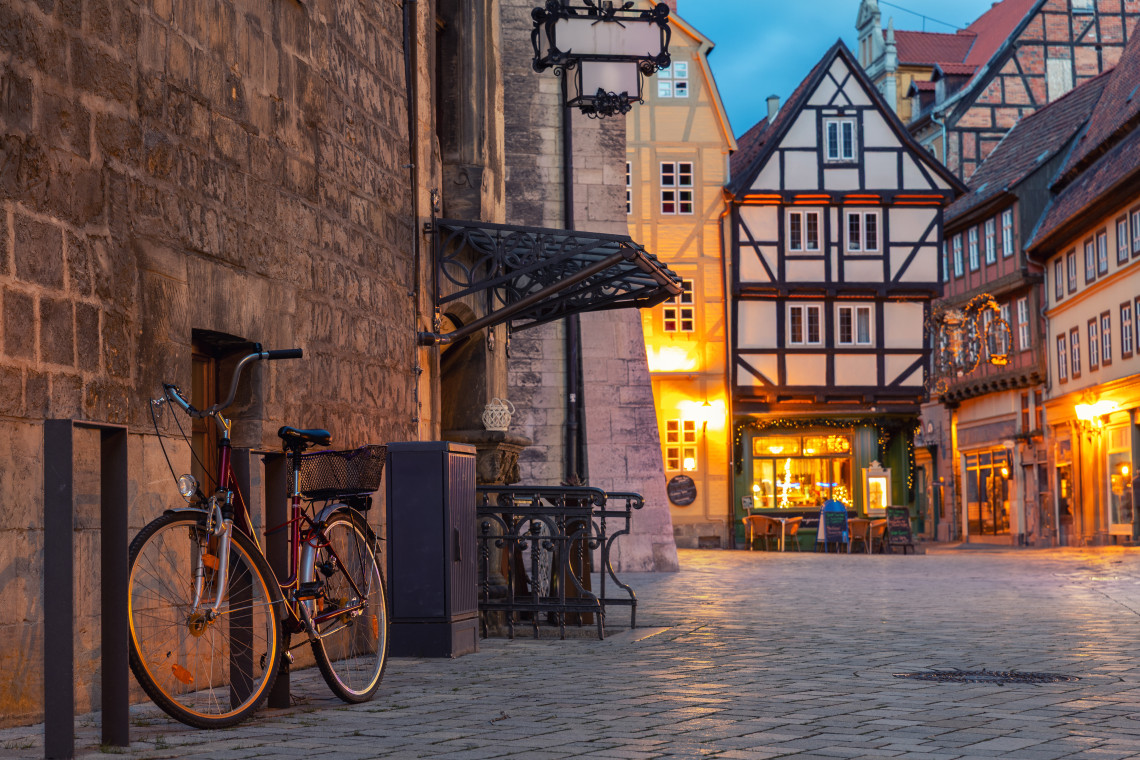
3. Quedlinburg: half-timbered UNESCO gem
Where it is. Saxony-Anhalt, in the Harz mountains, 200 km southwest of Berlin. Population 24,000.
Why it's worth a stop. UNESCO listed since 1994. Quedlinburg has 2,000+ half-timbered buildings dating from six centuries — the largest concentration of half-timbered architecture in Germany. The old town is nearly untouched, having survived WWII intact and the East German era with minimal renovation (a mixed blessing that preserved the medieval character).
What to do. Walk the cobblestone streets and Marktplatz. Visit the Collegiate Church of St. Servatius (Romanesque, on a hill above the town). See the Wernigerode Castle nearby (30 min drive). Take the Harzquerbahn steam railway through the Harz mountains.
Where to base. Quedlinburg itself. Romantik Hotel am Brühl (in the old town) is atmospheric.
How to reach. Train from Berlin (2h30m via Magdeburg) or Leipzig (2h). Best by car from either city.
Best time. Late April to October. Christmas market late November-December (small but atmospheric).
Suits travelers who: Want medieval half-timbered atmosphere without the tour buses of Rothenburg.
4. Görlitz: Germany's easternmost city
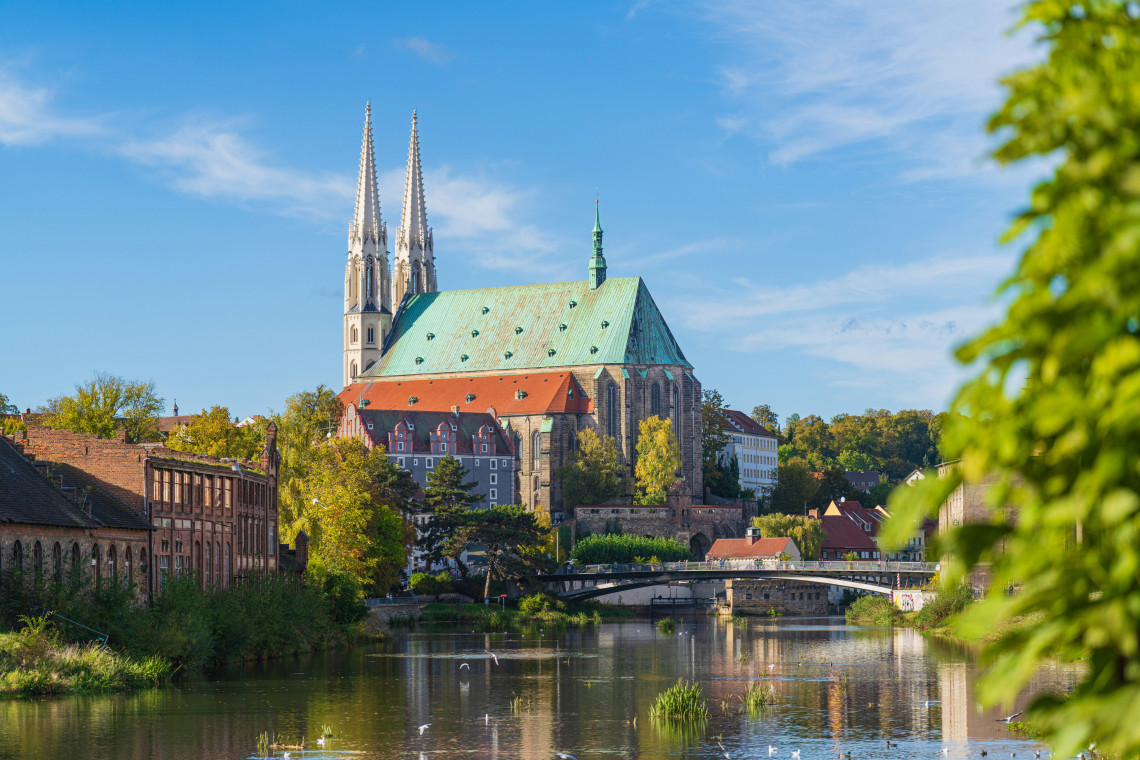
Where it is. Saxony, on the Polish border. Görlitz's old town is 30% in Poland (called Zgorzelec). 220 km east of Berlin, 100 km east of Dresden.
Why it's worth a stop. Görlitz is Germany's easternmost city, and one of its most cinematic. Over 4,000 historic buildings in Gothic, Renaissance, Baroque, and Wilhelminian styles. Wes Anderson filmed "The Grand Budapest Hotel" here (2014). Quentin Tarantino filmed "Inglourious Basterds." The old town survived WWII with almost no damage.
What to do. Walk the Untermarkt and Obermarkt squares. Cross the Old Town Bridge (Altstadtbrücke) into Zgorzelec, Poland (no border formalities). Visit Peterskirche (peter's church) and the Renaissance old town hall. Photograph the film locations from The Grand Budapest Hotel.
Where to base. Görlitz itself. Hotel Börse (in the Baroque merchant's house on Untermarkt).
How to reach. Train from Berlin (3h) or Dresden (1h30m). Car from Prague (2h30m via Zittau).
Best time. May to October.
Suits travelers who: Love architecture, are combining Germany with Poland or Czech Republic, or are film-location tourists.
5. Meissen: porcelain capital on the Elbe
Where it is. Saxony, 25 km northwest of Dresden on the Elbe River. Population 27,000.
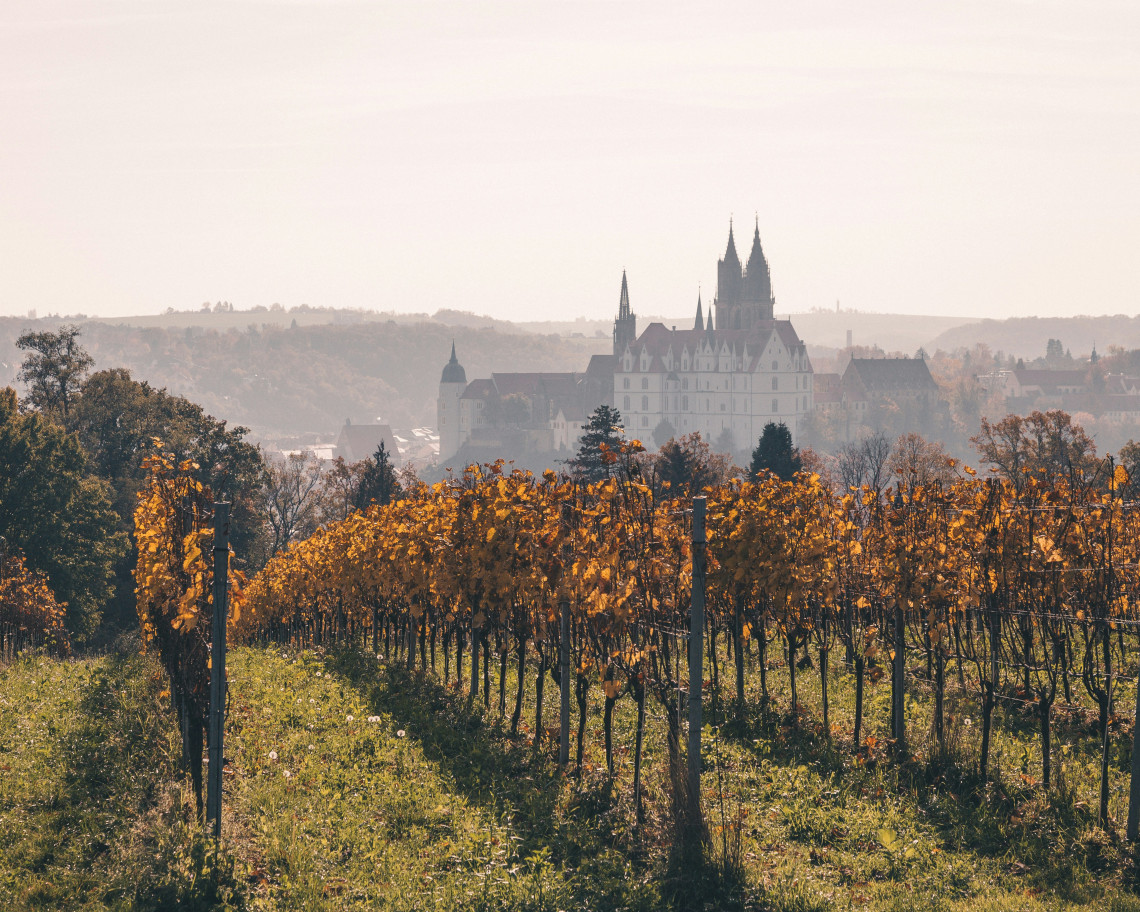
Why it's worth a stop. The birthplace of European porcelain manufacturing (1710). Meissen Porcelain (Meissener Porzellan-Manufaktur) is Europe's oldest porcelain manufacturer, still operating and marked with the famous crossed-swords logo. The town also has a spectacular baroque castle on a cliff overlooking the Elbe (Albrechtsburg, Germany's oldest castle-palace) and the Meissen Cathedral. Elbe wine country (some of Europe's northernmost wine).
What to do. Meissen Porcelain factory tour (see the crossed-swords being painted). Climb to Albrechtsburg and Meissen Cathedral. Walk the historic old town. Elbe river cruise from Dresden to Meissen (1.5 hours).
Where to base. Day trip from Dresden (25 min drive or 40 min train). Or overnight at Hotel Ross Meissen in the old town.
How to reach. Regional train from Dresden Hauptbahnhof (40 min).
Best time. May to October.
Suits travelers who: Love porcelain, baroque architecture, wine (Elbe wine is a niche), or are combining with Dresden.
6. Erfurt: medieval bridge houses and Luther
Where it is. Thuringia, central Germany, 300 km southwest of Berlin. Population 214,000.
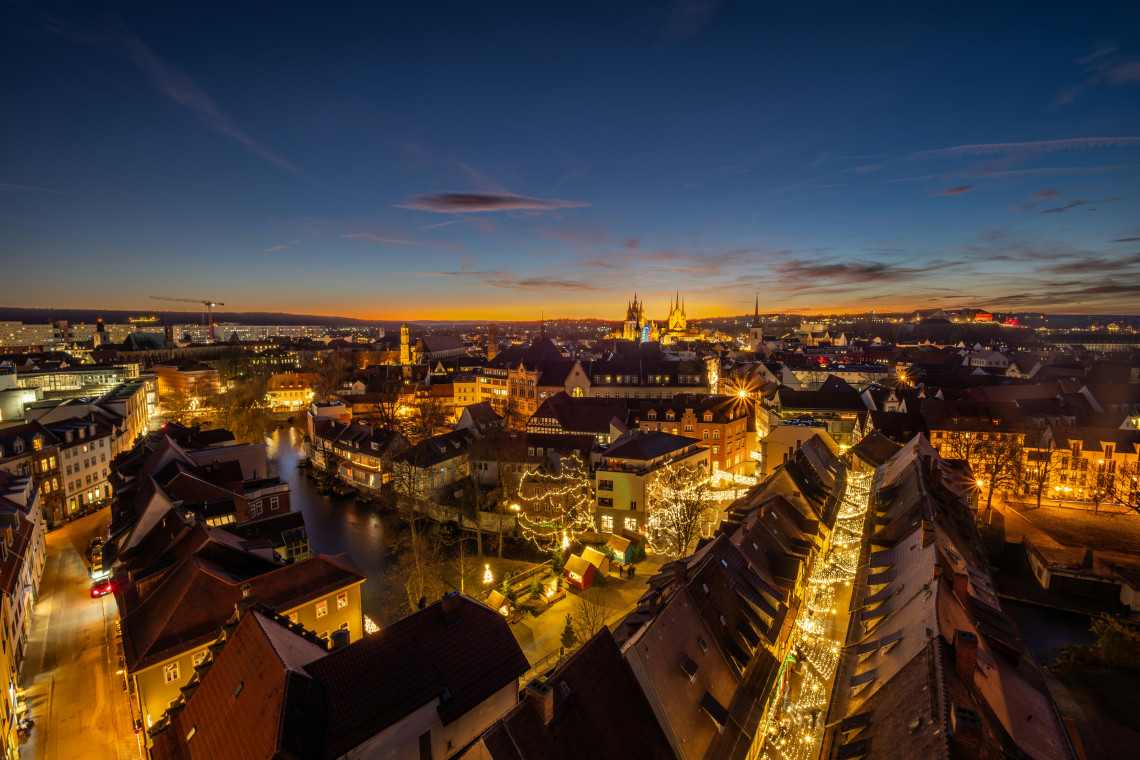
Why it's worth a stop. Erfurt has one of Germany's best-preserved medieval city centers. The Krämerbrücke (Merchants' Bridge) is a 32-meter bridge lined with houses and shops on both sides — the longest inhabited bridge in Europe. Home to Martin Luther (who studied at Erfurt University 1501-1505 before his religious revolution). The Erfurt Cathedral and the Church of St. Severus (Severikirche) share a hilltop with what may be the most striking sacred architecture ensemble in Germany.
What to do. Walk the Krämerbrücke and explore its shops. Visit the Domplatz (cathedral square) with its two churches. See Luther's monastery (Augustinerkloster) where he lived as a monk. Christmas Market on Domplatz is one of Germany's most atmospheric.
Where to base. Erfurt itself. Hotel Zumnorde or Radisson Blu Hotel Erfurt are options.
How to reach. ICE from Berlin (1h50m), Munich (2h30m), Frankfurt (2h). Well-connected.
Best time. May to October, late November to December 23 (Christmas market on Domplatz is exceptional).
Suits travelers who: Love medieval bridges, Luther/Reformation history, or are on the Berlin-Frankfurt ICE corridor and want a stop.
7. Wismar and Stralsund: the Baltic Hanseatic League
Where they are. Baltic coast of Mecklenburg-Vorpommern. Wismar is 130 km east of Hamburg; Stralsund is 220 km east of Hamburg. Population Wismar 42,000, Stralsund 59,000.
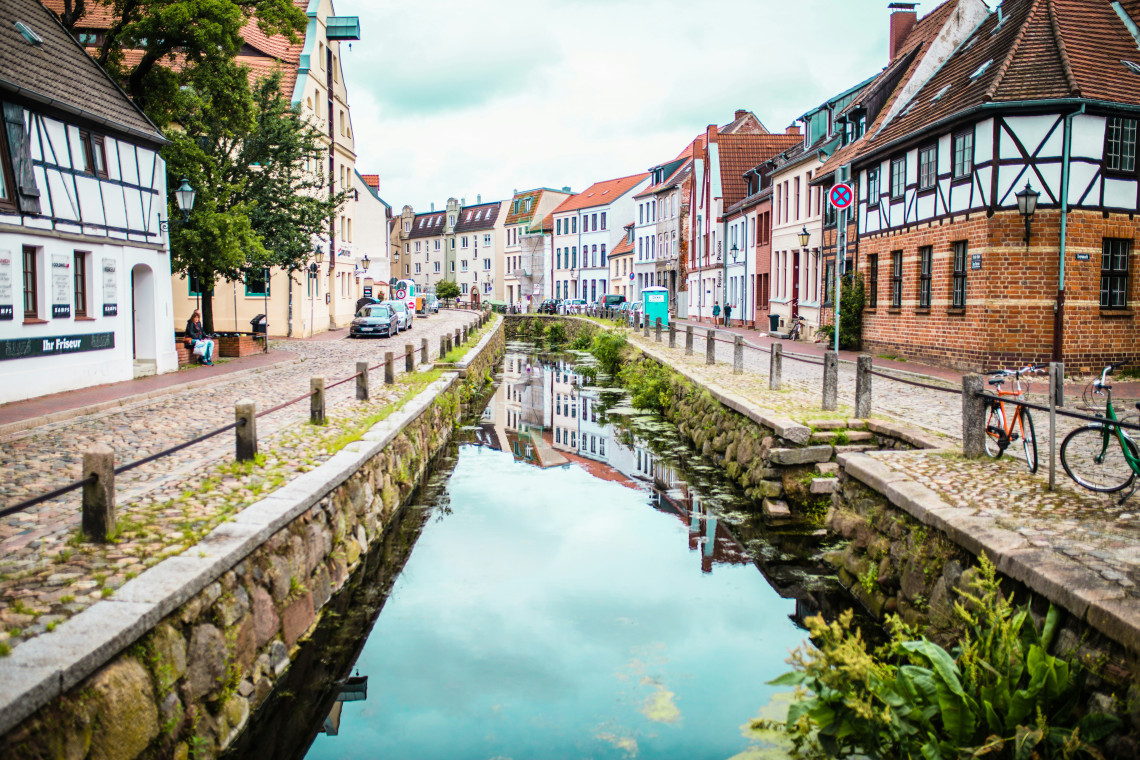
Why they're worth a stop. Both UNESCO listed since 2002 as "Historic Centres of Stralsund and Wismar." They were major Hanseatic League cities (medieval trading confederation) with distinct brick Gothic architecture — massive redbrick churches, warehouses, town halls. Different from anywhere else in Germany. Access point for Rügen island (Baltic coast summer resort).
What to do. Walk Wismar's Marktplatz (largest medieval marketplace in Northern Germany). See the Church of St. Nicholas (Nikolaikirche). In Stralsund: the Meeresmuseum (Sea Museum) with a large aquarium. Cross to Rügen island by bridge for the Kreidefelsen (chalk cliffs) at Sassnitz.
Where to base. Wismar for a shorter visit, Stralsund for combined access with Rügen.
How to reach. Train from Hamburg to Wismar (2h30m), Hamburg to Stralsund (3h30m).
Best time. Late June to early September for summer coast weather.
Suits travelers who: Love brick Gothic architecture, are combining Germany with Scandinavia (ferry from Rostock to Denmark), or want a coastal contrast to Bavaria.
8. Cochem: fairy-tale Mosel castle town
Where it is. Mosel River (tributary of the Rhine), 60 km southwest of Koblenz. Population 5,000.
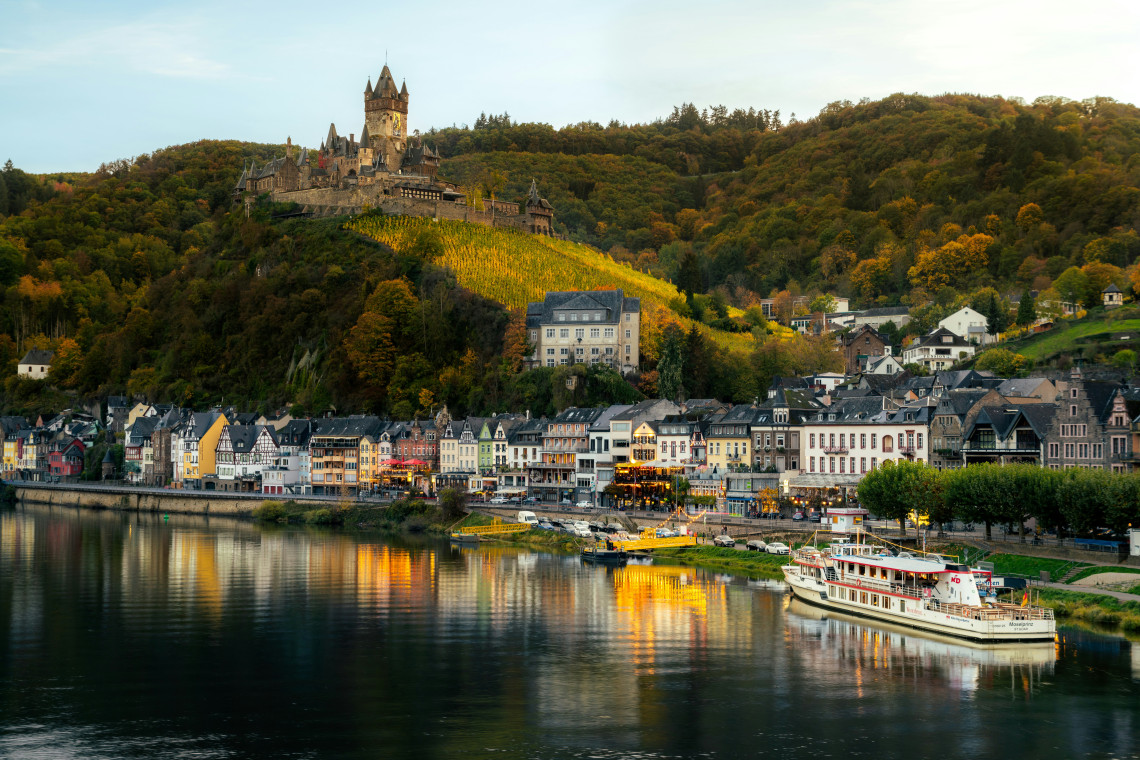
Why it's worth a stop. Cochem is what Rothenburg would be if it sat on a river. Medieval town nestled below the Reichsburg Cochem, an eye-catching Gothic Revival castle rebuilt from ruins in 1868. Half-timbered houses, cobblestone streets, wine culture. The Mosel Valley is Germany's Riesling heartland — smaller, quieter, and more scenic than the more-famous Rhine.
What to do. Reichsburg Cochem castle tour. Wine tastings at local wineries (Cochem has several excellent Riesling producers). Boat trip on the Mosel River. Bicycle path along the Mosel (one of Europe's great flat river bike rides).
Where to base. Cochem itself. Villa Vinum Cochem (boutique wine hotel) or Hotel Villa Tummelchen.
How to reach. Train from Koblenz (30 min) or Frankfurt (2h via Koblenz). Best by car for exploring the Mosel Valley.
Best time. May to October. September for wine harvest.
Suits travelers who: Prefer the Mosel to the Rhine, love wine and small-scale scenery, want a quieter alternative to Rüdesheim or Bacharach.
9. Lübeck: the marzipan Baltic capital
Where it is. Baltic coast, 65 km northeast of Hamburg. Population 218,000.
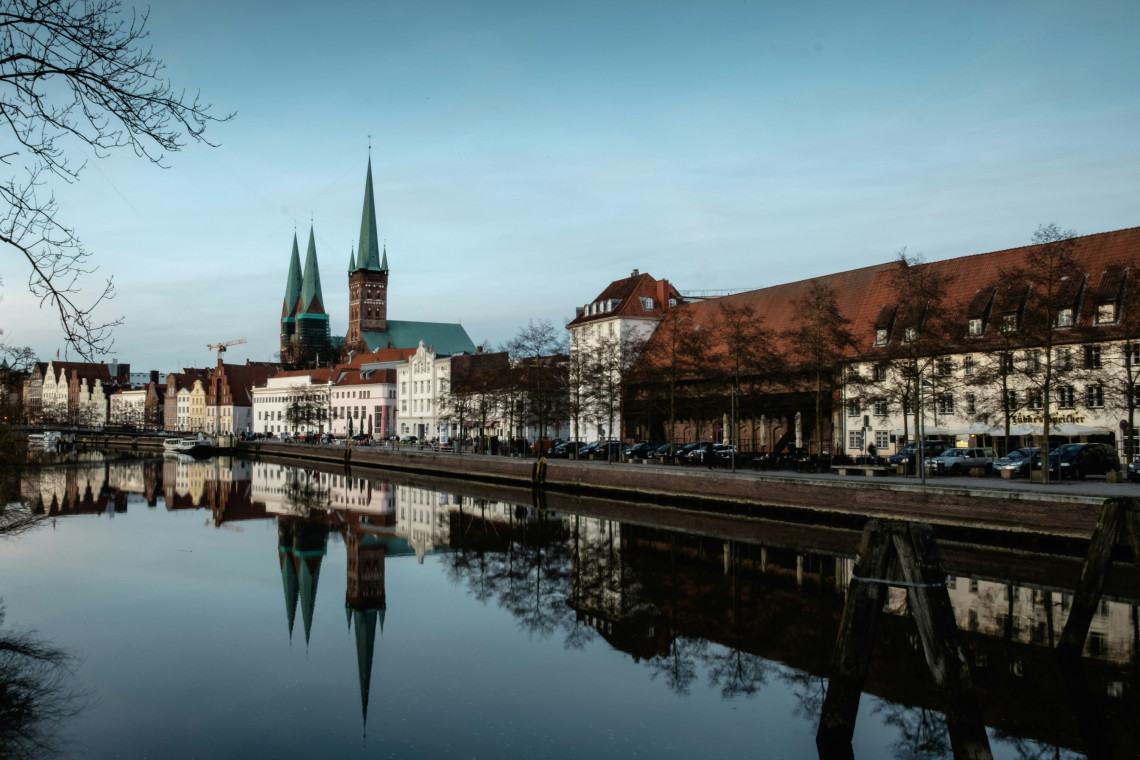
Why it's worth a stop. UNESCO listed since 1987. Once the "Queen of the Hanseatic League" — Europe's most powerful medieval trading city. The distinctive Holstentor (city gate) with its two Gothic towers is on every German 2-euro coin. Home to Niederegger Marzipan, the world's most famous marzipan manufacturer (since 1806). Thomas Mann (Nobel Prize novelist) was born here.
What to do. Photograph the Holstentor. Walk the old town (island surrounded by river channels). Visit St. Mary's Church (Marienkirche, brick Gothic masterpiece). Marzipan at Niederegger Café. Thomas Mann's house museum. Trave river boat tour.
Where to base. Lübeck itself. Hotel Klassik Altstadt (in the old town).
How to reach. Train from Hamburg (45 min).
Best time. May to September. Christmas market late November to December 23.
Suits travelers who: Love Baltic history and architecture, are combining Germany with Copenhagen or Scandinavia, or are marzipan enthusiasts.
10. Passau: three rivers city
Where it is. Eastern Bavaria at the Bavarian-Austrian border, 200 km northeast of Munich. Population 51,000.
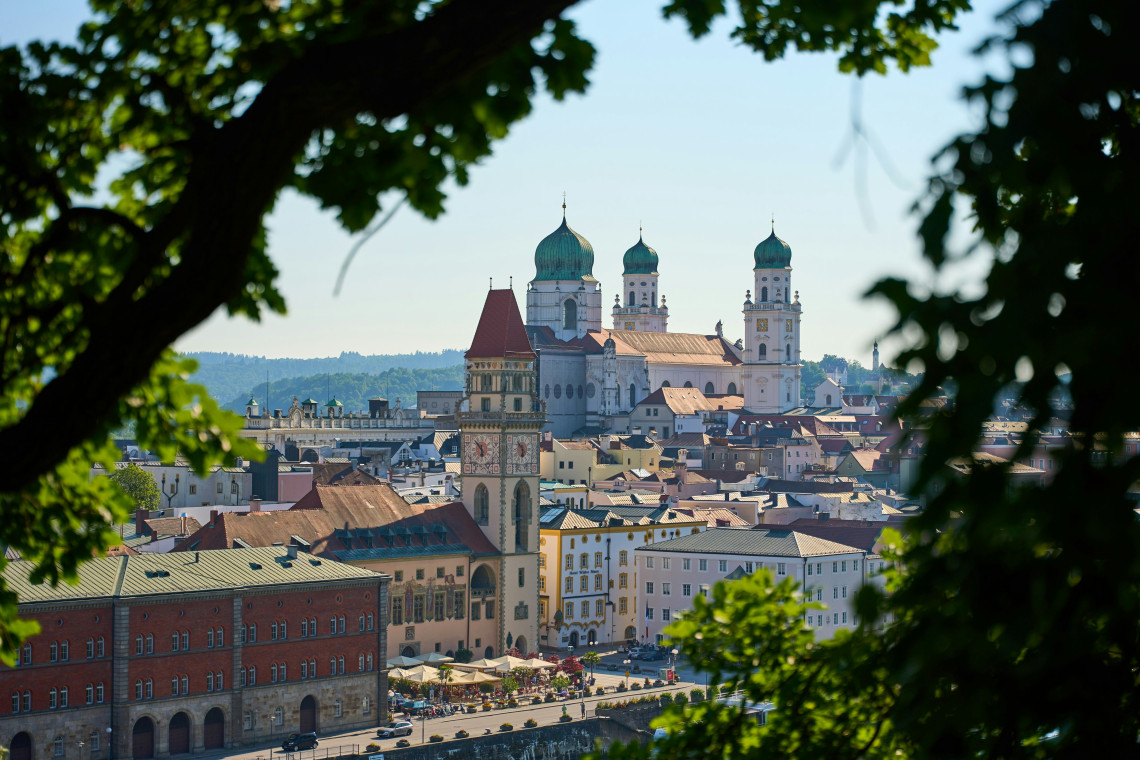
Why it's worth a stop. Passau sits at the confluence of three rivers — the Danube, Inn, and Ilz — which flow together in different colors (green, blue-gray, dark). The old town is Italian in feel because after a devastating fire in 1662, Passau was rebuilt by Italian baroque architects. The Cathedral of St. Stephen has the largest cathedral organ in Europe (17,974 pipes).
What to do. Walk to the "three rivers point" (Dreiflüsseeck) to see the confluence. Cathedral organ concert (daily May-October). Boat trip on the Danube toward Vienna (Passau is where Viking, AmaWaterways, and other Danube river cruises begin/end). Cross to Austria (Innbrücke bridge, 5 min walk).
Where to base. Passau itself. Hotel König or Wilder Mann Hotel.
How to reach. ICE from Munich (2h20m). Regional trains from Salzburg (2h).
Best time. May to October. Cathedral organ concerts May to October (daily).
Suits travelers who: Are starting/ending a Danube river cruise, combining Bavaria with Austria, or love unusual river confluences.
How to combine hidden German towns into a trip
Most travelers can fit 2-3 of these into a standard Germany trip. Natural combinations:
Bavaria beyond Rothenburg (5-6 nights): Munich + Bamberg + Regensburg + Passau. All UNESCO. All Bavarian. All connected by ICE.
Eastern Germany deep (5-7 nights): Berlin + Dresden + Meissen + Görlitz + Quedlinburg. Post-reunification atmosphere with baroque and half-timbered layers.
North Germany coast (5-6 nights): Hamburg + Lübeck + Wismar + Stralsund + Rügen island. Brick Gothic + Baltic beaches.
Rhine-Mosel wine trip (4-5 nights): Rüdesheim (Rhine) + Cochem (Mosel) + Trier. Wine, castles, river cruises.
Central Germany UNESCO tour (5-6 nights): Frankfurt + Erfurt + Quedlinburg + Bamberg + Nuremberg. Best for medieval-city enthusiasts.
When to visit hidden German villages
Late April to early October: Best for all towns. Warm weather, everything open.
September: Wine harvest along the Rhine and Mosel. Cochem, Meissen wine villages at their most atmospheric.
Late November to December 23: Christmas markets in Bamberg, Erfurt, Quedlinburg, Lübeck, Regensburg all worth a visit. Smaller and more traditional than the big Nuremberg/Munich/Dresden markets.
January-March: Very quiet. Some restaurants close in the smaller towns.
How to reach hidden German towns
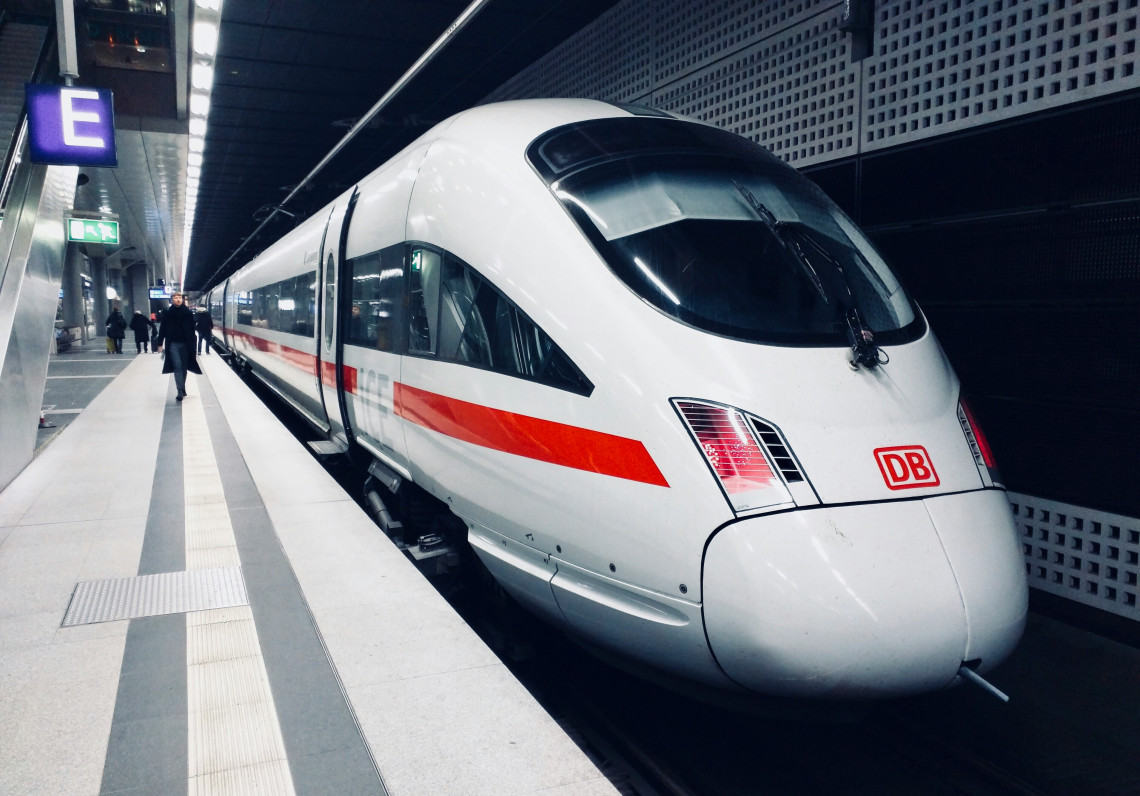
- By train: ICE and regional trains reach all 10 towns. Deutsche Bahn is the key.
- By car: Best for combining multiple towns. Rental in Frankfurt, Munich, Berlin, or Hamburg.
- By river cruise: Passau, Regensburg, and Cochem are stops on multi-day river cruises (Danube, Rhine, Mosel).
What to pack for hidden German towns
Cash. Many small-town restaurants and pensions prefer cash. Bring 200-300 euros for a hidden Germany trip.
Comfortable walking shoes. All these towns are best walked, with cobblestone streets.
Camera. Bamberg, Regensburg, Quedlinburg, Görlitz are photographers' cities.
Warm layers. Even in summer, some regions get evening cool.
Patience for smaller Sunday services. Small-town restaurants close Sundays more strictly than big cities.
Honest tradeoffs
The pros: Fewer crowds than Munich, Rothenburg, or Neuschwanstein. Deep cultural authenticity. Excellent regional food. Meaningfully cheaper hotels. Discover parts of Germany most Americans have never heard of.
The cons: Less English coverage than major cities. Fewer high-end hotels. Regional trains can be slow. Some towns require overnight to experience properly (day-tripping cannot capture the empty-morning atmosphere).
To get the best version: Overnight in at least 2 of these towns. Rent a car for exploring multiple in the same region. Try local food specialties (Bamberg smoked beer, Lübeck marzipan, Cochem Mosel wine). Combine with famous destinations for contrast.
Frequently asked questions
What is the most beautiful hidden town in Germany? Among the most often cited: Bamberg for beer culture + UNESCO, Regensburg for Danube medieval, Quedlinburg for half-timbered concentration, Cochem for fairy-tale castle setting.
Which small German town is best for first-time visitors? Bamberg — easy from Munich or Nuremberg, UNESCO listed, beer culture, and walkable in a day. Second: Cochem for river + castle atmosphere.
Are these towns crowded? Meaningfully less than Rothenburg, Munich, or Neuschwanstein. Peak summer weekends can be busy but nothing overwhelming. Weekdays are calm.
Can I reach these towns without a car? Yes, mostly. Bamberg, Regensburg, Erfurt, Lübeck, Passau, Meissen, and Görlitz are all accessible by ICE or regional trains. Quedlinburg, Cochem, Wismar, Stralsund benefit from a car for full exploration.
What is the most under-the-radar German town? Görlitz. Almost no international tourism, spectacular architecture, film-location cred, and Germany's easternmost city. Or Wismar and Stralsund on the Baltic — practically unknown to North American travelers.
Are these towns safe to visit? Very safe. All 10 are traditional small German towns with very low crime rates. Standard travel precautions apply.
Which is best for medieval architecture? Regensburg (largely intact medieval center), Quedlinburg (2,000+ half-timbered), Görlitz (4,000+ historic buildings across styles).
Which town is best for wine lovers? Cochem (Mosel Riesling) and Meissen (Elbe wine, one of Europe's northernmost). Also Bamberg for beer culture.
Which is best for Christmas markets in hidden Germany? Erfurt (Domplatz Christmas Market) and Bamberg (traditional Bavarian). Both smaller than the famous Nuremberg or Dresden markets but more atmospheric with fewer international crowds.
Can I do a multi-town hidden Germany trip? Yes. A Bavarian route (Bamberg + Regensburg + Passau) takes 4-5 nights. An eastern Germany route (Dresden + Meissen + Görlitz + Quedlinburg) takes 5-7 nights.
When is the best month for hidden Germany? May to September for warm weather. September for wine harvest along the Mosel. Late November to mid December for Christmas markets in Bamberg, Erfurt, Lübeck.
Should I include hidden Germany on a first trip? For most first-time travelers with 10+ days, adding 1-2 of these towns improves the trip meaningfully. For under 7 days, focus on the famous destinations first and save the hidden towns for a second visit.
The Germany travelers remember most.
Our Germany travel experts route hidden town stops into trips of every length.
See Germany Packages Tailor-Made Trip