August 11, 2026 • 13 min read
The Colosseum is the most visited monument in Italy and the largest surviving structure from the Roman Empire. Combined with the Roman Forum and Palatine Hill next door, it forms the greatest archaeological complex in the Western world. It is also one of the most poorly visited: nine in ten travelers arrive without booking, queue for an hour, and rush through in 45 minutes.
Here is how to visit properly. Which ticket to book, when to arrive, how to add the hypogeum and Arena floor, and how to combine all three sites without collapsing.
The short answer
The Colosseum, Roman Forum, and Palatine Hill are visited together on a single combined ticket. You must book online in advance. Same-day tickets are almost never available. Timed entry is enforced strictly at the Colosseum.
To visit properly, you need to:
- Book the combined ticket (Colosseum + Forum + Palatine) 15 to 30 days ahead through coopculture.it, the only official reseller.
- Choose an early morning slot (8:30 or 9:00am) or the last-hour slot (about 1 hour before sunset) for the best light and smallest crowds.
- Consider the Full Experience ticket if you want the Arena floor and hypogeum (underground) access. Sells out fastest.
- Allow 3 to 4 hours minimum for all three sites. A full day is not overkill.
- Wear comfortable shoes. The Forum is uneven and unshaded.
What actually is the Colosseum?
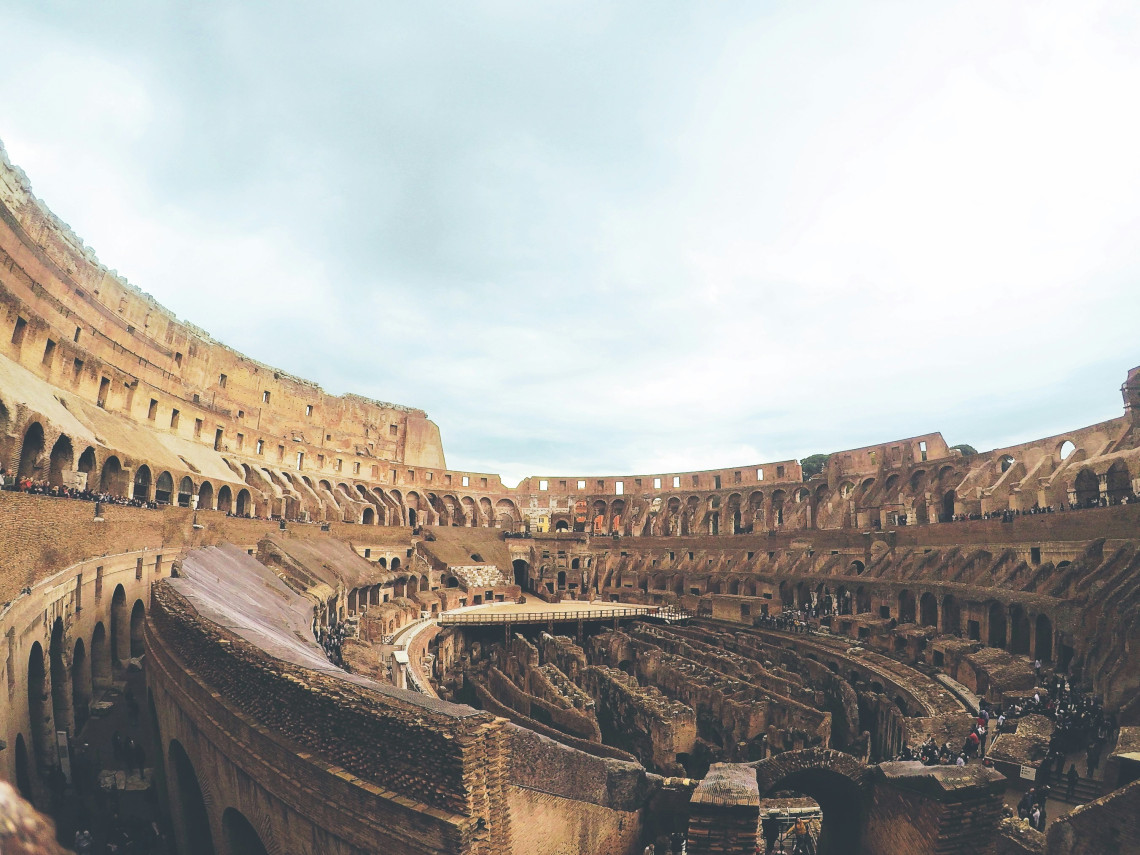
The Colosseum (formal name: Amphitheatrum Flavium or Flavian Amphitheatre) is a Roman amphitheatre built between 72 and 80 AD under the emperors Vespasian and Titus, completed by Domitian. It seated 50,000 to 80,000 spectators for gladiator games, executions, animal hunts, and public spectacles for over 400 years.
- Height: 48 meters (157 feet), the equivalent of a 16-story building.
- Circumference: 545 meters (1,788 feet).
- Material: Travertine limestone, tuff, and brick-faced concrete.
- Named "Colosseum" from a nearby colossal statue of Nero that once stood next to it.
The last recorded gladiator combat was in the 5th century. After that the Colosseum was used as a quarry, church, cemetery, and fortress. Roughly two thirds of the original structure was lost to earthquakes and stone-robbing by the 15th century. What survives is still spectacular.
Since 1980 it has been a UNESCO World Heritage site. Since 2007 it has been officially named one of the New Seven Wonders of the World.
Just outside the Colosseum walls stands the Arch of Constantine (315 AD), the largest surviving Roman triumphal arch. Free to view.
The Roman Forum and Palatine Hill
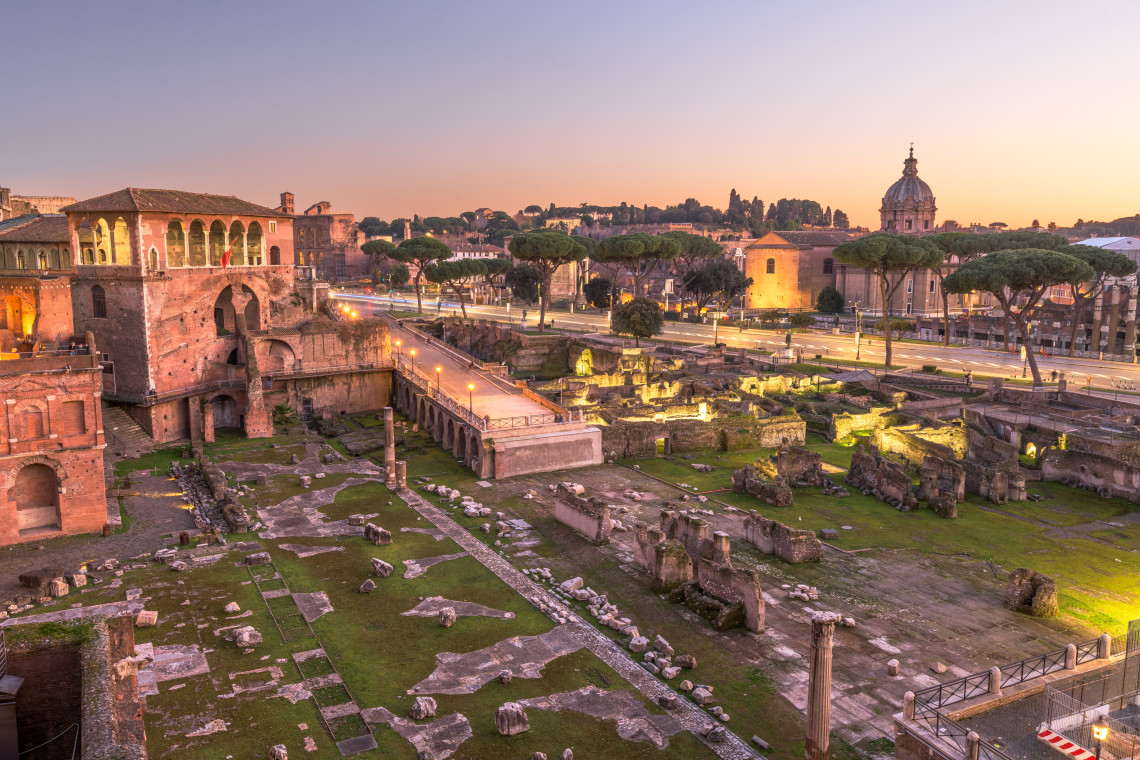
The Roman Forum (Foro Romano) was ancient Rome's civic and political center for over 1,000 years. Site of the Senate, courts of law, victory processions, and public speeches by Cicero and Julius Caesar. Now an archaeological park with dozens of visible ruins: the Curia (Senate house), the Temple of Julius Caesar, the Arch of Titus, the Arch of Septimius Severus, the Temple of Saturn, and the House of the Vestal Virgins.
The Palatine Hill (Palatino) is where Rome was founded (traditionally April 21, 753 BC, by Romulus). The imperial palaces sat here for four centuries. The word "palace" comes from Palatine. Best panoramic view over the Forum below.
All three sites are visited on the same combined ticket. Enter at the Colosseum or Roman Forum entrance and use the ticket to move between them.
How to book Colosseum tickets
Only book on the official website: coopculture.it (the exclusive official ticket concessionary) or the Italian Ministry of Culture's Colosseo Archaeological Park page. Every other site is a reseller charging 30-100% more.
The main ticket options:
- Colosseum, Roman Forum & Palatine, 24h combined ticket (€18 + €2 booking fee): Standard entry to all three sites. Includes basic Colosseum access (2nd tier walkways). The one 95% of visitors need.
- Colosseum, Roman Forum & Palatine, Full Experience (€24 + €2 booking fee): Adds Arena floor access (where the gladiators fought) OR the Underground (hypogeum) access, depending on which sub-tier you pick. Sells out fastest. Book 30+ days ahead.
- Super Ticket (€22 + €2): Combined ticket + special access to sites that open periodically (Cryptoporticus of Nero, Museum of Palatine, House of Augustus). Availability varies.
- Under-18 tickets: Free but still require an online booking with a small €2 admin fee.
- First Sunday of the month: Free entry to all state museums including the Colosseum. Very long queues; book a free timed slot online.
Timing your ticket:
- You must arrive within a strict 30-minute window at the Colosseum entrance. Late arrival = no entry.
- The Roman Forum and Palatine parts of your combined ticket have no strict time slot; you can enter them any time during the 24-hour window.
- Book 15 to 30 days ahead in high season (April to October). 5 to 7 days in winter usually works.
- Full Experience (Arena floor / hypogeum) needs 30 to 60 days ahead.
Booking mistakes to avoid:
- Do not book from any URL other than coopculture.it or the parcocolosseo.it official page. Multiple lookalike sites charge 3x for the same tickets.
- Bring the passport used in the booking. ID is checked and must match the ticket exactly. Non-matching name = refused entry, no refund.
- Book each person on their own passport.
What's the difference between Basic, Arena, and Underground?
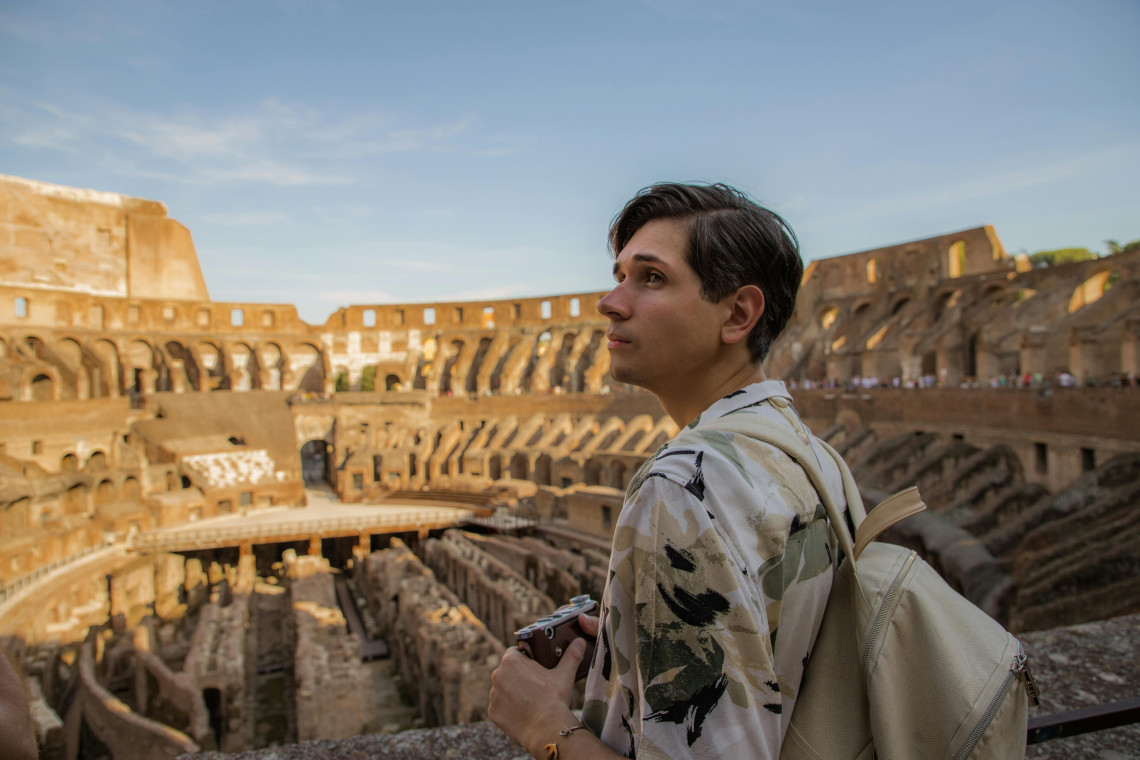
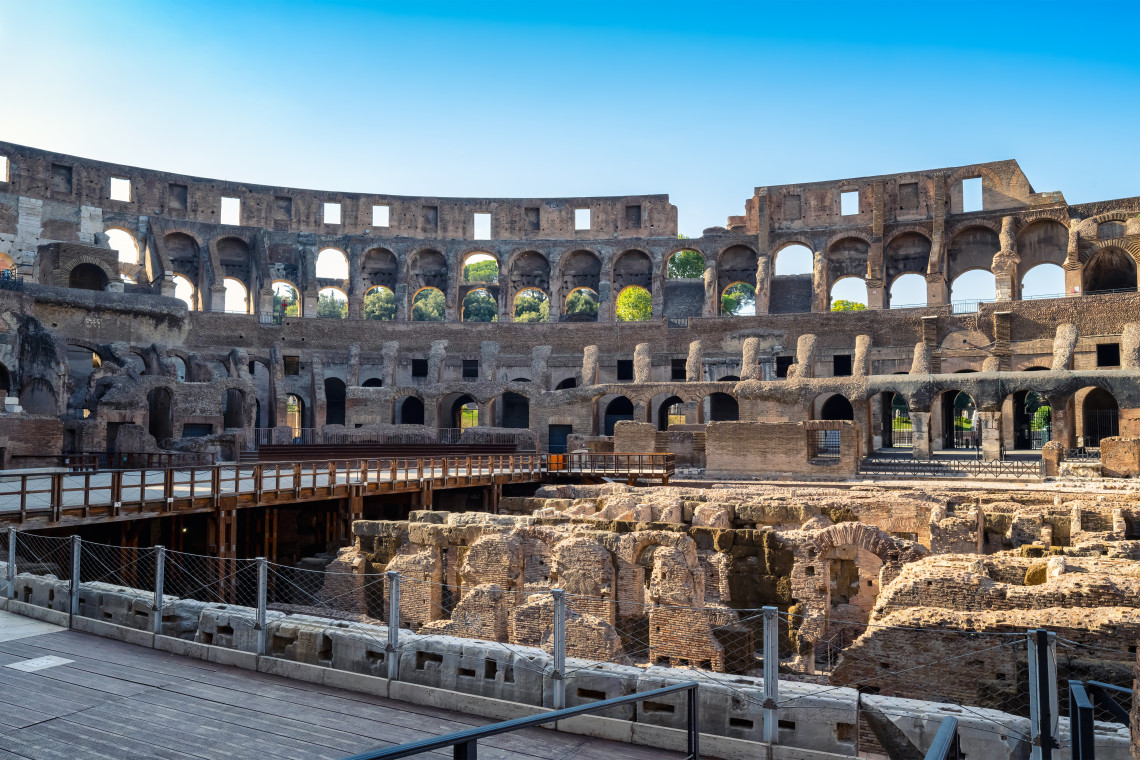
Basic (standard combined ticket). Access to the 1st and 2nd tier walkways inside the Colosseum. You look down onto the reconstructed Arena floor and the exposed underground (hypogeum) from above. This is what 90% of visitors see.
Arena Floor add-on. You walk onto the reconstructed Arena floor itself. You stand where the gladiators stood. Dramatically different perspective. Sold as part of Full Experience.
Underground (hypogeum) add-on. Guided-tour-only access to the tunnels below the Arena floor where gladiators, prisoners, and wild animals waited to be lifted up onto the arena. Small groups, atmospheric, limited slots. Only accessible through Full Experience + underground.
Which should you pick?
- First-time Rome visitor with limited budget: Basic combined ticket. Great experience, cheaper.
- Anyone who cares about ancient Rome or history: Full Experience with Arena floor. The Arena floor makes the visit real.
- Serious history obsessive: Full Experience with underground. Book 60 days ahead.
When is the best time to visit?
By time of day:
- 8:30 to 9:30am: Coolest, quietest, best light. Start here.
- 10am to 2pm: Peak crowds and heat. Avoid if you have flexibility.
- 3pm to 5pm: Second wave of crowds, hot in summer.
- 5pm to 1 hour before sunset: Golden light on the travertine. Second-best window.
- Night tours (occasional summer season): Very special. Book far ahead.
By season:
- March to May: Best. Mild temperatures, no crowds yet.
- June to August: Peak crowds. The Colosseum interior can hit 40°C+ (104°F+) in direct sun. Bring water, a hat, and SPF 50. The Roman Forum has no shade.
- September to October: Second sweet spot.
- November to February: Coolest, quietest, cheapest. Grey skies but no queue. Roman Forum is atmospheric in winter light.
The suggested visit route
Total time: 3 to 4 hours minimum. Full day possible.
1. Colosseum first (90 min to 2 hours). Enter at your booked time. Follow the tier walkways clockwise. Look down onto the Arena floor and hypogeum. Read the panels; the audio guide (rentable €5.50) adds context. Photos work best from the second tier.
2. Exit toward the Arch of Constantine. Photograph the outside of the Colosseum here (the best exterior shot).
3. Roman Forum and Palatine (2 hours). Enter via the Via Sacra gate. Walk the ancient main street of Rome. Key ruins: the Curia, Temple of Saturn, Arch of Titus, Temple of Vesta, House of the Vestal Virgins, Basilica of Maxentius.
4. Palatine Hill (30 to 60 min). Climb up to the imperial palace ruins. The Farnese Gardens at the top give one of Rome's greatest views over the Forum. Sunset from Palatine is spectacular in summer.
5. Exit toward Circus Maximus or Piazza Venezia. Lunch or coffee.
Getting there
Metro: Line B, Colosseo stop. Two-minute walk. The easiest option.
Bus: Multiple lines (75, 87, 175, 810). Stop "Colosseo."
Tram: Line 3.
Taxi: €10 to €15 from central Rome. Faster in the mornings; slower in the evening rush hour.
Walking: From Piazza Venezia (Vittoriano monument), 10 minutes downhill along Via dei Fori Imperiali. Best approach the first time; you walk past the Roman Forum ruins and the Arch of Titus before reaching the Colosseum.
What to bring
- Passport or matching ID. Non-negotiable.
- Water bottle. Refill fountains inside the Forum area.
- Sunhat and SPF 50 in warm months. The Forum has zero shade.
- Comfortable walking shoes. Cobbles, uneven ancient stones, hills.
- Small backpack only. Large bags require the free cloakroom (which slows you down).
- Cash or card. Both accepted for the audio guide and gift shop.
What to skip
- Selfie sticks: Banned inside the Colosseum.
- Large tripods: Require a permit.
- Suitcases and large backpacks: Not allowed.
- Food and glass containers: Not permitted inside.
Guided tours vs audio guide vs self-guided
Self-guided with the on-site audio guide (€5.50 for adults): Fine for most travelers. The panels around the site do most of the work.
Guided tours (€40 to €80 per person for a small group): Worth it if you want context and characters, especially for the Arena floor and hypogeum. Recommended operators: Take Walks, Walks of Italy, Context Travel, Through Eternity. Book directly with these operators, not through OTA resellers.
Guided private tour (€200 to €400): Best for families or history-focused travelers who want deep context.
Skip: Aggressive street tour hawkers around the entrance. They often oversell scam packages. Ignore anyone approaching you unsolicited.
Where to eat near the Colosseum
The immediate blocks around the Colosseum are tourist traps. Walk 10 minutes uphill to Monti (Rome's most atmospheric ancient neighborhood) or downhill to Testaccio.
Monti (uphill, walkable):
- La Taverna dei Fori Imperiali: Classic Roman trattoria. Cacio e pepe done right.
- La Carbonara (Piazza Madonna dei Monti): Roman classics on the terrace.
- Ai Tre Scalini: Wine bar with excellent charcuterie.
- Fatamorgana Monti: One of Rome's best gelaterias.
Testaccio (a metro or bus ride south):
- Flavio al Velavevodetto: Legendary Roman trattoria dug into an ancient amphora dump.
- Roscioli Salumeria: Michelin-adjacent classic Roman food.
Skip: Any restaurant with a laminated multi-language menu within 200m of the Colosseum entrance.
How to combine with the rest of Rome
One perfect Rome day (Colosseum + surroundings):
- 8:30am: Colosseum entry.
- 10:30am: Arch of Constantine. Photo stop.
- 11am: Roman Forum.
- 1pm: Palatine Hill. Farnese Gardens for the view.
- 2pm: Lunch in Monti.
- 4pm: Walk to Piazza Venezia (10 min). Vittoriano monument (Terrazza delle Quadrighe rooftop, €12, best panoramic view of Rome).
- 5:30pm: Trevi Fountain (15-min walk).
- 6:30pm: Aperitivo in Trastevere or Piazza Navona.
Rome in 3 days (the classic itinerary):
- Day 1: Colosseum + Roman Forum + Palatine + Monti + Trevi Fountain + Trastevere.
- Day 2: Vatican Museums + Sistine Chapel + St Peter's Basilica + Castel Sant'Angelo + Piazza Navona + Pantheon.
- Day 3: Borghese Gallery + Villa Borghese park + Spanish Steps + a food tour (Trastevere or Testaccio).
Practical tips for visiting
Do not queue at the ticket office. Prebooking is essentially mandatory now. Same-day availability is rare, and when it exists the queue at the ticket window is 60 to 90 minutes.
Security screening. Airport-style X-ray at the entrance. Allow 15 minutes.
Toilets. Free, inside the Colosseum on the ground floor and in the Palatine Hill area. None between the Arch of Constantine and the Forum entrance.
Accessibility. The Colosseum has a lift for the second tier. The Forum has some accessible paths but is largely uneven ancient stone. Ask at the entrance for the accessible route.
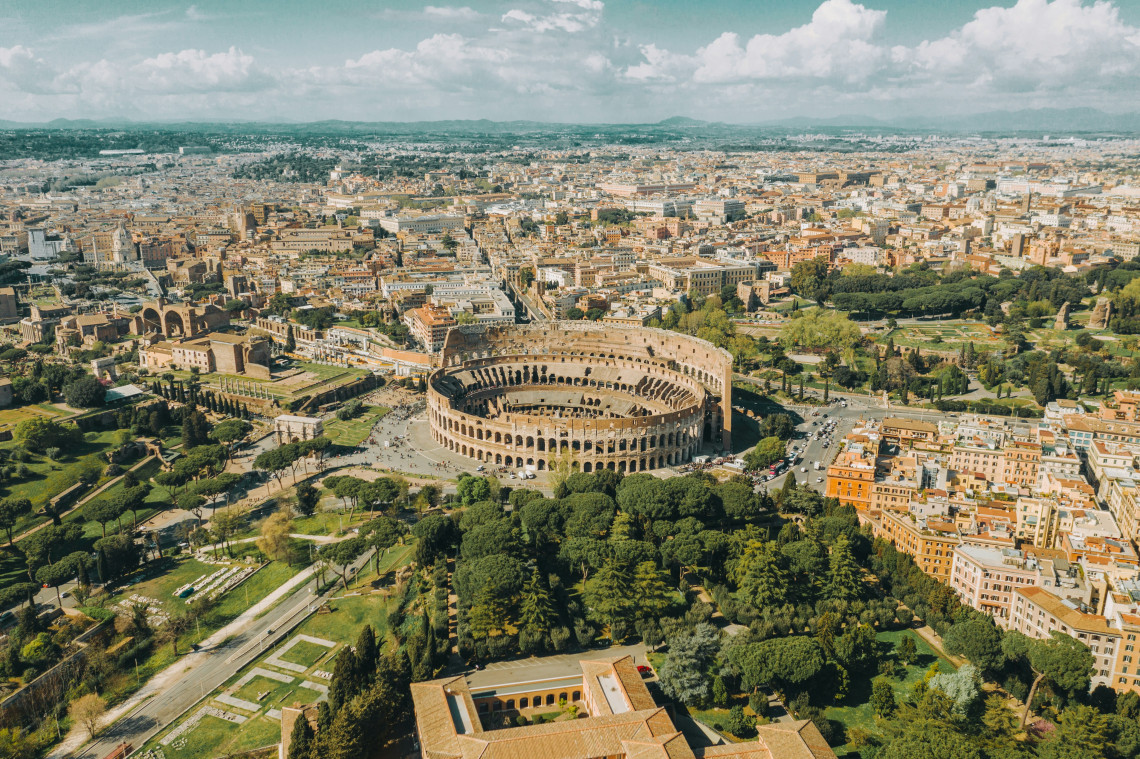
Photography. Non-commercial photography is free. Best exterior shots from the Arch of Constantine side and from the Oppian Hill park (5 min walk east).
Free Sundays. First Sunday of every month is free entry to state museums including the Colosseum. Book a free timed slot online. Expect record crowds.
Guides asking for money on-site. Ignore. Licensed guides come with pre-booked tickets and identifiable credentials. Anyone approaching you unsolicited at the entrance is not licensed.
Rome's ZTL (restricted traffic zone). Do not try to drive to the Colosseum. Fines are €70+ per infraction and the area is heavily camera-controlled.
Is the Colosseum worth the money?
Yes. It is one of the world's essential monuments and the single most visited paid attraction in Italy (over 7 million visitors per year). Even the standard combined ticket (€20 total) is one of the best-value cultural entries in Europe: three world-class sites, one ticket, valid 24 hours.
The Full Experience (€26) is worth the €6 premium for anyone with genuine interest in ancient Rome. Standing on the Arena floor is a very different experience from looking down at it.
Bottom line
The Colosseum is essential. Book online 15 to 30 days out through coopculture.it, choose an early morning or last-hour slot, and pair it with the Forum and Palatine in one visit. Add Arena floor access if you can. Combined with the Vatican the next day, it gives you the two greatest cultural halves of Rome in 48 hours.
Frequently asked questions
How do I book Colosseum tickets? Book online at coopculture.it (the only official reseller). €18 to €24 depending on which ticket tier you choose. Never buy from resellers.
Can I buy Colosseum tickets on the day? Very rarely. Same-day tickets sell out quickly and the queue at the ticket office is often 60 to 90 minutes. Book 15 to 30 days ahead.
What is the difference between the combined ticket and Full Experience? Combined ticket (€18) gives you standard access to the Colosseum, Roman Forum, and Palatine Hill. Full Experience (€24) adds the Arena floor or the Underground (hypogeum) with a guided component.
Is the Colosseum worth visiting? Yes. It is Italy's most visited monument and one of the New Seven Wonders of the World. Essential Rome.
How long does a Colosseum visit take? The Colosseum itself takes 90 minutes to 2 hours. Combined with the Roman Forum and Palatine, allow 3 to 4 hours total. A full day is not overkill.
What is the best time to visit the Colosseum? Early morning (8:30 to 9:30am) or the last-hour slot before closing. Avoid midday crowds and heat in summer.
Are the Roman Forum and Colosseum on the same ticket? Yes. The standard ticket covers the Colosseum, Roman Forum, and Palatine Hill for 24 hours.
Do I need to book the Roman Forum separately? No. It is included in the combined Colosseum ticket.
Is there a dress code at the Colosseum? No. The Colosseum has no dress code. However, comfortable walking shoes are essential.
Can children enter the Colosseum? Yes. Under-18s are free but need a ticket booked online (with a €2 admin fee).
Are Colosseum tours worth it? Yes for history-focused travelers or first-time visitors who want context. Small-group guided tours (€40-€80) explain the architecture, the games, and the political history that a self-guided visit does not cover.
Can I visit the Colosseum's underground? Yes, but only via the Full Experience ticket with the underground add-on. Sells out fastest. Book 30 to 60 days ahead.
Can I walk on the Colosseum's arena floor? Yes, with the Full Experience Arena Floor ticket. Standing where the gladiators stood is a highlight of any Rome visit.
Is the Colosseum wheelchair accessible? Partially. A lift accesses the second tier. The Roman Forum has some accessible paths but is largely uneven ancient stone. Ask at the entrance for the accessibility route.
How old is the Colosseum? Nearly 2,000 years. Built between 72 and 80 AD.
Why is the Colosseum half-destroyed? Earthquakes (especially in 847 and 1349 AD) collapsed the southern side. In the Middle Ages and Renaissance, the ruins were used as a quarry: the travertine facing was stripped for use in St Peter's Basilica, Palazzo Barberini, and other buildings.
Can I see the Colosseum for free? The exterior is always free to view. Free entry to the interior is the first Sunday of each month, but crowds are extreme; book a free timed slot online.
How do I combine the Colosseum with the Vatican? Different days. Both need 3+ hours and both are physically tiring. Do the Colosseum day 1 and the Vatican day 2 of any Rome trip.
Rome, ancient and modern, in one clean trip.
Our Italy travel experts pre-book the Colosseum, add a Vatican slot the next morning, and pair them with a Rome hotel, transfers, and dining reservations.
See Italy Packages Tailor-Made Trip