by Yes Getaways Team
July 28, 2026 • 12 min read
Spain has one of the best high-speed rail networks in Europe. It also has some of Europe's most scenic driving. The right choice depends less on which is "better" and more on what your trip actually looks like: which cities, how many stops, and how much freedom you want off the beaten path.
Here is the honest breakdown, based on route-by-route reality rather than tourist board romance.
The short answer
Take the train if your trip is city-to-city: Madrid, Barcelona, Seville, Málaga, Valencia, Zaragoza, Córdoba. The AVE high-speed network connects Spain's major cities faster than flying (once you factor in airport time) and much more comfortably than driving.
Rent a car if your trip is region-driven: the Andalusian white villages, the Costa Brava, Mallorca, the Basque coast, the Picos de Europa, the Ronda-to-Zahara loop, the Rioja wine country. Anywhere the good stuff is between the trains rather than at them.
Combine both for most first Spain trips. Train the long-haul city legs (Madrid to Seville, Barcelona to Valencia). Rent a car for the regional loop (Seville-Granada-Ronda-Málaga, or Bilbao-San Sebastián-La Rioja).
What the AVE network actually is
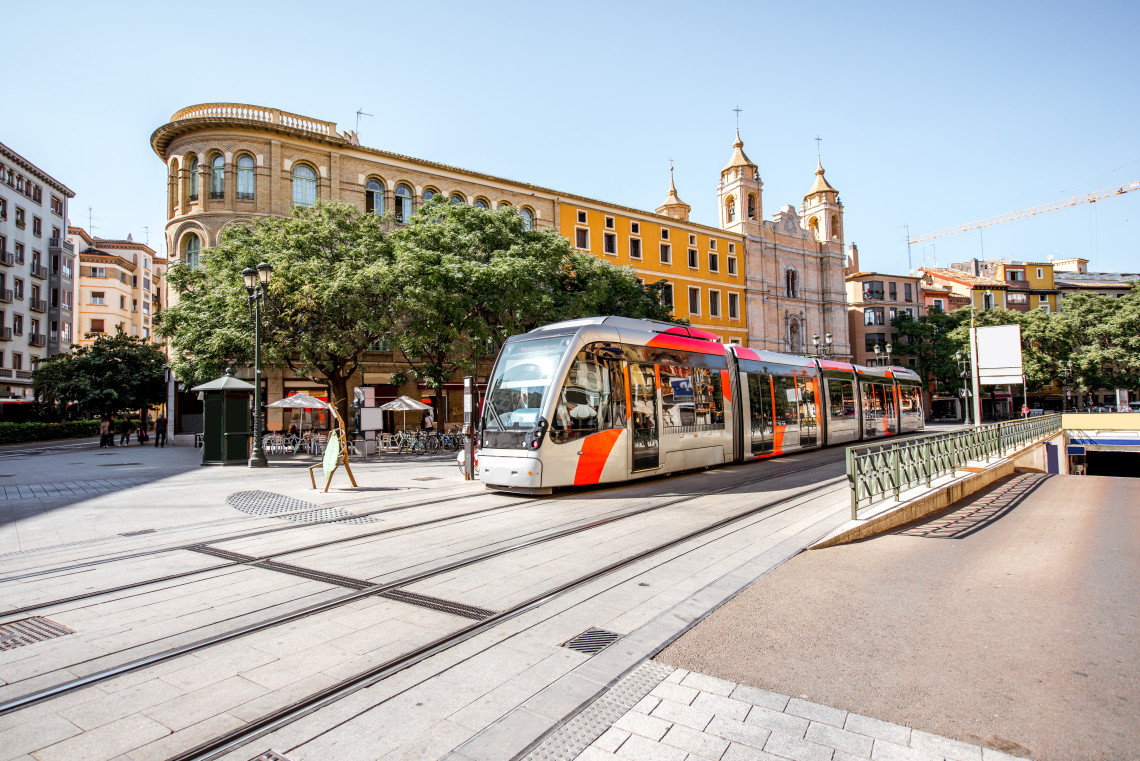
AVE (Alta Velocidad Española) is Spain's high-speed rail network, operated primarily by Renfe with newer competition from Iryo and Ouigo on the busiest routes. Speeds hit 300 km/h (186 mph). The main lines are:
- Madrid, Barcelona: 2h 30min. About 15 daily trains. Every Spanish rail traveler's first ride.
- Madrid, Seville: 2h 30min. The original AVE line (opened 1992) and still one of the world's best rail experiences.
- Madrid, Málaga: 2h 40min. Fast entry to Andalusia and the Costa del Sol.
- Madrid, Valencia: 1h 50min. Fastest way to reach the Mediterranean from the capital.
- Madrid, Alicante: 2h 20min. Costa Blanca gateway.
- Barcelona, Seville: 5h 30min via Madrid.
- Barcelona, Málaga: 5h 45min.
- Madrid, Córdoba: 1h 45min.
- Madrid, Zaragoza: 1h 20min.
Iryo and Ouigo run on the same tracks with lower prices, especially if you book ahead. Ouigo is bare-bones (small carry-on free, everything else costs), Iryo is closer to Renfe with a nicer experience.
Cost comparison: AVE vs car rental
Book AVE early and prices are absurdly low. A Madrid to Barcelona ticket booked two months out can be €19-€35. Book the day of departure and it can be €150. Iryo and Ouigo drop as low as €9-€19 booked ahead.
Car rental in Spain averages €30-€60 per day off-peak for a small economy car (Fiat 500, VW Polo). Summer coastal rentals in Málaga, Palma, or Alicante hit €80-€120 per day. Add gasoline (about €1.55 per liter, or $6.60 per U.S. gallon), tolls on some AP highways (Madrid-Andalusia is mostly free, but many AP roads charge €5-€15 per stretch), and parking (paid parking in Madrid, Barcelona, Seville, and San Sebastián old towns runs €20-€30 per day).
For two people, three days, Madrid to Seville and back:
- Train: €80-€150 total (both directions, both people, booked ahead).
- Car: €150 rental + €90 gasoline + €40 tolls + €60 parking = €340 minimum.
The math tilts to train for city-to-city trips.
For two people, five days, Andalusian white villages loop starting in Seville:
- Train + limited buses: Frustrating, some villages are impossible to reach.
- Car: €200 rental + €130 gasoline + €25 parking = €355 total.
The math tilts to car for regional exploration.
When to take the train
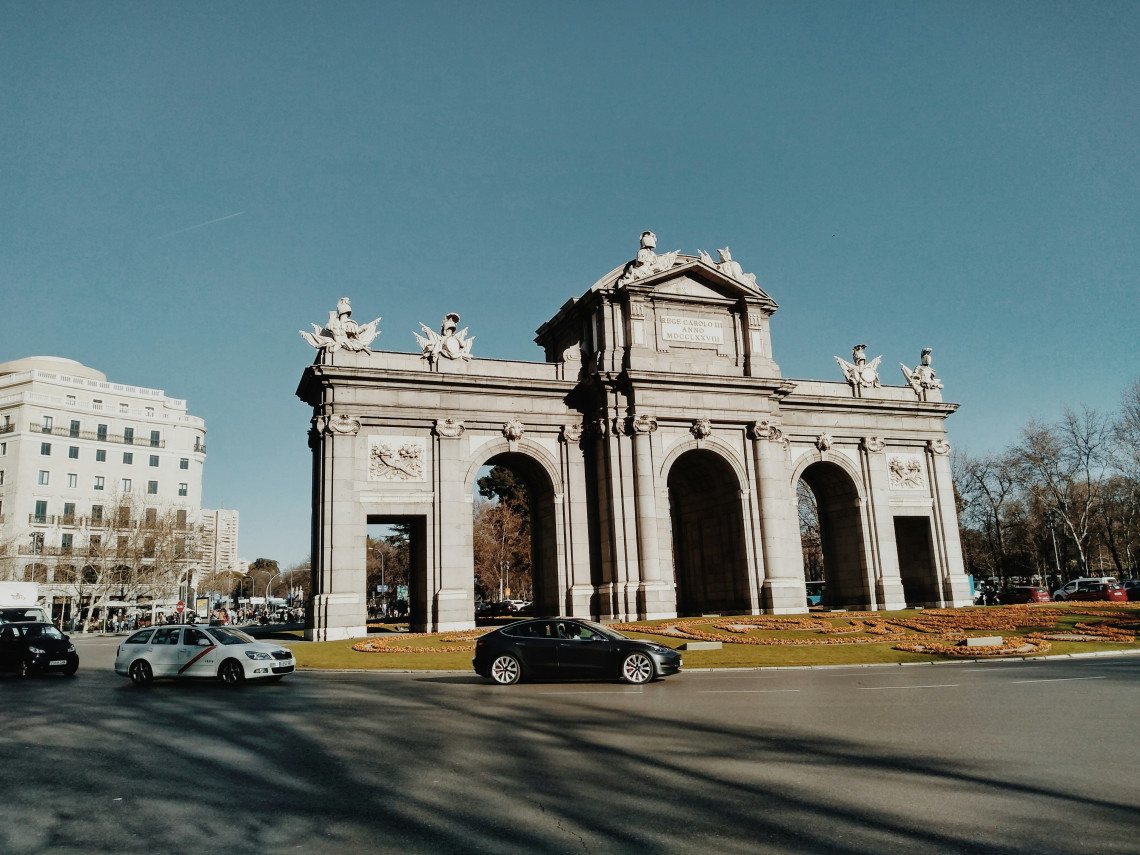
City-to-city with less than 4 hours of AVE. Madrid-Barcelona, Madrid-Seville, Madrid-Málaga, Madrid-Valencia, Madrid-Córdoba, Madrid-Zaragoza. The train beats flying (30-40 minutes total travel time saved once you factor in airport transfer, security, boarding). The train destroys driving on comfort, cost, and time.
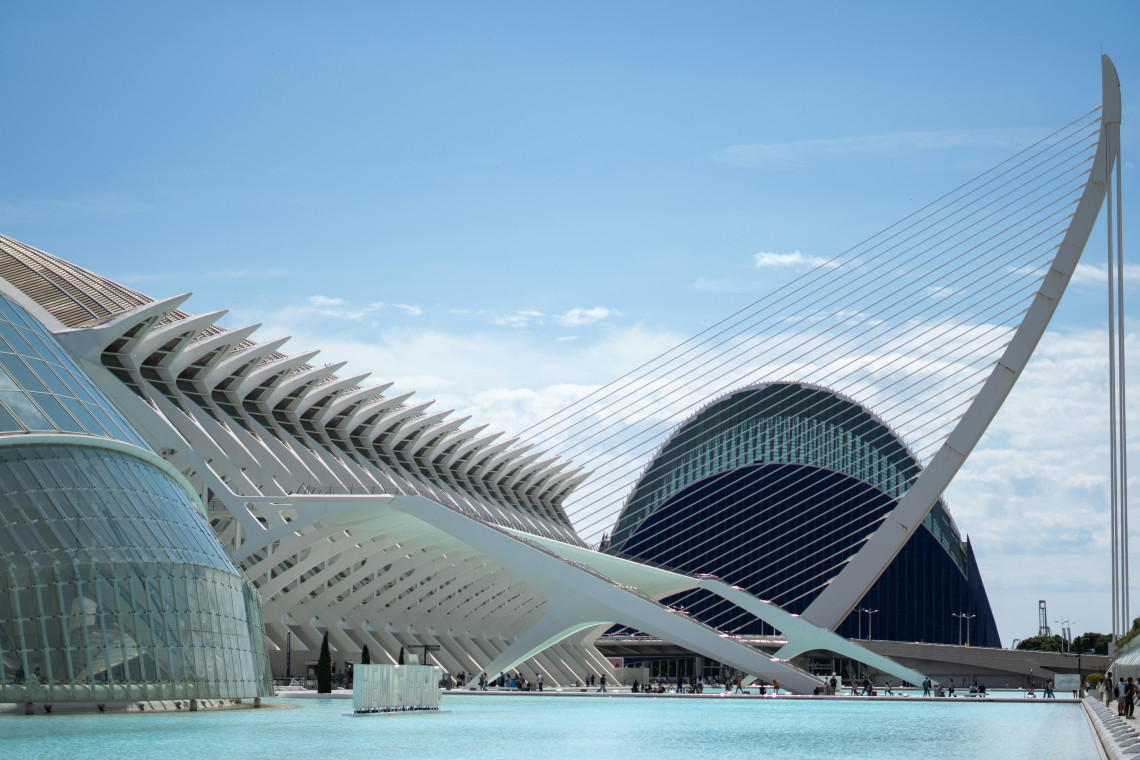
Trips that stay in city centers. Every AVE station is walkable to the historic center of Madrid (Atocha), Seville (Santa Justa), Málaga (María Zambrano), and Valencia (Joaquín Sorolla). Renting a car for a city-only trip is a mistake: you pay for parking, deal with the ZBE low-emission zones (see below), and only use the car for the drive out of the parking garage.
Trips where you want to work, nap, or drink wine. AVE first-class carriages (Preferente) have wide seats, meals included on longer routes, and full luggage racks. You cannot drink your Rioja on the autopista.
Groups of 1-3 people. Two or three train tickets booked ahead usually beat a rental plus fuel plus tolls.
When to rent a car
Andalusian white villages (pueblos blancos). Ronda, Zahara de la Sierra, Grazalema, Setenil de las Bodegas, Arcos de la Frontera, Frigiliana. Buses are infrequent and inconvenient. A car unlocks the region.
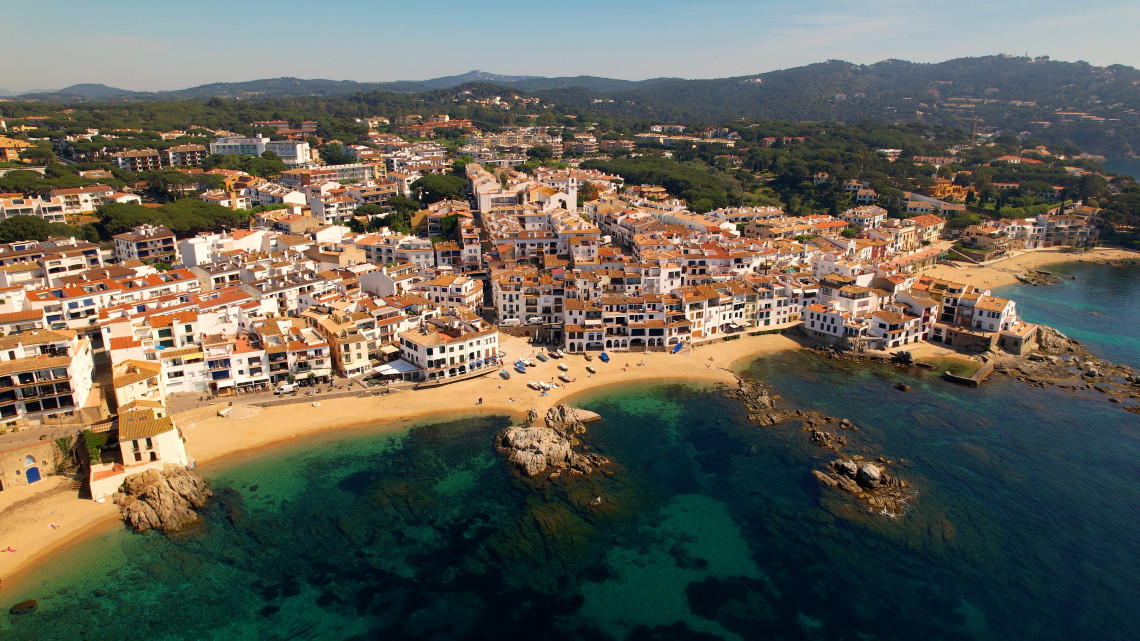
Costa Brava north of Barcelona. The coves and coastal villages (Cadaqués, Begur, Tossa de Mar) are car-country.
Mallorca and Menorca. Public transport exists but is limited. A car is essential for the Tramuntana mountains in Mallorca and every beach beyond Palma.
Basque coast. The road between San Sebastián and Bilbao (via Getaria, Zumaia, and the flysch cliffs) is one of Europe's underrated coastal drives. Same for Rioja Alta villages (Haro, Laguardia, Elciego).
Picos de Europa. No feasible public transport for hiking bases and rural hotels.
Trips with 4+ people and lots of luggage. Four train tickets plus taxis between hotels start to close the price gap with a bigger rental.
Driving in Spain: what to actually know
Get an International Driving Permit. Not strictly enforced but technically required by Spanish law for non-EU/EEA drivers. Get it before you leave; it is $20 through AAA in the U.S. or CAA in Canada.
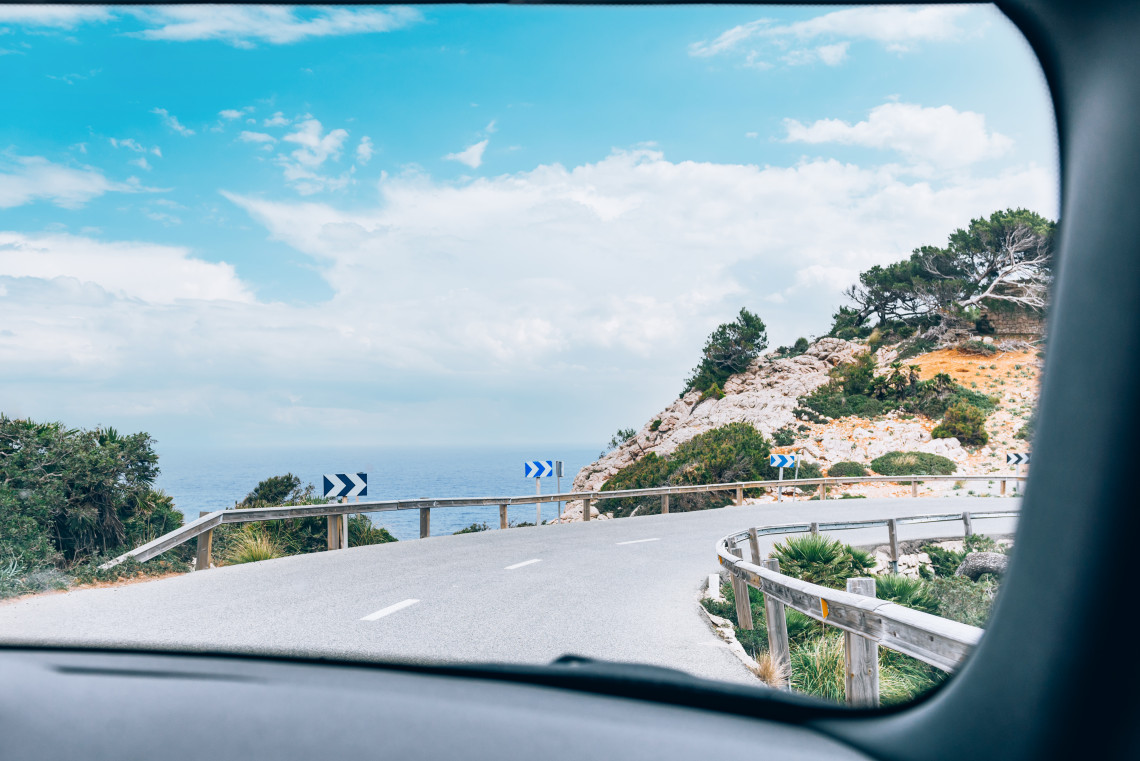
Most Spanish highways are toll-free (autovías). The AP-numbered roads (autopistas) are the exception and charge tolls. On major routes you now have both a free A-road and a tolled AP-road in parallel, always check your GPS route and switch if the toll number is high.
Watch for ZBE (Zonas de Bajas Emisiones) in city centers. Madrid, Barcelona, Seville, Valencia, Zaragoza, Palma, and 100+ smaller cities have low-emission zones restricting older cars and non-registered vehicles. Rental cars are typically registered, but check with your rental company if you plan to drive into the center of Madrid or Barcelona. Fines are €200+.
Fuel is expensive. Around €1.55 per liter (about $6.60 per U.S. gallon in mid-2026). Diesel is slightly cheaper than gasoline. Rentals in Spain are usually manual; automatic rentals cost 30-50% more and should be reserved weeks ahead.
Small-town streets are narrow. Ronda's old town, Toledo's centre, Cudillero's fishing harbor, the interior of most walled Andalusian villages: some streets are too narrow for full-size sedans. Rent small.
Roundabouts are everywhere. Yield to traffic already in the circle.
Alcohol limits are strict: 0.05% BAC (lower than most U.S. states). Random breath tests are common.
Renting a car in Spain: practical tips
Book 4-8 weeks ahead for the best rates. Automatic transmissions need earlier booking, especially in summer.
Compare prices at Málaga, Palma, Bilbao, Alicante, and Barcelona airports, these tend to have the largest fleets and best rates. Madrid airport is fine but often pricier for one-way rentals.
Pick up at the airport, not city center. Airport locations have longer hours, better fleets, and (usually) lower prices. City-center pickups are convenient but pricier.
One-way rentals attract a fee (usually €50-€120) between different Spanish provinces or islands. Cheaper if you return to the same location.
Full insurance matters. Spain has one of Europe's highest rental damage rates, especially for scrapes on narrow village streets. Take super collision damage waiver (SCDW) either from the rental company or via a third party (Allianz, RentalCover).
Watch for prepaid fuel tricks. Some rental companies force prepaid full tank and charge you above pump price. Read the terms; sometimes "full to full" is cheaper.
Taking the AVE: practical tips
Book on renfe.com, iryo.eu, or ouigo.com. All three are safe. Third-party sites (Trainline, Omio) add small commissions but are convenient. Avoid resellers charging 30%+ over official prices.
Buy 1-2 months ahead for the lowest fares. Renfe releases seats 60 days ahead. Ouigo and Iryo can be even earlier.
Fare types: Basic (non-refundable, non-changeable), Choose (some flexibility), Premium (full flexibility, Preferente class). For most travelers, Basic + a small trip insurance is the smart combo.
Arrive 20-30 minutes early. Spanish AVE stations run airport-style security (X-ray for bags) but boarding is fast. Trains leave punctually.
Preferente (first class) is often only €10-€20 more than tourist. Includes meal service on longer routes and much more space. Worth it on 3+ hour rides.
Luggage is unlimited but manageable. Two large bags plus carry-on is fine. Iryo and Ouigo have stricter carry-on rules; check ahead.
Trains from Madrid depart from Atocha station. Trains to and from the north use Chamartín. Confirm your departure station before you go.
Renfe Spain Pass and Eurail passes are rarely worth it. Point-to-point tickets booked ahead are usually cheaper.
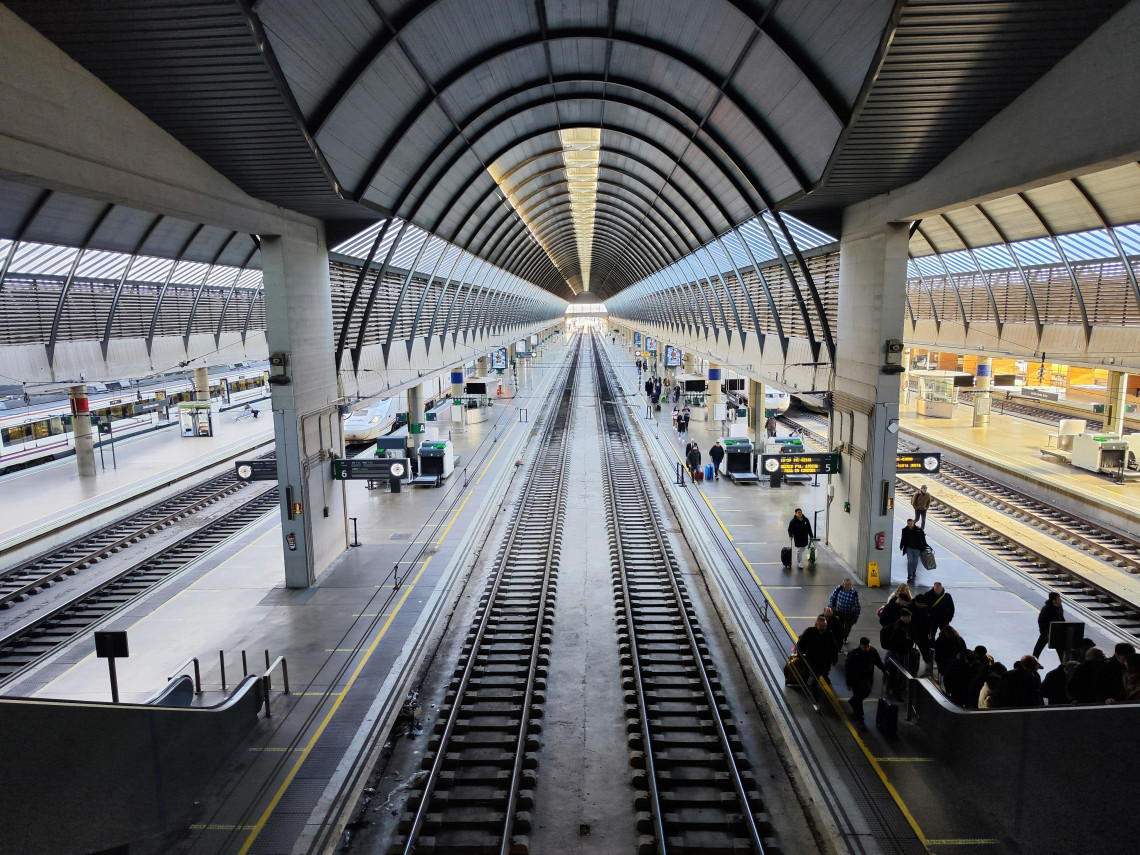
The Spanish night trains and slower regional trains
AVE is the flagship, but Spain has:
- Media Distancia (MD): Regional trains connecting mid-sized cities. Slower, cheaper, more scenic. Great for Rioja Alta villages, Basque coast, Galicia.
- Cercanías: Commuter trains around Madrid, Barcelona, Seville, Málaga, Valencia. Useful for airport transfers (Barcelona T2 to Sants is €4.60, Madrid airport to Atocha is €2.60).
- Alvia and Avlo: Renfe secondary high-speed brands, often on routes AVE does not fully serve.
- Transcantábrico and Al Andalus: Luxury tourist "cruise trains" that run multi-day itineraries. Expensive but a distinctive experience.
Night trains are limited in Spain. The traditional Trenhotel to Lisbon and Paris was discontinued. Domestic overnight service is rare.
The combo strategy (what most first-time visitors actually want)
A one-week Spain trip, worked out:
- Day 1-3: Madrid.
- Day 4-5: AVE Madrid to Seville (2h 30min). Base in Seville. Day trip by AVE to Córdoba (45min).
- Day 6-7: Rent a car in Seville. Drive Seville-Ronda-Málaga (with stops in the pueblos blancos). Return the car at Málaga airport. Fly home from Málaga.
You get the AVE experience on the long leg, the freedom of a car for the villages, and no wasted time on city driving.
What about domestic flights?
Skip them for anything under 4 hours by AVE. The math changes in three cases:
- Mainland to islands. Palma, Ibiza, Menorca, Tenerife, Gran Canaria, Lanzarote, Fuerteventura all require flights (or long ferries). Vueling, Iberia, and Ryanair fly cheap from Madrid, Barcelona, or Málaga.
- North coast to south coast. Bilbao to Málaga, or A Coruña to Málaga. AVE takes 8+ hours; a flight is 1h 30min.
- Extreme corners. Vigo to Valencia, San Sebastián to Ibiza. Flying wins.
For everything else in mainland Spain, the AVE beats the plane door-to-door.
Bottom line
Train wins for city-to-city Spain trips. AVE is fast, cheap when booked ahead, and drops you in the heart of every major Spanish city.
Car wins for regional exploration: Andalusian villages, Costa Brava, Mallorca, Basque coast, Rioja, Picos de Europa.
Both together is what most well-planned Spain trips look like. Train the long legs, rent for the loops.
Frequently asked questions
Is Spain easy to travel by train? Yes, Spain has one of the best high-speed rail networks in Europe. AVE connects Madrid to every major city in under 3 hours, and Renfe, Iryo, and Ouigo compete on the busiest routes.
How long is the AVE from Madrid to Barcelona? Two hours and thirty minutes on direct AVE trains. Iryo and Ouigo also run this route with similar journey times.
Is renting a car in Spain necessary? Only if you want to explore small villages, the Costa Brava, the Basque coast, Mallorca, or the Andalusian white villages. For Madrid, Barcelona, Seville, Málaga, and Valencia, the train is faster and cheaper.
What is the cheapest way to travel in Spain? Ouigo and Iryo booked 4-8 weeks ahead offer AVE tickets as low as €9-€19. Buses (Alsa) are cheaper but slower.
Do I need an International Driving Permit for Spain? Technically yes for U.S. and Canadian drivers, though enforcement is rare. Get one before you leave for €20 through AAA or CAA.
Is driving in Spain difficult? Highways are excellent and toll-free (autovías). City driving in Madrid and Barcelona is stressful and often restricted by ZBE low-emission zones. Small-village streets can be very narrow.
Are there tolls on Spanish highways? Most main routes are toll-free (autovías, A-roads). AP-numbered roads (autopistas) charge tolls, typically €5-€15 per stretch. Choose the parallel A-road to avoid tolls.
What is the best train app for Spain? The official Renfe app works. Trainline and Omio aggregate all operators including Iryo and Ouigo, often easier for foreign travelers.
Are trains in Spain punctual? Yes. AVE trains have among the best punctuality in Europe. Renfe guarantees a full refund if the train is more than 15 minutes late.
Can I take luggage on the AVE? Yes, unlimited. Two large bags plus carry-on is standard. Iryo and Ouigo have stricter carry-on rules; check ahead.
Should I get a Eurail or Renfe Spain Pass? Rarely. Point-to-point AVE tickets booked ahead are usually cheaper than pass alternatives.
How much is gas in Spain? About €1.55 per liter, or roughly $6.60 per U.S. gallon in mid-2026. Diesel is slightly cheaper.
Spain, city to village, seamlessly.
Our Spain travel experts blend AVE segments and rental cars into one clean itinerary.
See Spain Packages Tailor-Made Trip