by Yes Getaways Team
July 27, 2026 • 11 min read
Austria has one of the best train networks in Europe and one of the most scenic mountain driving networks on the continent. Which means your transport question is not "is the train good" or "are the roads good," it is "where, exactly, am I going, and what kind of trip do I want this to be."
This guide compares the two honestly, region by region, with the costs, the journey times, and the tradeoffs that nobody puts in the brochure.
The short answer
If your trip is Vienna plus one or two major cities (Salzburg, Innsbruck, Graz, Linz), take the train. Austria's ÖBB Railjet is one of Europe's fastest and most comfortable rail networks. Faster than driving, cheaper than fuel plus tolls, and drops you in the city center.
If your trip is the Salzkammergut lakes, the Wachau Valley wine country, the Tyrolean back roads, or ski resort villages off the main rail lines, rent a car. Public transport reaches the main towns but the villages and scenic loops require driving.
If your trip is both, do what most experienced Austria travelers do: take the Railjet between cities, rent a car for the rural section, return the car before re-entering Vienna.
How Austrian trains actually work
ÖBB (Österreichische Bundesbahnen), the national rail operator, runs three classes of train that you need to know about:
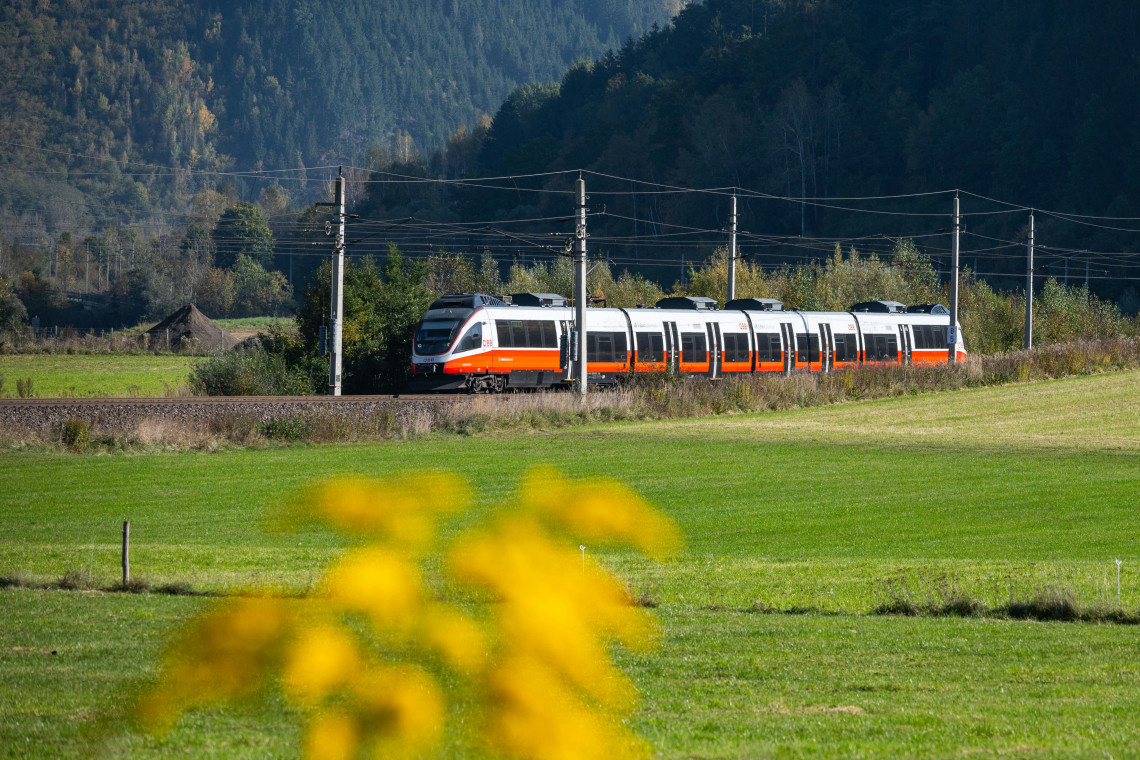
Railjet is the flagship high-speed service. It runs at up to 230 km/h (143 mph) between Vienna and Salzburg (2h22m), Vienna and Innsbruck (4h15m), Vienna and Graz (2h35m), Vienna and Klagenfurt (4h), and Vienna and Linz (1h15m). Reservations are optional in second class, recommended in first class. Fares are dynamically priced: a Vienna to Salzburg that costs 19 euros booked 60 days ahead can be 79 euros walk-up.
ICE and EuroCity trains from Germany run parallel to Railjet on many routes. Same speed, same comfort tier.
REX (Regional Express) and R (Regional) are the regional trains. Slower, no reservation needed, fixed prices. These connect smaller towns within a region and they are how you reach places like Bad Ischl, Zell am See from Salzburg, Krems from Vienna, Villach and the southern lakes.
Nightjet is ÖBB's overnight train network, running from Vienna, Salzburg, and Innsbruck to Italy, Germany, Switzerland, and beyond. Not typically useful within Austria itself but worth knowing for multi-country trips.
A few practical notes that catch first time Austria travelers off guard:
- Vienna's main station (Wien Hauptbahnhof, opened 2015) is where Railjet trains terminate. Vienna Meidling handles some regional services. Older maps show Westbahnhof and Südbahnhof as terminals but they no longer are.
- Railjet second class is genuinely excellent. First class is worth it on Vienna-Innsbruck (4h+) but not for shorter hops.
- Buy tickets on the ÖBB app or ÖBB Ticketshop (the official channel). Sparschiene fares (advance tickets) start at 19 euros for major routes.
- Austria uses the same fare structure for return tickets: two one-way tickets are the same price as a return, so there is no return discount.
- Trains include free Wi-Fi and reasonable food service (dining car on Railjet).
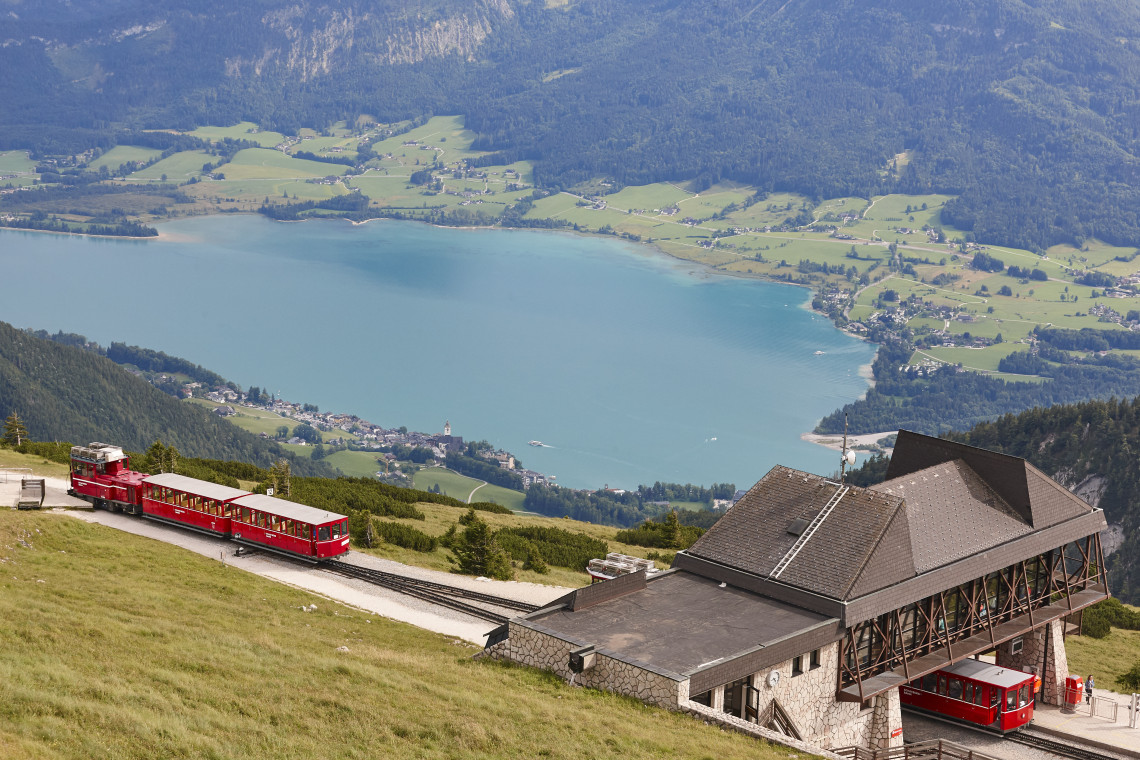
How Austrian roads actually work
Austria has Europe's most scenic Alpine road network, and one of the most efficient. Autobahns (motorways) connect all major cities in efficient straight lines; mountain passes (Grossglockner, Timmelsjoch, Silvretta, Nockalm) offer some of the greatest driving experiences in Europe.
A few practical notes:
- Vignette (motorway sticker) is required on all autobahns and Schnellstraßen. Buy at gas stations near the border, at post offices, or online. Costs about 10 euros for 10 days, 15 euros for 2 months, 100 euros for a year. Rental cars usually already have one; verify at pickup.
- Additional tolls apply on certain Alpine tunnels and passes (Grossglockner Hochalpenstraße, Brenner Pass, Tauern Autobahn, Karawanken Tunnel, Arlberg Tunnel). Costs 5 to 40 euros each.
- Speed limits: 130 km/h on autobahns (110 in rain), 100 on dual carriageways, 100 on rural roads, 50 in towns, 30 in residential zones. Heavy radar enforcement, especially at construction sites where limits drop.
- Fuel in Austria costs about 1.70 to 1.95 euros per liter for petrol, 1.65 to 1.85 for diesel (rough mid-2026 ranges). Diesel is slightly cheaper.
- Winter driving rules: From November 1 to April 15, cars must have winter tires or all-season tires with mud-and-snow marking (M+S) on all axles when winter conditions exist. Rental cars in Austria come equipped. Bring or rent snow chains for higher Alpine roads.
- Environmental zones (Umweltzone) apply in some areas but Austria is less strict than Germany. Vienna has a low-emission zone but tourists rarely encounter it.
- Roundabouts are common on rural roads. Traffic in the roundabout has priority.
- Parking in Vienna, Salzburg, and Innsbruck old towns is expensive and limited. Most old-town hotels do not have their own parking and charge 25 to 40 euros a night at a nearby garage. The single best reason not to drive into Austrian cities.
- Mountain passes close in winter. Grossglockner is open May to October; Timmelsjoch May to late October. Plan around these.
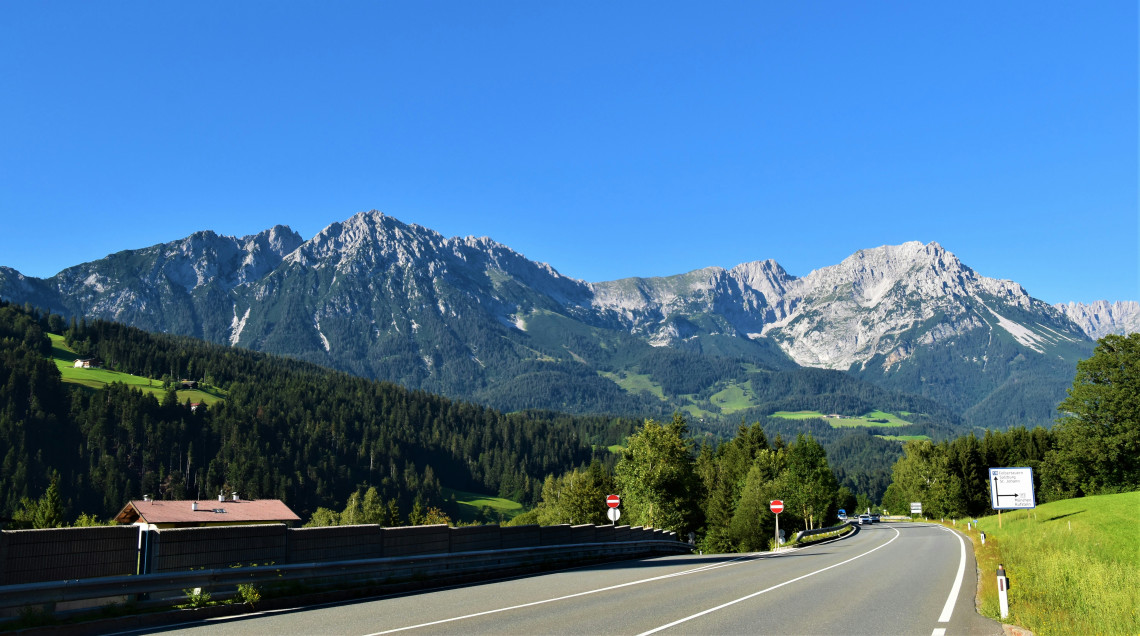
Region by region: where each really wins
Vienna and around
Train, always. Driving into Vienna is stressful, parking is expensive, and the U-Bahn plus tram network covers everything you would want to see. Day trips to Bratislava, Baden bei Wien, Melk, and Krems (Wachau Valley) are all easy by train. If you rent a car in Vienna, you will spend the first day looking for parking.
Vienna to Salzburg (or Salzburg to Vienna)
Train, decisively. Railjet does the 300 km route in 2h22m at around 20-40 euros advance booking. Driving takes 3h with tolls and vignette costs, plus Salzburg parking. Almost no reason to drive this segment.
Salzburg and the Salzkammergut (Hallstatt, Wolfgangsee, Bad Ischl)
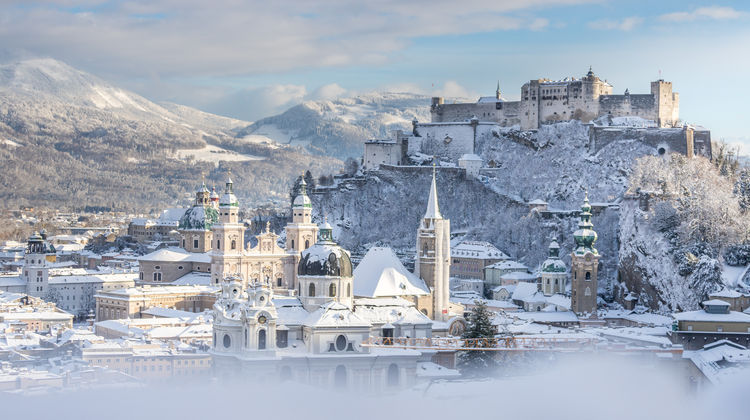
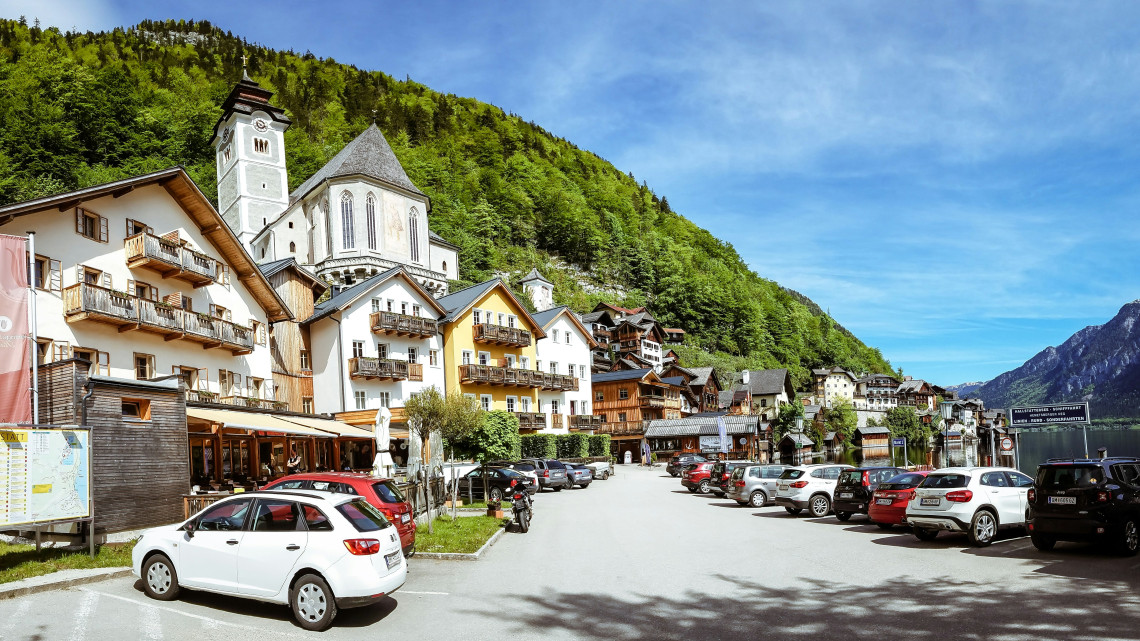
Car, mostly. Salzburg itself is easy by train and walkable. But the Salzkammergut lakes and villages are best by car. Hallstatt reachable by train + ferry from Attnang-Puchheim but with fixed schedule friction. Wolfgangsee and Bad Ischl reachable by regional trains but slower. For a proper Salzkammergut trip, rent a car from Salzburg for 2 to 4 days.
Innsbruck and the Tyrol
Train to Innsbruck, car for the ski resorts and Alps. Vienna-Innsbruck by Railjet is 4h15m. Innsbruck itself is walkable and the Nordkette gondola is a 15-minute walk from the center. But if you are skiing at Kitzbühel, St. Anton, Sölden, Ischgl, or Zell am See, driving is meaningfully easier for luggage and multi-day resort stays. Regional trains connect the ski resorts but with limited luggage capacity.
Wachau Valley (Melk to Krems)
Car, always. The Wachau villages (Dürnstein, Weißenkirchen, Spitz) are on a regional railway line but the wine tasting logistics are only workable by car. Drive from Vienna in 1h to Melk, wine route east to Krems (about 40 km along the Danube), overnight in Krems or Dürnstein. Alternative: Wachau bicycle route from Melk to Krems is one of Europe's great bike rides in April to October.
Graz and Styria
Train to Graz, car for Styria wine country. Railjet Vienna-Graz is 2h35m. Graz itself is walkable. But Southern Styria wine country (Ehrenhausen, Gamlitz, Straden) is car-only.
Carinthia (Wörthersee and southern lakes)
Mix. Vienna-Klagenfurt by Railjet is 4h. Klagenfurt to Villach is 30 min by regional train. But to explore Wörthersee, Ossiacher See, and the Nockberge mountains, rent a car.
Vorarlberg and Bregenzerwald
Train to Bregenz, car for the Bregenzerwald. Bregenz is on the Vienna-Zurich mainline. From Bregenz, the Bregenzerwald villages (Schwarzenberg, Egg, Damüls) require a car.
Mountain pass tourism (Grossglockner, Silvretta, Timmelsjoch)
Car, obviously. These are the trips where you drove for the drive. Rent a convertible or a solid mid-size for the Grossglockner High Alpine Road (48 km through Austria's highest peaks) or the Silvretta Hochalpenstrasse.
What does it actually cost?
For a 10 day Austria trip covering Vienna + Salzburg + Salzkammergut (the most common multi-region trip), here is the rough cost comparison for two travelers:
Train only:
- Vienna to Salzburg Railjet: 60 euros total (booked ahead, 2 people)
- Salzburg to Hallstatt via Attnang-Puchheim: 60 euros total
- Regional trains within Salzkammergut: 50 euros total
- Return Salzburg to Vienna: 60 euros
- Local transport, taxis where needed: 250 to 400 euros
Train + car combo (recommended):
- Vienna to Salzburg Railjet: 60 euros
- 5 days car rental from Salzburg, dropped in Salzburg: 300 euros
- Fuel and tolls (vignette + minor tolls): 150 euros
- Parking (Salzkammergut villages, Salzburg): 60 euros
- Salzburg back to Vienna Railjet: 60 euros
Car only (Vienna to Salzburg to Salzkammergut, returned in Vienna):
- 10 days car rental from Vienna, returned at Vienna: 500 euros
- Fuel and tolls (about 1,400 km total): 220 euros
- Vienna parking (7 nights at hotel garage): 210 euros
- Parking at other stops: 90 euros
The car only approach is the most expensive because of Vienna parking and because the Vienna to Salzburg segment is fast and cheap by train while slow and tolled by car.
Honest tradeoffs
Train pros: Faster between cities. No parking stress. You can drink at lunch. You arrive in city centers. Less mental load on long days. Comfortable seats and Wi-Fi. Very reliable.
Train cons: Bad for rural regions off the main lines. Last-mile to a country hotel often needs a taxi. Less flexibility if you fall in love with a village. Railjet fares spike close to departure.
Car pros: Reaches everywhere. Lets you stop in a village you spotted from the road. Trunk space for shopping at markets and wine cellars. Critical for the Salzkammergut, Wachau Valley, Southern Styria wine, Tyrolean back roads. Enables Alpine pass tourism.
Car cons: Vignette and tolls add up. Parking in cities is expensive and stressful. Winter driving requires equipment (chains, winter tires). Mountain passes close in winter. You cannot drink at lunch.
The setup most experienced Austria travelers use
The pattern that comes up again and again with returning Austria visitors:
- Fly into Vienna. Stay 3 to 4 nights, no car.
- Railjet out of Vienna to the gateway of the rural region (Salzburg for Salzkammergut, Innsbruck for Tyrol, Villach for Carinthia).
- Pick up a rental at the train station of the gateway city. All major stations (Salzburg, Innsbruck, Graz, Villach) have Avis, Hertz, Europcar, Sixt, Budget desks. Book ahead. Counter rates are 30 to 50 percent higher.
- Drive the rural region for 4 to 7 days.
- Drop the car at another gateway station (Klagenfurt, Innsbruck), Railjet back to Vienna or fly home from that city.
This avoids parking in Vienna, captures the train advantage on the long segments, and the car advantage in the countryside.
Frequently asked questions
Is driving in Austria hard for Americans? No, with two caveats. Roads are excellent and signs are clear. The two things that catch people out are the vignette requirement (motorway sticker) and winter driving rules (November to April). Most rental cars are automatic if you ask, but manuals are common and slightly cheaper.
Do I need an international driving permit for Austria? Officially yes for short term visitors. In practice, U.S. and Canadian licenses are accepted at every rental counter in Austria. An IDP from AAA or CAA costs about 20 dollars and avoids any risk if you are pulled over.
What is the cheapest way to take the Railjet? Book on the ÖBB app or ÖBB Ticketshop 60 to 90 days in advance, off peak (Tuesday to Thursday). Look for Sparschiene fares, which start at 19 euros for major routes.
Is there a train from Vienna to Hallstatt? Yes, but it requires two changes. Vienna to Attnang-Puchheim (2h), regional train to Hallstatt (1h30m), then a small ferry across the lake to Hallstatt village (10 minutes). Total 4 to 5 hours. Most travelers drive from Salzburg (1h15m) instead.
Can I drive in Austria with a U.S. license? Yes for up to 6 months as a visitor. Longer stays require an Austrian license or an EU exchange.
Are Austrian tolls expensive? The vignette is 10 euros for 10 days. Additional Alpine tunnel tolls (Grossglockner, Brenner, Arlberg) are 5 to 40 euros each. Overall, meaningfully cheaper than French autoroute tolls.
What about a rail pass for Austria? Eurail and InterRail passes can make sense if you are doing 6+ long train trips in a multi-country trip. For Austria alone, Sparschiene point-to-point tickets are almost always cheaper.
Is winter driving in Austria dangerous? No if the car is properly equipped (winter tires, sometimes chains) and if you avoid mountain passes in snow. Autobahns are always cleared. Alpine village roads can be tricky. Ski resort transfer buses are the safest option for major resorts.
Can I take the train from Vienna to Kitzbühel? Yes. Railjet Vienna to Wörgl (3h30m), then regional train to Kitzbühel (30 min). Total about 4h. Or drive in 4h. During ski season, the train is often more relaxing.
Should I rent a car at Vienna Airport or in central Vienna? Neither, ideally. Rent at your departure Railjet city instead (Salzburg, Innsbruck, Graz). If you must rent at Vienna Airport (VIE), the rental hall is 10 minutes from arrivals and rates are typically lower than central Vienna.
Skip the logistics, keep the trip.
Our Austria travel experts handle Railjet, rentals, parking, and the villages where trains will not go.
See Austria Packages Tailor-Made Trip