July 28, 2026 • 12 min read
Austria has 76 lakes in the Salzkammergut alone. Some are famous, like Hallstatt. Some are secretly better, like Wolfgangsee. Some are further south and warmer, like Wörthersee. All are set against Alpine peaks reflected in mirror-still water, and all justify at least one day in an Austria trip.
This guide compares Austria's essential lakes: which one fits which trip, how to reach them, when to visit, and the honest tradeoff between the famous ones (crowded) and the underrated ones (quieter but harder to reach).
The short answer
For the iconic photo: Hallstatt. The most photographed lake village in Europe. Small, cinematic, and extremely crowded 10am to 4pm in summer.
For the local Austrian experience: Wolfgangsee. Storybook village of St. Wolfgang, the Schafberg cog railway, Sound of Music-adjacent locations, less international-tourist-heavy.
For lake swimming: Wörthersee (Carinthia, warmer) or Attersee (Salzkammergut, larger but cool).
For the imperial connection: Bad Ischl (Emperor Franz Joseph's summer residence, coffee house culture).
For quiet: Almsee, Grundlsee, or the Weissensee (Austria's cleanest, deep in Carinthia).
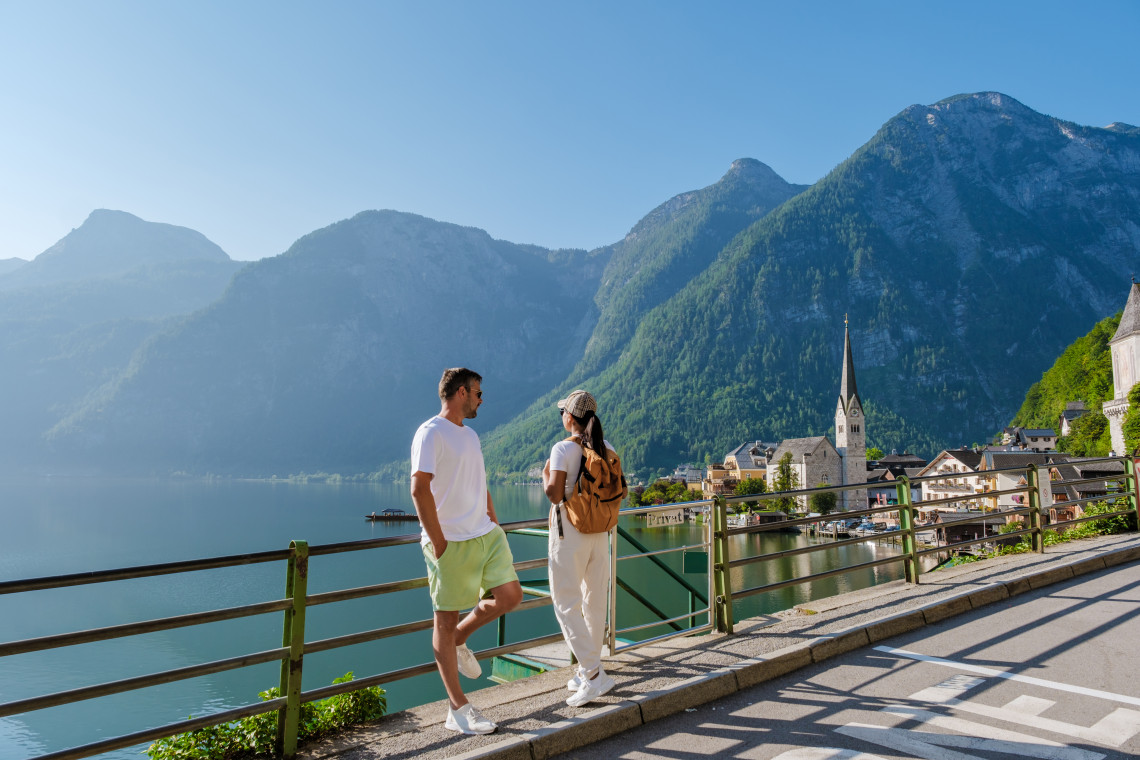
Hallstatt: the icon (and the crowd)
Population: 780.
Location: On the west shore of Hallstätter See, in the Salzkammergut Lake District. 1h15m by car from Salzburg.
Why it's famous. Hallstatt is UNESCO listed for its 7,000-year-old salt mining history and its lakeside village setting. The pastel-colored houses climbing up the mountain, the church spire piercing the mist at dawn, the mirror reflection in the lake — this is the single most photographed village in Central Europe, and the image most travelers picture when they hear "Austrian lake."
What Hallstatt delivers. Two experiences:
The daytime Hallstatt (10am-4pm): Extremely crowded. Tour buses arrive from Salzburg, Vienna, Munich, and (increasingly) Asian bus tours from as far as Vienna in dedicated day-trips. The main viewpoint area gets so crowded some days that walking is difficult. Restaurants at lunch require reservations. This is the Hallstatt most day-trippers experience.
The empty Hallstatt (before 9am and after 5pm): Utterly different. Empty lakeside path, low mist over the lake, church bells, restaurants with local guests. The reason to stay overnight in Hallstatt is precisely this window.
Essential experiences:
- The classic viewpoint from the lakeside path near the parking area (best photo of the village).
- The Skywalk viewpoint above the town (funicular up + short walk, dramatic 350m drop view).
- Salt Mine tour (Salzwelten Hallstatt), 7,000 years of salt mining history, requires a 30-minute walk uphill.
- Lake boat ride across Hallstätter See to Obertraun.
- Dachstein Ice Cave across the lake (cable car up, tour of the cave system).
Best for: First-time Austria travelers who want the photo. Overnight travelers willing to experience the empty windows.
Honest tradeoffs:
- Extremely crowded 10am-4pm. If you visit in these hours only, expect the "why did I come here" feeling.
- Hotels are limited (about 15 hotels in the village and immediate area). Book 6+ months ahead.
- Not a swimming destination (lake is cold — 15-17°C even in August due to Alpine feeder streams).
- The nearby Chinese "Hallstatt" replica village in Guangdong province tells you everything about how iconic this village has become.
How to visit right: Stay overnight (Seehotel Grüner Baum, Hallstatt Hideaway, or nearby Obertraun). Arrive after 4pm, dinner in the village, empty morning walk from 6:30am, leave by 10am when the buses arrive. This turns Hallstatt from "regrettable day trip" into "unforgettable overnight."
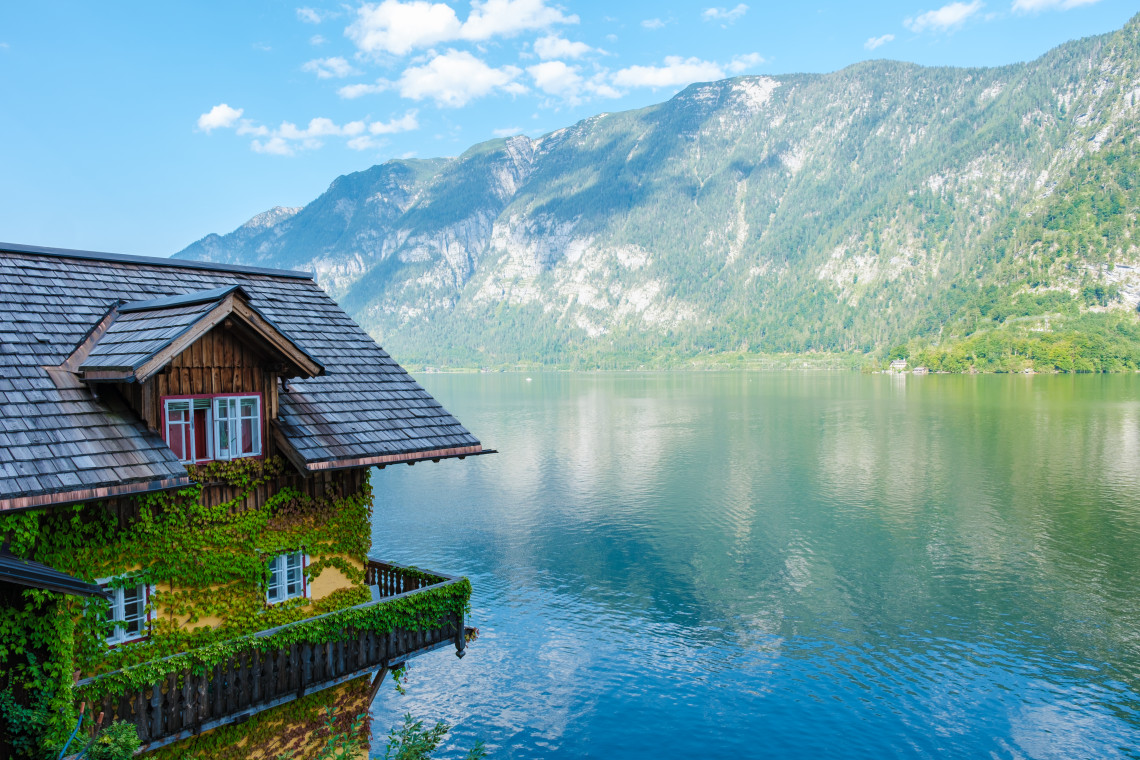
Wolfgangsee: the local favorite
Location: Border of Salzburgerland and Upper Austria. 30-45 minutes from Salzburg.
Villages: St. Wolfgang (the main village, most tourists), Strobl (quieter, southern shore), St. Gilgen (northern shore, Mozart family connection).
Why it's a local favorite. Wolfgangsee is what most Austrians picture as their "lake weekend" destination. Warmer than Hallstätter See (21-24°C in summer). Well-served by ferries (the White Wolfgangsee Steamer is a nostalgic 19th-century steamboat). Framed by the Schafberg mountain (1,783m), which the historic cog railway climbs from St. Wolfgang.
Essential experiences:
- The Schafberg cog railway (Schafbergbahn). One of Europe's oldest steam-powered mountain railways (1893). 40 minutes to the summit for one of Austria's finest lake panoramas.
- The White Steamer (Wolfgangsee Schifffahrt). Traditional steamboat around the lake, connecting all three main villages.
- Wallfahrtskirche St. Wolfgang (Church of St. Wolfgang). Late gothic pilgrimage church with a famous altarpiece by Michael Pacher.
- Swimming and lakeside walks. Multiple public beaches. The lakeside path around portions of the lake makes for easy hiking.
- The Weißes Rössl (White Horse Inn). Traditional hotel on the lake, made famous by the operetta of the same name.
Best for: Second-time Austria travelers. Families. Multi-generational trips. Anyone who prefers atmosphere over icon.
Honest tradeoffs:
- Not as visually iconic as Hallstatt (village is beautiful but less photographed).
- Crowded in summer around the main St. Wolfgang village, though nothing like Hallstatt.
- The Sound of Music tour buses stop briefly in St. Gilgen; if you want quiet, visit in the morning before 10am.
How to visit right: 2 to 3 night stay based in St. Wolfgang or Strobl. Combine with Salzburg day trips and one day up the Schafberg.
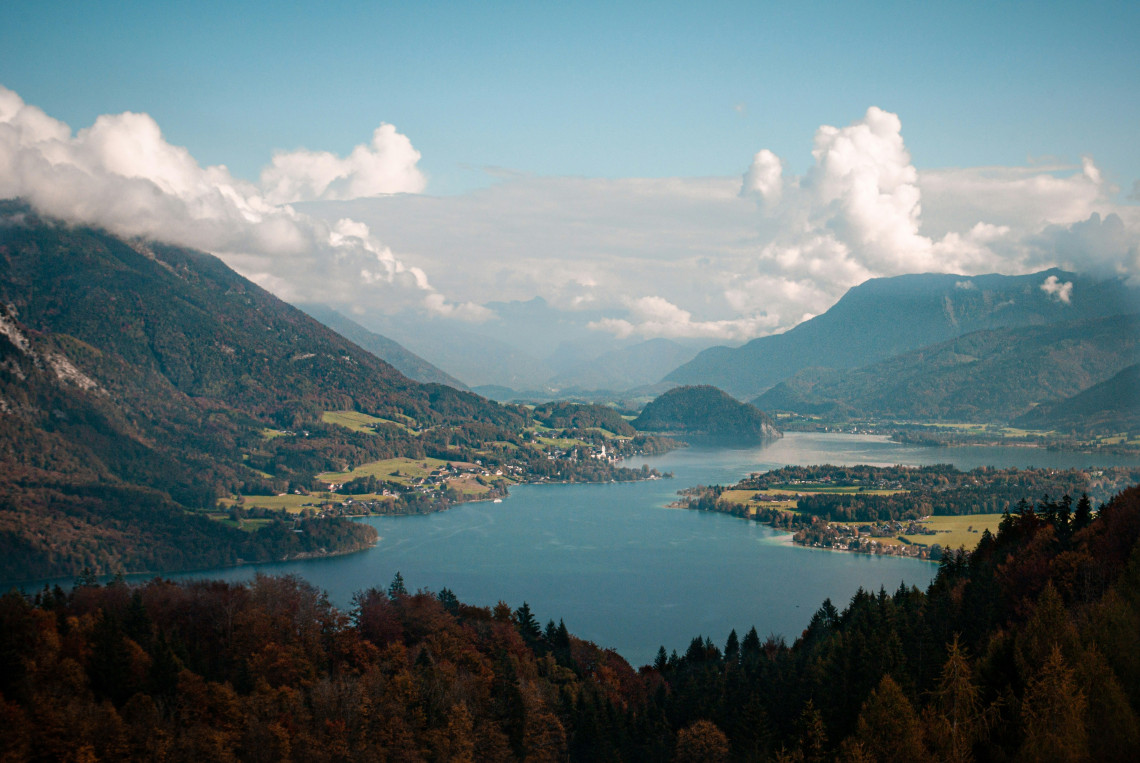
Attersee: Klimt's summer painting spot
Location: Northern Salzkammergut. 1h drive from Salzburg.
Villages: Weyregg, Steinbach, Unterach, Nussdorf.
Why it's important. Attersee is the Salzkammergut's largest lake (46 km²), meaning water temperatures reach genuinely swimmable levels (22-24°C in July-August). Gustav Klimt spent 15 summers painting here between 1900 and 1916, producing some of his most famous landscape works (the small square landscapes of the lake).
Essential experiences:
- The Klimt Trail (Klimt am Attersee). Marked walking trail visiting his painting spots. Klimt Center in Kammer explains the connection.
- Lake swimming. Multiple public and private beaches. Warmest large lake in the Salzkammergut.
- Boat rentals. Sailing, electric boats, standup paddleboarding.
- The Höllengebirge mountains behind the lake for hiking.
Best for: Art travelers (Klimt), lake swimmers, second-time Austria visitors.
Honest tradeoffs:
- Less visually iconic than Hallstatt or Wolfgangsee (large lake with modest villages, not a single postcard scene).
- Fewer accommodations. Book ahead.
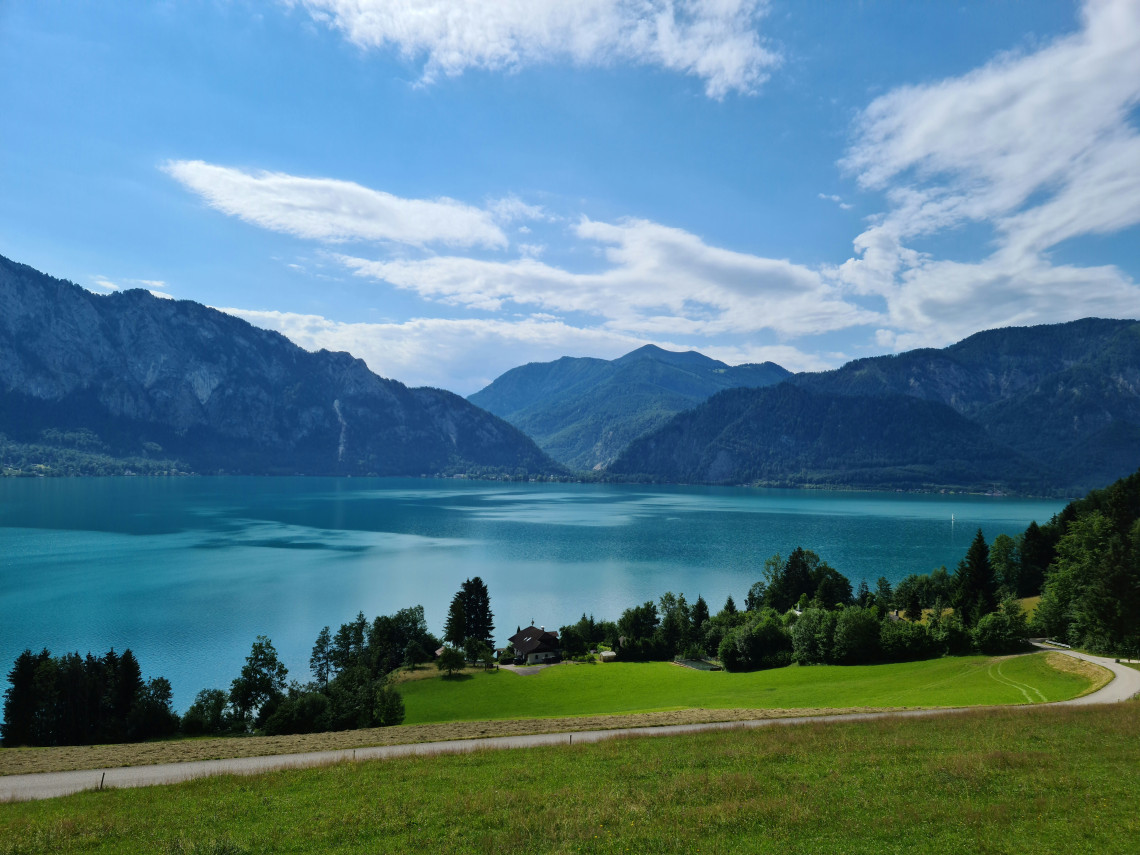
Traunsee: dramatic cliffs and imperial history
Location: Northern Salzkammergut. 1h drive from Salzburg.
Villages: Gmunden (imperial spa town), Traunkirchen (peninsula village), Ebensee.
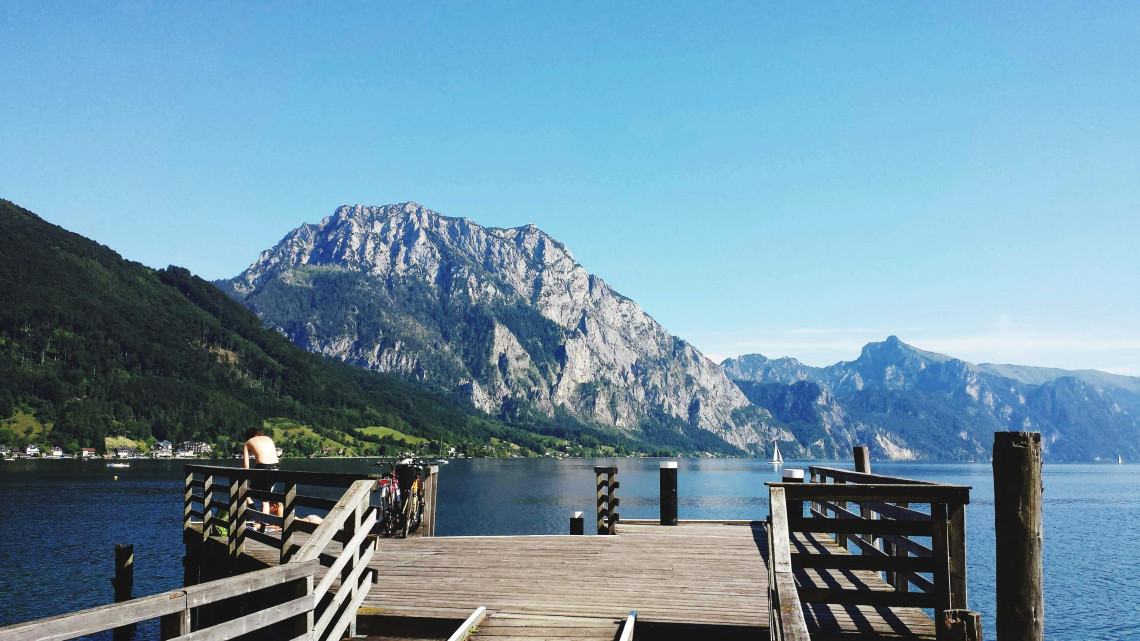
Why it's worth a stop. Traunsee has the most dramatic cliff scenery of the Salzkammergut lakes. The Traunstein mountain rises 1,691m directly from the lake, framing Gmunden. Emperor Franz Joseph summered in nearby Bad Ischl but sailed on Traunsee. Schloss Ort, a castle on a peninsula (originally an island) in the lake, is one of Austria's most photographed castles.
Essential experiences:
- Gmunden. Imperial spa town with the Klosterspitz, ceramic tradition (Gmundner Keramik factory tours), promenade.
- Schloss Ort. Castle on a lake peninsula, connected by a wooden bridge.
- Grünberg Cable Car. Above Gmunden, panoramic lake views.
- Boat tours on the traditional Traunseeschifffahrt fleet.
Best for: Off-the-beaten-path Salzkammergut. Second-time visitors.
Honest tradeoffs:
- Less swim-friendly than Wolfgangsee or Attersee (lake is deep and cool).
- Gmunden is a small city, not a village.
Wörthersee: Carinthia's warm-water resort
Location: Carinthia, southern Austria. 3h drive from Salzburg, 4h from Vienna.
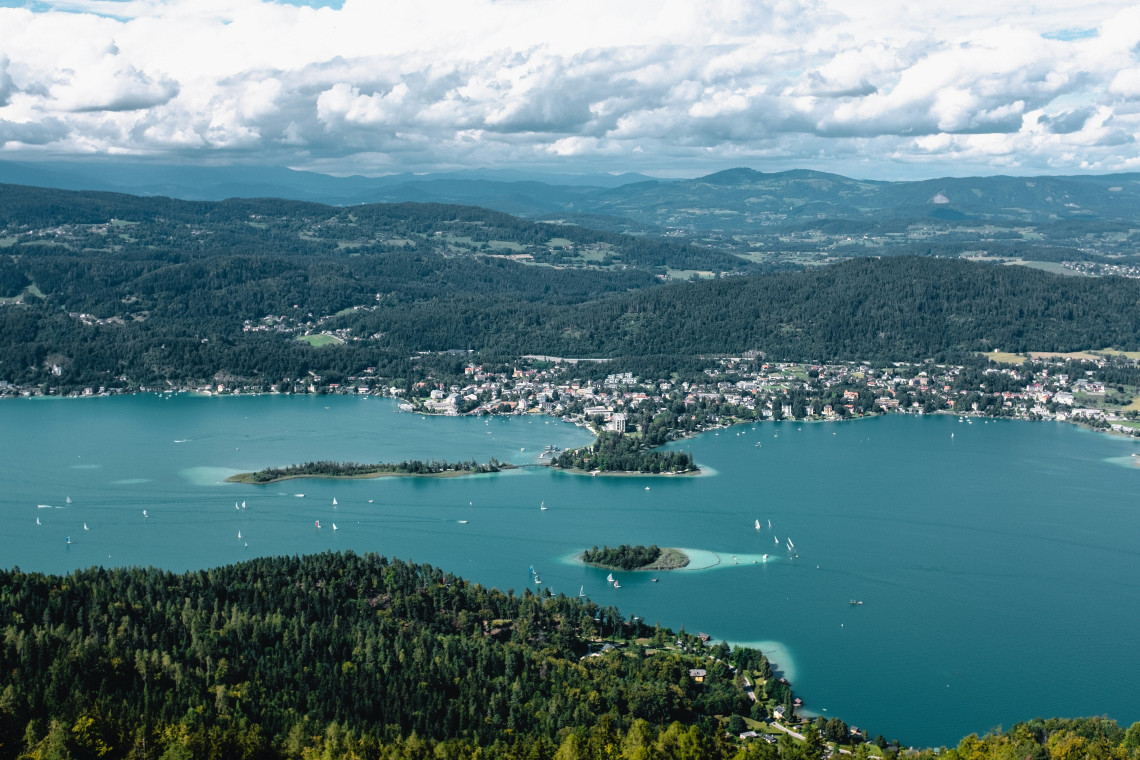
Villages: Klagenfurt (capital of Carinthia, eastern lake shore), Velden (glamorous resort, northern shore), Pörtschach, Maria Wörth.
Why it's different. Wörthersee is the warmest large lake in Austria. Water temperatures reach 25-27°C in July-August (compared to 15-17°C at Hallstatt). Almost Mediterranean in climate. The lake attracts Austrian and southern German summer visitors for beach vacations, water sports, and Belle Époque villa culture.
Essential experiences:
- Klagenfurt. Renaissance old town, home of the Lindwurm (dragon) fountain. Small but pleasant capital.
- Velden. Elegant resort town with grand hotels, casino, and celebrity summer scene.
- Maria Wörth. Peninsula village with a photogenic pilgrimage church surrounded by water.
- Water sports. Wörthersee is Austria's water sports capital: sailing, water skiing, SUP, wakeboarding.
- Villa Wörthersee culture. Belle Époque villas around the lake shore, some open to visitors.
Best for: Summer beach vacations. Water sports enthusiasts. Travelers combining Austria with Slovenia (Ljubljana is 1h30m south).
Honest tradeoffs:
- Further south than most Austria trips reach. Long drive from Salzburg or Vienna.
- Feels more like the Italian lake district than the Salzkammergut. Less "traditional Alpine Austria."
- Peak summer crowds and high prices at Velden.
The Salzkammergut hidden lakes
For travelers who want quiet, three lakes deserve mention:
Grundlsee. Small lake behind Bad Aussee. Mountain-locked, quiet, traditional. Feels 50 years back in time.
Almsee. Small crystalline lake at 589m elevation, extremely photogenic. Requires the drive to reach it. Rewards with silence.
Wolfgangsee's neighbor Fuschlsee. Smaller than Wolfgangsee, quieter, home to Red Bull's Fuschl castle and Red Bull's headquarters. Excellent lakeside path walks.
How to combine the lakes into a trip
One day from Salzburg: Wolfgangsee morning + Bad Ischl afternoon (drive back to Salzburg).
Two days: Overnight in Hallstatt (arrive 4pm, empty morning, leave 10am) + Wolfgangsee return.
Three to four days: Wolfgangsee + Hallstatt + Attersee (2 or 3 different bases).
A week of lake immersion: Base in Bad Ischl or a small Salzkammergut village. Rent a car. Explore all seven lakes above with day trips to the mountains between them.
When to visit the Austrian Lakes
May-June: Mountains snowy, lakes cool but photogenic. Villages quiet before summer.
July-August: Peak season. Warm water (Wolfgangsee, Attersee, Wörthersee at their swim-best). Crowded at Hallstatt.
September: Golden Alpine light, empty lakes after Austrian school starts, one of the best months.
October: Fall foliage around the lakes. Cold water. Very quiet.
November-March: Villages are quiet, snow-capped mountains. Some hotels close. Winter walks on empty lakeside paths are one of Austria's underrated pleasures.
Salzkammergut deep dive: See Best Time to Visit Austria for seasonal specifics.
How to reach the Austrian Lakes
By car from Salzburg: Wolfgangsee 30 minutes, Attersee 1h, Hallstatt 1h15m, Traunsee 1h. A rental car is genuinely the best way to see the Salzkammergut properly.
By train: ÖBB regional trains reach Hallstatt (via Attnang-Puchheim + ferry), Bad Ischl, Attnang-Puchheim, and Gmunden. But most Salzkammergut lake villages are car-only.
By bus: Postbus services connect Salzburg to the major villages (St. Wolfgang, Bad Ischl, St. Gilgen). Slow but reliable.
From Vienna: 3h drive to Hallstatt via the A1 and B145. Or train to Attnang-Puchheim (2h) + regional connection.
From Munich: 2h30m drive to Hallstatt.
Frequently asked questions
Which Austrian lake is best to visit? Depends on the trip. Hallstatt for the photo, Wolfgangsee for the atmosphere, Attersee for swimming, Wörthersee for warm water resort vibe. Most travelers do Hallstatt + Wolfgangsee together.
Is Hallstatt worth visiting? Yes, with the qualifier that you must plan around the crowds. Arrive after 4pm or before 9am. Stay overnight. Otherwise you experience the "why is everyone here" version.
How do I avoid crowds at Hallstatt? Stay overnight. Empty from 5pm to 9:30am. Or visit in November-March when tourism drops significantly.
Which lake is best for swimming? Wörthersee (25-27°C in July-August) for warmest. Wolfgangsee (21-24°C) for most convenient from Salzburg. Attersee (22-24°C) for largest.
Which lake is closest to Salzburg? Fuschlsee is 20 minutes. Wolfgangsee 30-45 minutes. Attersee 1h. Hallstatt 1h15m.
Can I visit Hallstatt from Vienna as a day trip? Technically possible (3h drive each way, or 4h by train + bus). Very tight day and misses the empty morning/evening window. Overnight is strongly recommended.
Which lake did Klimt paint? Attersee. He spent 15 summers there between 1900 and 1916.
What is the best time to visit the Austrian Lakes? Mid June to mid September for swimming. September for empty crowds and golden light. May and October for photography without crowds. Winter for quiet lakeside walks.
Is there a Sound of Music connection to the lakes? Yes. Mondsee (the wedding church scene) is in the Salzkammergut, 25 minutes from Salzburg. Wolfgangsee is nearby. Some Sound of Music tours include lake stops.
How many days do I need for the Salzkammergut? 2 to 3 days for the highlights (Wolfgangsee + Hallstatt). 4 to 7 days for immersion (add Attersee, Traunsee, Grundlsee).
Can I visit the lakes without a car? Yes for Hallstatt (train + ferry), Bad Ischl (train), Wolfgangsee (bus). Longer trips require a car or private driver.
Which lake is best for a family with kids? Wolfgangsee. Warm water for swimming, the Schafberg cog railway, boat rides, family hotels, easy Salzburg proximity.
76 lakes, one perfect trip.
Our Austria travel experts route Salzkammergut lake trips that avoid the Hallstatt crush.
See Austria Packages Tailor-Made Trip