by Yes Getaways Team
September 24, 2026 • 13 min read
Bavaria (Bayern) is Germany's largest state by area, the wealthiest by output, and the most culturally distinct. It has its own dialect, its own centuries-old kingdom that only joined the German Empire in 1871, its own Catholic-Baroque architectural tradition, its own beer laws, and enough medieval walled towns, alpine villages, and royal palaces to fill a two-week trip without leaving the state's borders. For most American first-timers to Germany, Bavaria is the trip: Munich, Neuschwanstein, Rothenburg, Nuremberg, and the Alps, in some combination. This guide covers the four sub-regions, the best places in each, and how to build the trip.
The short answer
- What Bavaria is: Germany's largest state, in the southeast, with the Alps as its southern border. Munich is the capital and biggest city. Nuremberg is second.
- The four sub-regions: Upper Bavaria (Munich, the Alps, Neuschwanstein), Franconia (Nuremberg, Bamberg, Würzburg, Rothenburg), Swabia (Augsburg, the Allgäu), and the Bavarian Forest (east, on the Czech border).
- How many days: 5 to 7 days for the highlights (Munich + Neuschwanstein + one day trip). 10 to 12 days to see the four sub-regions properly. 14 days lets you slow down.
- Best time to visit: May to early October is the main season, with September as the sweet spot. Late November to December for Christmas markets. January to March for skiing in the Alps.
- What to eat: Weisswurst, Schweinshaxe, pretzel, Obatzda, Käsespätzle, Franconian wine in Würzburg, beer everywhere.
- How to get around: Trains connect the major cities. A car unlocks the smaller villages, the Alps, and the Romantic Road. Best is often a combination: train between Munich, Nuremberg, and Würzburg; rental car for the countryside days.
Christmas Magic in Austria & Bavaria — Munich, Salzburg, and Vienna combined, hotels, transfers, and the classic Alpine Christmas trip.
See the package →Understanding Bavaria (Before You Try to Plan It)
Bavaria is the size of South Carolina, with a population of 13 million. It has four internationally-known cities (Munich, Nuremberg, Würzburg, Augsburg), one of Germany's most iconic castles (Neuschwanstein), one of Europe's most famous scenic drives (the Romantic Road), and a chunk of the Alps that includes Germany's highest peak (Zugspitze) and the country's most photographed lakes (Königssee, Chiemsee, Tegernsee).
Culturally, Bavaria is not just "Germany with mountains". It was an independent kingdom until 1871 and behaved like one for the century after that. Bavarians speak a dialect that other Germans can find hard to follow. The state is majority Catholic, unlike most of northern Germany, and the architectural tradition (Baroque and Rococo churches, onion-domed steeples, painted village houses) has more in common with Austria and Czech Bohemia than with Berlin or Hamburg. Lederhosen and Dirndl are worn without irony in the countryside, especially at festivals. The state government office is officially named the "Free State of Bavaria" and takes the "free" seriously in a way that occasionally shows up in national politics.
For a first-time traveler, the practical implication is this: Bavaria is one region but is not one experience. Munich is a big polished European capital city. Rothenburg is a preserved medieval village. Neuschwanstein is a 19th-century fantasy castle. The Alps at Berchtesgaden are as alpine as Switzerland. A well-designed Bavaria trip touches at least three of those categories.
The Four Sub-Regions
Upper Bavaria (Oberbayern). The stretch that includes Munich, the Bavarian Alps, and the Neuschwanstein area. This is the Bavaria of American imagination: Munich beer gardens, Neuschwanstein, Chiemsee, and the mountains. If you have 5 days and are on a first trip, this is the sub-region that should carry most of the itinerary.
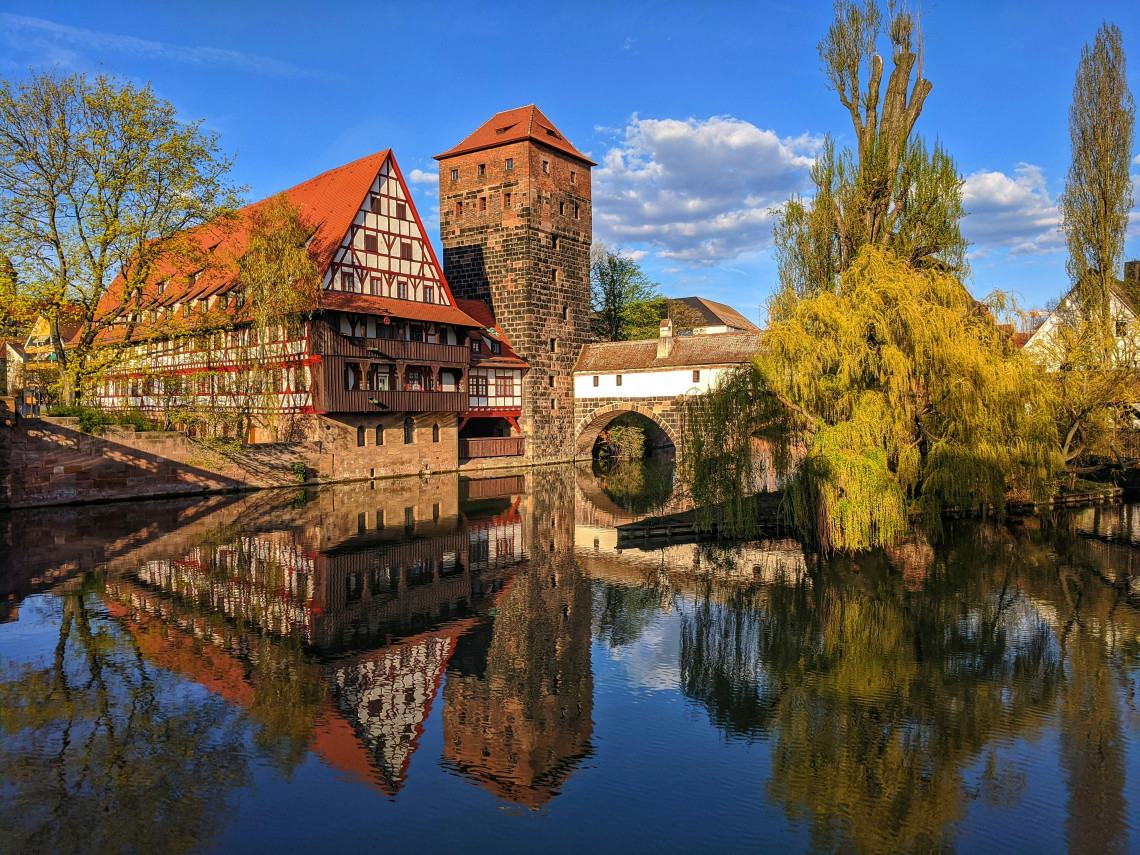
Franconia (Franken). The northern third of Bavaria, from the border with Baden-Württemberg east to Czechia. Franconia has Nuremberg (the second city), Würzburg (baroque wine capital), Bamberg (UNESCO old town and beer capital), and Rothenburg (medieval walled). It is arguably the most historically dense area of Germany and often gets skipped by first-timers who only see Upper Bavaria. Do not skip it.
Swabia (Schwaben). Western Bavaria, including Augsburg (the biggest Swabian city) and the Allgäu region in the southwest, which is where Neuschwanstein technically sits. Swabia has its own dialect and cuisine within Bavaria; the Spätzle (egg noodle) tradition is particularly Swabian. Landsberg am Lech, on the Romantic Road, is Swabian.
Bavarian Forest (Bayerischer Wald). The eastern border with Czechia, a low mountain range covered in dense forest. Under-visited by international travelers, popular with Germans for hiking and nature. Passau, at the confluence of three rivers on the Austrian border, is the gateway city. Skip on a first trip. Come back for it.
The Cities Worth Visiting
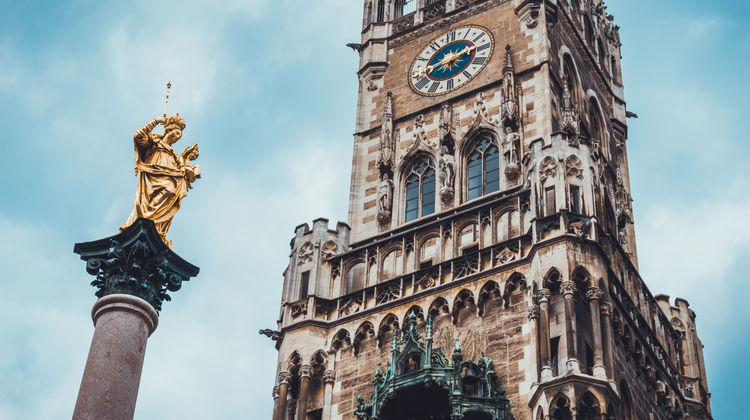
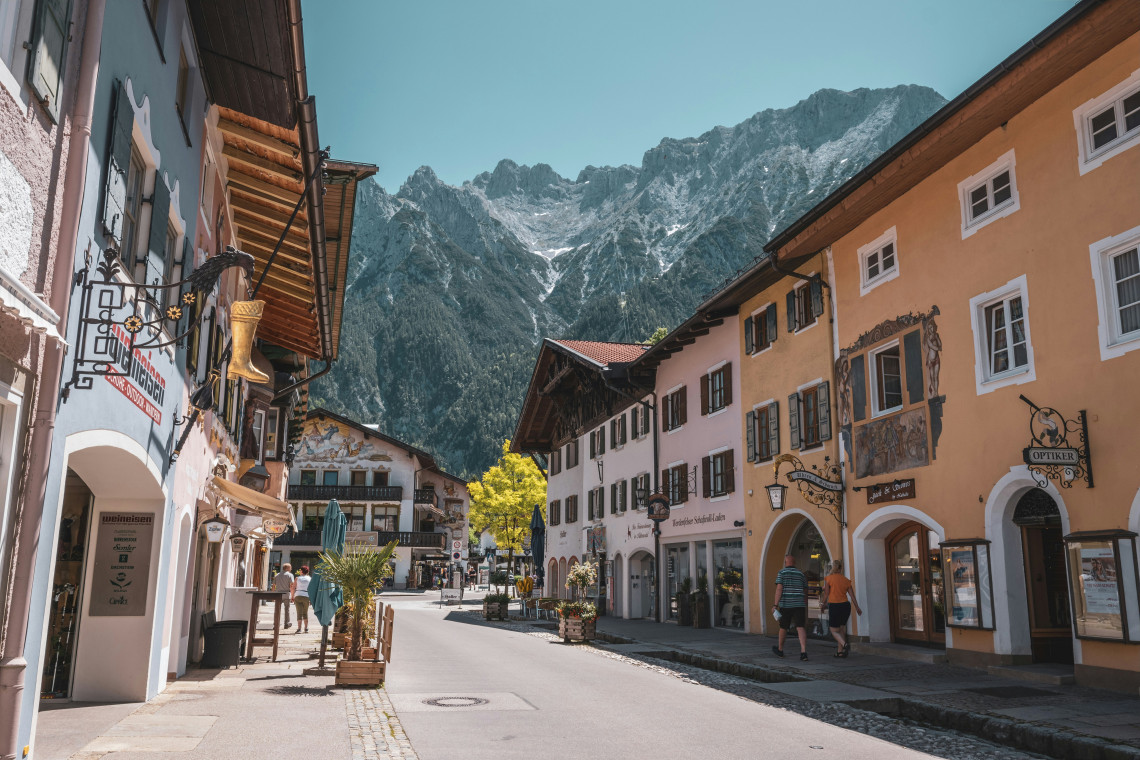
Munich. The capital and starting point for most Bavaria trips. Beer halls, the Residenz palace, Nymphenburg, the English Garden, Marienplatz, Oktoberfest in autumn, Christkindlmarkt in December. Plan 3 to 4 days.
Nuremberg. Bavaria's second city, an hour north of Munich by ICE train. Nuremberg has the medieval Kaiserburg castle on a hill above the old town, the Documentation Center (Nazi Party Rally grounds), the Germanisches Nationalmuseum (Germany's largest cultural history museum), and the Christkindlesmarkt in December, which is arguably the most historically important Christmas market in Germany. Plan 1 to 2 days.
Würzburg. Northern Bavaria's Franconian wine capital, on the Main river. The Würzburg Residenz (UNESCO) is one of the great Baroque palaces in Europe. Franconian dry Silvaner wine is served in the Bocksbeutel bottle at riverside restaurants. Northern anchor of the Romantic Road. Plan 1 to 2 days.
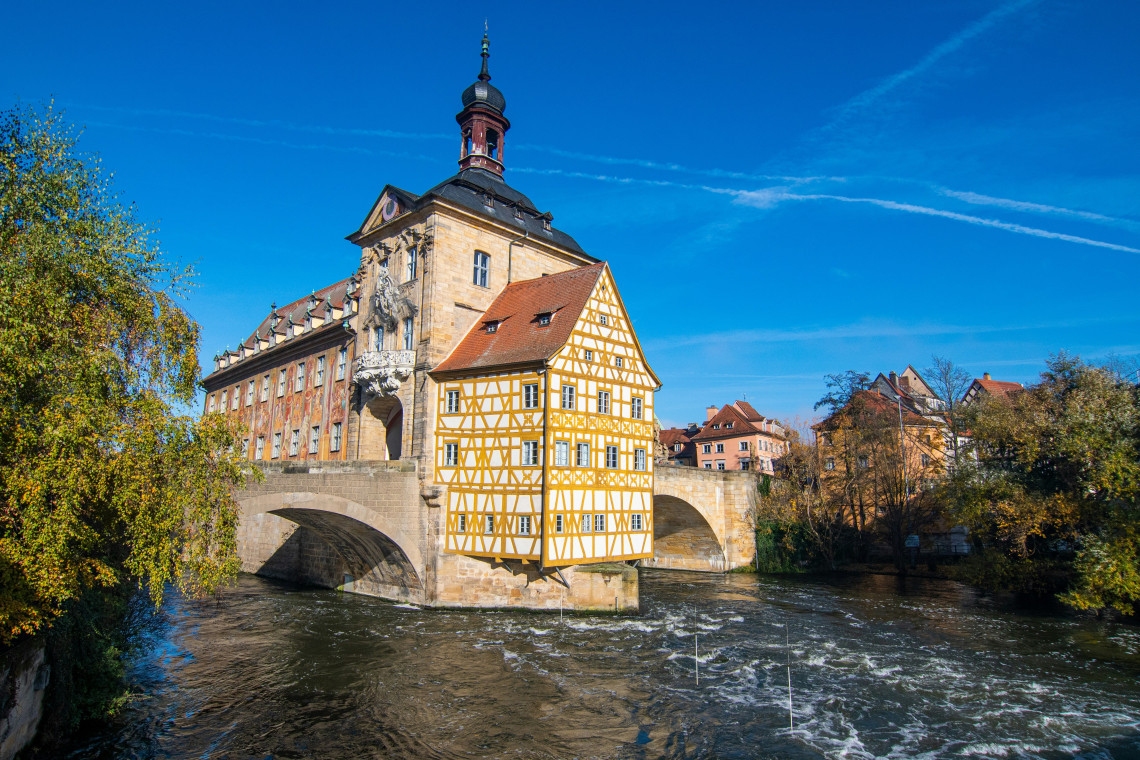
Bamberg. UNESCO old town, ten Baroque and medieval churches, and the smoked beer (Rauchbier) that Bamberg is famous for. Smaller and quieter than Nuremberg. Plan 1 day, easily as a day trip from Nuremberg.
Regensburg. Also UNESCO, also on a river (the Danube). One of the best-preserved medieval city centers in Europe, with the Stone Bridge (1146) still in use and the oldest continuously-operating sausage kitchen in Germany (Historische Wurstkuchl, since 1146). Plan 1 day.
Augsburg. The oldest city in Bavaria, founded by the Romans. The Fuggerei (oldest social housing in the world, 1521), the Rathaus with its Golden Hall, and the Cathedral. Plan 1 day, usually combined with the Romantic Road.
Passau. Baroque city on the Danube-Inn-Ilz confluence, on the Austrian border. Under-visited, quieter than Regensburg, worth a day if your itinerary passes east.
The Castles and the Countryside
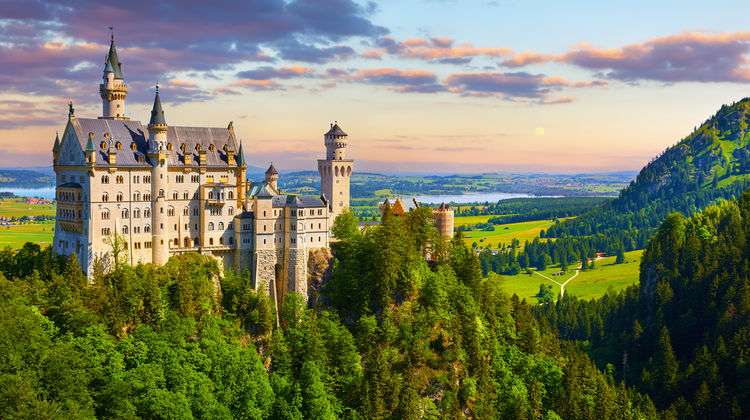
Neuschwanstein. The single most photographed building in Germany. King Ludwig II's fairy-tale castle in the Allgäu Alps, opened in 1886 and left unfinished at his death. Timed-ticket tours only. Half a day for the visit plus the walk up to the castle and to the Marienbrücke viewpoint. Reachable from Munich as a day trip (2 hours each way) or as the natural end-point of the Romantic Road.
Hohenschwangau. Ludwig II's childhood summer home, at the base of the hill below Neuschwanstein. Genuinely different from Neuschwanstein: smaller, more lived-in, more human. Half a day combined with Neuschwanstein makes a full day.
Herrenchiemsee. Ludwig II's other unfinished castle, on an island in the Chiemsee lake. Modeled after Versailles. Half a day plus the ferry from Prien.
Linderhof. Ludwig II's smallest and only finished palace, tucked in a valley in the Bavarian Alps between Oberammergau and Ettal. Half a day.
Nymphenburg. The Wittelsbach summer palace in Munich itself. Half a day, easy to fit into a Munich stay.
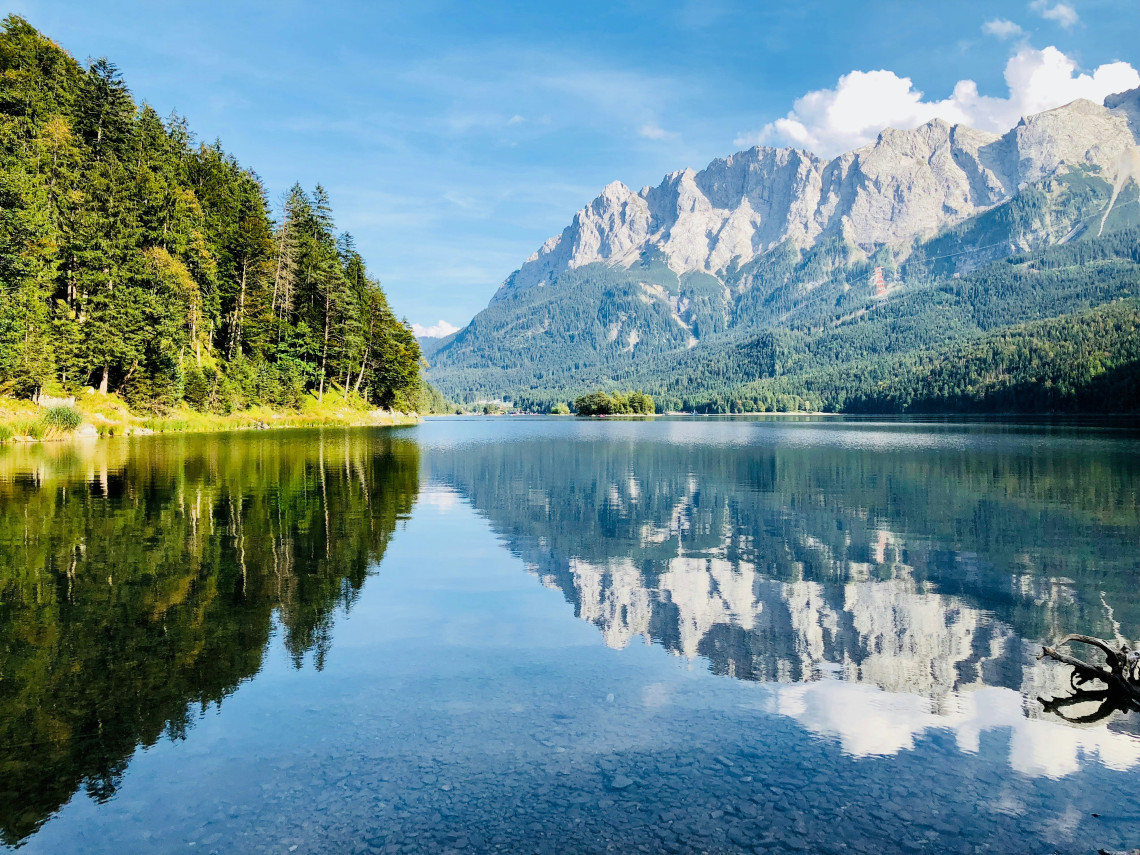
Bavarian Alps. The Zugspitze (Germany's highest peak at 2,962m) is reached by cable car from Garmisch-Partenkirchen, about 90 minutes south of Munich. Berchtesgaden National Park (Königssee, the Eagle's Nest) is 3 hours from Munich, near the Austrian border. Both are worth a full day; either is a possible base for a 2-night alpine addition to a Bavaria trip.
The Bavarian Lakes. Chiemsee (the biggest), Starnberger See (closest to Munich), Tegernsee (upscale and easy day trip from Munich), and the smaller pre-Alpine lakes are the summer weekend escape for Munich residents. Any of them makes a half-day or full-day trip.
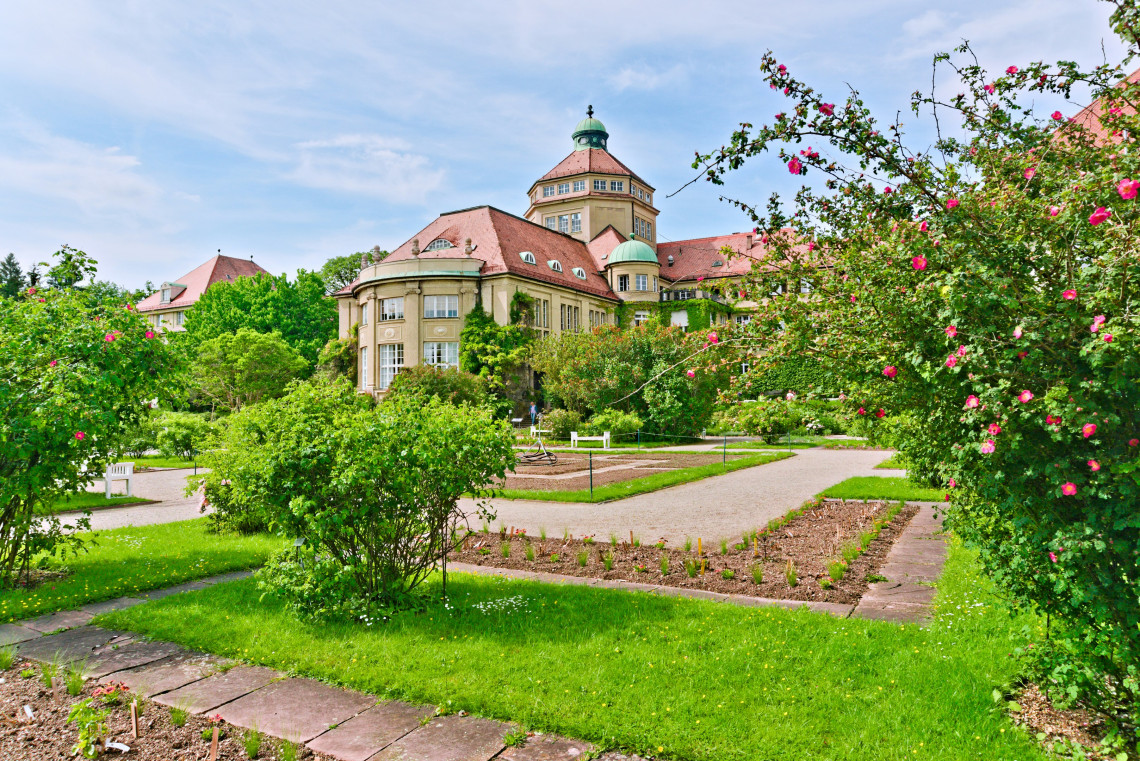
Munich City Break: Flights, Hotel, Itinerary
A Munich base is the natural way to explore Upper Bavaria. Yes Getaways covers flights, an Altstadt-area hotel, and day-trip planning for Neuschwanstein, Salzburg, or the Alps.
See the Munich City Break →Suggested Itineraries
5-Day Bavaria (Highlights)
The compressed version. Munich + one castle day.
- Days 1-3: Munich (Marienplatz, Residenz, Nymphenburg, English Garden, Hofbräuhaus, one museum, dinner in Haidhausen)
- Day 4: Neuschwanstein day trip from Munich (train and bus, or organized tour)
- Day 5: Depart from Munich, or add a beer garden and Nymphenburg gardens morning before flying
Best for: Travelers with a total 5 to 7 days in Germany who want the classic Bavaria experience without adding a car.
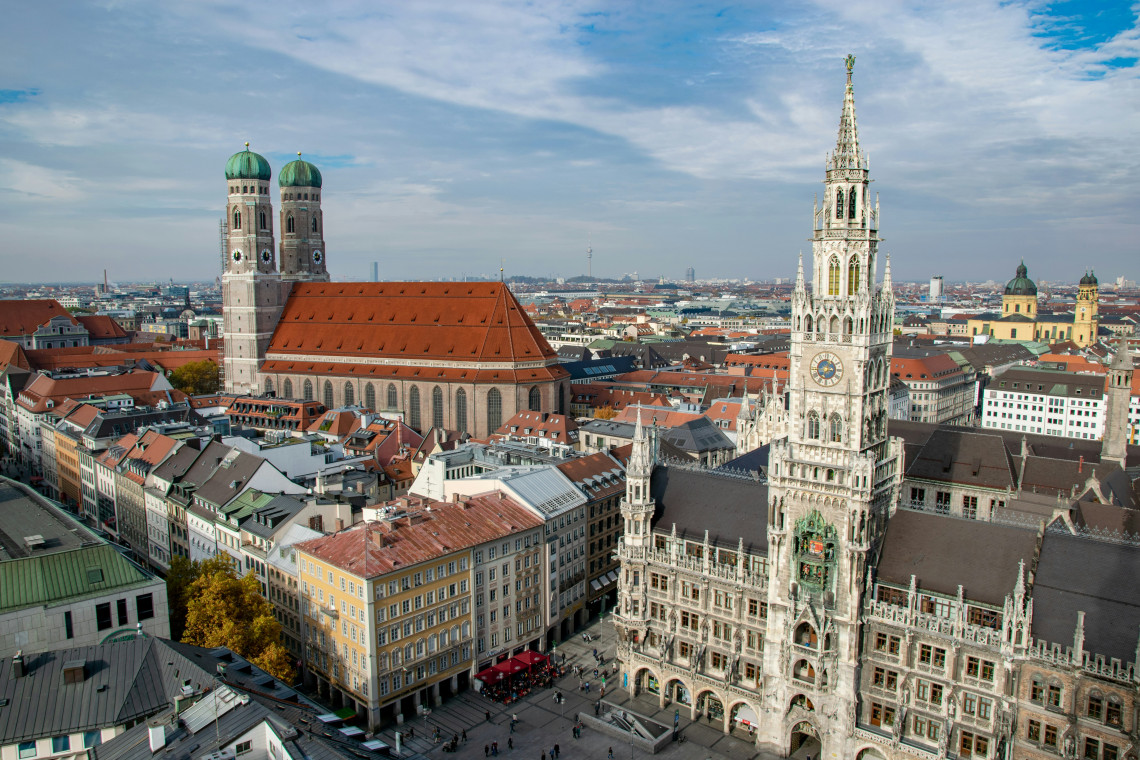
7-Day Bavaria (Munich + Alps + Castle)
Munich, one country base, and Neuschwanstein.
- Days 1-3: Munich
- Day 4: Salzburg day trip (90 minutes by train) or Chiemsee/Herrenchiemsee day trip
- Day 5: Drive or train south to Füssen; visit Neuschwanstein and Hohenschwangau
- Day 6: Bavarian Alps day (Zugspitze from Garmisch, or hike in the Ammergau Alps)
- Day 7: Return to Munich, depart
Best for: A first Bavaria trip where you want both the city and the countryside.
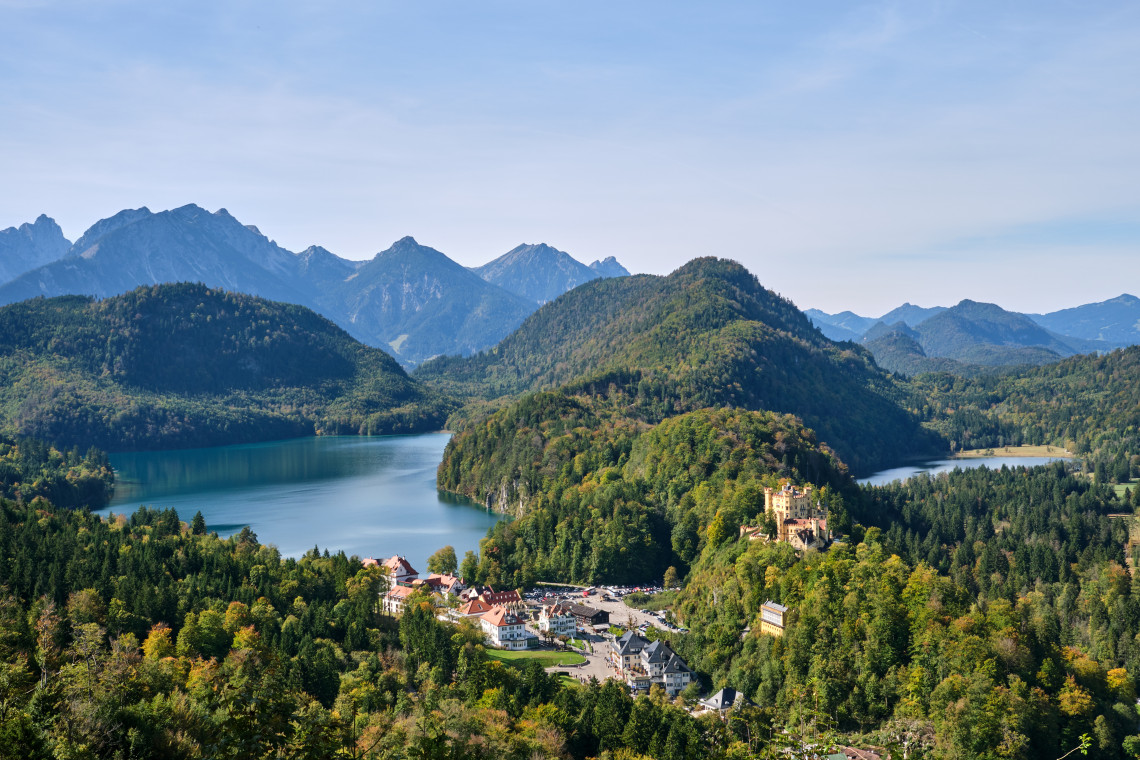
10-Day Bavaria (Adding Franconia)
Bavaria's four internationally-known cities plus one alpine day.
- Days 1-2: Würzburg (arrive, Residenz, wine on the Alte Mainbrücke)
- Day 3: Würzburg to Rothenburg (drive or short train + car)
- Day 4: Rothenburg full day
- Days 5-6: Rothenburg to Nuremberg (train), Nuremberg for 2 nights (Kaiserburg, Documentation Center, Germanisches Nationalmuseum)
- Day 7: Nuremberg to Munich (ICE train, 1 hour)
- Days 7-9: Munich (3 nights)
- Day 10: Neuschwanstein day trip and depart, or drop the trip in Füssen and fly from Munich
Best for: Travelers who want to see both Franconia and Upper Bavaria without rushing either.
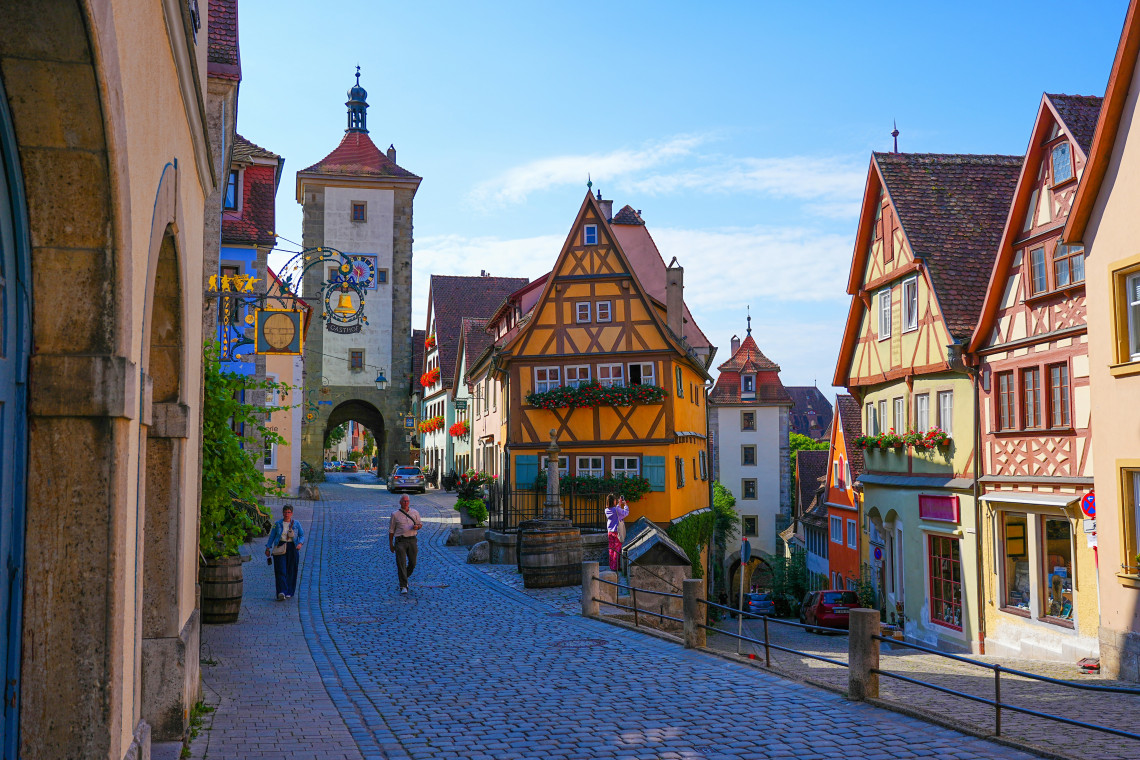
14-Day Bavaria (The Full Version)
The complete state, at a proper pace.
- Days 1-2: Würzburg
- Day 3: Bamberg (day trip or 1-night stop)
- Days 4-5: Nuremberg
- Days 6-7: Rothenburg (2 nights, drive from Nuremberg)
- Days 8-9: Munich part 1 (settle in, see the city)
- Day 10: Neuschwanstein and Füssen
- Day 11: Bavarian Alps day (Zugspitze or Berchtesgaden)
- Day 12: Bavarian Lakes (Chiemsee, Tegernsee) or Regensburg day trip
- Days 13-14: Munich part 2 and depart
Best for: Travelers with two full weeks and interest in both cities and mountain landscape.
Prefer to Do the Romantic Road?
The Romantic Road covers Würzburg, Rothenburg, Dinkelsbühl, Nördlingen, Augsburg, and Füssen as a 7-day self-drive route ending at Neuschwanstein. It is Bavaria without Munich, or with Munich added at the end.
See the Romantic Road →When to Visit Bavaria
May to early June. Spring is quiet, green, and cool. Wildflowers in the alpine meadows. Long days. Warmest weather 65 to 75°F in the lowlands, cooler in the mountains. Ideal for the Alps and the countryside.
Mid-June to late August. Peak summer. Warm to hot in Munich (75 to 90°F), cooler at altitude, long daylight until 9:30 PM. Beer gardens at their best. Book hotels well ahead, especially in Rothenburg and Füssen.
September to early October. The traveler's sweet spot. Warm days, cool nights, harvest colors in the Franconian vineyards, thinning crowds after the first week of September. Oktoberfest runs late September into early October in Munich; book far ahead if your dates align.
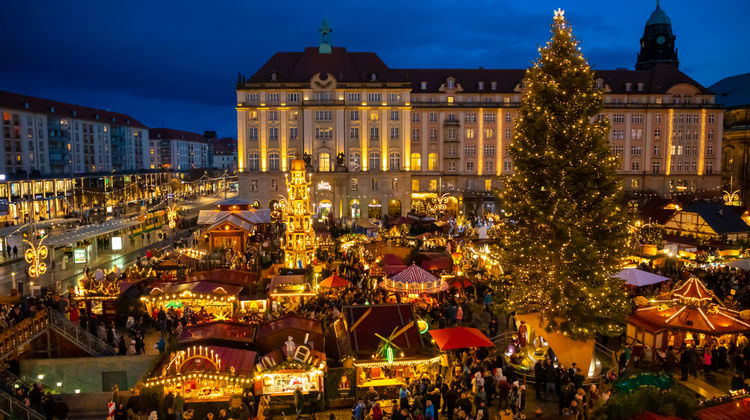
Late November to late December: Christmas market season. Nuremberg (Christkindlesmarkt), Munich (Marienplatz), Rothenburg (Reiterlesmarkt), and Bamberg are the four essential markets. Bavarian Christmas markets are more traditional and more religious in character than Berlin's or Cologne's. Weather is cold (25 to 40°F), often snowy in the Alps.
January to March. Alpine ski season in Garmisch, Berchtesgaden, and the Zugspitze. City sightseeing is quiet and grey outside the Alps. Fine for a specific ski trip; not ideal for a general Bavaria trip.
April. Shoulder month. Weather is variable, some village businesses in the countryside are still opening for the season. Not the strongest month for a first trip.
Bavarian Food and Beer
Bavarian cuisine is distinct from what most Americans think of as "German food". It is heavier on pork, potato, and dumplings than the northern German tradition, and it has a specific set of dishes that appear on every Wirtshaus menu across the region.
Weisswurst. White veal-and-pork sausage, boiled, served with sweet mustard and a soft pretzel, and traditionally eaten before noon. A morning ritual in Munich. Do not slice it lengthwise; use your fingers to peel the skin off.
Schweinshaxe. Roast pork knuckle, crispy skin, tender inside, served with potato dumplings and sauerkraut. The signature Bavarian dinner dish. Split with a companion if you have not eaten one before.
Käsespätzle. Egg noodles baked with cheese and fried onions. Bavarian comfort food. Vegetarian.
Obatzda. Soft cheese spread made from Camembert, butter, paprika, and beer. Served with pretzels and radishes at every beer garden.
Leberkäse. Baked meat loaf sliced thick and served hot in a Semmel (Bavarian roll). The Bavarian equivalent of a sandwich.
Prinzregententorte and Apfelstrudel. The classic Bavarian coffee-and-cake pairings, served at every proper Konditorei.
Beer. Bavaria takes beer seriously. The Reinheitsgebot (beer purity law) of 1516 originated here. Munich has six official Oktoberfest breweries (Augustiner, Hofbräu, Löwenbräu, Paulaner, Spaten, Franziskaner) and each has its own preferred beer hall or beer garden. Franconia (northern Bavaria) has more independent small breweries per capita than anywhere else in the world; Bamberg alone has 11. If beer matters to you, extend your Bavaria trip north into Franconia.
Wine. Franconian dry Silvaner in Würzburg, served in the flat-round Bocksbeutel bottle, is the Bavarian wine to know. Rarely leaves the region.

Getting Around Bavaria
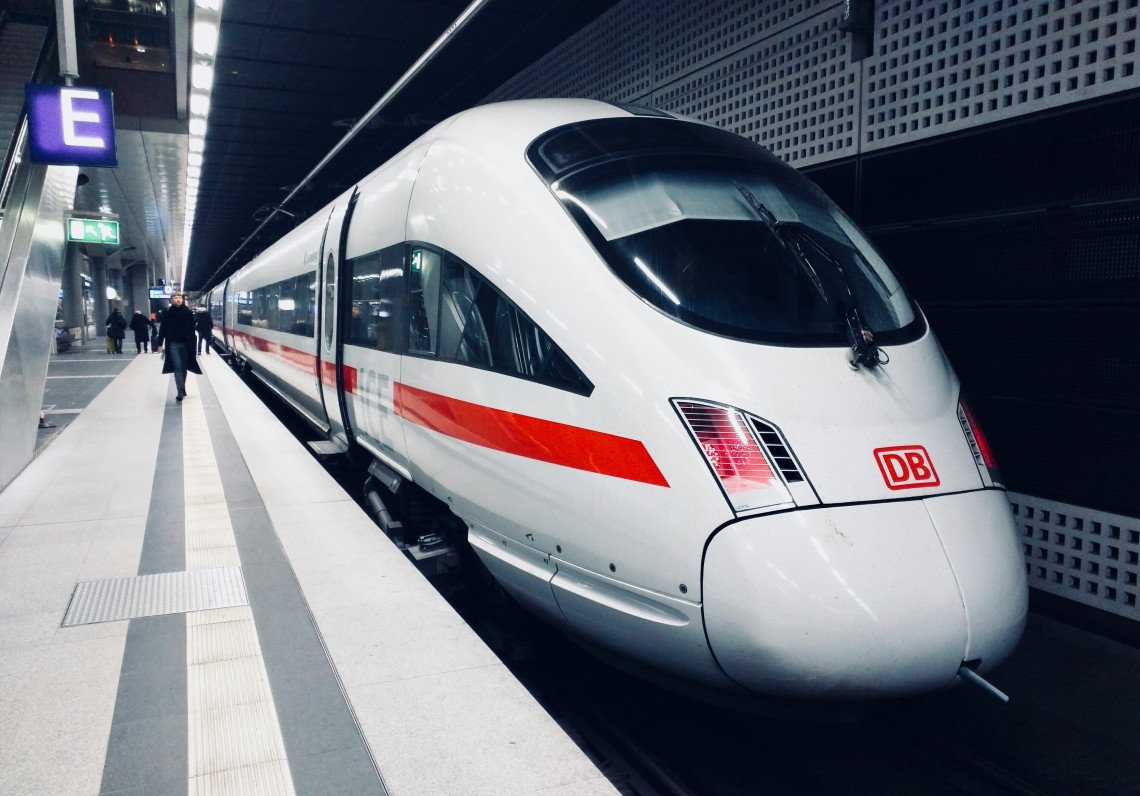
Trains. Munich to Nuremberg is 1 hour by ICE. Nuremberg to Würzburg is 1 hour. Munich to Regensburg is 90 minutes. The main cities are all connected by fast, comfortable rail. The Deutsche Bahn app handles tickets. A Bayern-Ticket day pass covers unlimited regional trains within Bavaria for a fixed daily rate; useful for day trips.
Rental car. Essential for the Romantic Road, the Alps, and the Bavarian Forest. Munich Airport is the biggest pickup point. Automatic transmissions are less common and more expensive; request in advance if you cannot drive manual.
Combination. The most efficient way for many Bavaria trips: take the train for the intercity legs (Würzburg-Nuremberg-Munich), rent a car for the countryside days (Romantic Road, alpine day trips), drop the car at the end.
Munich Airport (MUC). The main international gateway. Direct flights from JFK, EWR, ORD, IAD, and other US hubs. Nuremberg Airport (NUE) is a smaller alternative useful for Franconia-focused trips (connections via Frankfurt, Amsterdam, or London).
Autobahn. No toll for cars. Speed limit varies by stretch (some sections unlimited). Watch for construction and speed camera zones.
Practical Details
Language. German, with a Bavarian accent that can be strong in older residents and in the countryside. English is widely spoken at any tourist-facing business. Learning to say "Servus" instead of "Hallo" is a small charm the locals appreciate.
Currency. Euro. Bavaria is more card-friendly than a decade ago, but small cafés, sausage stands, beer gardens, and older Wirtshäuser often still take only cash. Carry 40 to 60 EUR in cash at all times.
Tipping. Not obligatory but appreciated. Round up at cafés, 10% at proper restaurants. Tell the server the total as you pay, not after.
Regional etiquette. Bavarians are more formal in first interactions than northern Germans; "Grüß Gott" is a normal greeting in the countryside. Shorts and flip-flops in a Wirtshaus are frowned upon in some traditional establishments; a collared shirt or blouse is safer.
Frequently Asked Questions
Is Bavaria the same as Germany? No. Bavaria is one of Germany's 16 federal states, the largest by area. Culturally it is one of the most distinct.
How many days do I need in Bavaria? 5 to 7 days for the highlights, 10 for a proper Franconia-plus-Upper-Bavaria trip, 14 for the full version with the Alps and the lakes.
Where should I stay for a first Bavaria trip? Munich is the natural base. From Munich you can day-trip to Neuschwanstein, Salzburg, Chiemsee, or the Bavarian Alps.
Is Bavaria expensive? Munich is one of Germany's more expensive cities. The countryside (Rothenburg, Nördlingen, the Alps) is comparable to national averages. Overall Bavaria is more expensive than Berlin, cheaper than Zurich or Paris.
Should I combine Bavaria with Salzburg? Yes, if you have 7 days or more. Salzburg is 90 minutes east of Munich by train, in Austria, and it fits naturally as a Munich day trip or an overnight extension.
Should I combine Bavaria with the Rhine or Berlin? For a longer trip, Bavaria + Rhine (Würzburg is 2 hours from the Rhine river cities) works well. Bavaria + Berlin requires a flight or a 4-hour train and is a much bigger scope shift.
Do I need a car for Bavaria? Not if you stay in the major cities (Munich, Nuremberg, Würzburg) and take day trips by train. For the Romantic Road, the Alps, and the smaller villages, yes.
What is the difference between Bavaria and the Bavarian Alps? Bavaria is the entire state. The Bavarian Alps are the southern edge, along the Austrian border, about 20 percent of the state's area. Many Bavaria trips barely touch the Alps.
When is the best time for the Bavarian Alps? Late May to early October for hiking, June to September for the highest passes. December to March for skiing.
Is Bavaria good for families? Yes, exceptionally. Castles for kids, beer gardens that welcome families, big parks in Munich, safe cities, easy public transport, and multiple family-friendly museums.
Should I do Oktoberfest? If you can arrange it (book 6 to 9 months ahead), yes, at least once. The festival runs late September to early October in Munich.
What is the most beautiful part of Bavaria? Contested. Common answers: the Berchtesgaden Alps (Königssee), the Wieskirche in a meadow near Steingaden, the walled town of Rothenburg at dusk, and the view of Neuschwanstein from the Marienbrücke.
Can I visit Neuschwanstein without going to Munich? Yes. Fly into Munich, take the train direct to Füssen (about 2 hours), visit the castle, and either continue elsewhere or return to Munich. The train works well without a rental car.
What is the Bavarian Christmas market tradition? Older and more religious than the German average. Christkindlesmarkt in Nuremberg is the oldest and most historically important. Munich's Marienplatz market is the biggest of the Bavarian city markets. Rothenburg's Reiterlesmarkt is the most atmospheric of the walled-town markets.
Are there any Bavaria destinations that are still under the radar? Bamberg (UNESCO, beer capital of Franconia), Regensburg (UNESCO, medieval Danube city), and Passau (Baroque, three-river city) are the three most underrated. Add one if you have the time.
Bavaria, Your Way
Whether you want a Munich city break with day trips, the Romantic Road self-drive, or the full 10-day Bavaria loop with Franconia and the Alps, Yes Getaways builds it around your dates.
Keep reading
Munich: The First-Timer's Complete Guide
The Bavarian capital, and the natural base for the region.
Neuschwanstein Castle: The Complete Visitor Guide
Bavaria's fairy-tale castle, and how to visit.
Germany's Romantic Road: 7-Day Self-Drive
Würzburg to Füssen through the walled towns of Bavaria.