July 28, 2026 • 12 min read
The Camino de Santiago is a network of pilgrimage routes leading to the shrine of Saint James the Apostle at the Cathedral of Santiago de Compostela in Galicia. Pilgrims have walked it for over 1,000 years. In recent years it has surged from religious tradition to global bucket-list walk, drawing over 400,000 pilgrims per year.
Here is the honest guide to which route to walk, how many days you need, when to go, and what actually matters when you start.
The short answer
The Camino is not one path but many. The most popular routes are the Camino Francés (French Way), the Camino Portugués, and the Camino del Norte. All lead to Santiago de Compostela.
For most first-time pilgrims (especially from North America):
- Walk the last 100km of the Camino Francés (Sarria to Santiago). Takes ~5-7 days. Fulfills the requirement to receive the Compostela certificate.
- Best months: May, June, September, early October. Peak crowds July-August.
- Get the pilgrim credential (credencial) stamped daily at churches, albergues, and cafés along the route.
- Book the first and last nights ahead; the middle can be more spontaneous in shoulder season.
- Pack light. 6-8 kg (13-17 lb) max in your backpack.
What is the Camino de Santiago?
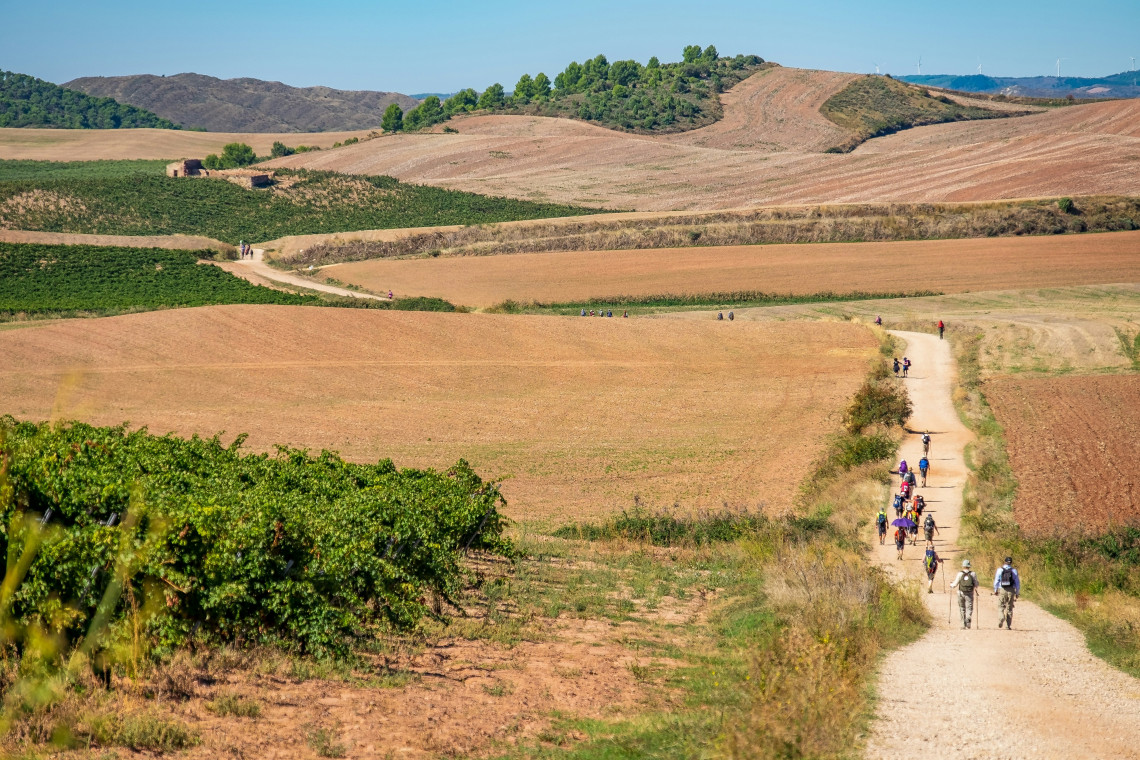
The Camino de Santiago is a pilgrimage route ending at the Cathedral of Santiago de Compostela in Galicia, northwestern Spain. Its origins date to the 9th century, when a hermit discovered a tomb believed to belong to the Apostle James (Santiago in Spanish). A cathedral was built over the site, and pilgrims began walking there from across Europe.
In the Middle Ages, the Camino Francés (starting from various French cities and crossing the Pyrenees) became the most trafficked pilgrimage route in Europe after Rome and Jerusalem. It declined after the 16th century and had almost died out by the 1970s.
The revival began with the 1987 "Camino Path" designation as a European Cultural Route and Paulo Coelho's book The Pilgrimage (1987), followed by decades of steady growth. In 2024, over 500,000 pilgrims received the Compostela certificate. In 2025, a Xacobean Holy Year (when St. James's feast day falls on a Sunday), the number surpassed 700,000.
The main routes
Camino Francés (French Way). The most popular route. Starts in Saint-Jean-Pied-de-Port (France) and crosses the Pyrenees into Spain, passing through Pamplona, Logroño, Burgos, León, and Astorga before reaching Santiago. ~800 km total. About 30-35 walking days.
Camino Portugués (Portuguese Way). Second most popular. Starts in Lisbon or Porto, Portugal, and enters Spain via Tui or Valença do Minho. ~240 km from Porto to Santiago. Coastal variant available. 12-14 days from Porto.
Camino del Norte (Northern Way). Follows Spain's Atlantic coast from San Sebastián west. Passes through Bilbao, Santander, Gijón, and eventually Santiago. ~830 km total. About 32-35 days. More rugged, less crowded.
Camino Primitivo (Original Way). The oldest route, starting from Oviedo and joining the Camino Francés at Melide. ~320 km. About 13-14 days. Physically demanding, mountainous.
Vía de la Plata (Silver Way). Starts in Seville and heads north to Santiago via Salamanca and Astorga. ~1,000 km. About 40+ days. Hot, southern, less-walked.
Camino Inglés (English Way). From Ferrol on the Galician coast, ~120 km. Historically used by pilgrims arriving by sea from England, Ireland, and Scandinavia. 5-6 days.
Which route should you choose?
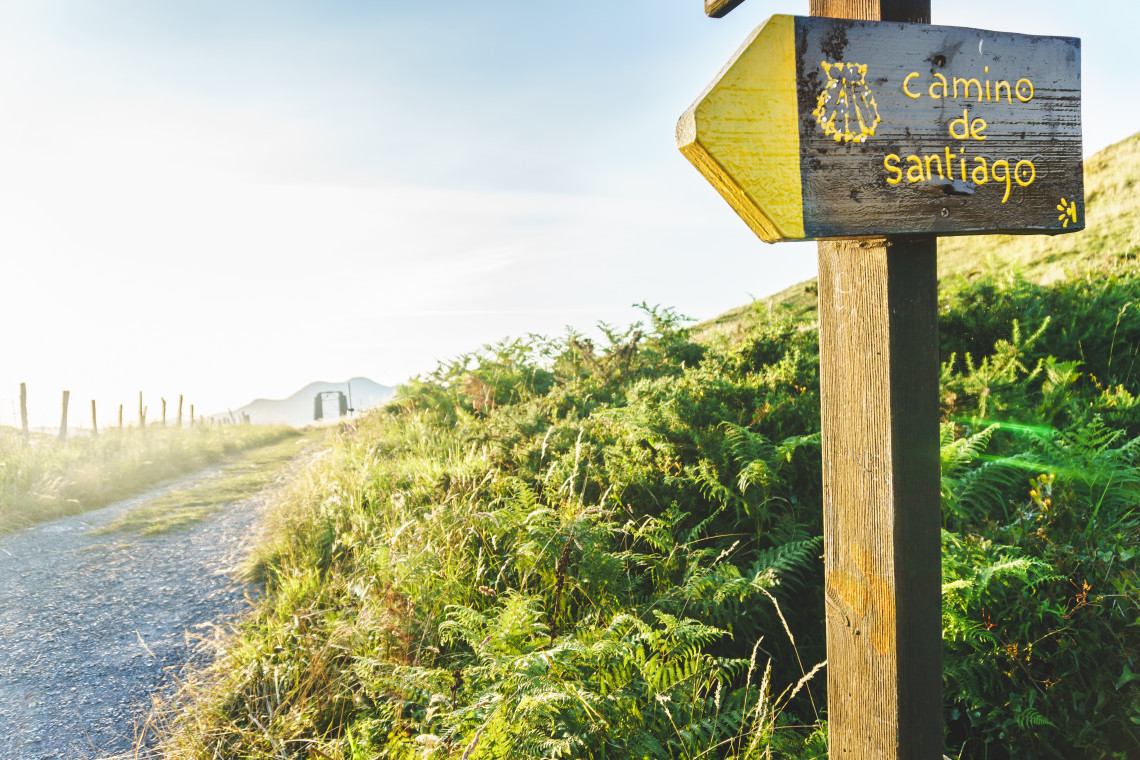
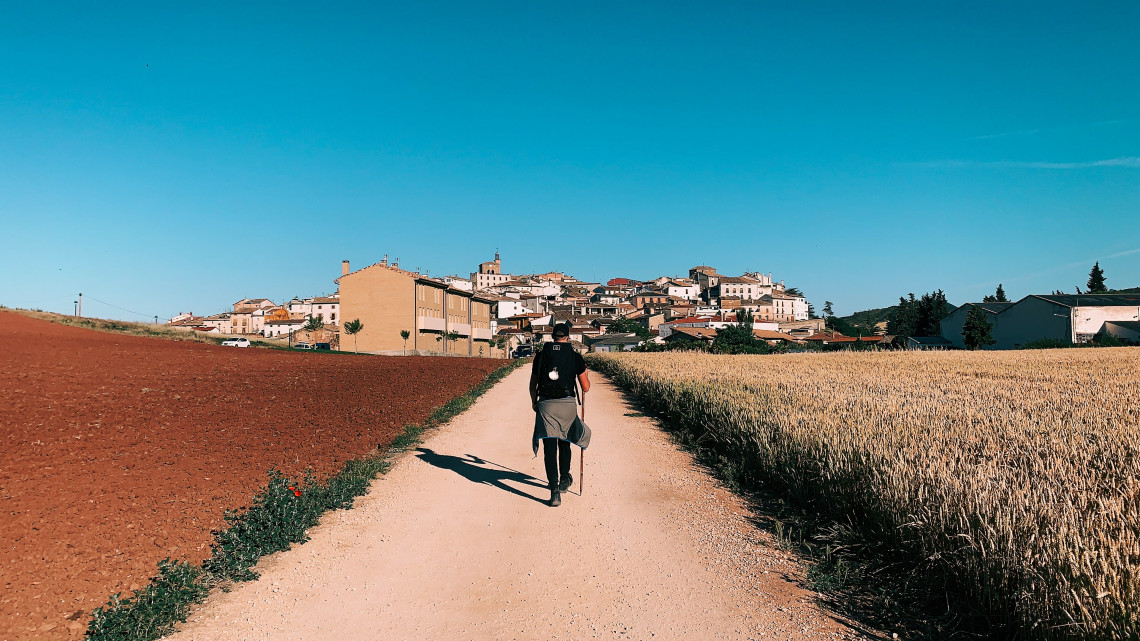
For most first-time North American pilgrims: Walk the last 100 km of the Camino Francés (Sarria to Santiago) or the last 100 km of the Camino Portugués (Tui to Santiago). Reasons:
- Fulfills Compostela certificate requirements. You need to walk at least 100 km (or cycle 200 km) with a pilgrim credential stamped twice a day near the end of the route.
- Manageable timeframe. 5-7 days walking, plus travel days. Doable in one week of vacation.
- Well-supported infrastructure. Albergues, restaurants, luggage transfer services, and hotels every 5-15 km.
- Beautiful Galician landscape. Green fields, ancient chestnut forests, granite villages.
Full Camino Francés (Saint-Jean-Pied-de-Port to Santiago): Serious pilgrims aiming for 30-35 days. The complete experience. Physically demanding but rewarding.
Camino Portugués coastal from Porto: Beautiful. 12-14 days. Combines Portuguese and Galician coast.
Camino del Norte from San Sebastián: More rugged. For experienced hikers.
How many days do you need?
- The last 100 km (Sarria to Santiago on Camino Francés): 5-7 days.
- Porto to Santiago (Camino Portugués): 12-14 days.
- León to Santiago (Camino Francés): 12-14 days.
- Saint-Jean-Pied-de-Port to Santiago (full Camino Francés): 30-35 days.
- Bilbao to Santiago (Camino del Norte): 25-28 days.
Plan 20-25 km per day as a comfortable pace. Fit hikers cover 30 km/day, though not sustainably for weeks. Add rest days every 5-6 walking days.
When is the best time to walk?
Best months:
- May and June: Wildflowers, mild weather, growing crowds. Excellent.
- September and early October: Harvest season, cooler nights, similar crowd volume to spring. Best combination of weather and atmosphere.
Second-tier months:
- April: Chance of rain and snow at higher elevations (Pyrenees, O Cebreiro). Otherwise fine.
- Late October to early November: Fewer people. Cooler and shorter days. Some albergues close for winter.
Peak but crowded:
- July and August: Peak pilgrim numbers, hottest weather (especially the Meseta on Camino Francés). Book ahead everywhere.
Off-season (challenging):
- December to February: Many albergues closed. Snow at higher elevations. Short daylight. Only experienced winter hikers.
- March: Weather still unstable. Fewer pilgrims but limited services.
Xacobean Holy Years (when St. James's feast day, July 25, falls on a Sunday): 2027 is not, 2032 is. Holy Years bring massive pilgrim numbers.
The pilgrim credential (credencial)
The credencial is your pilgrim passport. A small folded document that you carry with you and get stamped at least twice a day (once from your morning café or hostel, once from your evening albergue) along the route.
Where to get it:
- Any Catholic parish in your home country (some U.S. and Canadian churches issue them).
- Pilgrim office at your starting city.
- American Pilgrims on the Camino (americanpilgrims.org) mails them free.
The Compostela certificate. At the Pilgrim Office in Santiago, present your stamped credential (with 100+ km walked or 200+ km cycled and religious/spiritual motivation stated) and receive the Compostela certificate. Free. Not required to visit the cathedral. Some pilgrims also get the Distance Certificate (paid, showing exact route and kilometers).
Where to sleep: albergues, hostels, hotels
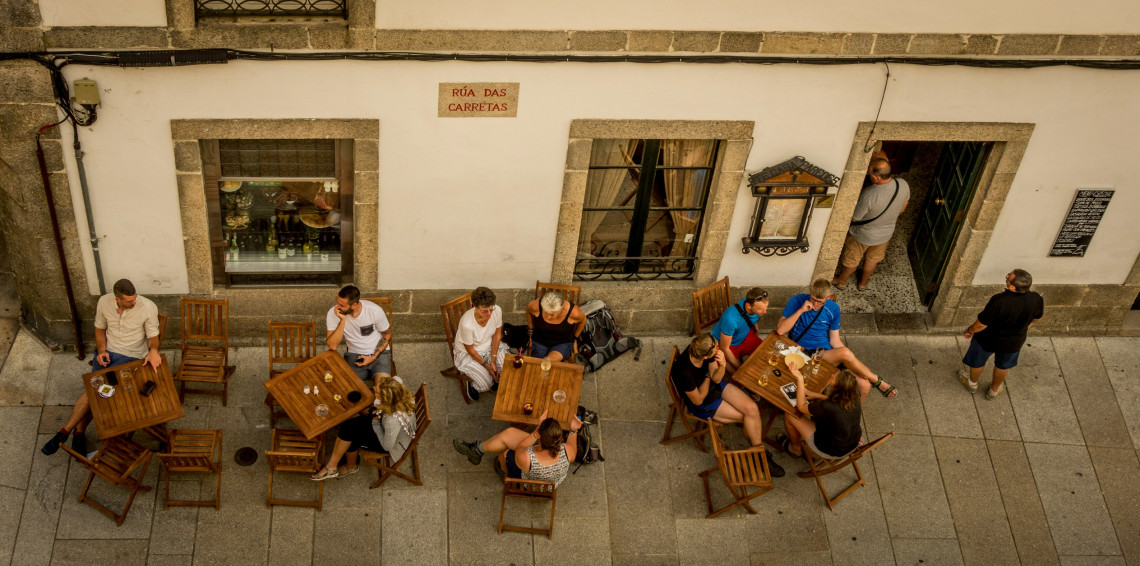
Albergues (pilgrim hostels). Dormitories with bunk beds. €8-€15/night. Basic: shared bathrooms, kitchens, wash lines. Two types:
- Public/municipal albergues. Government-run, cheapest, first-come first-served (no advance booking usually).
- Private albergues (parroquial or private). Often better facilities, may allow booking.
Casas rurales and small hotels. €40-€90/night. Private room. Booking possible.
Rural hotels and paradores in Galicia. €80-€200/night. Boutique or luxury option. Bookable ahead. The Parador in Santiago (Hostal de los Reyes Católicos) is one of the oldest hotels in the world (founded 1499).
Booking strategy: In peak months (July-August), book at least 2-3 days ahead. In shoulder months, you can often walk in and find a bed. First and last nights: book ahead regardless of season.
Luggage transfer services
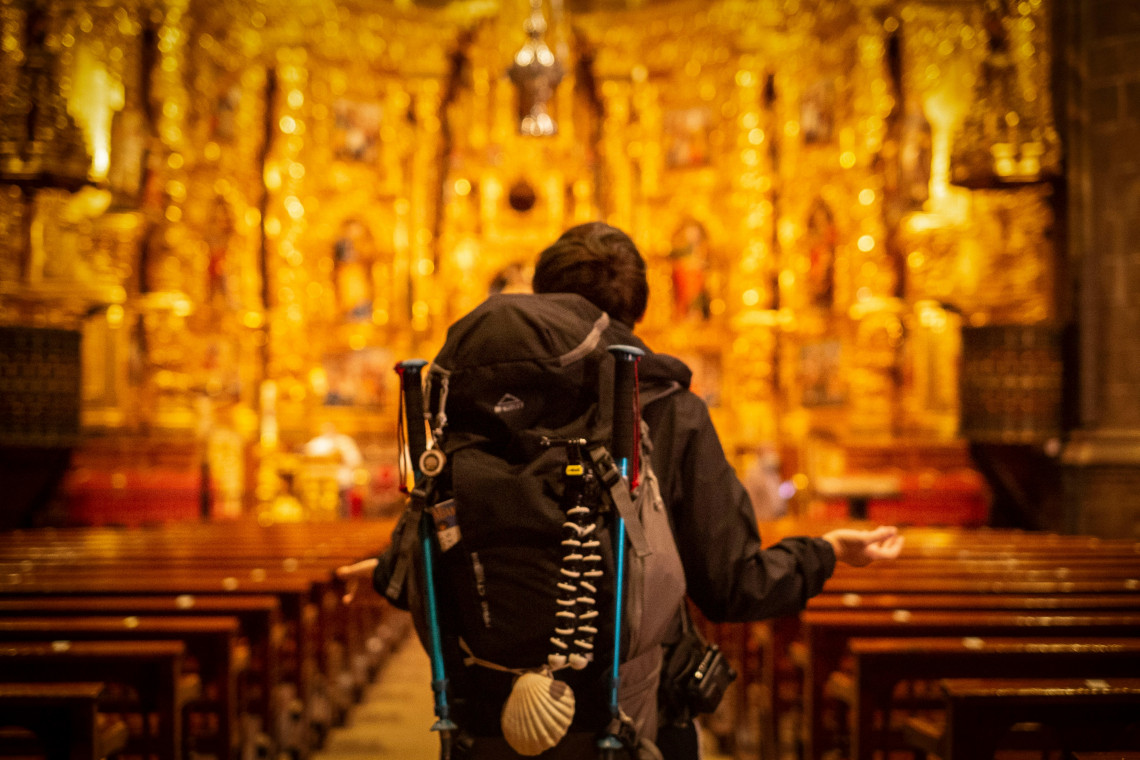
You do not have to carry your luggage. Services like Jacotrans, Camino Ways, and Correos (Spanish post office) will transfer your backpack from one albergue/hotel to the next for €5-€8 per stage. You walk with just a small daypack and water.
Popular with first-time pilgrims, older pilgrims, and those wanting a more comfortable experience. Some purist pilgrims frown on it; most modern pilgrims do not.
What to pack
In the backpack (6-8 kg max):
- 2-3 quick-dry moisture-wicking t-shirts.
- 2 pairs hiking pants (one long, one short/convertible).
- 3-4 pairs merino wool socks.
- Lightweight rain jacket.
- Fleece for cool evenings.
- Small toiletry kit.
- Blister care: Compeed, tape, moleskin.
- Sun hat and sunscreen.
- Reusable water bottle.
- Small first-aid kit.
- Ibuprofen (blister and knee pain relief).
- Phone charger and universal adapter.
- Passport, ID, credit card, some cash.
- Pilgrim credential.
- Trekking poles (highly recommended, especially for downhill).
On your body:
- Broken-in hiking shoes or trail runners (do not walk in new shoes).
- Long-brimmed sun hat.
- Sun-protective clothing.
Do not bring:
- Multiple guidebook volumes.
- Excess clothing "just in case."
- Anything scented.
- More than one pair of shoes (weight kills).
The typical Camino day
5:30-7:00am: Wake in the albergue. Everyone's up early because the beds close early. 6:30-8:00am: Breakfast (coffee and toast at a café). Start walking. 8:00am-noon: Cool morning walking. Breaks every 5-8 km at cafés for pincho and coffee. Noon-2:00pm: Reach that day's endpoint. Shower. Wash clothes. Rest. 2:00-5:00pm: Pilgrim menu lunch (€10-€14 fixed menu with wine included). Sightsee. 5:00-8:00pm: Explore the village. Attend evening Mass and pilgrim blessing (in many towns). 8:00-10:00pm: Bed. Repeat.
What no one tells you
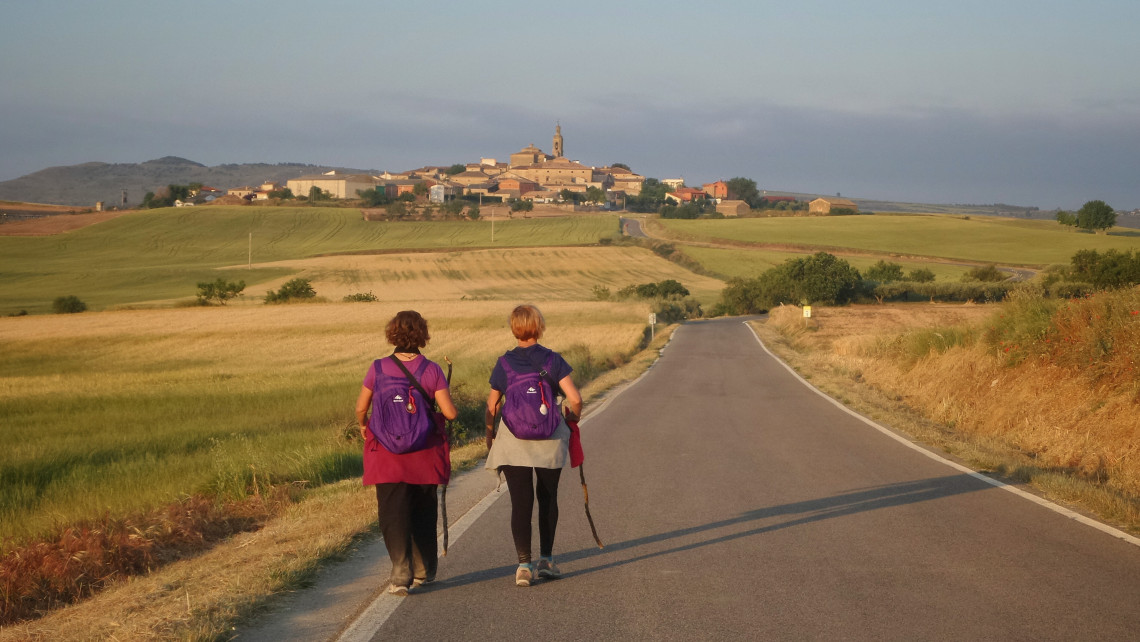
The Meseta (the flat central plateau on the Camino Francés) is either the most soul-stirring or the most monotonous stretch. Some pilgrims skip it (bus from Burgos or León to León or Astorga). Others say it is the psychological heart of the whole walk.
Feet win or lose the Camino. Blisters are the top reason people quit. Break in your shoes for months before. Change socks midday. Treat hotspots before they become blisters.
The last 100 km (Sarria to Santiago) gets crowded in July-August. Peak season sees 1,000+ pilgrims/day on this section. If you want the meditative Camino, go shoulder season or start further back.
The Cathedral of Santiago Pilgrim Mass is at noon. On busy days, the botafumeiro (giant incense censer) is swung during the mass, the iconic moment of arriving at Santiago.
The distance you walk is less important than that you walk. Some pilgrims walk from Sarria (100 km, 5 days), some walk the full route, some walk multiple Caminos over years. All are pilgrims.
Santiago de Compostela: the finish
Arriving in Santiago is emotional. Even non-religious walkers describe it as significant.
What to do in Santiago:
- Pilgrim Mass at the Cathedral. Daily at noon. Free.
- Get the Compostela certificate at the Pilgrim Office (Oficina del Peregrino).
- The Cathedral itself. Baroque interior, Portico of Glory, altar over St. James's tomb.
- Praza do Obradoiro. The cathedral square. The finish point.
- Old town of Santiago. UNESCO. Wander for a full day.
- Pilgrim lunch: Traditional Galician seafood, empanada, Albariño wine, pulpo a la gallega.
Consider going onward to Finisterre. 90 km walk (or bus) west to Cape Finisterre, the "end of the world" for medieval pilgrims. Traditional pilgrim tradition ends here, not Santiago.
Bottom line
The Camino is one of Europe's great walks and one of the most personal travel experiences you can have. Start with the last 100 km if you have a week. Walk further if you have more time. Go in May, June, September, or early October for the best experience. Pack light, book smart, and let the walk teach you what it wants to.
Frequently asked questions
How long is the Camino de Santiago? Depends on the route. Camino Francés is ~800 km. Camino Portugués from Porto is ~240 km. Camino del Norte is ~830 km. The minimum to receive the Compostela certificate is 100 km walked.
How many days does the Camino de Santiago take? The full Camino Francés takes 30-35 days. The last 100 km (Sarria to Santiago) takes 5-7 days. The Camino Portugués from Porto takes 12-14 days.
What is the best time to walk the Camino de Santiago? May, June, September, and early October are the best months. July and August are peak but crowded and hot on the Meseta.
How difficult is the Camino de Santiago? Moderate. Days of 20-25 km of walking with hills. Physically prepared walkers manage well. The Pyrenees crossing and the Camino Primitivo are more demanding.
Do I need to be religious to walk the Camino? No. Modern pilgrims include religious, spiritual, cultural, athletic, and personal-challenge motivations. All are welcome.
Where do you sleep on the Camino? In albergues (pilgrim hostels, €8-€15/night, dorms), private albergues (€15-€30/night), casas rurales (€40-€90/night, private rooms), or small hotels (€60-€150/night). Book ahead in peak season.
What is the pilgrim credential? A small folded document (the "credencial") that you carry and get stamped at least twice a day along the route. Required to receive the Compostela certificate at the end.
Is the Camino safe for solo walkers? Very safe. Solo pilgrims (including solo women) are common. The community feel of the Camino is strong; you are rarely truly alone.
Do I need to carry my luggage? No. Luggage transfer services (Jacotrans, Correos, Camino Ways) move your bag between stages for €5-€8. You walk with a small daypack.
How much does the Camino cost? €30-€50/day including albergue, meals, and drinks. Higher if you stay in hotels (€100-€150/day). Flights and gear extra.
What language do I need to speak? Spanish helps a lot. English works in tourist areas and with younger locals. Basic Spanish phrases smooth everything.
Where does the Camino start? Depends on the route. Camino Francés starts in Saint-Jean-Pied-de-Port, France. Camino Portugués starts in Porto (or Lisbon). Camino del Norte starts in San Sebastián. The last 100 km popular start point is Sarria.
Is the Camino open in winter? Yes but limited. Many albergues close. Snow at higher elevations. Short daylight. Only for experienced winter hikers.
What is the difference between a pilgrim and a tourist on the Camino? Pilgrims walk (or cycle) with a pilgrim credential, sleep in albergues, and receive the Compostela. Tourists visit Santiago without walking. Both are welcome; only pilgrims receive the certificate.
When was the Camino de Santiago first walked? Pilgrimages began in the 9th century after the tomb of St. James was believed discovered. The Camino became widely traveled in the 11th-12th centuries.
Your Camino, arranged.
Our Spain travel experts book hotels along the route, arrange luggage transfer, and pair the walk with a Santiago hotel finish.
See Spain Packages Tailor-Made Trip