by Yes Getaways Team
May 27, 2026 • 6 min read
Italy has 7,600 km of coastline and almost every kilometre is photogenic. That sounds like marketing copy until you actually try to plan a coastal trip and realize the coastlines are not one destination. They are five distinct trips with five completely different price points, attracting five completely different kinds of travelers.
This guide compares them honestly. Where each coast wins, where each one falls short, who each one is for. By the end you will know which Italian coast belongs on your itinerary and which ones to save for a future trip.
Read on for the honest case for each.
The Amalfi Coast: the icon, the price, the cliffs
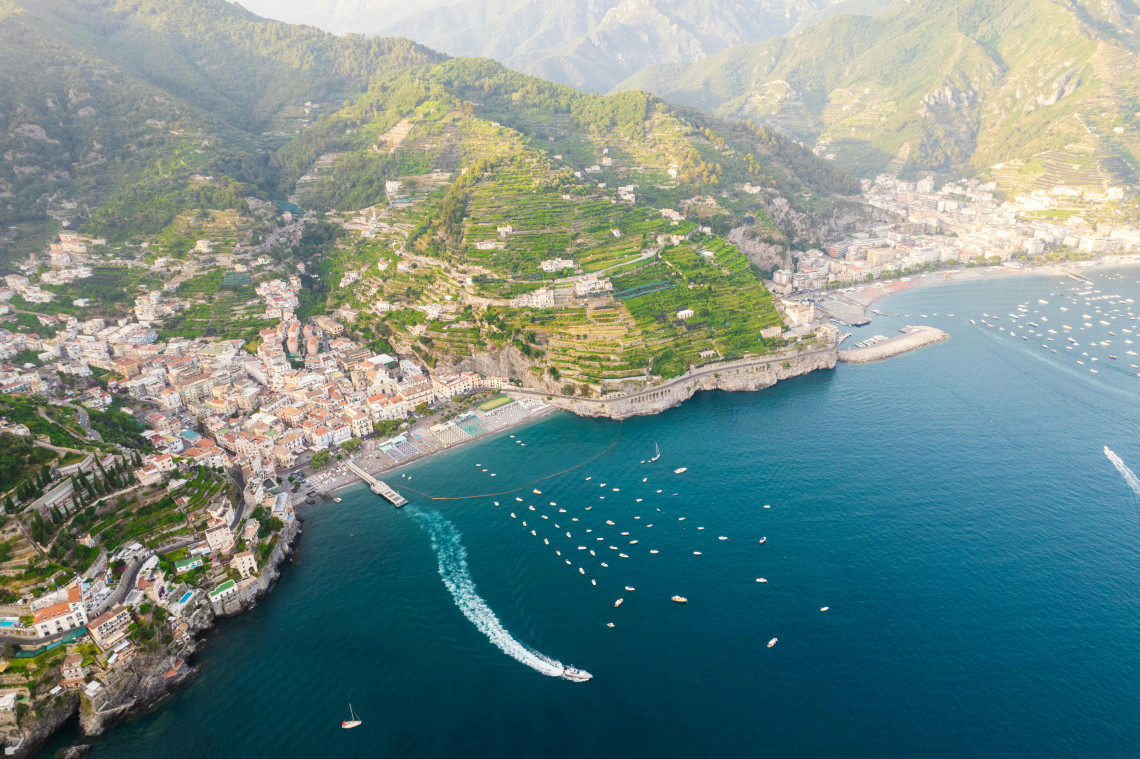
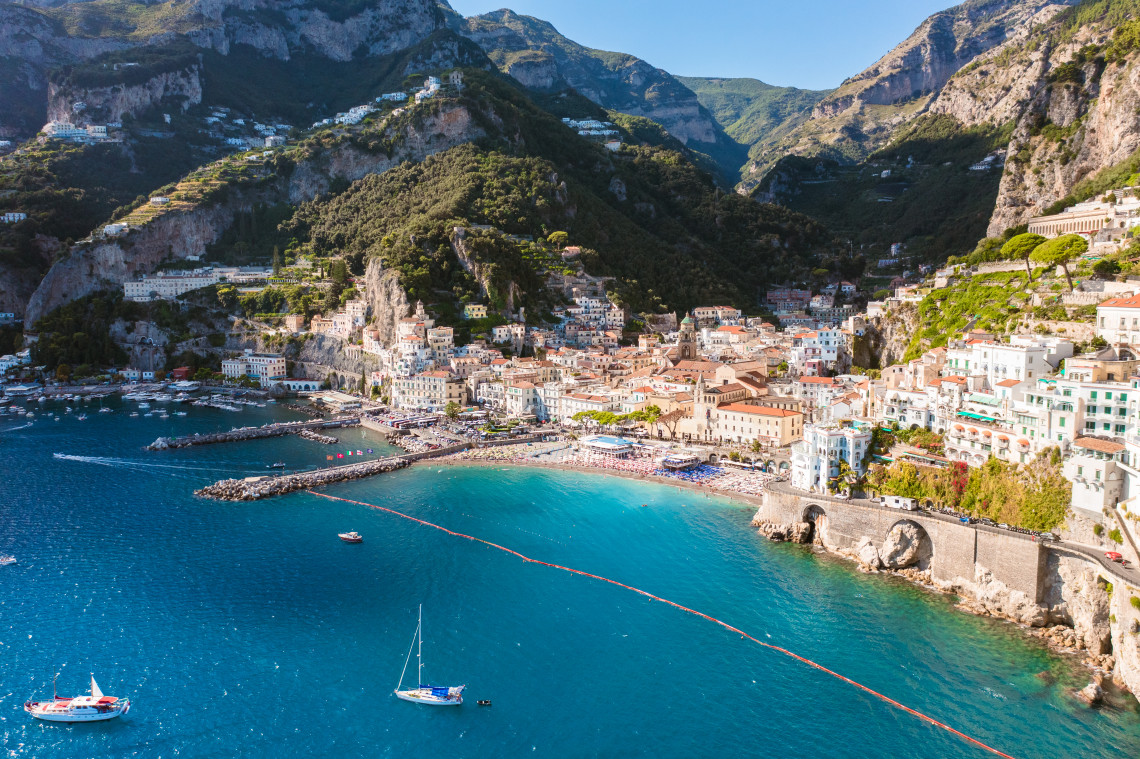
The Amalfi Coast runs 50 km along the south side of the Sorrento Peninsula in Campania, from Positano in the west to Vietri sul Mare in the east. It is the Italian coast that built the brand of "Italian coast" — the cliff-side villages, the sea below, the cobalt water, the lemon groves, the impossibly narrow road carved into the rock. Of all the Italian coasts, it is the most photographed and the most expensive.
Who it is for
- Honeymooners wanting the iconic Italian Mediterranean experience
- Couples on milestone trips (anniversary, retirement, big birthdays)
- Travelers prioritizing visual drama over swimming or sandy beaches
- First-time visitors to coastal Italy who want the famous version
Where to stay
- Positano for the iconic Amalfi experience. Visually overwhelming, very expensive, fully walkable
- Praiano as the smarter Positano alternative — between Positano and Amalfi, quieter, lower prices, same views
- Amalfi for the historic town with the cathedral and a bigger beach
- Ravello for travelers wanting altitude over coast — perched 350m above the sea, gardens, classical music festival in summer
- Sorrento as the gateway base if you want one foot on the Amalfi Coast and one on the Bay of Naples
When to go
Late April to mid June and mid September to mid October are the sweet spots. September is arguably the best month — sea is warm, weather is bright, the August crush has cleared. Skip July and August if you can: the road becomes one long traffic jam and prices reach peak.
The honest drawbacks
- It is one of the most expensive coastal destinations in Europe. Positano sea-view rooms start at €450 per night in June and routinely hit €1,000+ for the famous hotels
- The beaches are pebbly and small. This is a coast for views, not for serious swimming
- The coastal road is one lane each way and brutally slow. A 30 km drive can easily take 2 hours
- Almost everything is up or down stairs. Mobility-limited travelers struggle here
- It is the Italian coast Americans expect Italy to be. That makes it worth doing once. It also makes it less authentic than other options
Cinque Terre: the five villages, the hike, the train
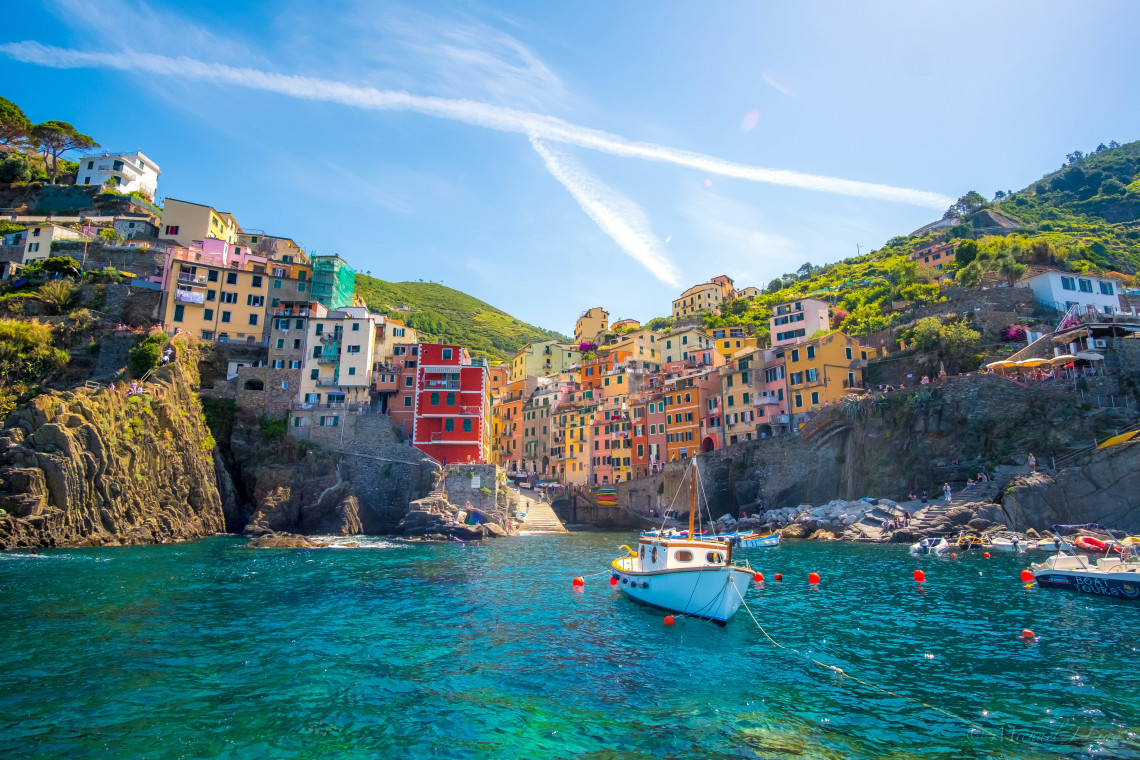
The Cinque Terre ("five lands") is a strip of Ligurian coast 20 km long, between La Spezia and Levanto. Five tiny villages — Monterosso, Vernazza, Corniglia, Manarola, Riomaggiore — cling to the cliffs, connected by hiking trails and a local train that runs every 20 minutes. The whole area is a UNESCO World Heritage Site and a national park. It is also smaller and more compact than most Americans expect.
Who it is for
- Active travelers who want to hike between villages and earn their lunch
- First-time visitors to Italy combining with Florence (3 hours by train)
- Budget-conscious travelers versus Amalfi (everything is meaningfully cheaper)
- Travelers without a car (this is the only Italian coast easily done by train)
- Photographers of small-village color (Manarola at sunset is one of the most photographed spots in Italy)
Where to stay
- Monterosso as the largest village, with the only proper beach. Best for families and travelers with luggage
- Vernazza as the most photogenic of the five. Walkable, with the small harbor as the heart
- Manarola for the sunset photo. Smaller, more romantic, fewer beds available
- Riomaggiore for nightlife and casual restaurants
- Levanto or La Spezia as nearby bases if all five villages are booked (they often are)
When to go
May, June, late September, October. The hiking trail (the famous Sentiero Azzurro) is most enjoyable in spring before the heat. Avoid July and August unless you have to — the trains, the villages, and the trail all reach uncomfortable density.
The honest drawbacks
- The villages can feel overwhelmed. Total population of all five is under 4,000. Cruise ship day-trippers can easily push the daily visitor count above 20,000
- The famous hiking trail is partially closed. Sections between Manarola and Corniglia have been closed for landslide repairs for years. Check current status before planning your hike
- Accommodations are limited and book out months ahead. Especially Vernazza and Manarola
- There is no traditional "beach holiday" here. Monterosso has a beach. The other four are essentially cliffs
- It rains more than the Amalfi Coast. The Ligurian climate is wetter, especially in shoulder season
Italian Riviera (Portofino and Liguria): luxury, fishing villages, the Hollywood crowd
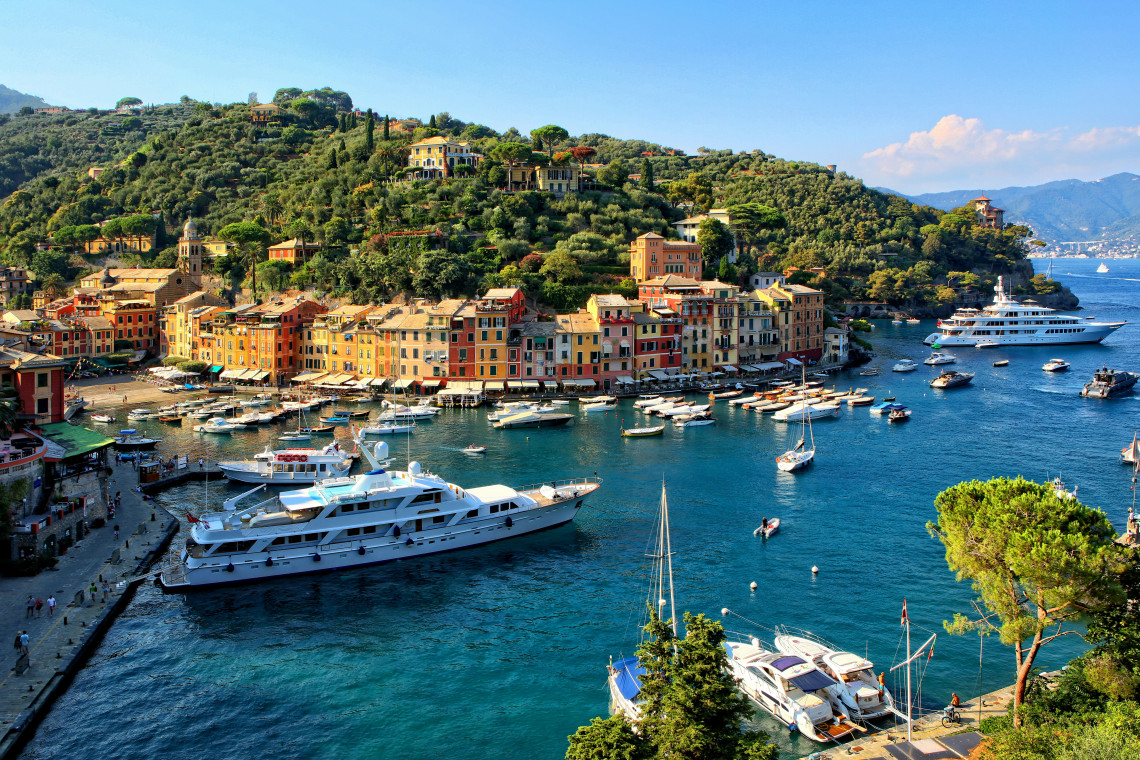
The Italian Riviera proper stretches from the French border at Ventimiglia all the way down through Genoa and on to La Spezia. The most internationally famous stretch is the Riviera di Levante (east of Genoa) — Portofino, Santa Margherita Ligure, Camogli, San Fruttuoso. These villages are smaller, more discreet, and significantly more expensive than the Cinque Terre that sits just south of them.
Who it is for
- Luxury travelers wanting the European Mediterranean equivalent of Saint-Tropez or Monaco
- Travelers combining yacht or boat travel with land stays
- Mature couples wanting elegance without the Cinque Terre crowd
- Travelers using Milan or Genoa as a gateway (closest to north Italy airports)
Where to stay
- Portofino for the iconic experience. Tiny, sublime, eye-wateringly expensive
- Santa Margherita Ligure as the practical luxury base. 10 minutes from Portofino, more accommodations, lower prices
- Camogli for fishing village charm without the Portofino price tag. Walkable, with a real beach
- Genoa if you want a city base with day trips to the Riviera villages
When to go
May to early July and September. Portofino in August is wall-to-wall yacht tenders.
The honest drawbacks
- Portofino is among the most expensive accommodations in Italy. Belmond Splendido starts at €1,500 per night in season and routinely tops €4,000
- The Portofino harbor is tiny and busy. Photogenic, yes. Restful, no
- The Riviera is less photographed than Cinque Terre or Amalfi for a reason — visually it is more subtle. If you arrive expecting Positano drama you may find Portofino understated
- Getting there is awkward. Portofino has no train station. You take the train to Santa Margherita and then a 10 minute taxi or boat ride
Puglia: the underrated coast, the sandy beaches, the value
Puglia is the heel of Italy's boot, a 400 km stretch of coastline running down the Adriatic and curving around to the Ionian. This is the Italian coast Italians themselves vacation on, which is the strongest possible recommendation. The trulli houses of Alberobello, the white-washed walking cities of Ostuni and Lecce, the long sandy beaches of the Salento peninsula, the olive oil that 40% of Italy's olive trees produce. And prices that are a fraction of Amalfi or Portofino.
Who it is for
- Travelers wanting genuine Italian coastal experience without the Amalfi price tag
- Families with kids (real sandy beaches, calmer water, kid-friendly trulli houses to rent)
- Foodies (Puglia's cuisine is distinctive: orecchiette, burrata from Andria, sea urchin from the south coast)
- Repeat Italy visitors who have done Rome/Florence/Venice and want something different
- Travelers willing to drive (a car is essential here)
Where to stay
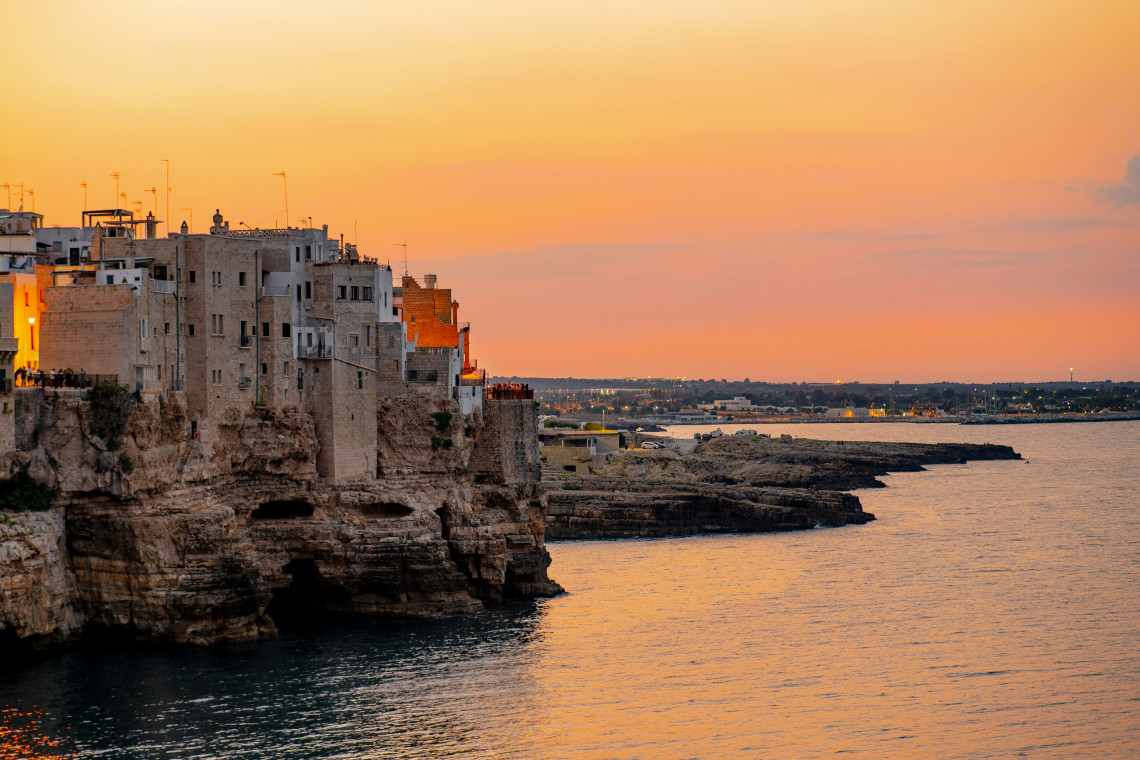
- Polignano a Mare for the cliff-built town with sea cave restaurants. Photogenic and central
- Monopoli as a more lived-in alternative to Polignano, with a small old port
- Ostuni for the white city on a hill (15 km inland), with day trips to the coast
- Lecce for the Baroque "Florence of the South" feel
- Otranto or Gallipoli for deep Salento, where the beaches are best
- Trullo accommodations in the Itria Valley (Alberobello, Locorotondo) for the unique experience of sleeping in a conical stone house
When to go
Late April to mid June and mid September to mid October. June is excellent — sea is warm, crowds are still manageable. July and August get genuinely hot and prices rise (but Puglia even in peak is cheaper than Amalfi in shoulder season).
The honest drawbacks
- You need a car. Public transport in Puglia is limited outside the main cities. A rental car is non-negotiable
- The coast is long and dispersed. Unlike Amalfi or Cinque Terre, Puglia rewards 7+ days, not weekend trips
- Less English spoken than in tourist hotspots. This is a feature for some, a barrier for others
- Getting there from the U.S. is one stop. No direct flights from North America to Bari or Brindisi. You connect via Rome, Munich, or London
Sardinia: the beaches, the water, the Costa Smeralda divide
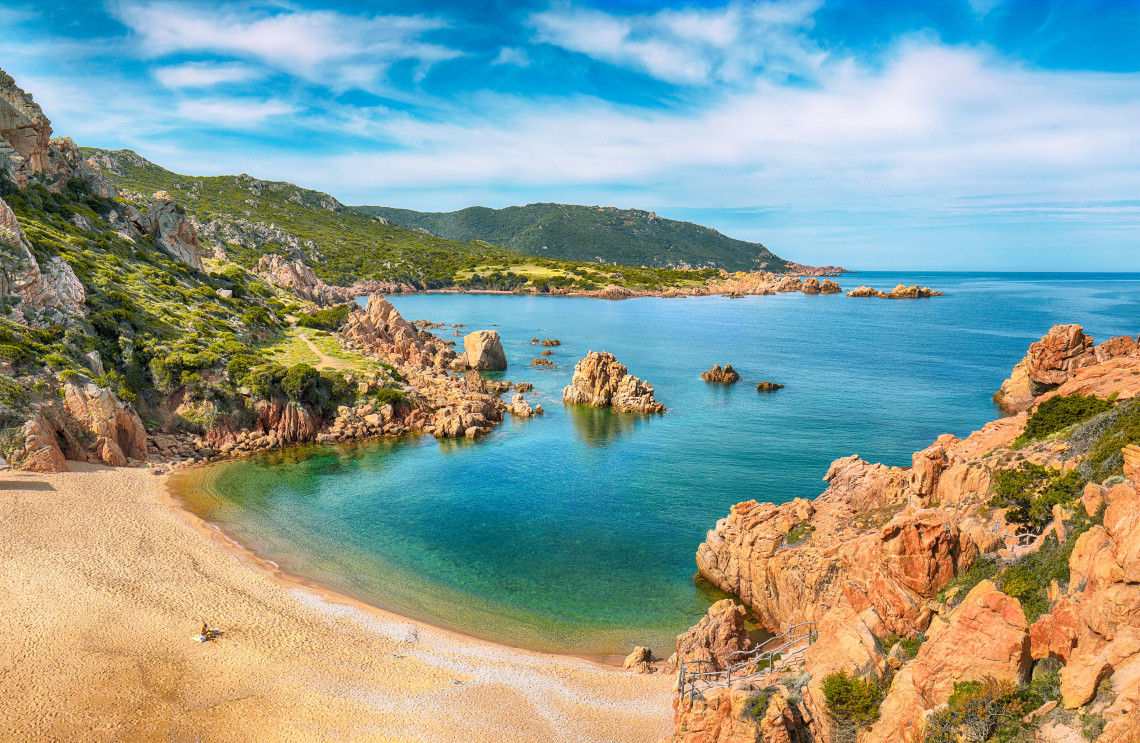
Sardinia is Italy's second largest island (after Sicily), set in the middle of the Mediterranean halfway between Italy and Tunisia. It has the best beaches in Italy by most objective standards — fine white sand, water in turquoise gradients you usually associate with the Caribbean or French Polynesia. The island has two distinct personalities. The Costa Smeralda (Emerald Coast) in the northeast is the luxury enclave (Porto Cervo, Romazzino, established by the Aga Khan in the 1960s, now home to mega-yachts and oligarch villas). The rest of the island is more relaxed, more affordable, and arguably more interesting.
Who it is for
- Beach lovers who want Mediterranean water that looks like Bora Bora
- Honeymooners wanting beach over cliff drama
- Families (sandy beaches are kid-friendly, accommodations are spacious)
- Travelers wanting Italian coast without crowds (Sardinia is large and disperses visitors)
- Sailors and yacht charterers (one of the great Mediterranean cruising grounds)
Where to stay
- Costa Smeralda (Porto Cervo, Porto Rotondo) for the luxury enclave
- La Maddalena Archipelago for boat-accessible beaches that look unreal
- Alghero on the west coast for Catalan-influenced charm and a more affordable base
- Cagliari as the capital and southern gateway, with city plus beach access
- Pula and the south coast for the most beautiful southern beaches (Chia, Tuerredda)
When to go
Mid May to mid June and mid September to mid October for the best balance of weather, crowds, and prices. Sea temperatures are swimmable from June through October. July and August are peak Italian holiday — prices in Costa Smeralda go absurd.
The honest drawbacks
- It is a separate trip. Sardinia takes 2-3 hours to fly to from Rome (or a long overnight ferry from Civitavecchia or Genoa). Combining it with mainland Italy in under 10 days is hard
- Costa Smeralda prices are not Italian, they are St-Tropez. Hotel Romazzino starts €1,000 per night. Yacht charters start €15,000 per week
- You need a car. Sardinia is too large to do without one
- Food culture is distinctive but not for everyone. Lots of sheep, lots of bread, lots of fish — but the cuisine is less varied than mainland Italian. Bring patience for menus
Honorable mentions: Aeolian Islands and Calabria
The Aeolian Islands
Seven volcanic islands off the north coast of Sicily, reachable by ferry from Milazzo (1.5 hours from Catania or 3 hours from Palermo). Lipari is the largest and most lively. Stromboli has an active volcano you can hike at dusk. Vulcano has mud baths and accessible volcanic landscapes. Panarea is the celebrity quiet island. Salina is the food and wine island. Best for travelers wanting a true Mediterranean island experience, away from the mainland crowd. Combines naturally with a Sicily trip.
Calabria
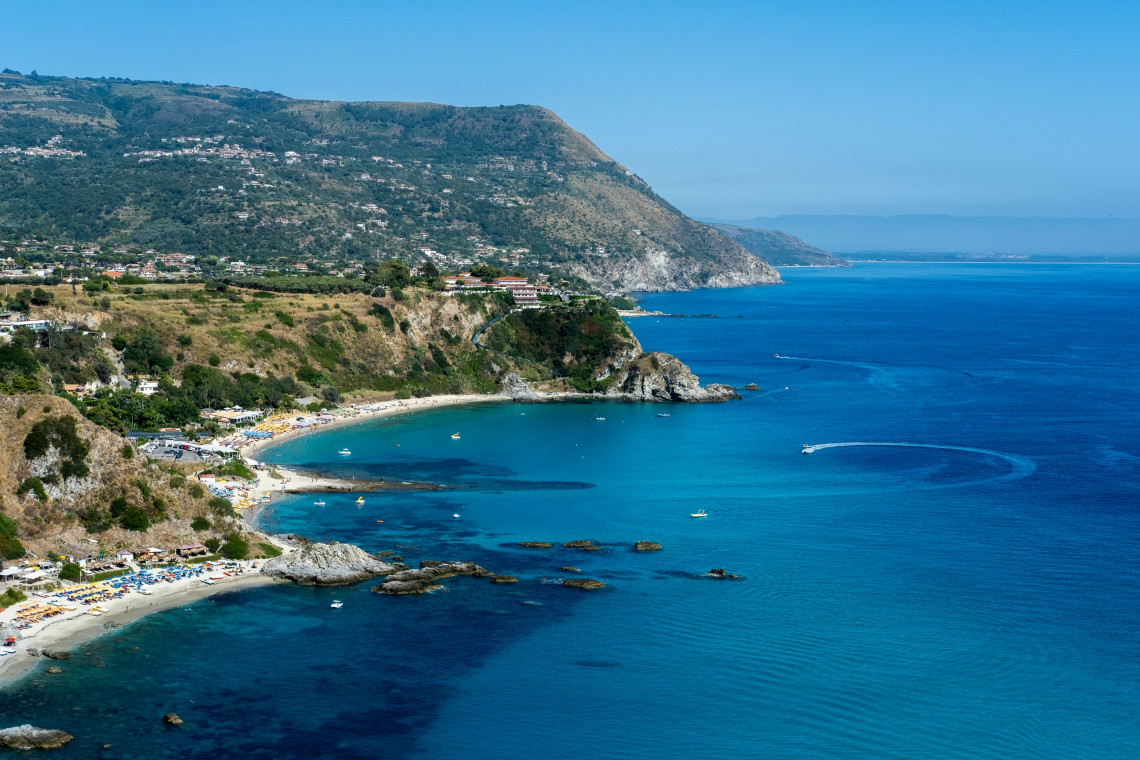
The toe of Italy's boot, between Puglia and Sicily across the Strait of Messina. Tropea is the famous town — built on a sandstone cliff above some of the clearest beaches in mainland Italy. The Aspromonte mountains rise behind. Calabria is the Italian coast most North Americans have never heard of, and it remains genuinely undiscovered. The food is robust (nduja, bergamot, swordfish), the prices are the lowest of any Italian coast, and the beaches around Tropea are exceptional. For repeat Italy travelers wanting something nobody else picked.
Getting there: gateway cities and routes
| Coast | Closest international gateway | Onward travel |
|---|---|---|
| Amalfi Coast | Naples (NAP) | 60 min drive or private transfer to Positano |
| Cinque Terre | Pisa (PSA) or Florence (FLR) | Train via La Spezia (3 hours from Florence) |
| Italian Riviera | Genoa (GOA) or Milan (MXP) | Train to Santa Margherita (1.5 hours from Milan) |
| Puglia | Bari (BRI) or Brindisi (BDS) | Pick up rental car at airport |
| Sardinia | Olbia (OLB) for Costa Smeralda, Cagliari (CAG) for south | Pick up rental car at airport |
| Aeolian Islands | Catania (CTA) | 1 hour drive to Milazzo, ferry to islands |
| Calabria | Reggio Calabria (REG) or Lamezia Terme (SUF) | Rental car or train down the coast |
From the U.S. East Coast, the most common routings are:
- Amalfi: direct to Naples or Rome, then transfer
- Cinque Terre: direct to Rome or Milan, train onwards
- Italian Riviera: direct to Milan, train onwards
- Puglia: connect via Rome or Munich to Bari or Brindisi
- Sardinia: connect via Rome or Milan to Olbia or Cagliari
The bottom line
There is no single Italian coast. There are five worth flying for, each one a different trip.
The mistake most first-time travelers make is assuming Amalfi is "the" Italian coast and everything else is a lesser version. It is not. Amalfi is the most famous version. Cinque Terre is the most walkable version. Puglia is the best-value version. Sardinia is the beach version. Riviera is the luxury version. The right coast is the one that matches your trip, not the one with the most Instagram followers.
For more on planning your trip, see our Italian Lakes guide, Best Time to Visit Italy, and How Many Days Do You Need in Italy.
Frequently asked questions
Amalfi Coast or Cinque Terre: which one should I pick?
For honeymoons, milestone trips, and cliff drama with high budget — Amalfi. For active travelers, train-only itineraries, and lower budgets — Cinque Terre. They are completely different coasts at completely different price points. If forced to pick one for a first-time visitor to coastal Italy, Amalfi delivers the most iconic Italian Mediterranean experience.
Which Italian coast has the best beaches?
Sardinia by a clear margin, followed by Puglia. Both have real sandy beaches with clear water. The Amalfi Coast and Cinque Terre are scenic but limited for actual beach holidays. Sicily and Calabria also have excellent beaches but are less famous.
Which Italian coast is cheapest?
Puglia is the most affordable of the famous coasts, with hotel rooms in coastal towns from €140 per night and meals from €25 per person. Calabria is cheaper still but has less developed tourism infrastructure.
Which Italian coast is best for honeymoons?
The Amalfi Coast wins for romantic drama and the iconic Italian Mediterranean experience. Sardinia wins if honeymoon means "beach and quiet luxury." Portofino wins if budget is unlimited and you want pure glamour. Most first-time honeymooners pick Amalfi.
Which Italian coast is best for families?
Puglia and Sardinia, by a long way. Both have sandy beaches, kid-friendly accommodations (especially the trulli in Puglia), and a relaxed pace. Amalfi is rough on families because of the cliffs, the lack of sandy beaches, and the high prices. Cinque Terre is acceptable for older kids who can handle the hiking.
Can I do the Italian coast without a car?
Yes for Amalfi (use the SITA bus + ferries) and Cinque Terre (use the local train). No for Puglia, Sardinia, or Calabria — these require a rental car. The Italian Riviera is car-optional but a car expands what you can see.
When is the best time to visit the Italian coast?
Late April to mid June and mid September to mid October. May is the single best month across all coasts. September is the best for swimming (sea is warmest). Avoid August unless you have specific reasons.
Which Italian coast is least crowded?
Calabria, by a long way. Then Puglia (outside the main beach weekends in August). The Amalfi Coast and Cinque Terre are the most crowded.
Can I combine multiple Italian coasts in one trip?
Yes but you need 10+ days. The natural combinations are Amalfi + Cinque Terre (drive or train, 5 hours apart), Cinque Terre + Italian Riviera (very close, day trip distance), Puglia + Aeolian Islands (via Sicily). Sardinia is its own trip.
Which Italian coast pairs best with Rome?
Amalfi (90 minutes by car or fast train via Naples) and Puglia (4 hours by car, 4 hours by train to Bari). The Italian Riviera pairs better with Florence or Milan than with Rome.
Is the Cinque Terre overrated?
It depends on when you visit. In peak season (July, August, cruise-heavy days) the villages can feel suffocating and the hiking trail crowded. In May, late September, or October the Cinque Terre delivers exactly what it promises: five tiny villages, a beautiful trail between them, and food that makes you forget your phone.
Which is more luxurious, Amalfi or Portofino?
Portofino is more exclusive and expensive at the top end (Belmond Splendido, Hotel Splendido Mare). Amalfi has more luxury options spread across a longer coast (Le Sirenuse in Positano, Caruso in Ravello, Santa Caterina in Amalfi). For one-night luxury showpiece, Portofino. For a full luxury coastal trip, Amalfi.
Ready to Plan Your Italian Coast Trip?
We build Italian coastal trips for U.S. and Canadian travelers every week, with hand-picked seafront hotels, transfers, ferries, and restaurant reservations. Tell us which coast suits you and we will build the rest around it.
.jpg)