by Yes Getaways Team
June 01, 2026 •11 min read
France has one of the best train networks in the world and one of the most photogenic backroad networks in Europe. Which means your transport question is not "is the train good" or "are the roads good" — it is "where, exactly, am I going, and what kind of trip do I want this to be."
This guide compares the two honestly, region by region, with the costs, the journey times, and the tradeoffs that nobody puts in the brochure.
The short answer
If your trip is Paris plus one major city (Lyon, Marseille, Bordeaux, Strasbourg, Nice, Reims), take the train. TGV high speed rail is faster than driving, cheaper than fuel and tolls, and drops you in the city center.
If your trip is Provence villages, the Loire Valley, the Dordogne, Alsace wine route, or the Côte d'Azur backroads, rent a car. Public transport in rural France is sparse, and the entire point of these regions is the drive between the villages.
If your trip is both, do what most experienced France travelers do: take the train between cities, rent a car for the rural section, return the car before re-entering Paris.
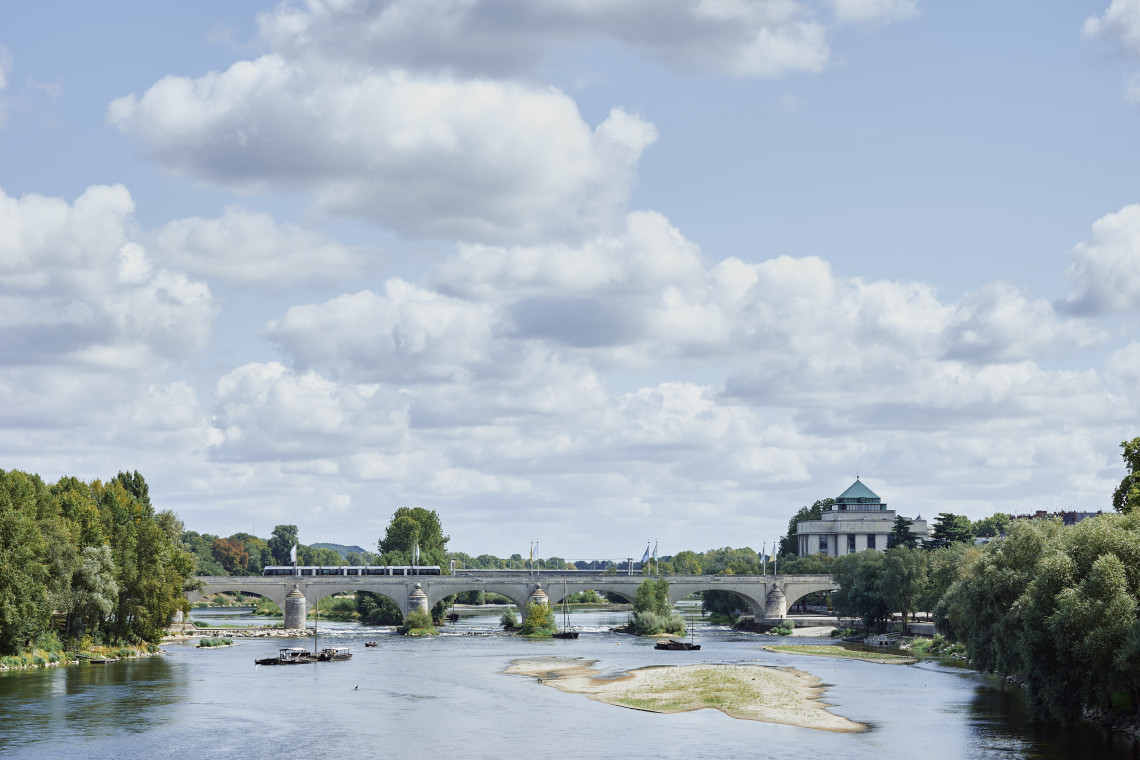
How French trains actually work
SNCF, the national rail operator, runs three classes of train that you need to know about:
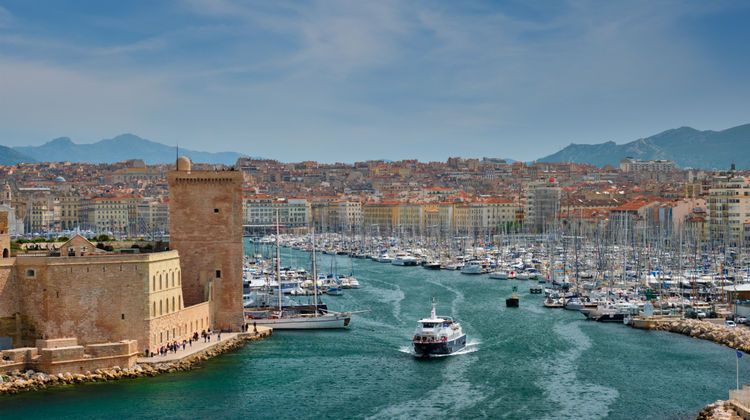
TGV (Train à Grande Vitesse) is the high speed network. It connects all major cities at 300 km/h (186 mph): Paris to Lyon in 2 hours, Paris to Marseille in 3h15m, Paris to Bordeaux in 2h05m, Paris to Strasbourg in 1h45m, Paris to Nice in 5h30m, Paris to Avignon in 2h40m. TGVs require seat reservations, even if you have a rail pass. Book ahead — fares are dynamically priced like airlines, and a Paris-Marseille that costs 39 euros booked 8 weeks out can be 119 euros if you walk up.
TER (Trains Express Régionaux) are regional trains. Slower, no reservation needed, fixed prices. These connect smaller towns within a region and they are how you reach places like Avignon to Arles, Bordeaux to Saint-Émilion, Nice to Antibes, Strasbourg to Colmar.
Intercités is the mid-tier. Slower than TGV, faster than TER, used on lines that have not been upgraded to high speed (mostly cross-country routes that bypass Paris).
A few practical notes that catch first time France travelers off guard:
- Most French TGVs leave from one of seven Paris terminals, not from a central station. Check whether your train is from Gare de Lyon, Gare du Nord, Gare Montparnasse, Gare de l'Est, Gare Saint-Lazare, Gare d'Austerlitz, or Gare de Bercy. They are not close to each other.
- TGV second class is perfectly comfortable. First class is mostly worth it on routes longer than 3 hours.
- The Eurostar to London leaves from Gare du Nord and requires UK border control before boarding (allow 60 minutes minimum).
- Buy tickets on SNCF Connect (the official site) or Trainline. Most third party sites add a markup.
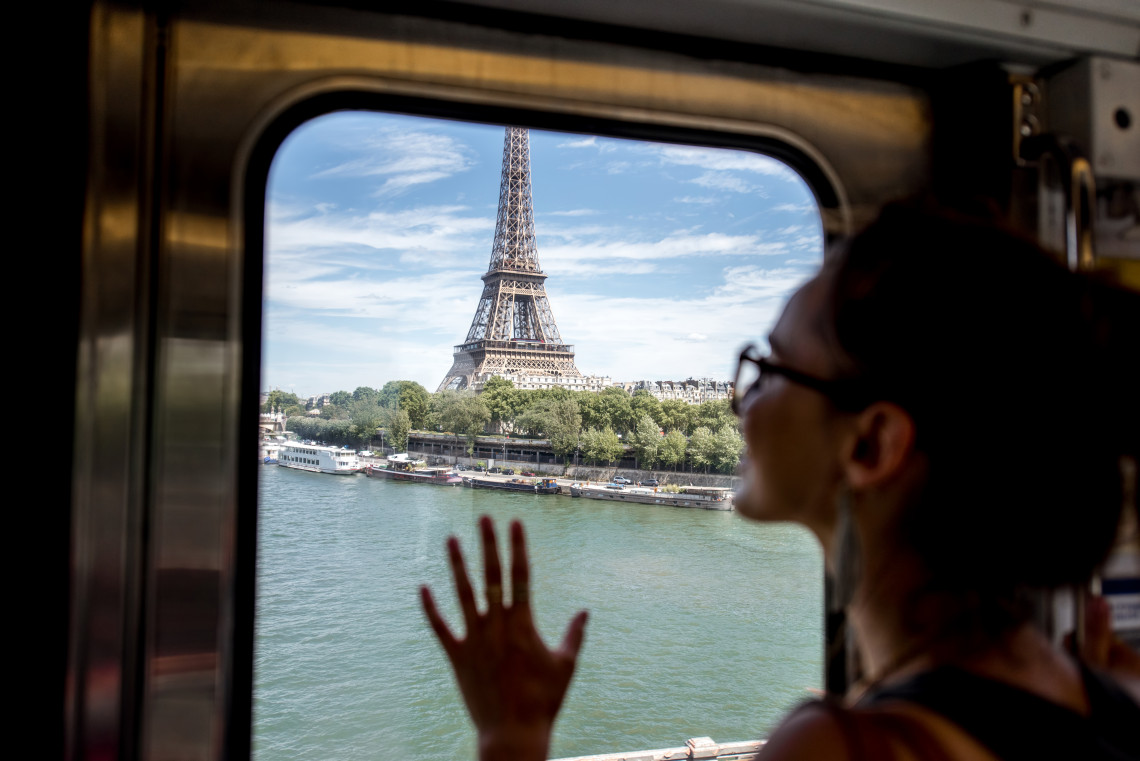
How French roads actually work
France has Europe's most extensive autoroute (motorway) system. They are well maintained, well signposted, well stocked with service stations, and almost entirely tolled. A Paris to Nice drive in tolls alone is around 90 euros each way, plus fuel.
A few practical notes:
- Tolls are paid at booths with cash or credit card, or via an electronic transponder (Bip&Go, Liber-t). If you are renting in France for more than a week and driving on autoroutes, ask the rental company about a transponder — it cuts time in queues meaningfully.
- Speed limits: 130 km/h on autoroutes (110 in rain), 110 on dual carriageways, 80 on most rural roads (the recent reduction from 90), 50 in towns. Heavy radar enforcement.
- Fuel in France runs around 1.80 to 2.00 euros per liter for diesel and around 1.90 to 2.15 for petrol (rough mid-2026 ranges). Diesel cars are common in rental fleets; check what you have been given.
- Low Emission Zones (ZFE) apply in Paris, Lyon, Marseille, Toulouse, Grenoble, Strasbourg, Nice, Rouen, Reims, and Montpellier. Most rental cars qualify automatically, but check your Crit'Air sticker — it should be on the windscreen.
- Roundabouts are everywhere in France. The rule is straightforward: traffic already in the roundabout has priority unless signs say otherwise. A few older roundabouts still operate on "priorité à droite" (yield to the right), which catches everybody out.
- Parking in city centers is expensive and limited. Most hotels in Paris, Nice, Lyon, Bordeaux do not have their own parking — you pay 35 to 50 euros a night at a nearby garage. This is the single best reason not to drive into French cities.
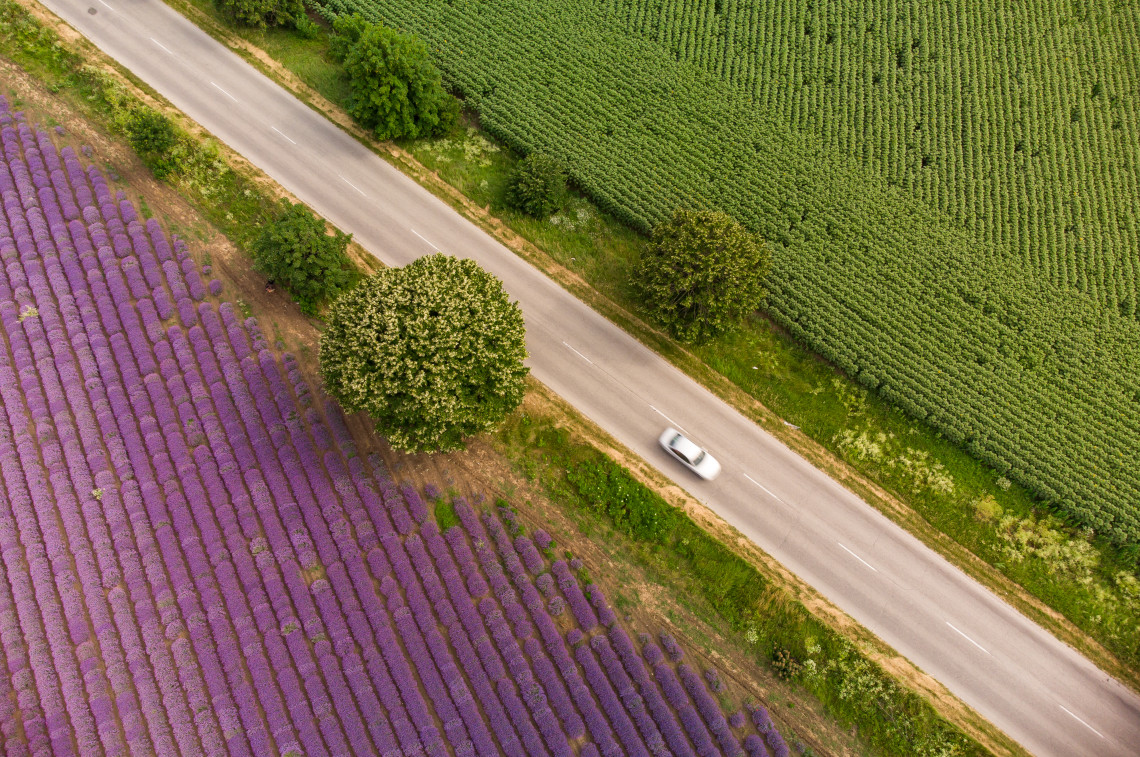
Region by region: where each really wins
Paris and the Île-de-France
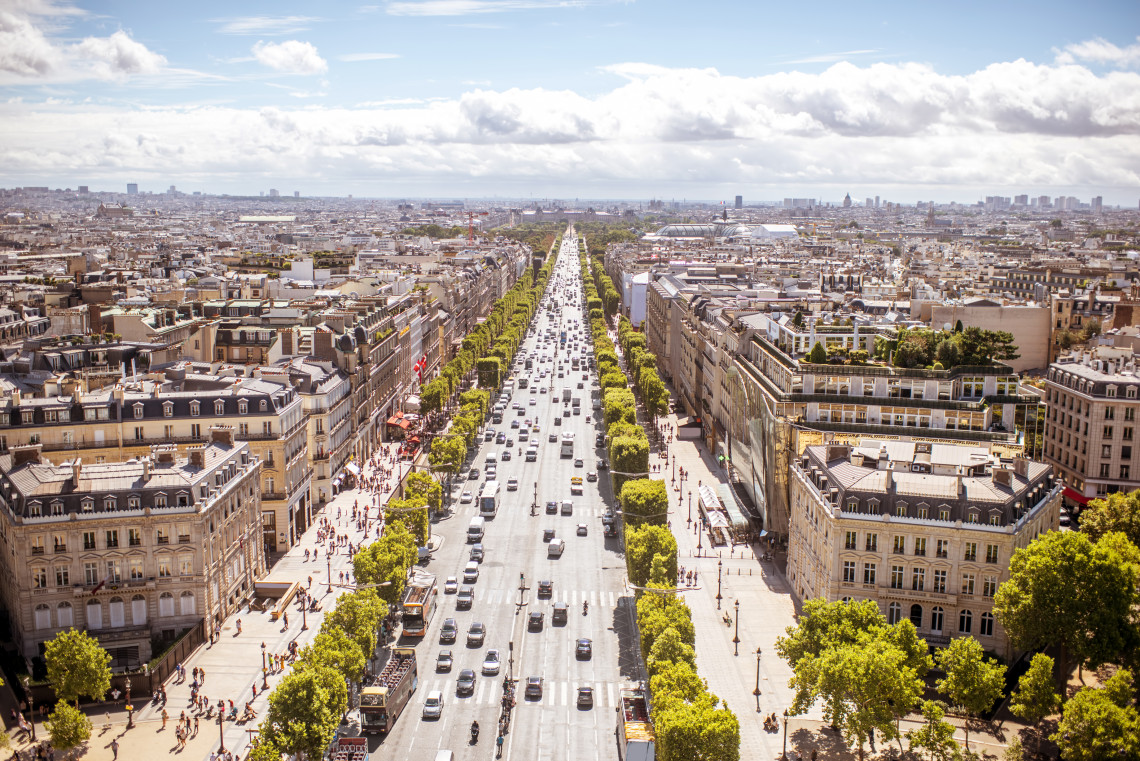
Train, always. Driving into Paris is unpleasant, parking is brutal, and the Métro plus RER plus walking covers everything you would want to see. Day trips to Versailles, Fontainebleau, Giverny, Chartres, Reims are all easy by train. If you rent a car in Paris, you will spend the first day stressed and the second day looking for parking.
Loire Valley
Car, almost always. The château route is the textbook road trip: Chambord, Cheverny, Chenonceau, Amboise, Villandry, Ussé, Azay-le-Rideau. By train you can reach Tours, Amboise, Blois, Saumur, Angers, but the châteaux themselves are mostly 5 to 20 km outside the towns. Day trips by train work for Amboise + Chenonceau (with a shuttle from Tours) and for Chambord (with a bus from Blois), but if you want to see four or five châteaux in three days, drive.
Provence (Avignon, Arles, Saint-Rémy, Gordes, the Luberon, Aix)
Car, with one exception. The Luberon villages, the lavender fields, Pont du Gard, the Camargue, Les Baux, are all off the train network. Avignon and Aix-en-Provence are excellent train arrivals, then rent a car at the station for the rest. The one exception: if you are basing entirely in Avignon or Aix and only doing day trips, the regional buses (LER lines) actually cover the main villages.
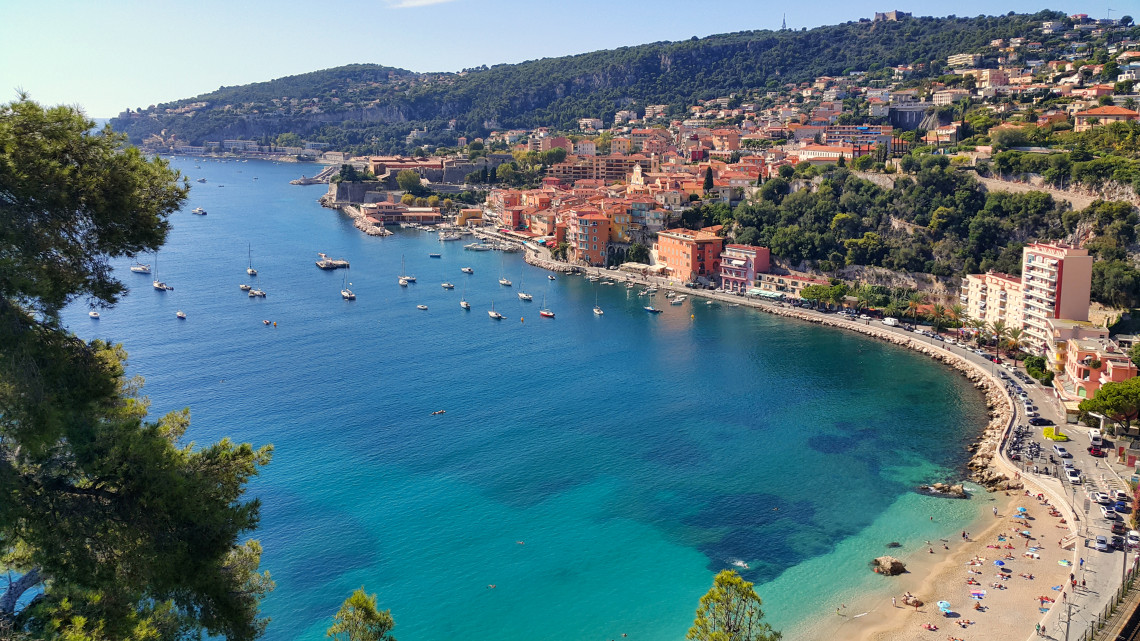
French Riviera (Nice, Cannes, Antibes, Monaco, Menton)
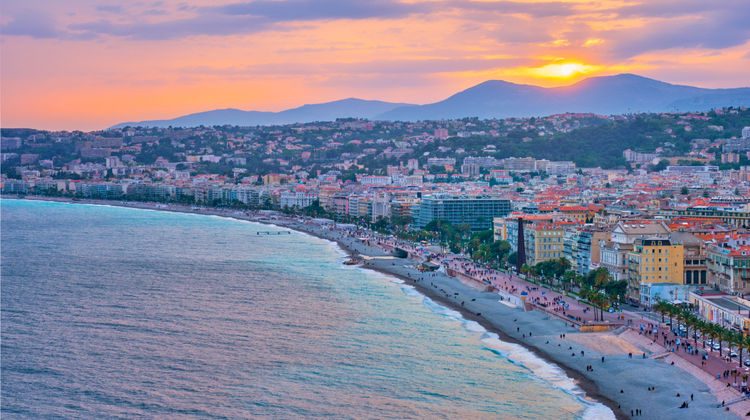
Train wins, with surprises. The coastal TER line from Marseille to Ventimiglia stops at every Riviera town: Nice to Monaco in 22 minutes, Cannes to Antibes in 13 minutes, Nice to Cannes in 30 minutes. Traffic on the Riviera coastal road is famously bad in summer (June through September especially), and parking in Nice old town, Monaco, and Cannes during festival weeks is impossible. The train is faster and cheaper. Where a car wins: the back country (Gourdon, Saint-Paul-de-Vence, the Verdon Gorges).
Bordeaux and the Médoc
Mix. Bordeaux itself is best by train (Paris in 2h05m, dense walkable city). The vineyards split: Saint-Émilion is easy by train (35 min from Bordeaux); the Médoc châteaux (Pauillac, Margaux, Saint-Julien) are not on a useful rail line and a car or a day tour is the answer.
Burgundy
Car. Dijon and Beaune are on the TGV line (Paris to Dijon in 1h35m), but the wine route between Beaune, Meursault, Pommard, Volnay, Nuits-Saint-Georges, Gevrey-Chambertin is rural backroad driving at its most beautiful. The villages have no train stations.
Alsace (Strasbourg, Colmar, Riquewihr, Eguisheim)
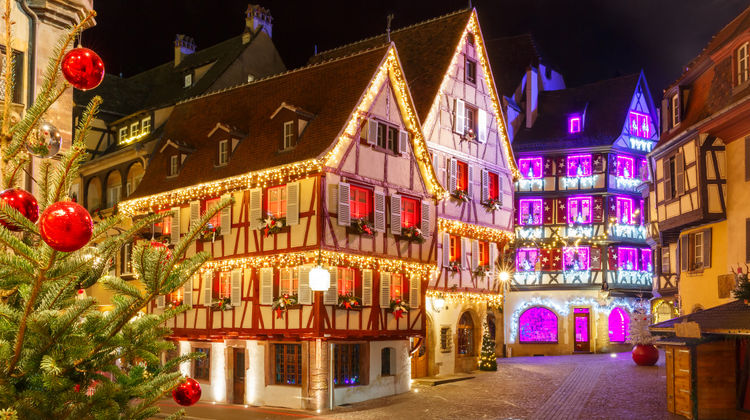
Train then car. Strasbourg to Colmar is 30 minutes by TER. From Colmar, the Alsace wine route villages (Riquewihr, Eguisheim, Ribeauvillé, Kaysersberg) are best by car or by an organized day tour. Some are reachable by local bus, but service is sparse.
Brittany and Normandy
Mix. Major hubs (Rennes, Saint-Malo, Caen, Rouen, Bayeux, Mont-Saint-Michel by combined train+shuttle) work by rail. But for the D-Day beaches, the Honfleur to Étretat coastal drive, and the inland Brittany villages, you want a car.
The Dordogne (Sarlat, Rocamadour, Lascaux, the Vézère valley)
Car, full stop. This is one of the regions where French train coverage is genuinely thin. There are stations at Sarlat, Périgueux, and Souillac, but the prehistoric sites, the bastide villages, the canoe launches on the Vézère and Dordogne rivers, are all rural. A car is essentially required.
French Alps
Train in winter, car in summer. The TGV runs to Bourg-Saint-Maurice, Modane, Annecy, Chambéry, Grenoble. In ski season, the Eurostar Snow Train and the TGV Lyria run direct to the Alps and most resorts have shuttle transfers, so a car is unnecessary (and often a hazard on icy mountain roads). In summer for hiking and lake trips, a car opens up much more.
Corsica
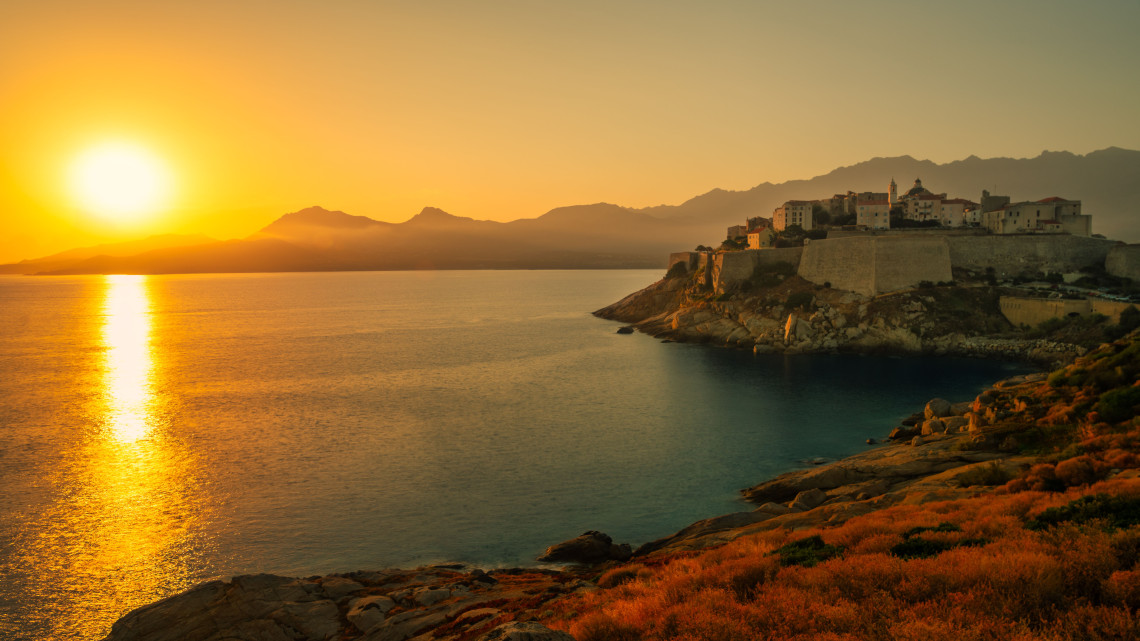
Car, always. Corsican train service is limited to a single scenic narrow gauge line. For the actual island experience, fly into Ajaccio or Bastia and rent.
What does it actually cost?
For a 10 day France trip covering Paris + Loire + Provence (the most common multi-region first trip), here is the rough cost comparison for two travelers:
Train only:
- Paris to Tours TGV: 60 euros total (booked 8 weeks ahead, 2 people)
- Tours to Avignon TGV: 130 euros total
- Local trains and buses in Loire and Provence: 100 euros total
- Taxis or organized day tours where buses do not run: 200 to 350 euros
- Total: roughly 490 to 640 euros
Train + car combo (recommended):
- Paris to Tours TGV: 60 euros
- Tours to Avignon TGV: 130 euros
- 6 days car rental from Tours, dropped in Avignon: 350 euros
- Fuel and tolls Tours-Loire-Avignon route: 180 euros
- Parking in towns: 60 euros
- Total: roughly 780 euros
Car only (Paris to Loire to Provence, returned in Paris):
- 10 days car rental from Paris CDG, returned at CDG: 550 euros
- Fuel and tolls (about 2,200 km total): 380 euros
- Parking in Paris (8 nights at hotel garage): 320 euros
- Parking on the road: 80 euros
- Total: roughly 1,330 euros
The car only approach is the most expensive partly because of Paris parking and partly because the long Paris to Provence segment by car is slow and tolled while the same TGV segment is fast and cheap.
Honest tradeoffs
Train pros: Faster between cities. No parking stress. You can drink at lunch. You arrive in city centers. Less mental load on long days. Better in summer when Riviera traffic is brutal.
Train cons: Bad for rural regions. Last-mile to a country hotel often needs a taxi. Less flexibility if you fall in love with a village. TGV fares spike close to departure.
Car pros: Reaches everywhere. Lets you stop in a village you spotted from the road. Trunk space for shopping at markets and wineries. Critical for the Loire, Dordogne, Provence villages, Burgundy wine route, Alsace wine route, Brittany backroads.
Car cons: Tolls and fuel add up. Parking in cities is expensive and stressful. ZFE rules in major cities. The drive from Paris to anywhere in the south is long and largely autoroute monotony. You cannot drink at lunch. Mountain driving and snow add risk in winter.
The setup most experienced France travelers use
The pattern that comes up again and again with returning France visitors:
- Fly into Paris. Stay 3 to 4 nights, no car.
- TGV out of Paris to the gateway of the rural region (Avignon for Provence, Tours for the Loire, Bordeaux for the southwest, Strasbourg for Alsace, Nice for the Riviera, Dijon for Burgundy).
- Pick up a rental at the train station of the gateway city. Most major stations have Avis, Hertz, Europcar, Sixt, Budget, and Enterprise desks. Book ahead — counter rates are 30 to 50 percent higher.
- Drive the rural region for 4 to 7 days.
- Drop the car at another gateway station (Nice, Marseille, Bordeaux), TGV back to Paris or fly home from that city.
This avoids parking in Paris, captures the train advantage on the long segments, and the car advantage in the countryside.
Frequently asked questions
Is driving in France hard for Americans?
No, with two caveats. Roads are excellent and signs are clear. The two things that catch people out are roundabouts (everywhere) and ZFE rules in city centers. Most rental cars are automatic if you ask, but manuals are common and slightly cheaper.
Do I need an international driving permit for France?
Officially yes for short term visitors. In practice, U.S. and Canadian licenses are accepted at every rental counter in France. An IDP from AAA or CAA costs about 20 dollars and avoids any risk if you are pulled over.
What is the cheapest way to take the TGV?
Book on SNCF Connect 60 to 90 days in advance, off peak (Tuesday to Thursday, late morning to mid afternoon, not Friday evening or Sunday evening). Look for Prem's or Ouigo (the low cost TGV brand).
Is Ouigo worth it?
Ouigo is the low cost TGV brand. Same speeds, fewer comforts (no power outlets, no first class, often leaves from outer Paris stations like Marne-la-Vallée not Gare de Lyon). For budget travelers on direct city routes, yes. For longer multi-leg trips with luggage, the regular TGV is friendlier.
Can I drive in France with a U.S. license?
Yes for up to 90 days as a visitor. After that, France requires either a French license or a residence-based exchange.
Are tolls in France expensive?
Yes by U.S. standards. Paris to Lyon in tolls alone is around 36 euros, Paris to Marseille around 75 euros each way. Build it into your budget if you are road tripping long distances.
What about a rail pass for France?
Eurail and InterRail passes can make sense if you are doing 6 plus long train trips in a multi-country trip. For France alone, point-to-point TGV tickets booked ahead are almost always cheaper.
Is Mont-Saint-Michel doable by train?
Yes, with a combined ticket. TGV Paris to Rennes (1h25m), then a connecting SNCF bus to Mont-Saint-Michel (about 1h15m). Or TGV to Pontorson then taxi (10 min). Many travelers drive instead, which gives flexibility to combine with D-Day beaches or Saint-Malo.
Should I rent a car at Paris CDG or in central Paris?
Neither, ideally. Rent at your departure TGV city instead (Tours, Avignon, Nice, Bordeaux). If you must rent at CDG, the rental hall is a 10 minute shuttle from terminals and rates are typically lower than central Paris.
Skip the logistics, keep the trip.
Our travel experts handle TGV, rentals, parking, and the rural villages where trains will not go.
See France Packages Tailor-Made Trip

.jpg)