by Yes Getaways Team
July 15, 2026 • 18 min read
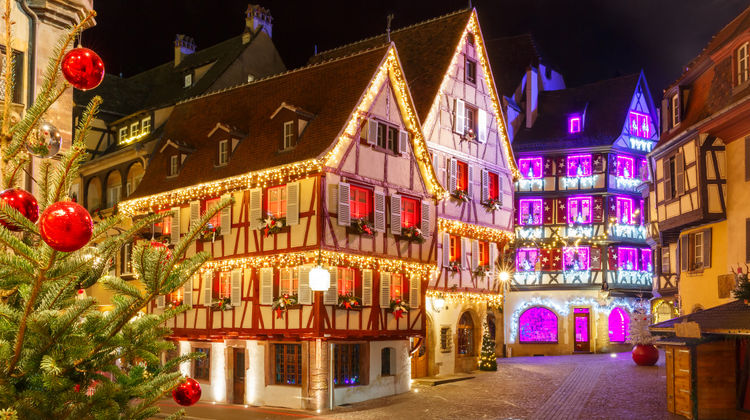
The smell of mulled wine, the warmth of gingerbread, twinkly lights against half-timbered houses, the sound of carols in a medieval square. European Christmas markets are one of the continent's great seasonal experiences, and choosing which to visit is half the joy.
Christmas market season opens roughly the last Friday of November (or first Friday before Advent in Germanic tradition) and stretches into late December, with some markets continuing through Three Kings Day on January 6. Each city does it differently: Strasbourg is grand and historical, Colmar is fairy-tale Alsatian, Nuremberg is the original tradition, Dresden claims the oldest documented Christmas market (1434), Vienna is elegant, Prague is dramatic, Tallinn is medieval, Budapest is rich.
This guide ranks the 15 European Christmas markets most worth flying for in 2026, with the honest tradeoffs of each. Germany takes 6 of the 15 spots — the country invented the Christmas market, and North American travelers are increasingly discovering the depth of options across Germany specifically.
The short answer
If you have only one Christmas market trip in your life, do Strasbourg + Colmar. The two together, 30 minutes apart by train, deliver the most complete European Christmas market experience.
If you want the deepest German tradition: Nuremberg + Munich + Rothenburg (the Bavarian classic).
If you want the widest German variety: Cologne + Dresden + Berlin.
If you want grand-scale imperial: Vienna or Salzburg.
If you want medieval atmosphere: Tallinn, Prague, or Rothenburg.
If you want post-Christmas options: Prague, Berlin, Tallinn, Copenhagen all extend into early January.
The full ranking and detail are below.
1. Strasbourg, France: Capital of Christmas (since 1570)
2026 dates: November 27 to December 27 (typical pattern).
The oldest Christmas market in France and one of the oldest in Europe, dating to 1570 in this Alsatian capital. Strasbourg officially trademarks itself as "Capitale de Noël" (Capital of Christmas), and the entire historic center transforms into 11 separate markets across the UNESCO-listed Grande Île. The Place Kléber hosts the giant illuminated Christmas tree (typically 30+ meters tall, the centerpiece of the whole city), Place de la Cathédrale runs the markets directly under the soaring spire of Notre-Dame de Strasbourg, and the Petite France district adds the canal setting.
Best for: Travelers who want the most complete, historical, large-scale Christmas market experience in Europe.
Honest tradeoffs: Strasbourg gets very crowded on weekends (especially December weekends after dark). Hotels book out 6 to 9 months in advance and prices are at European peak in December. Some travelers find the scale overwhelming.
Tip: Combine with Colmar (30 minutes south by TER train) for the complete Alsace Christmas experience. 2 nights Strasbourg + 2 nights Colmar is the most-requested itinerary.
2. Colmar, France: the storybook Alsatian village
2026 dates: November 25 to December 29.
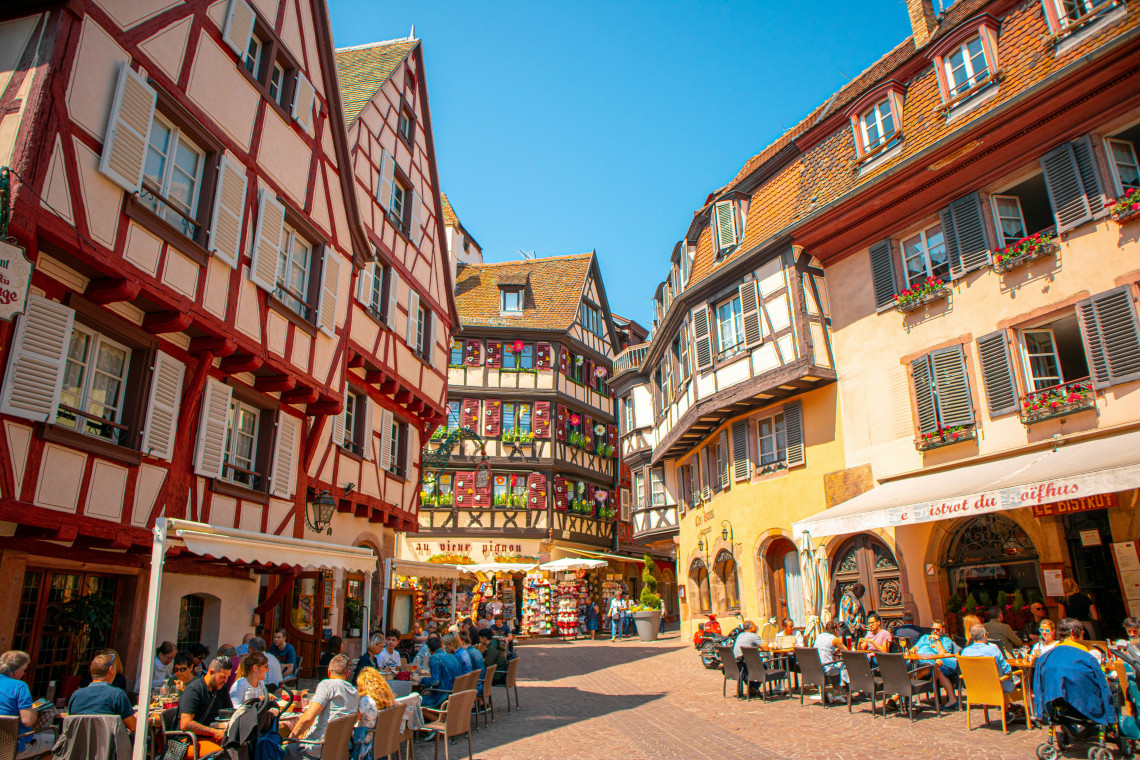
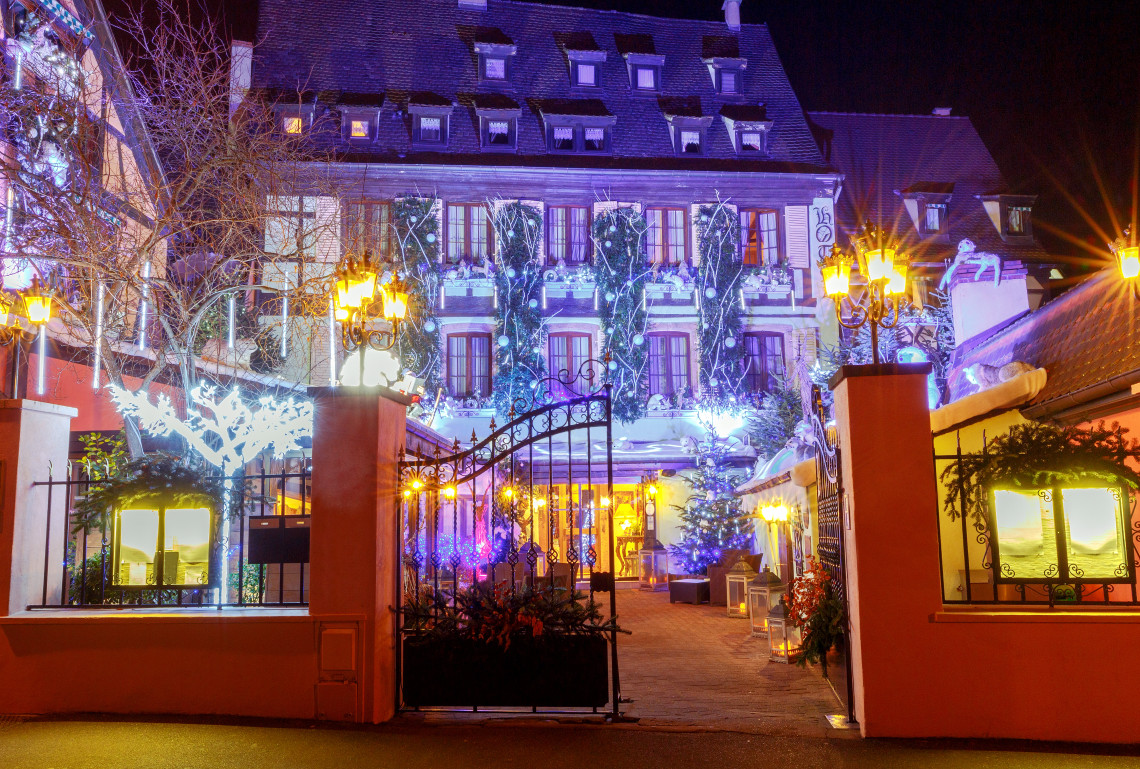
Colmar is the picture-perfect Alsatian counterpart to Strasbourg. Six distinct Christmas markets spread across the old town, each with its own theme: Place des Dominicains (the biggest), Place Jeanne d'Arc (the cozy one), Place de l'Ancienne Douane (historic), the indoor Koïfhus (artisans), Petite Venise (children, with the canal setting), and Rue de la Montagne Verte (gourmet, with live cooking by 9 regional chefs).
Best for: Travelers who want the fairy-tale Alsatian village atmosphere — half-timbered houses, canals, twinkly lights, the classic Christmas market postcard.
Honest tradeoffs: Smaller than Strasbourg, so it can feel crowded faster despite fewer total visitors. The Christmas-New Year week is the most expensive and most crowded. Stay outside the old town for better hotel value.
Full guide: Colmar Christmas Market 2026: The Complete Guide
3. Nuremberg, Germany: the original tradition (since 1628)
2026 dates: November 27 to December 24 (first Friday before Advent through Christmas Eve).
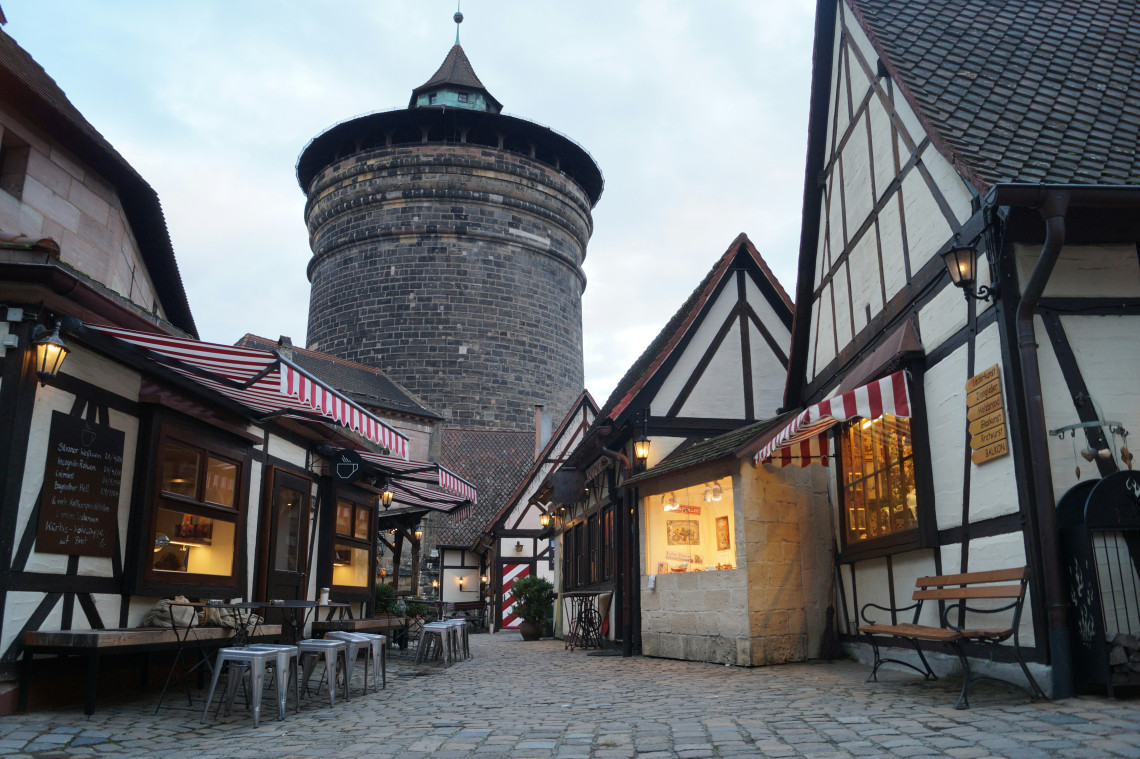
The Nürnberger Christkindlesmarkt is arguably the most famous Christmas market in the world. Documented since 1628, held every year since (with brief pauses for war) in the Hauptmarkt square in front of the gothic Frauenkirche. The market opens with the Christkind — a young woman in a golden gown and crown who recites the opening prologue from the church balcony.
Around 180 wooden chalets fill the square, selling Nuremberg-specific specialties: Lebkuchen (spiced gingerbread, protected by geographical indication), Nürnberger Rostbratwurst (small pork sausages, three to a bun), Zwetschgenmännle (prune-people figurines), tin angels, and hand-carved wooden ornaments.
Best for: Traditionalists who want the most authentically German, oldest-tradition Christmas market in Europe. History travelers (Nuremberg's medieval old town is among Germany's finest).
Honest tradeoffs: Closes early — December 24 is the final day. Most stalls focus on traditional German fare without much variety. Heavy regional German crowds on weekends.
4. Munich, Germany: Bavarian tradition on Marienplatz
2026 dates: Late November to December 24 (main market on Marienplatz).
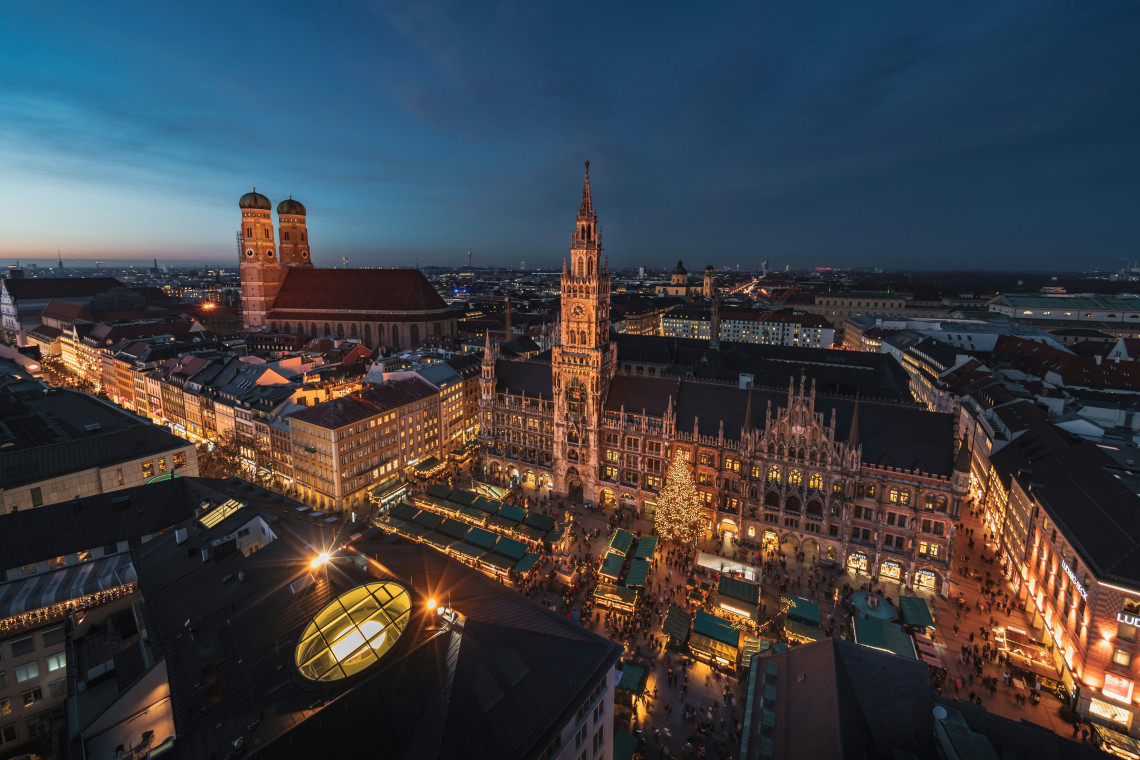
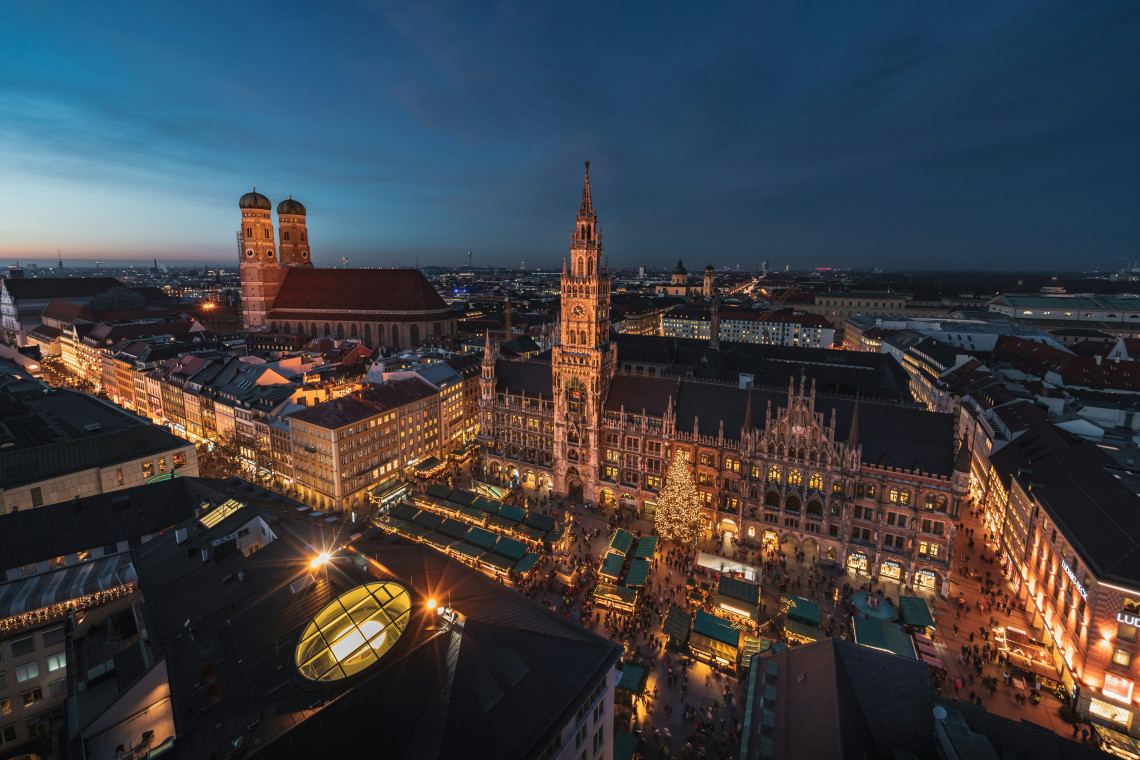
Munich runs about 30 Christmas markets, spread across the city, but the icon is the Christkindlmarkt on Marienplatz — the main square in front of the neo-gothic Neues Rathaus (New Town Hall), with the giant Christmas tree at the center and market chalets radiating out. The Rathaus itself provides the daily Glockenspiel performance (a mechanical clock spectacle at 11am and 12pm) as the marketplace backdrop.
Beyond Marienplatz, Munich runs specialized markets: the Kripperlmarkt near St. Peter's for nativity scene figurines, the Medieval Christmas Market at Wittelsbacher Platz with 14th-century costumes and mead in ceramic mugs, and dozens of neighborhood markets in Schwabing, Sendlinger Straße, and Haidhausen.
Munich food specialties: Weißwurst (white sausage, traditionally eaten before noon), Brezn (soft pretzels), Feuerzangenbowle (rum set alight over mulled wine — a Munich Christmas market signature), Lebkuchen.
Best for: Travelers who want Bavaria plus proximity to the Alps. Combines seamlessly with Salzburg (1h30m by train) and Innsbruck. Excellent gateway airport (MUC) for U.S. and Canadian direct flights.
Honest tradeoffs: Munich hotels in December book out fast. The Marienplatz market is the busiest — some smaller markets are more atmospheric.
Combines with: Salzburg, Nuremberg, Rothenburg, Innsbruck.
5. Cologne, Germany: seven markets in one weekend
2026 dates: Late November to December 23 (main markets; some to January 6).
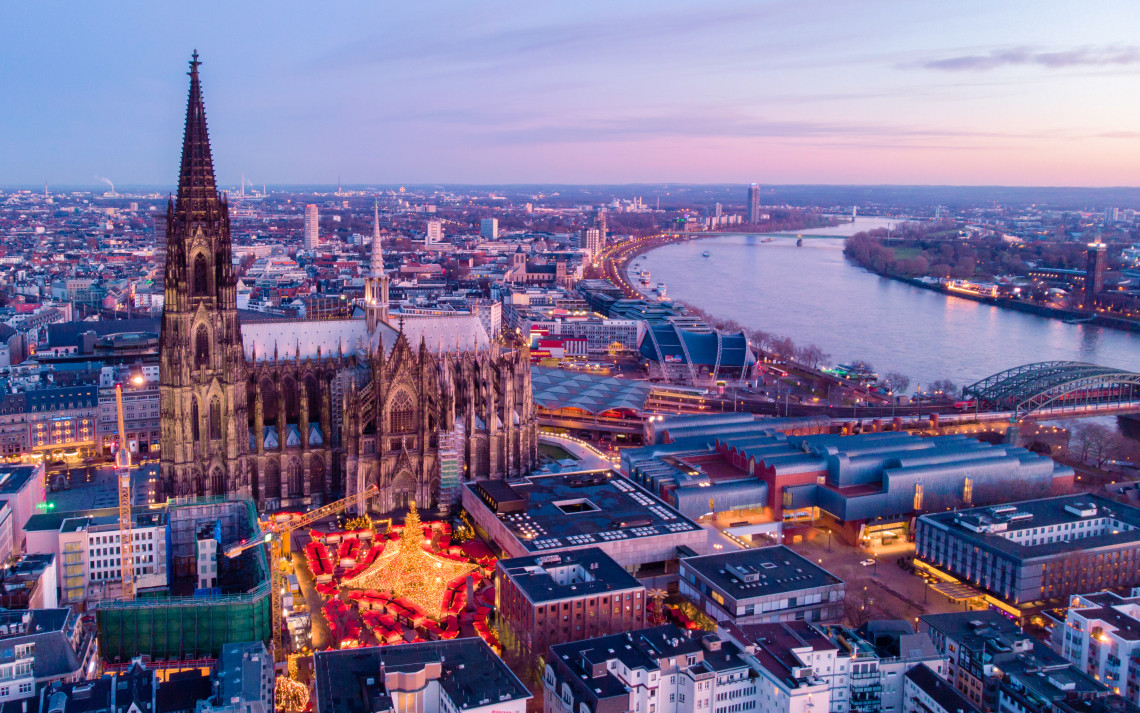
"Cologne christmas market" is one of the fastest-rising Christmas market search queries in 2026 — and for good reason. Cologne (Köln) runs seven distinct Christmas markets in the historic center, all walkable from each other. The main Weihnachtsmarkt am Kölner Dom sits directly in front of the twin spires of Cologne Cathedral (a UNESCO gothic masterpiece), with the cathedral illuminated as backdrop each evening. The Alter Markt and Heumarkt markets are traditional. The Angels' Market at Neumarkt goes for the fairy-tale aesthetic. The Harbour Christmas Market at Chocolate Museum offers the most unusual setting. The Nikolausdorf at Rudolfplatz is dedicated to St. Nicholas.
Cologne is a wine and beer city year-round, and the Christmas markets deliver: Glühwein (mulled wine) is served in dozens of variations, from classic red to white to blueberry.
Best for: Travelers who want maximum markets in minimum walking. First-time Christmas market travelers who want variety. Photographers (the illuminated cathedral above the markets is unmatched).
Honest tradeoffs: Cologne is grey and often rainy in December. Cathedral queues can be long during the market season.
Combines with: Aachen (1h by train, its own market plus the Aachener Printen gingerbread), Düsseldorf (25 minutes), Rhine river Christmas markets by boat.
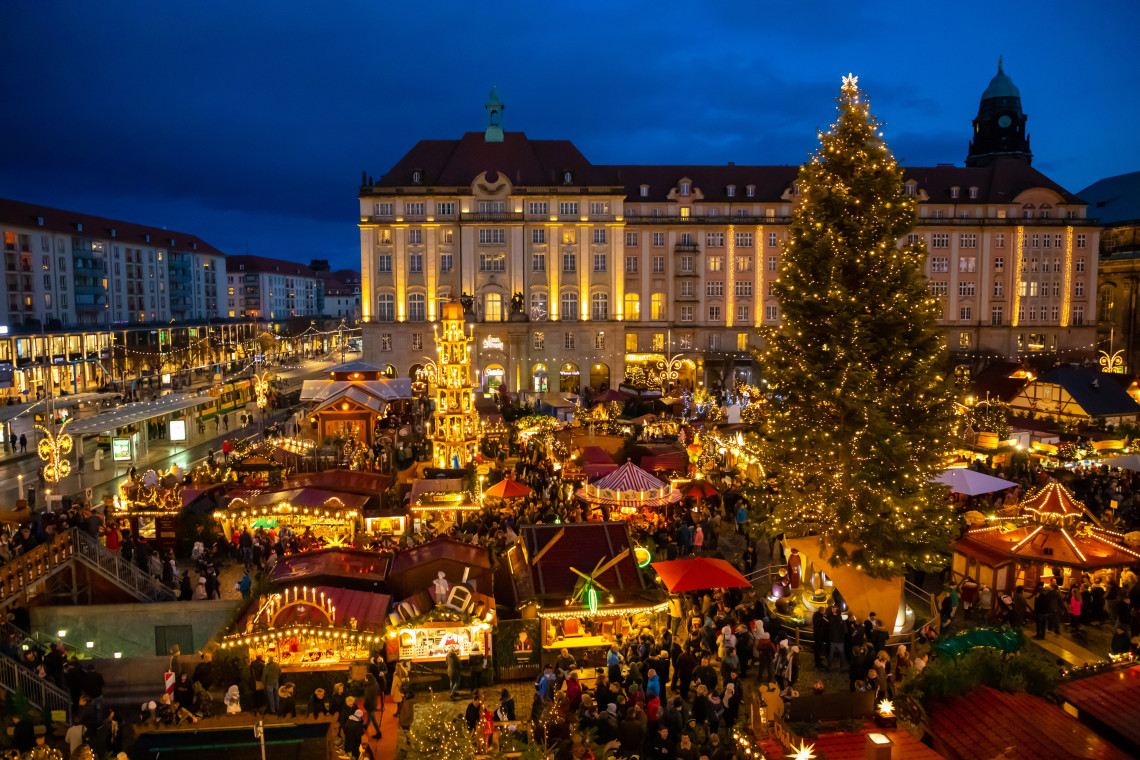
6. Dresden, Germany: the oldest documented Christmas market (1434)
2026 dates: November 26 to December 24 (Striezelmarkt).
Dresden claims the oldest documented Christmas market in the world — the Striezelmarkt, first recorded in 1434 (nearly 600 years old). Set on the Altmarkt in the baroque old town (reconstructed after WWII bombing). The market's icon is the giant Erzgebirge pyramid — a multi-tiered wooden windmill decoration, the largest in the world at 14 meters. The traditional Christmas cake here is Dresdner Stollen — the version protected by geographical indication and celebrated with its own Stollenfest parade on the second Advent Saturday, when a 4-ton stollen is paraded through the city.
Beyond the Striezelmarkt, Dresden has 10+ additional Christmas markets: at the Frauenkirche (the baroque church spectacularly restored after WWII), at Neustadt (the alternative bohemian quarter), at the Royal Palace, at the Semperoper opera house, at the Weihnachtsmarkt an der Prager Straße. The layered market network across the reconstructed baroque center is one of Europe's finest.
Best for: Travelers who want the deepest historical Christmas tradition. Baroque architecture enthusiasts (Dresden's old town is one of Europe's finest baroque ensembles). Stollen connoisseurs.
Honest tradeoffs: Dresden is a smaller city than Berlin or Munich. December weather is cold and often overcast. Fewer international flights direct — most travelers arrive via Berlin, Frankfurt, or Munich.
Combines with: Leipzig, Berlin (2h by train), Prague (2h by train — a natural Christmas markets combo).
7. Rothenburg ob der Tauber, Germany: the fairy-tale walled town
2026 dates: Late November to December 23 (Reiterlesmarkt).
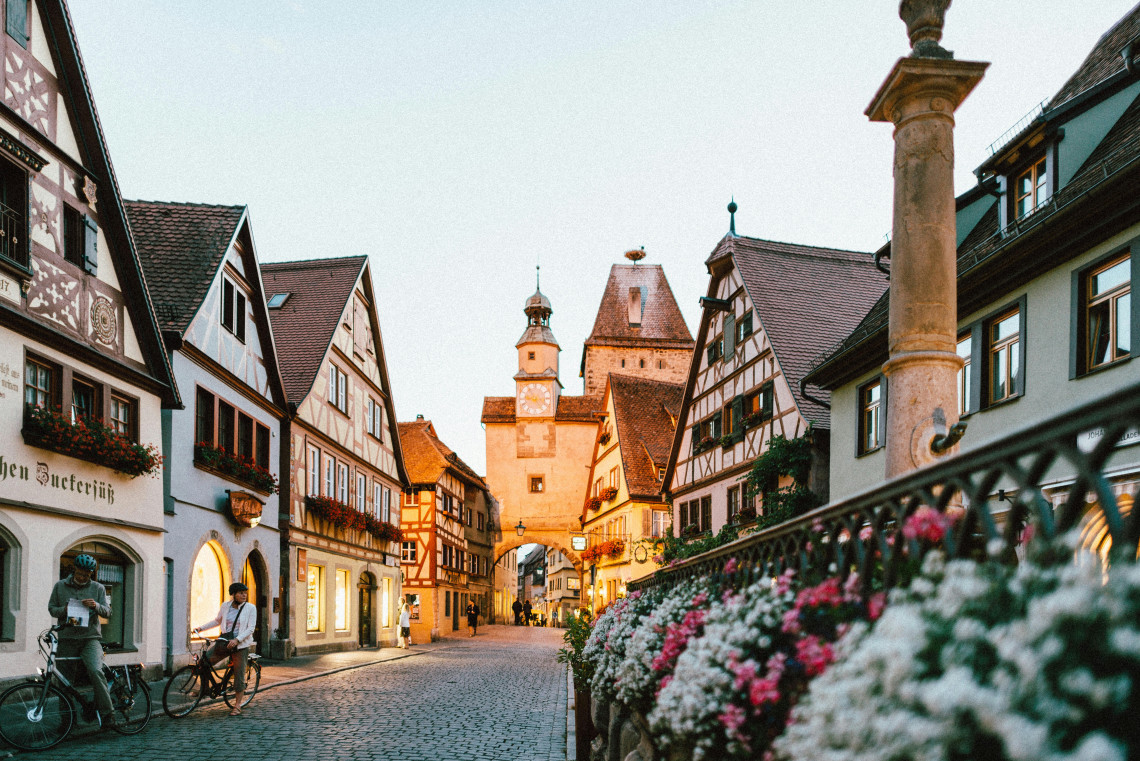
Rothenburg is what most travelers picture when they imagine a "German Christmas village": a fully preserved medieval walled town, cobbled streets, half-timbered houses draped in Christmas decoration. The Reiterlesmarkt on the Marktplatz in front of the Renaissance town hall is Rothenburg's Christmas market — small in scale but placed in the middle of what may be Europe's most visually complete medieval town.
The town's other Christmas signature is Käthe Wohlfahrt — the Christmas store operating year-round in a 16th-century half-timbered building, with 5 floors of German Christmas decorations, ornaments, nutcrackers, incense burners, and hand-blown glass. Even in July, Käthe Wohlfahrt sells the German Christmas world.
Rothenburg is small (population 11,000) and the market is compact. But the setting — the walled town at Christmas, often with snow — is among the most photographed Christmas scenes in Europe, especially appealing to travelers seeking a nostalgic, traditional, storybook German Christmas experience.
Best for: Photographers, romantic couples, first-time visitors who want the "postcard" German Christmas. Nostalgic North American travelers looking for the traditional European Christmas image. Multi-generational travelers with grandchildren.
Honest tradeoffs: Small scale (2 to 3 hour market visit is enough). Very crowded on December weekends with day-trippers. Hotels are limited — book well ahead if staying overnight (highly recommended for the empty post-tourist morning).
Combines with: Nuremberg (1h by regional train, typically change at Steinach), Würzburg (1h by train), Munich (2h30m).
8. Stuttgart, Germany: one of Germany's largest
2026 dates: Late November to December 23.
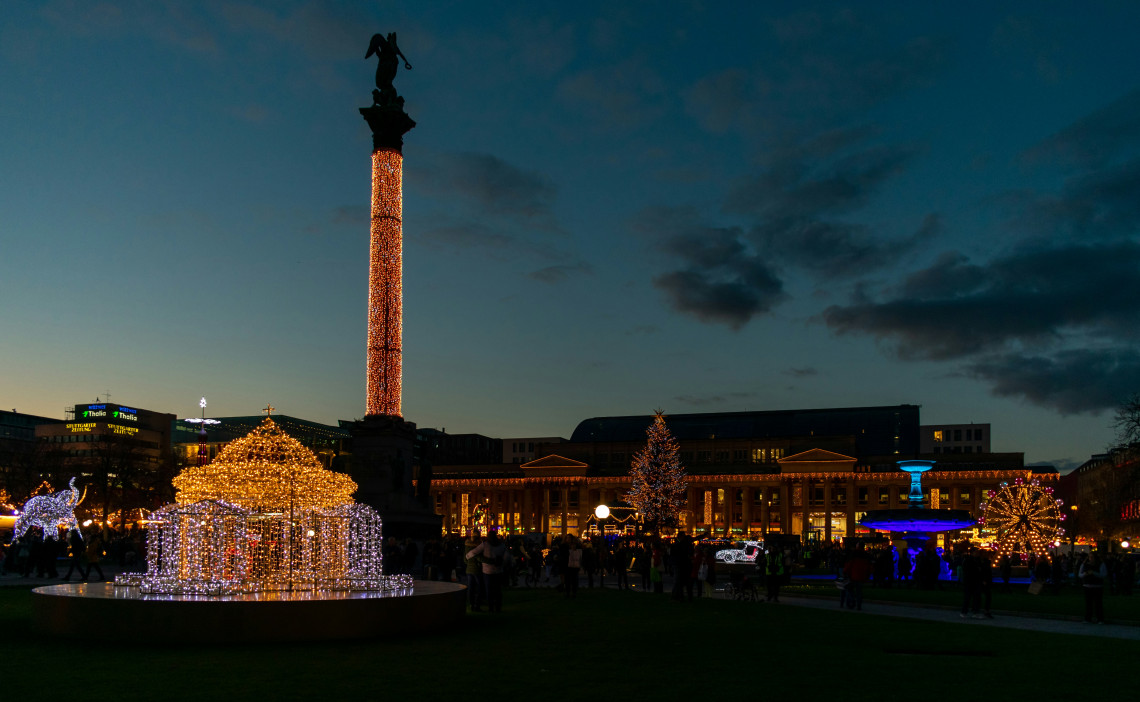
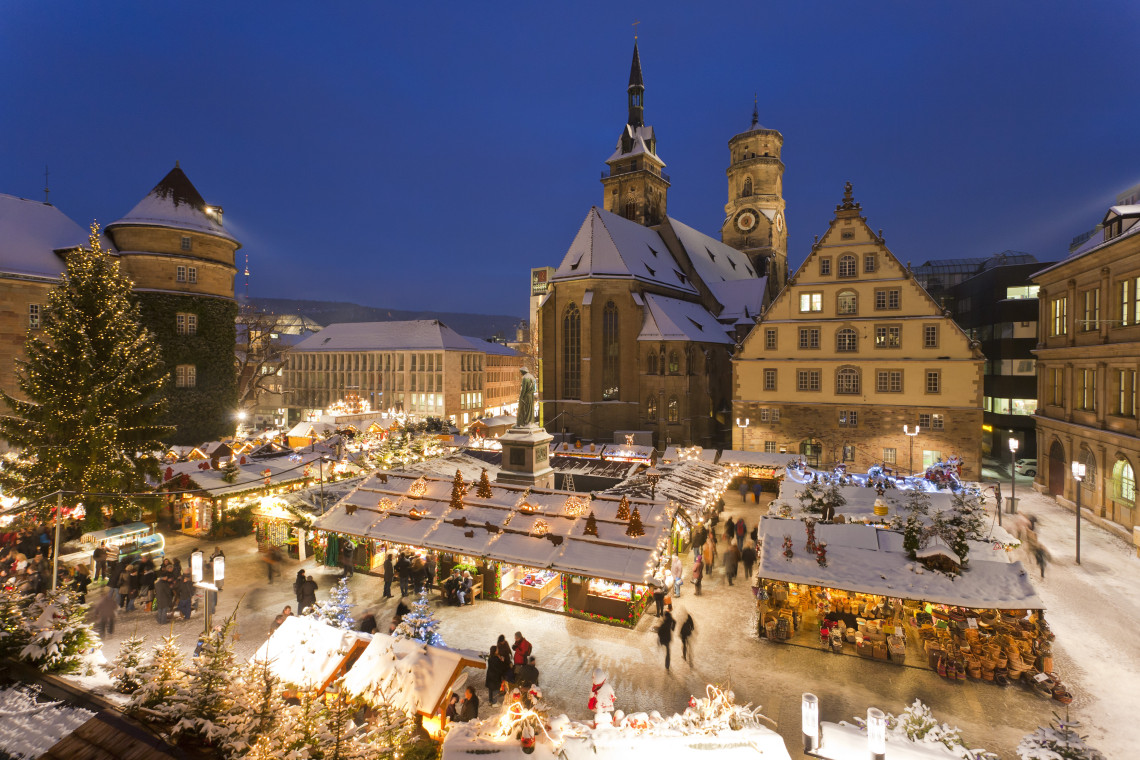
Stuttgart's Christmas market is among Germany's largest by chalet count (280+). Set across the historic center — the Schillerplatz, the Marktplatz, the Karlsplatz — in front of the gothic Stiftskirche and the Old Castle. The market's signature is the elaborately decorated roofs of the chalets — each one competes for the annual "most beautiful roof" prize, and the roofs become the visual highlight of the market, with lit reindeer, giant angels, Alpine cottages, and windmill decorations towering above each stall.
Stuttgart is a wine city (the surrounding Württemberg region produces excellent Riesling and Trollinger), and the Christmas market features local vintners' Glühwein alongside the standard versions. Live music, an ice-skating rink, and the Fairy Tale Land (a themed area for children) round out the market's family appeal.
Best for: Wine travelers, travelers who want the classic large-scale German Christmas market without the international-tourist crowds of Nuremberg. Families with children (the Fairy Tale Land is excellent).
Honest tradeoffs: Stuttgart is less internationally known than Munich, Berlin, or Cologne. Some travelers find the corporate car-industry atmosphere less atmospheric.
Combines with: Tübingen (1h by train, one of Germany's most beautiful small university towns), Ulm, Heidelberg, Rothenburg.
9. Berlin, Germany: over 100 markets, every taste
2026 dates: Late November 2026 to early January 2027 (varies by market — some close December 24, others run to January 6).
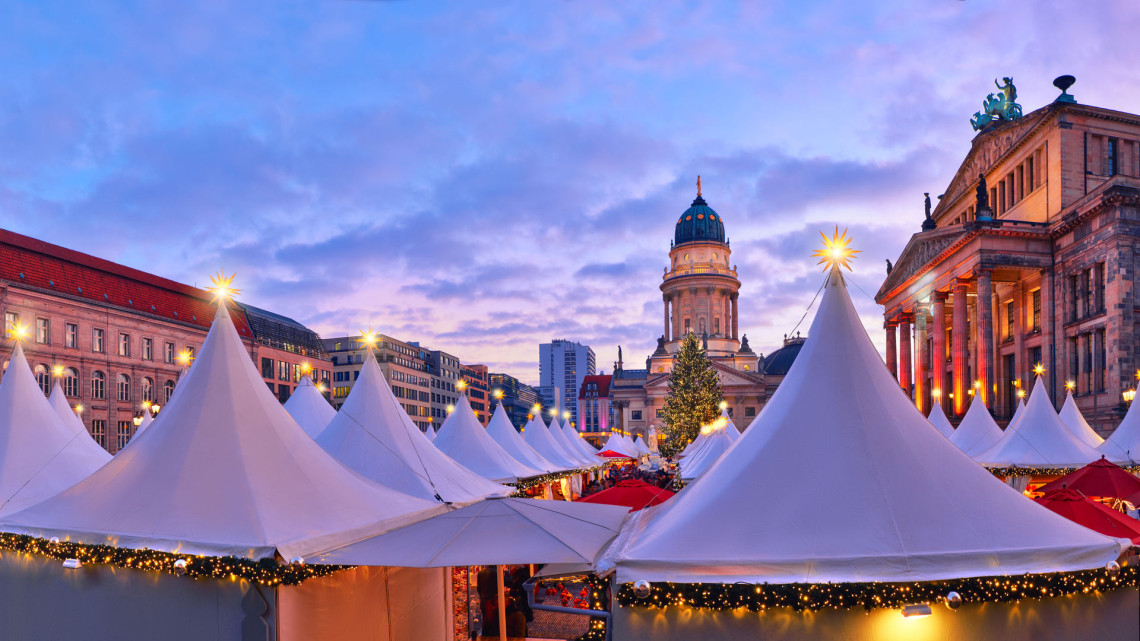
Berlin runs over 100 Christmas markets across the city. The famous ones: Gendarmenmarkt (the most elegant, in front of the symmetrical Konzerthaus and the French and German cathedrals), Charlottenburg Palace (in the courtyard of the baroque palace, one of the most beautiful settings), Alexanderplatz (the largest and most varied), and Spandau (medieval, the most traditional). For something completely different: WeihnachtsRodeo at Markthalle Neun (a hipster alt-Christmas market with craft beer, vintage stalls, and modern food).
Best for: Travelers who want variety, are visiting Berlin for the city itself and adding markets as a layer, and don't mind moving between districts.
Honest tradeoffs: No single Berlin Christmas market dominates — variety is the point but also a logistical question. Pick 4 to 6 markets in advance and route the days.
10. Vienna, Austria: imperial elegance
2026 dates: Mid-November to December 26 (varies by market). Many run to December 24, Spittelberg to December 23.
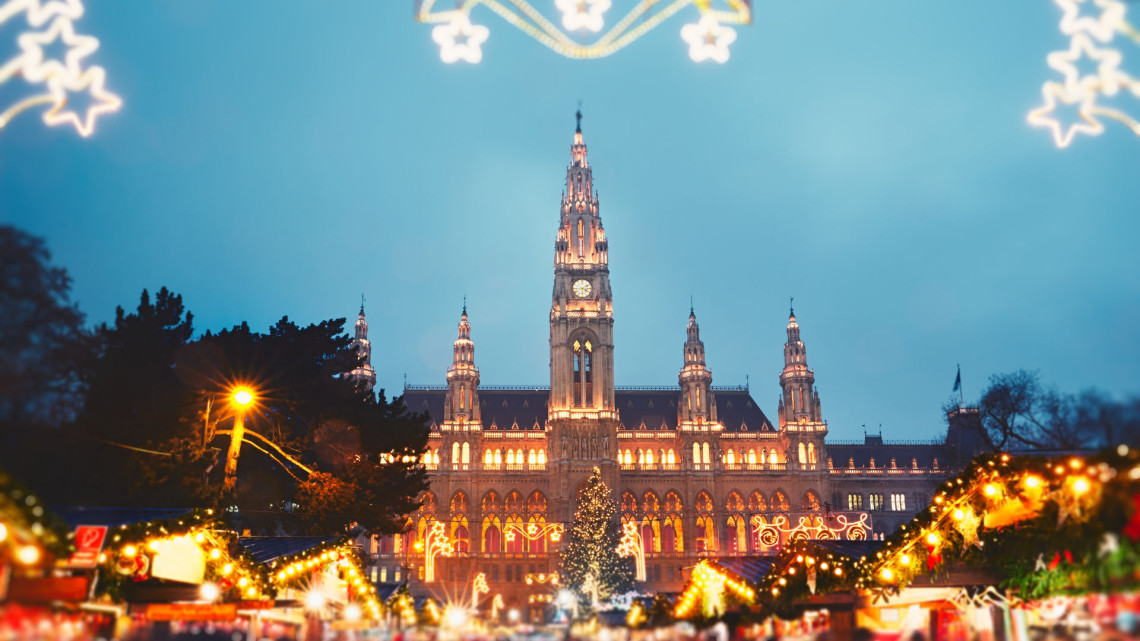
Vienna runs over 20 Christmas markets across the city, each with a different character. The most famous: Christkindlmarkt am Rathausplatz (in front of the neo-gothic City Hall, the most photographed), Schönbrunn Palace Christmas Market (in the courtyard of the imperial palace, the most elegant), Spittelberg (the boutique, off-the-beaten-path market with the highest-quality crafts), and Karlsplatz (the most arty, focused on independent makers).
Best for: Travelers who want imperial grandeur, exceptional Austrian food (Kaiserschmarrn, Bratwurst, Lebkuchen, Punsch), and a major city to explore between markets (Belvedere, Schönbrunn, the Hofburg, the Vienna State Opera).
Honest tradeoffs: Vienna's Christmas markets feel scattered across the city, so a 4-day trip is the minimum to do the best 5 to 6 properly. Compared to Alsace's compactness, Vienna requires more transport.
11. Prague, Czech Republic: dramatic and post-Christmas friendly
2026 dates: Late November 2026 to January 6, 2027 (Three Kings Day).
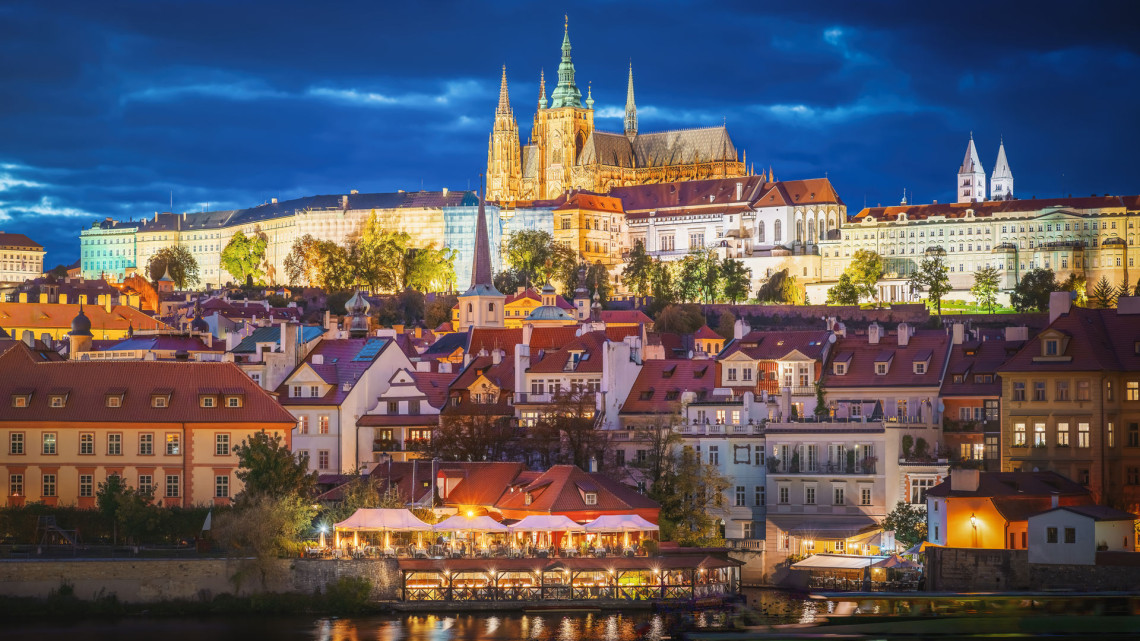
Prague's main Christmas markets at Old Town Square (Staroměstské náměstí) and Wenceslas Square (Václavské náměstí) transform the medieval city into one of the most dramatically lit Christmas scenes in Europe. The astronomical clock tower as the backdrop. Wooden stalls with Czech glassware, garnets, marionettes, traditional sweets. Live Christmas trees in both main squares. Plenty of Trdelník (the rolled cinnamon-sugar pastry that has become Prague's Christmas market signature), Czech sausages, and svařák (the Czech mulled wine).
Best for: Travelers who want medieval atmosphere, dramatic photography backdrops, and the option to visit after Christmas (the markets run to January 6).
Honest tradeoffs: Prague gets very cold in December (often below freezing). Many of the most photographed scenes are crowded with tourists from morning through evening. The Trdelník (despite being delicious) is not actually traditional Czech Christmas food.
12. Budapest, Hungary: warm and food-led
2026 dates: Mid-November 2026 to early January 2027.
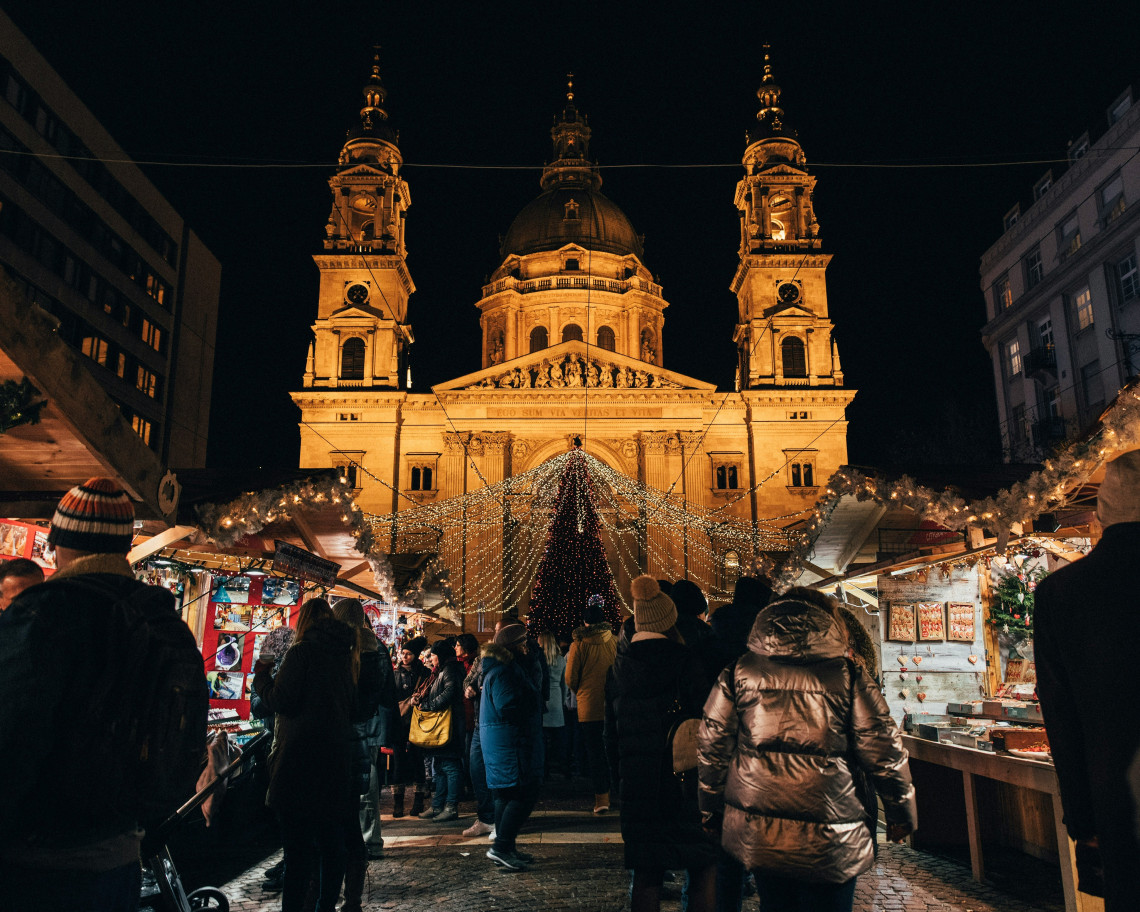
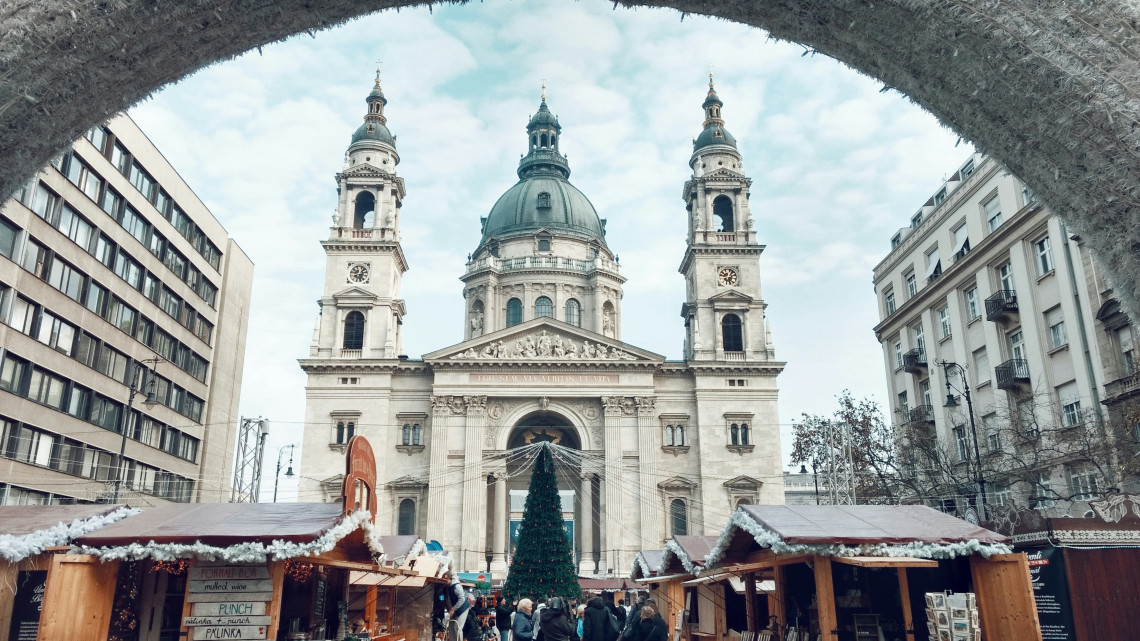
Budapest's main markets at Vörösmarty Square and St. Stephen's Basilica are smaller in scale than Vienna or Strasbourg but consistently rank among the best in Europe for atmosphere. The Basilica market sets up around the city's largest church, with the facade illuminated by a free light show every evening. The food scene is exceptional: chimney cake (kürtőskalács), lángos, stuffed cabbage, hot wine with Hungarian spices. After the market, retreat to one of Budapest's famous thermal baths (Széchenyi, Gellért, Rudas) for the most distinctive European Christmas market combination.
Best for: Foodies, photographers, travelers who want a less-Western-European Christmas market experience. Thermal bath enthusiasts.
Honest tradeoffs: Smaller scale than the major Alsace or Austrian markets. Hungarian Christmas market food is heavier than German or French — pace yourself.
13. Tallinn, Estonia: medieval and snowy
2026 dates: Late November 2026 to early January 2027.
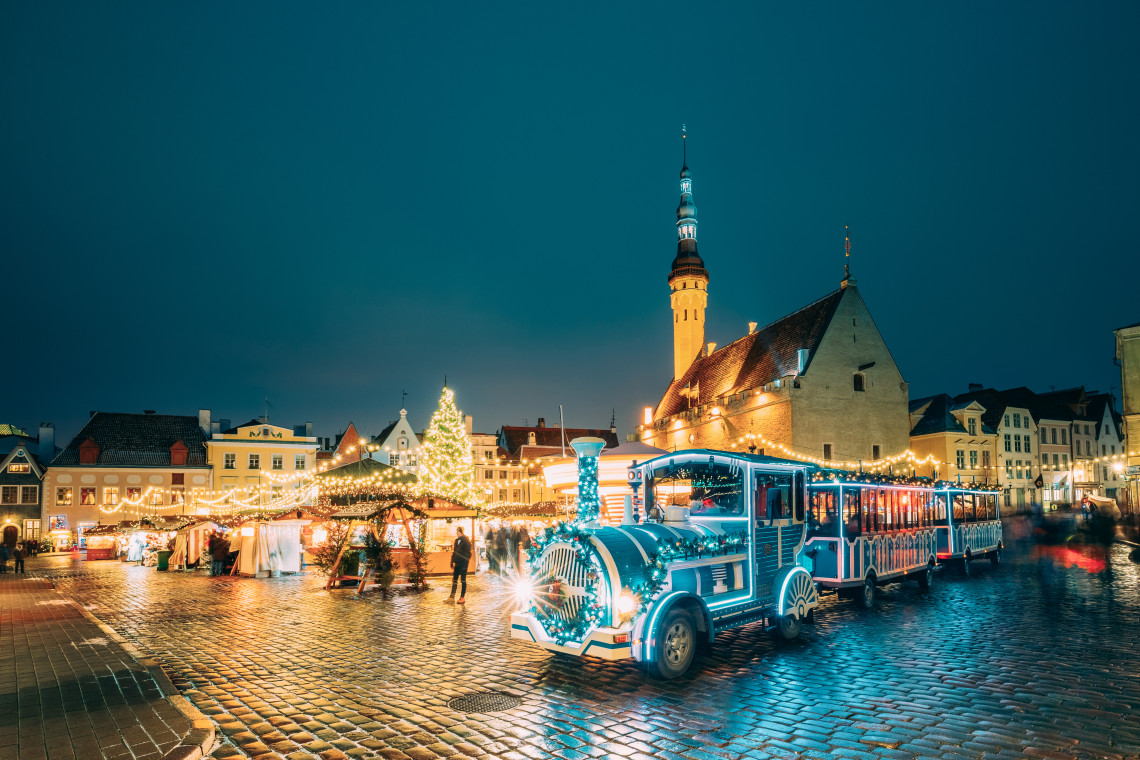
Tallinn's Christmas market in Raekoja plats (Town Hall Square) is consistently named one of Europe's most atmospheric, set inside one of the best-preserved medieval old towns in Europe. The Christmas tree at the center of the square is, by Tallinn's claim, the oldest publicly displayed Christmas tree in the world (first recorded in 1441, predating Riga's competing claim by 69 years). The cobbled streets of the medieval old town wind out from the market, with views of the Toompea castle on the hill above. Reliable snow (compared to Western European markets where snow is occasional).
Best for: Travelers who want medieval atmosphere, reliable winter snow, fewer crowds than Western European markets, and an under-the-radar destination.
Honest tradeoffs: Very cold in December (typically -5°C to -10°C). Some restaurants and tourist services have limited hours. Fewer direct flights from North America (typically connect via Helsinki, Stockholm, or Frankfurt).
14. Copenhagen, Denmark: hygge and Tivoli Gardens
2026 dates: Tivoli Gardens Christmas market typically runs November 14 to December 31. Multiple smaller markets across the city in parallel.
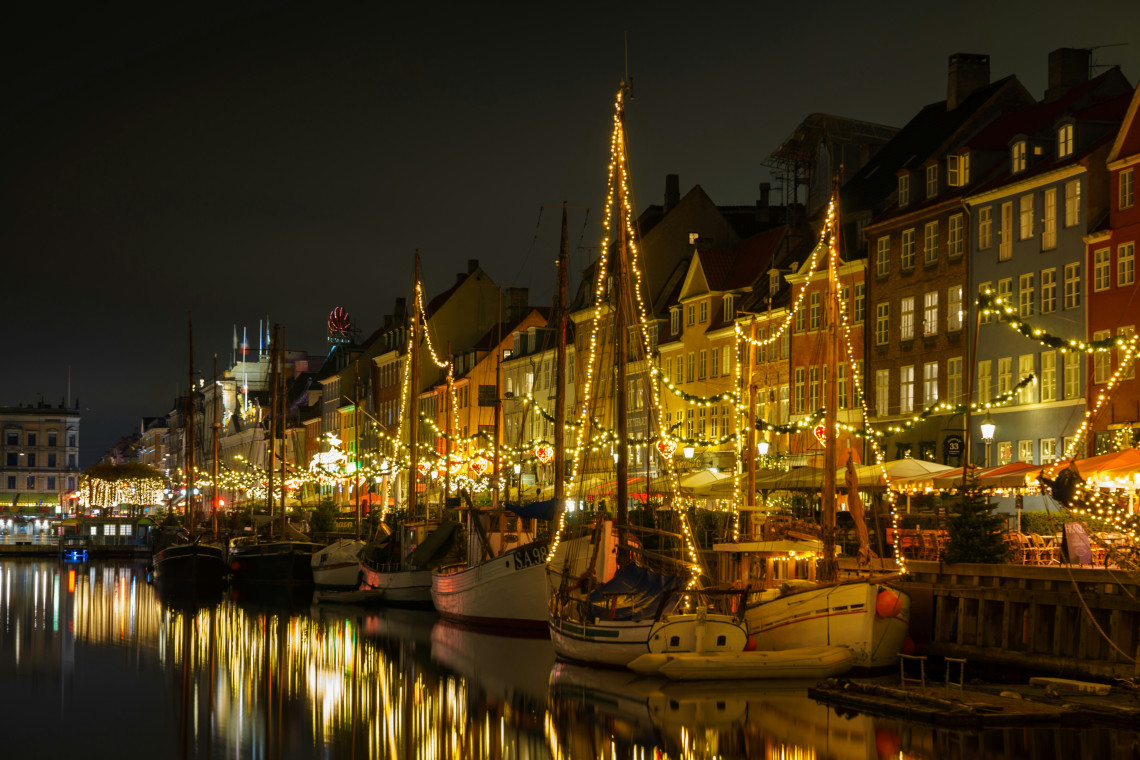
Copenhagen's Christmas markets center on Tivoli Gardens — the world's second-oldest amusement park (1843), transformed each November into one of the most magical Christmas wonderlands in Europe. The park lights up with over a million tiny lights, the Christmas market wraps around the lake, and rides operate alongside the chalets. Other markets at Højbro Plads, Kongens Nytorv (the King's New Square), and at the Nyhavn waterfront.
The Danish concept of hygge (cozy contentment) finds its purest expression in Copenhagen at Christmas: candle-lit restaurants, fireside cafés, wool blankets on outdoor terraces.
Best for: Families with children (Tivoli is unmatched for kids), travelers who want a polished, design-led Christmas market experience, hygge enthusiasts.
Honest tradeoffs: Tivoli entrance is paid (entrance only, then pay per ride). Copenhagen is among the most expensive European cities for hotels and food.
15. Salzburg, Austria: the Sound of Music in snow
2026 dates: Mid-November 2026 to December 26.
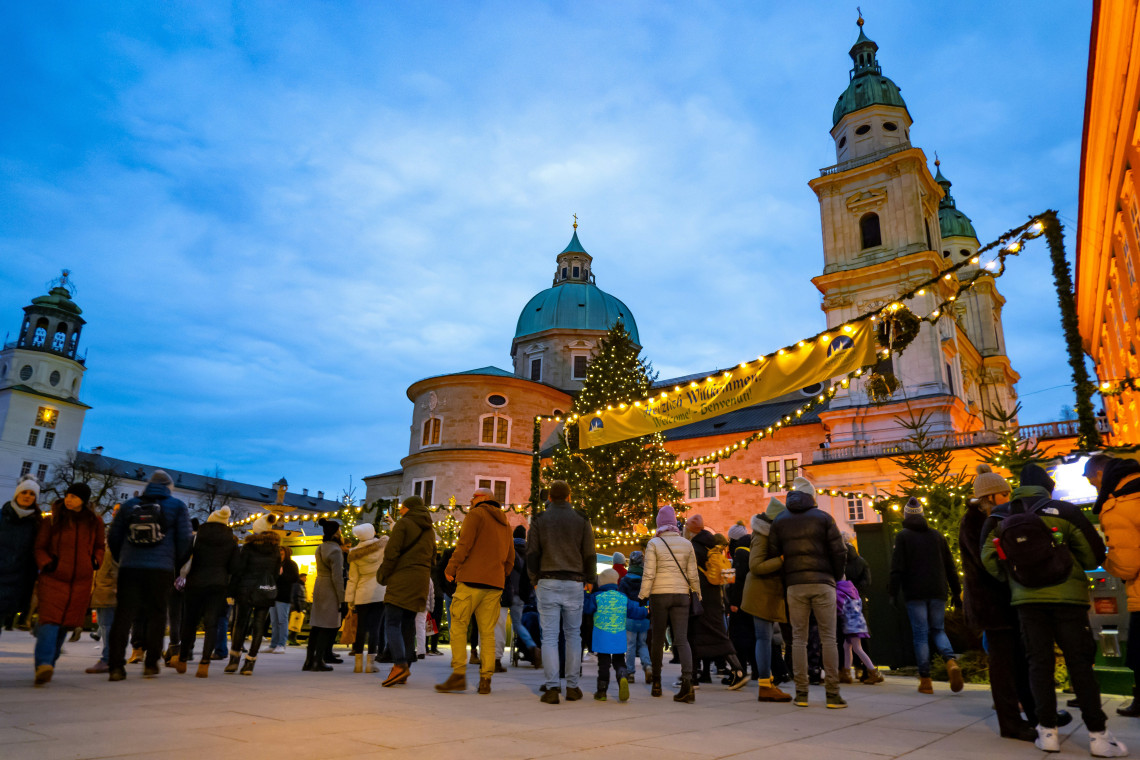
Salzburg's Christkindlmarkt on the Domplatz (Cathedral Square) and Residenzplatz is among the most picturesque in Austria, set between the baroque Salzburg Cathedral and the Hohensalzburg Fortress on the hill above. The narrow alpine streets of the old town (UNESCO listed, Mozart's birthplace) wind down from the markets. Side trip to the Hellbrunn Palace Christmas Market on weekends. Combine with Mozart concerts at the Schloss Mirabell.
Best for: Travelers who want Alpine setting + classical music + manageable scale. Couples on a romantic Christmas trip.
Honest tradeoffs: Salzburg's market is smaller than Vienna's. Reaching from Vienna by train is 2h30m. Hotels in the old town are limited.
How to combine multiple markets
The most rewarding Christmas market trips combine 2 to 4 cities. The natural pairings:
Alsace pair (recommended for first-timers): Strasbourg + Colmar. 4 to 5 nights total. The two cities are 30 minutes apart by TER train. Add the wine route villages (Riquewihr, Eguisheim) as day trips for the complete Alsace experience.
Bavarian classic (5 to 7 nights): Munich + Nuremberg + Rothenburg. The most-requested German Christmas itinerary. All connected by direct ICE trains. Combines the biggest city (Munich), the most historic market (Nuremberg), and the fairy-tale village (Rothenburg).
Western Germany (5 to 6 nights): Cologne + Aachen + Frankfurt. Or Cologne + Düsseldorf + Bonn. Rhineland Christmas markets with the Rhine river cruise as an optional add-on.
Eastern Germany (5 to 7 nights): Dresden + Leipzig + Berlin. The oldest documented Christmas markets (Dresden 1434) combined with the largest Christmas market city (Berlin). Naturally extends to Prague (2h from Dresden).
Austria-Bavaria triangle: Vienna + Salzburg + Munich + Nuremberg. 7 to 10 nights. Connect by train (Vienna-Salzburg 2h30m, Salzburg-Munich 1h30m, Munich-Nuremberg 1h).
Eastern Europe trio: Prague + Budapest + Vienna. 7 to 9 nights. Connect by train or short flights. The most affordable of the multi-city combinations.
Northern triangle: Copenhagen + Berlin + Prague. 7 to 9 nights. Direct trains between all three.
Two-country quick hit: Strasbourg + Munich. 5 nights. 4-hour direct train between them.
Plan it well: How Many Days in France and Hidden France: 10 Small Towns Most Tourists Miss.
When to go
The Christmas market window splits into three phases with very different experiences:
Late November to early December (the soft launch): Markets are open but less crowded. Hotel prices are lower than peak. Decorations are up but Christmas Day still feels distant. Best for travelers who want the atmosphere without the crowds.
Mid December (the peak): All markets in full operation, all decorations lit, the most "Christmas movie" version. Also the most crowded weekends and the highest hotel prices.
Christmas week to early January (the after-Christmas): Some markets close December 24 (Nuremberg, most Vienna markets). Others continue to December 31 (Copenhagen, parts of Berlin) or January 6 (Prague, Budapest, Tallinn). Atmosphere is more relaxed but several markets are closed.
Sweet spot recommendation: Weekdays in the first two weeks of December. You get all markets fully operational, with fewer crowds than the December 14-22 peak and more reasonable hotel pricing than the Christmas-New Year week.
What to wear and pack
European December weather is cold and often wet, sometimes snowy. Average temperatures range from -5°C to 8°C / 23°F to 46°F depending on the city. Pack:
- Warm waterproof coat (essential, especially in Alsace, Prague, Tallinn)
- Hat, gloves, scarf (you will be outside for hours each day)
- Waterproof boots (cobbled streets, occasional snow, slush)
- Layers (markets are outdoor but cafés and restaurants are well-heated)
- Power adapter (Europe uses Type C/E/F plugs, U.S. and Canada use Type A/B)
- Cash (some smaller stalls still cash-only, especially in Eastern Europe)
- A small day backpack for keeping warm extras and any purchases
Honest tradeoffs: what to expect
The pros: The settings genuinely live up to the photos. The food culture is exceptional and distinctive to each country. The atmosphere is hard to replicate anywhere else in the world. December is the off-season for most other European tourist activity, so museums and other attractions are less crowded than in summer.
The cons: December weekends at top markets are very crowded. Hotel prices peak (especially in Strasbourg, Colmar, Vienna, and during the December 26 to January 1 week). Days are short (sunset around 4pm to 5pm in most of Europe). Some travelers expect deeper snow and warmer outdoor temperatures than they actually find.
To get the best version: Visit in late November or the first two weeks of December, on weekdays where possible. Book hotels 6 to 9 months in advance for the prime markets. Layer up — much of the outdoor time at markets is in real cold. Plan dinner reservations at restaurants weeks ahead.
Markets open after Christmas
If your trip dates fall in the week between Christmas and New Year (or into early January), several markets continue:
- Colmar: Until December 29
- Strasbourg: Until December 27 (some smaller markets)
- Copenhagen Tivoli: Until December 31
- Berlin: Several until January 6
- Prague: Until January 6 (Three Kings Day)
- Budapest: Until early January
- Tallinn: Until early January
- Vienna: Most close December 23-26 but some Silvester (New Year) markets open December 30-31
The post-Christmas atmosphere is gentler than the December peak: smaller crowds, lower hotel prices (except for New Year's Eve itself), the markets feel more locally attended.
What we recommend most often
For first-time European Christmas market travelers writing to us, the most-built combinations are:
4 nights (single region): Strasbourg (2 nights) + Colmar (2 nights). The simplest, most rewarding short Christmas market trip.
7 nights (Bavarian classic): Munich + Nuremberg + Rothenburg. The complete German Christmas market trip.
7 nights (two countries): Strasbourg + Colmar (4 nights total) + Vienna (3 nights). Adds the imperial counterpoint to the Alsatian village experience.
10 nights (the full European Christmas tour): Strasbourg + Colmar + Nuremberg + Vienna + Salzburg. The most ambitious version, with TGV and ICE/Railjet connections handling the transport.
Post-Christmas option (5 nights): Prague + Budapest. Both markets remain open through early January, with the gentler post-Christmas atmosphere and lower hotel prices.
Deep German trip (10 nights): Nuremberg + Rothenburg + Munich + Dresden + Berlin. The complete German Christmas market experience across the country.
Frequently asked questions
What are the best Christmas markets in Europe in 2026? Strasbourg and Colmar (France) for the most complete Alsatian experience, Nuremberg (1628 tradition) and Munich (Marienplatz Christkindlmarkt) for classic German, Dresden (oldest documented, 1434) and Rothenburg (fairy-tale walled town) for historical German depth, Vienna for imperial elegance, Prague for medieval atmosphere, Copenhagen (Tivoli) for family magic.
When do European Christmas markets start in 2026? Most markets open between mid-November and the last Friday of November. Specific dates: Tivoli Copenhagen opens November 14, Vienna mid-November, Colmar November 25, Dresden November 26, Strasbourg November 27, Nuremberg November 27.
When do European Christmas markets end? Varies by market. Some close Christmas Eve (Nuremberg, Munich, Dresden, most Vienna markets), some continue to December 29 (Colmar), some to December 31 (Copenhagen Tivoli), and some to January 6 (Prague, Budapest, Tallinn).
Which is the best Christmas market in Europe? There is no single answer. Nuremberg for the oldest tradition (since 1628), Dresden for the oldest documented (1434), Strasbourg for scale and history (since 1570), Colmar for picture-perfect village atmosphere, Vienna for imperial elegance, Rothenburg for the fairy-tale postcard German setting, Tallinn for medieval snow. Most travelers visit 2 or 3 in a single trip.
Which German Christmas markets are must-see? Nuremberg (the oldest, 1628), Dresden (the oldest documented, 1434), Munich (Marienplatz Christkindlmarkt, Bavarian tradition), Cologne (7 markets in walking distance), Rothenburg (medieval walled town, most photogenic). Berlin adds variety (100+ markets). Stuttgart adds scale (280+ chalets). The "Bavarian classic" (Munich + Nuremberg + Rothenburg) is the most-requested 7-night German Christmas trip.
Are European Christmas markets crowded? Yes, especially Strasbourg, Colmar, Munich, and Nuremberg on December weekends after dark. Weekdays in late November or the first two weeks of December are meaningfully less crowded. Tallinn and the smaller Eastern European markets are quieter throughout.
Is it cold at European Christmas markets? Yes, often very cold. Daytime temperatures range from -5°C / 23°F in Eastern Europe to 8°C / 46°F in milder Western European cities. Snow is reliable in Tallinn and Alpine areas (Salzburg, Munich, Dresden), occasional in Strasbourg/Colmar/Prague/Nuremberg, rare in Western European cities. Layer up.
How much do Christmas market trips cost? Hotels in prime market cities are at European peak prices in December: 200 to 500 euros per night for mid-range. Food at markets is mid-range (4-6 euros for mulled wine, 10-18 euros for hot food). Train travel within Europe is generally affordable if booked 60+ days in advance.
Can I combine multiple Christmas markets in one trip? Yes — strongly recommended. The most popular combinations: Strasbourg + Colmar (30 minutes apart), Munich + Nuremberg + Rothenburg (Bavarian classic), Dresden + Berlin + Prague. Multi-country combinations work via train: Vienna + Salzburg + Munich, or Prague + Budapest + Vienna.
Are European Christmas markets family-friendly? Yes, with Tivoli in Copenhagen being unmatched for children. Colmar's Children's Market in Petite Venise has a carousel and Ferris wheel. Stuttgart's Fairy Tale Land is dedicated to families. Most German markets have children's areas with traditional toys and sweets.
What food should I try at European Christmas markets? In France/Alsace: tarte flambée, choucroute, bredele cookies, vin chaud. In Germany: bratwurst, lebkuchen (Nuremberg protected), stollen (Dresden protected), glühwein, feuerzangenbowle (Munich). In Austria: kaiserschmarrn, punsch. In Hungary: chimney cake (kürtőskalács), lángos. In the Czech Republic: trdelník, svařák.
Do European Christmas markets accept credit cards? Most chalets do, especially in Western Europe (France, Germany, Austria, Denmark). Some smaller stalls in Eastern Europe (Prague, Budapest, Tallinn) are cash-only. Bring some local currency or euros.
Which Christmas market is the oldest in Europe? Dresden's Striezelmarkt is the oldest documented, with records from 1434. Nuremberg's Christkindlesmarkt (since 1628) is the most internationally famous. Strasbourg's Christkindelsmärik (since 1570) is France's oldest and one of the oldest continuously operating in Europe.
From Strasbourg to Vienna, hand-built.
Our travel experts plan single-market and multi-country Christmas trips for travelers across Europe.
See Christmas Market Packages Tailor-Made Trip

.jpg)