by Yes Getaways Team
June 16, 2026 • 14 min read
Strasbourg has called itself the Capital of Christmas (Capitale de Noël) for more than four centuries, and the title is earned. The Strasbourg Christmas Market dates back to 1570, making it the oldest in France and one of the oldest in Europe. Each year, from late November to Christmas Day, the entire UNESCO-listed old town transforms into 11 distinct markets, with a 30-meter giant Christmas tree at Place Kléber as the centerpiece.
This guide covers everything you need to plan a Strasbourg Christmas Market trip in 2026: the dates, the 11 market locations, the food, where to stay, day trips to nearby Alsace villages, and how Strasbourg compares to Colmar (the other essential Alsace Christmas destination).
Strasbourg is the grand, historical, large-scale Christmas market experience. If you have one Christmas market trip in your life, this is the one to anchor it around.
Strasbourg Christmas Market 2026 dates
The 2026 edition runs from Friday, November 27 to Sunday, December 27, 2026.
The market opens on the fourth Friday of November each year, a tradition Strasbourg has followed for centuries. Most markets close on December 24 (Christmas Eve) at 6pm. Several sub-markets and the Place Kléber tree illumination continue through December 27 for the "Christmas Atmospheres" extension.
- Opening times: Generally daily 11am to 8pm (Monday to Thursday) and 10am to 9pm (Friday to Sunday). Specific hours vary by market.
- Christmas Day (December 25): Most markets closed. Some restaurants and the cathedral light show continue.
- Inauguration of the Great Christmas Tree: Typically late November on opening day, a major civic event with music, the official lighting, and the start of the season.
- Best dates: Late November to mid December for atmosphere without the December 20-24 peak. Weekdays meaningfully less crowded than weekends.
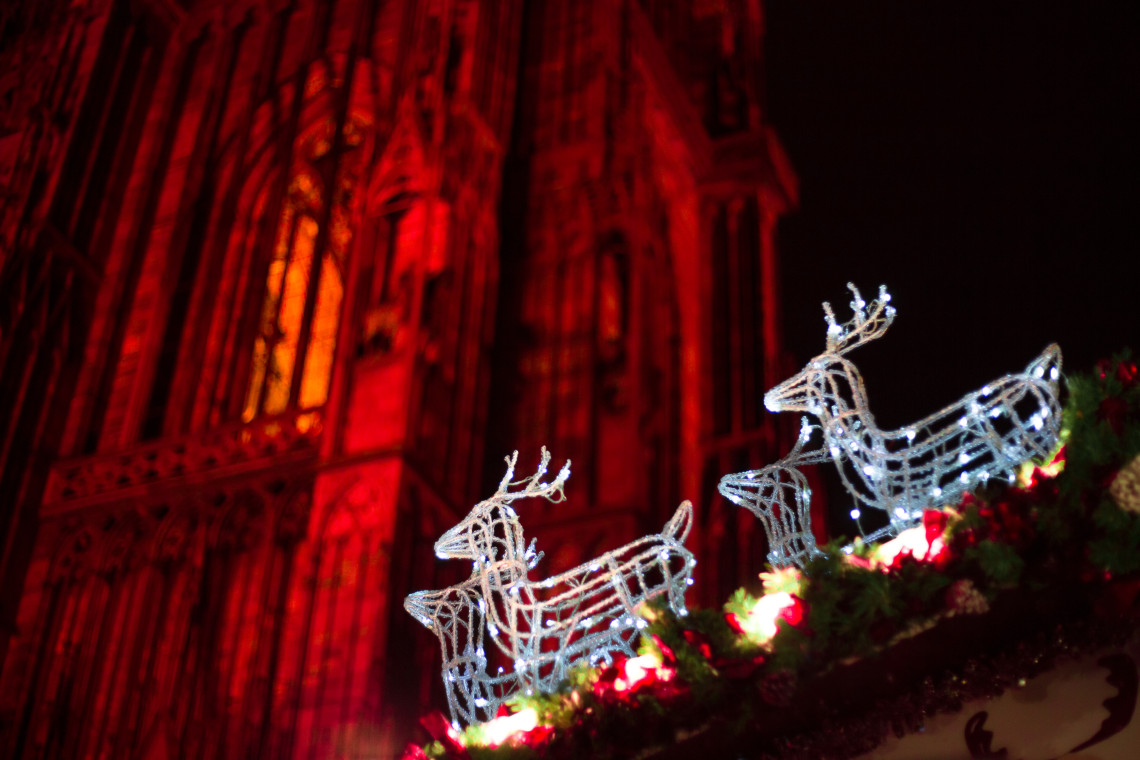
The 11 Strasbourg Christmas markets, explained
Strasbourg's market is not a single square — it spreads across 11 distinct locations on and around the Grande Île (the central island of the historic city, UNESCO World Heritage). The total walking circuit between all 11 is about 2 km, so you can do it across two days at a comfortable pace.
1. Place Broglie: the Christkindelsmärik (the original)
The oldest of the 11, originally established in 1570 as a Protestant alternative to the Catholic feast of Saint Nicholas. The name "Christkindelsmärik" (Market of the Christ Child) gave its name to the entire Strasbourg tradition. Set on the broad rectangular Place Broglie in front of the Hôtel de Ville, with traditional Alsatian crafts, decorations, and food. The most historically important of the markets.
Best for: Traditional Alsatian crafts, the historical heart of the Strasbourg market tradition.
2. Place de la Cathédrale: the cathedral market
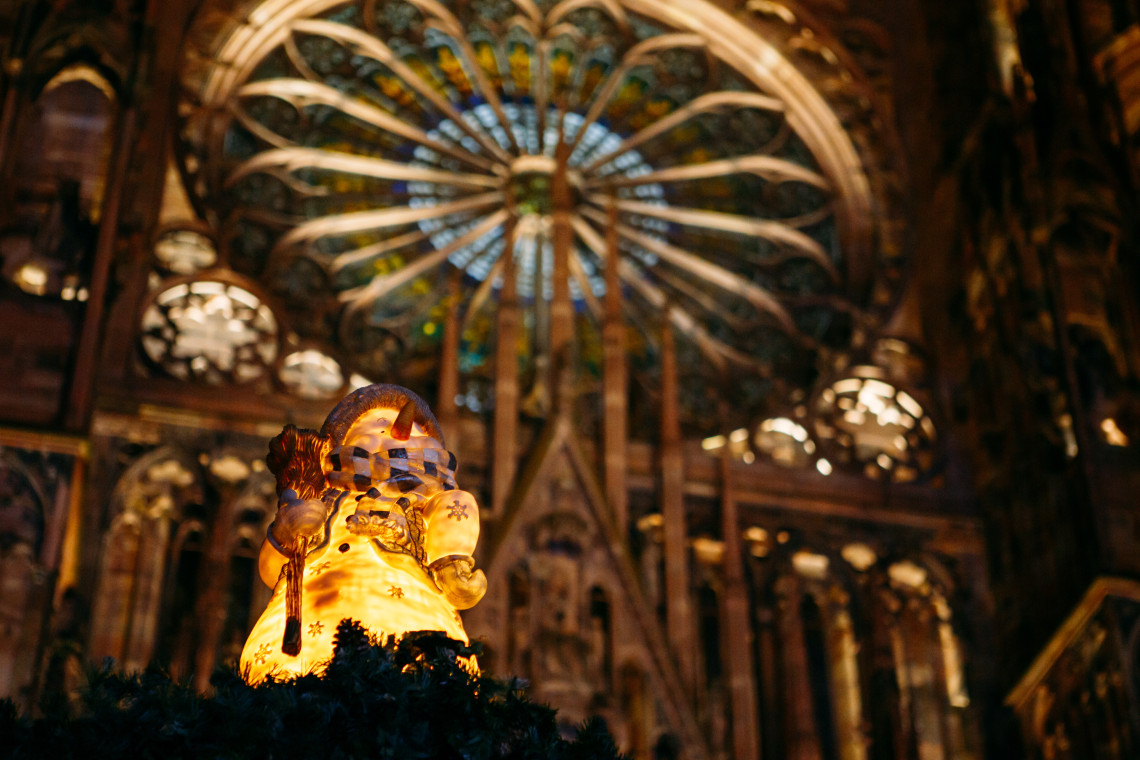
Set directly under the soaring spire of the Cathédrale Notre-Dame de Strasbourg, the tallest building in the world from 1647 to 1874 and still one of Europe's great gothic cathedrals. The market chalets here cluster against the carved sandstone facade. The cathedral's famous astronomical clock (with the noon performance) is steps away. The light show projected onto the cathedral facade each evening from late November is among the most photographed in Europe.
Best for: The iconic Strasbourg market photos, the cathedral light show after dark.
3. Place Kléber: the Great Christmas Tree
The largest square in central Strasbourg and home each year to Le Grand Sapin — Strasbourg's Great Christmas Tree. Typically a 30 to 32-meter Norway spruce from the Vosges mountains, decorated with thousands of lights and ornaments. The square also hosts a "Sharing Village" market focused on charitable causes and local artisans.
Best for: The Christmas tree itself (the largest natural Christmas tree in Europe most years), photographs, the most cinematic single Strasbourg moment.
4. Place du Château: the medieval setting
In front of the Palais Rohan (the former bishop's palace, now home to three museums), with the cathedral spire towering above. A smaller, more atmospheric market with high-quality crafts and decorations.
Best for: Photographers, calmer evening visits.
5. Place du Temple Neuf: the Alsatian artisans
Specialized in Alsatian regional craft and food. Slightly off the main tourist circuit, which makes it more local in feel. The Église du Temple Neuf provides the backdrop.
Best for: Authentic Alsatian crafts, the most relaxed atmosphere among the major markets.
6. Place Benjamin Zix: the Petite France market
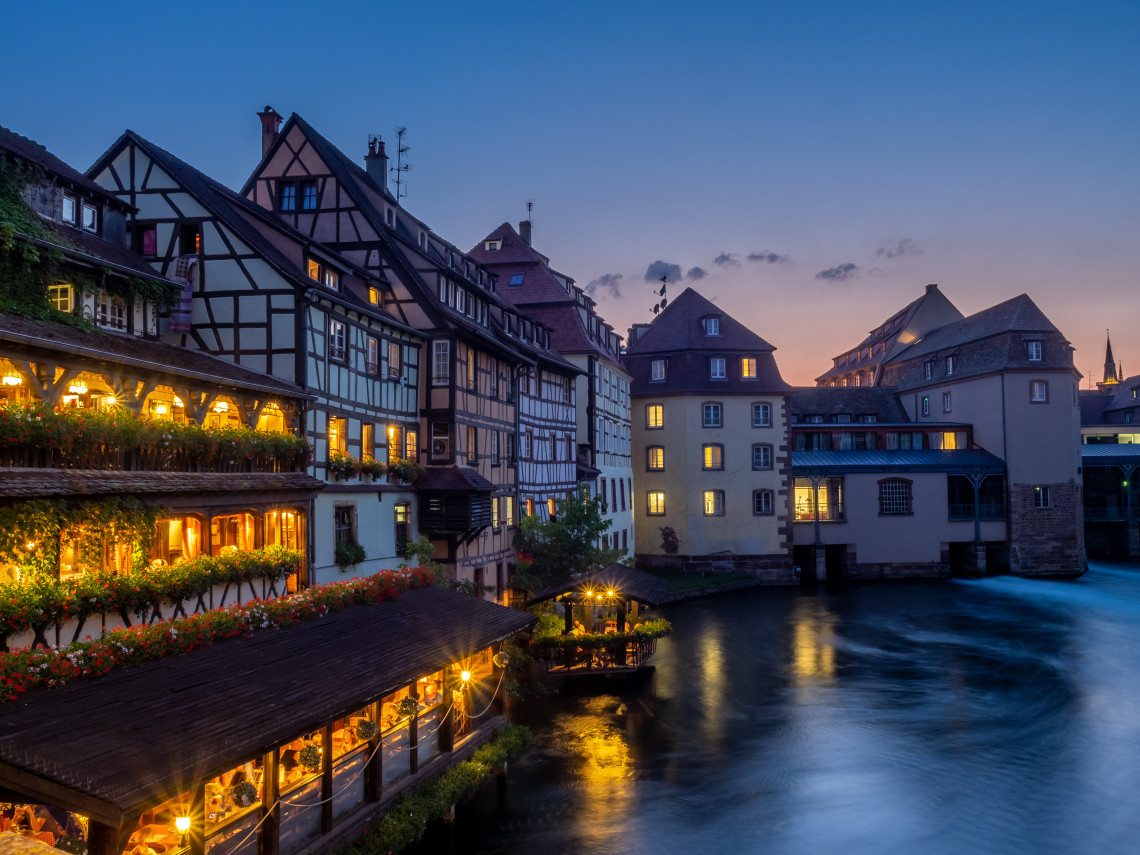
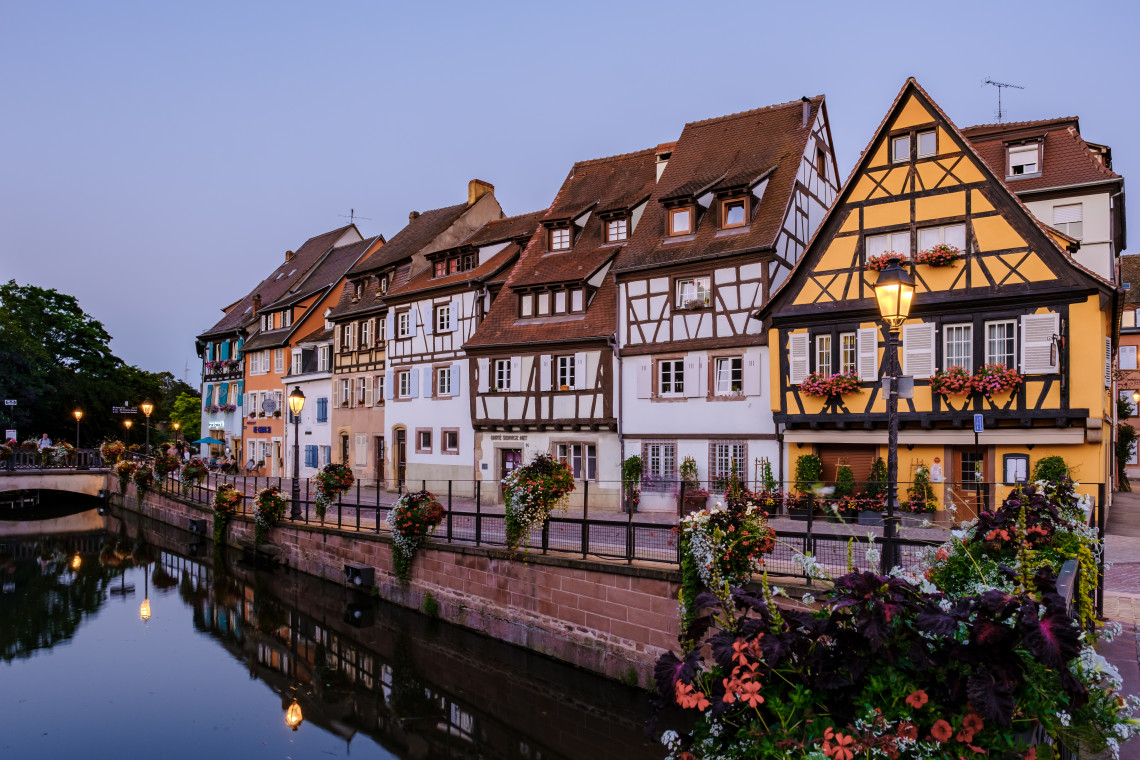
In the heart of the Petite France district, with its half-timbered houses leaning over the canals. The setting alone makes this one of the most beautiful, especially in the evening when the lights reflect on the water.
Best for: Photography, romantic evening walks, the iconic Strasbourg canal scene.
7. Place du Marché aux Poissons: the riverside
A small market by the Fish Market square along the Ill river, with chalets selling regional delicacies. Connects naturally to Petite France just to the west.
Best for: Quick stop while walking between Petite France and the cathedral.
8. Place Gutenberg: the international market
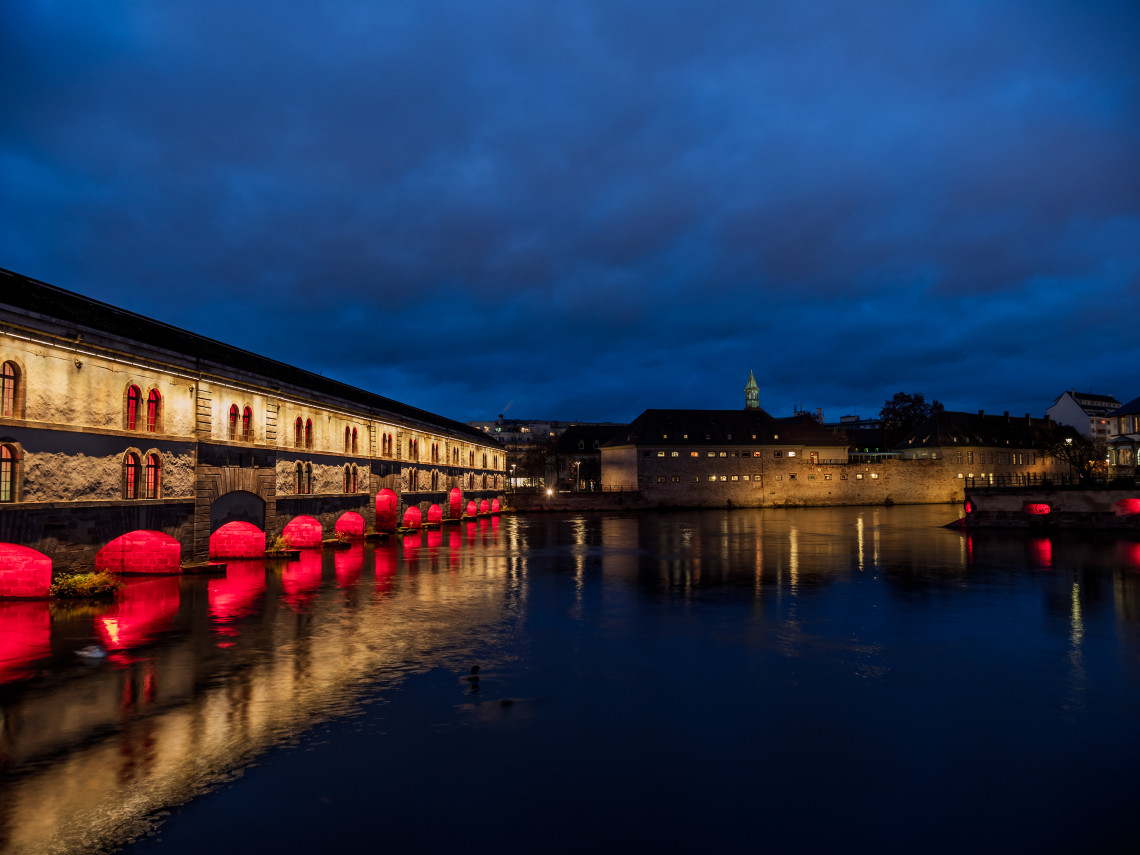
Around the statue of Johannes Gutenberg (who developed printing in Strasbourg). Each year, Strasbourg invites a guest country to feature on this square — past guests have included Iceland, Portugal, Hungary, Croatia, Slovakia, and others. The chalets here serve food and crafts from the guest country.
Best for: International food and crafts, a change of pace from purely Alsatian fare.
9. Place Saint-Thomas: the local crafts market
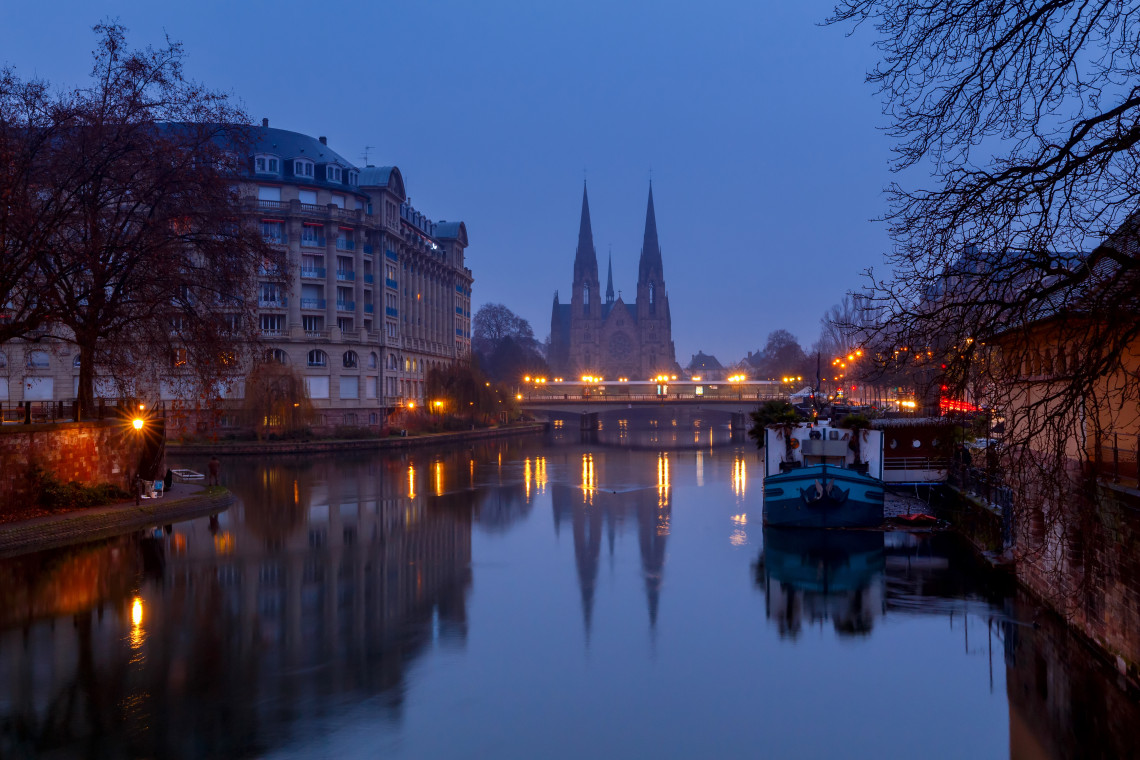
Near the gothic Église Saint-Thomas (the "Protestant Cathedral" of Strasbourg, with Mozart's father once an organist there). Smaller, focused on Alsatian artisanal products.
Best for: Hand-made local crafts, calm.
10. Place du Corbeau: the small one
A small additional market by the historic Pont du Corbeau bridge, where the medieval bridge crosses the Ill. Pleasant to walk through between other markets.
Best for: Atmospheric walking, photo opportunities.
11. Place du Quartier Blanc / Place de l'Étoile: the children's market
The family-focused market with a small skating rink, carousel, attractions for children, and chalets selling toys and sweets. The most kid-friendly of the 11.
Best for: Families with children, the ice skating, the gentler atmosphere.
Must-try foods at Strasbourg Christmas Market
The Alsatian Christmas table is one of the richest in France. German-influenced but distinctly its own:
- Vin chaud (mulled wine) — Alsace produces excellent wine, so the local mulled wine is meaningfully better than the average European version. Try Riesling-based for a drier style or Pinot Noir for richer.
- Bredele — small spiced cookies in 50+ traditional varieties. The Alsatian Christmas cookie tradition is one of the deepest in Europe. Try anise bredele, butter bredele, schwowebredele (almond), chocolate-coated.
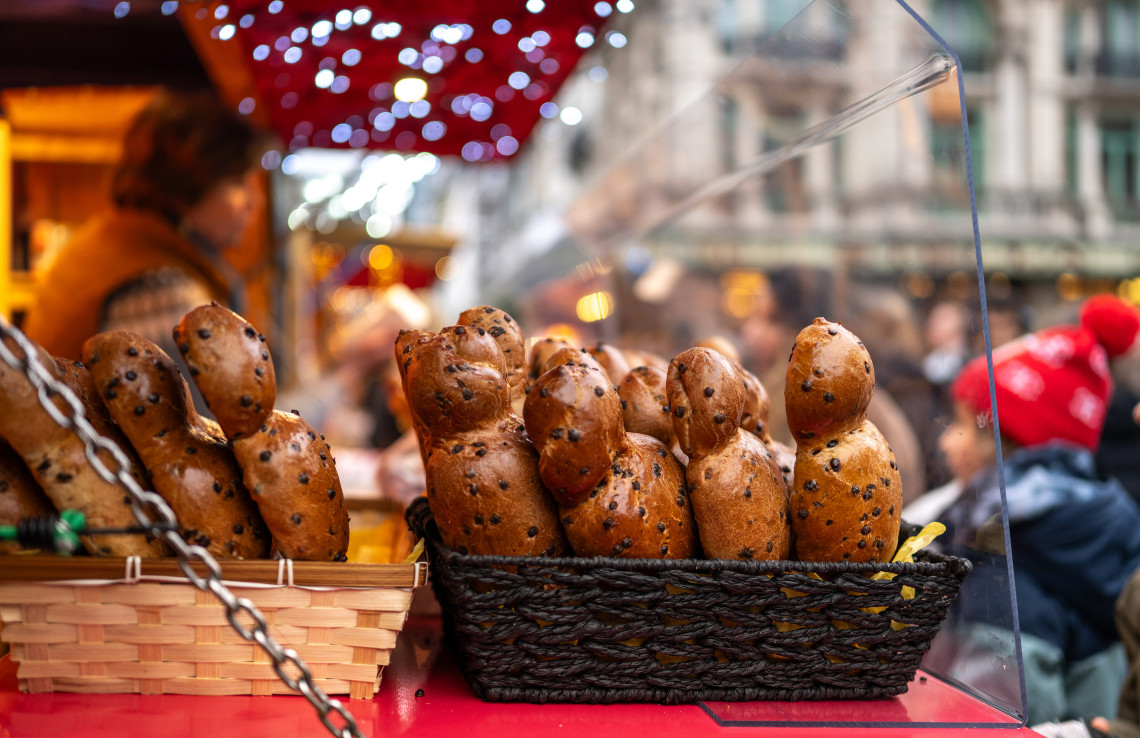
- Mannele — small brioche figures in the shape of a person, traditionally eaten around St. Nicholas Day (December 6).
- Tarte flambée (flammekueche) — thin Alsatian flatbread with cream, onions, and bacon. Served piping hot directly from wood-fired ovens at several chalets.
- Choucroute garnie — Alsatian sauerkraut with sausages, pork, and potatoes. The winter standard.
- Bretzels — Alsatian pretzels, larger and softer than their U.S. cousins.
- Pain d'épices — Alsatian gingerbread, often filled with marmalade.
- Christstollen — German-style fruit bread, more common at the Strasbourg market than at most French markets.
- Spätzle — Alsatian egg noodles, often served with cheese (kaesspaetzle) or with meat.
- Munster cheese — strong washed-rind cheese from the Vosges mountains, served warm at some chalets.
How to get to Strasbourg
By train from Paris: Direct TGV from Paris Gare de l'Est to Strasbourg in 1h45m. Trains run roughly every hour. Book on SNCF Connect 60+ days in advance for the lowest fares (40-90 euros booked early, 130-180 walk-up).
By train from Germany: Direct ICE and TGV trains from Frankfurt (1h45m), Munich (4h), Stuttgart (1h20m), Karlsruhe (40 min).
By car: Strasbourg is on the A4 autoroute. From Paris, about 4h30m drive (490 km). Park outside the old town and walk in (the Grande Île is largely pedestrianized).
By air: Strasbourg-Entzheim Airport has limited international service. Most travelers fly to Frankfurt (2h drive or 1h45m by train), Basel (1h20m), or Paris CDG (TGV directly from CDG to Strasbourg in 2h10m).
Where to stay in Strasbourg
Hotels in the Grande Île book out 6 to 9 months in advance for the Christmas market season, and December prices peak. Three recommended approaches:
Inside the Grande Île (best experience): Hôtel Cour du Corbeau (16th-century house, walking distance to all markets), Régent Petite France (historic mill on the Ill river), Le Bouclier d'Or, Hôtel Hannong. Walk to all 11 markets in 5 to 15 minutes.
Just outside the old town (better value): Maison Rouge, Hotel D Strasbourg, Mercure Strasbourg Centre Petite France, Hilton Strasbourg. 10 to 20 minute walk to the main markets, often 30 to 40 percent cheaper.
In Colmar (combine the two): Many travelers base in Colmar (30 minutes south by TER train) and day-trip into Strasbourg. Colmar hotels are typically more affordable and the village atmosphere offers a counterpoint.
Pricing reality: Expect 220 to 450 euros per night for a mid-range Grande Île hotel in December, rising to 350 to 700+ euros in the week between Christmas and New Year. Book 9 months ahead is the most reliable way to land good hotels at the lower end.
Beyond the markets: things to do in Strasbourg
The Christmas market is the headline, but Strasbourg itself rewards a longer stay.
- Climb the cathedral spire for one of the most spectacular views in France. 332 steps to the platform.
- See the astronomical clock at the cathedral perform at 12:30pm daily.
- Walk Petite France at dawn and after dinner for canal photos without crowds.
- Boat tour of the Ill canals — operates through December (covered, heated boats).
- Palais Rohan — three museums in one (Decorative Arts, Fine Arts, Archaeology).
- Musée d'Art Moderne et Contemporain — modern and contemporary art collection.
- European Parliament — guided visits available (book ahead).
- Christmas concerts — Strasbourg cathedral and the conservatory host nightly Christmas concerts through December.
Day trips from Strasbourg
Strasbourg is the perfect base for the Alsace Wine Route. Top day trips:
Colmar (30 minutes south by TER)
The fairy-tale Alsatian counterpart to Strasbourg. Six Christmas markets in the old town, including the famous canal-side market in Petite Venise. Most travelers split their Alsace Christmas trip between the two cities.
Full guide: Colmar Christmas Market 2026.
Riquewihr and Eguisheim (40-50 minutes by car)
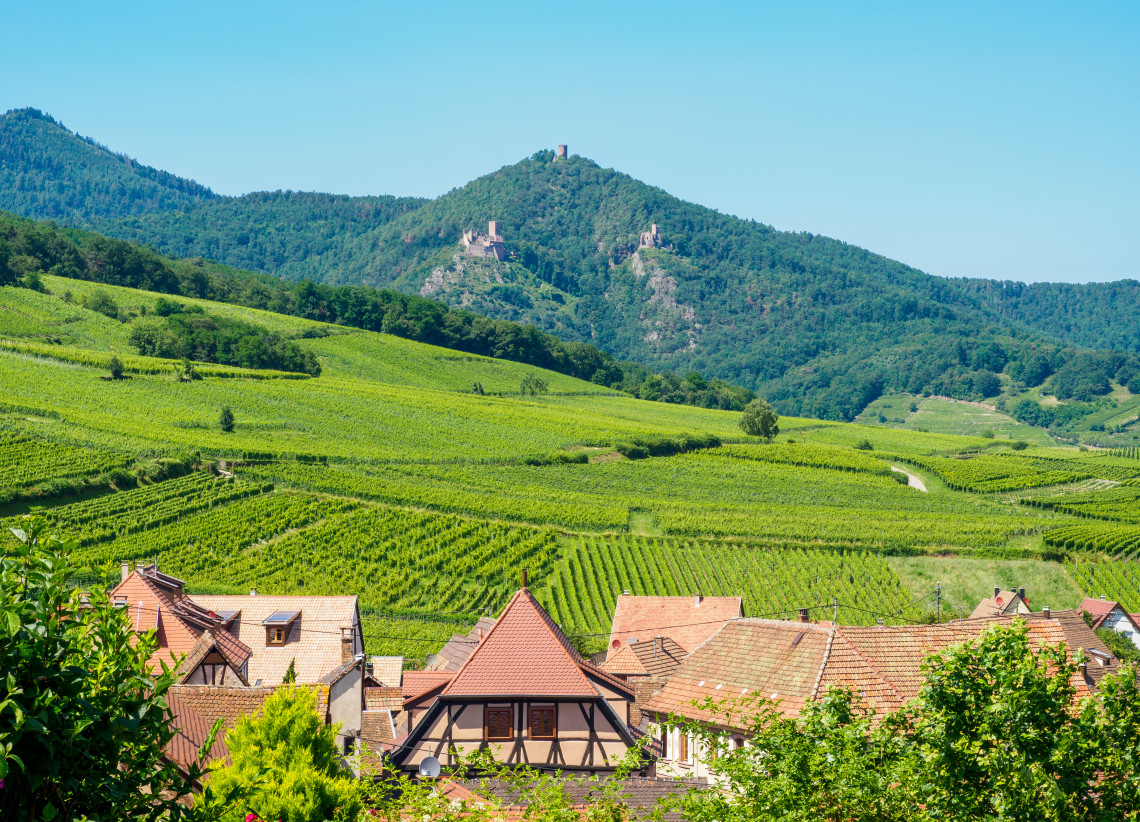
Two of France's most beautiful villages, both with their own smaller Christmas markets. Riquewihr is preserved inside its 13th-century walls. Eguisheim is the postcard-perfect circular wine village. Combine both in one day if you have a rental car.
Full guide: Hidden France: 10 Small Towns Most Tourists Miss.
Kaysersberg (45 minutes by car)
Voted "Favorite Village of the French" in 2017. The Christmas market here is smaller and among the most authentic in Alsace. Less touristy than Riquewihr.
Heidelberg, Germany (1h30m by train)
Across the German border, with its own famous Christmas market in front of the gothic Heiliggeistkirche. The Heidelberg Castle illuminated above the old town is an iconic German Christmas image.
Baden-Baden, Germany (45 minutes by car)
The Belle Époque German spa town with a Christmas market in front of the famous Casino and Kurhaus. Combine with a thermal bath visit (Friedrichsbad or Caracalla Therme).
The honest verdict: Most travelers do both. The most-built Alsace Christmas itinerary: 2 to 3 nights Strasbourg + 2 nights Colmar, with 1 to 2 day trips to wine route villages.
If you must choose only one: Strasbourg for the grand-scale historical experience, Colmar for the picture-perfect village atmosphere.
What to wear and pack
Alsace in December is cold, often wet, and occasionally snowy. Average temperatures range from -2°C / 28°F at night to 6°C / 43°F during the day. Pack:
- Warm waterproof coat — essential
- Hat, gloves, scarf
- Waterproof boots — cobbled streets, occasional snow
- Layers — markets are outdoor, restaurants are heated
- Power adapter for European plugs
- Cash for smaller stalls (most accept cards, but not all)
Honest tradeoffs: what to expect
The pros: Genuinely lives up to its "Capital of Christmas" reputation. The historical depth (since 1570) is real. The cathedral, the Petite France district, and the Great Tree at Place Kléber are among the most photogenic Christmas scenes in Europe. Excellent food and wine. Easy direct TGV from Paris.
The cons: Strasbourg gets very crowded on December weekends, especially after dark. The Grande Île can feel difficult to walk through on a Saturday evening between 5pm and 8pm. Hotel prices peak in December, especially the week between Christmas and New Year. Some travelers expect Strasbourg to be the "small village" version of an Alsace Christmas market and find the urban scale unexpected (it is the larger, grander experience — Colmar is the smaller village option).
To get the best version: Visit on weekdays in late November or the first two weeks of December. Arrive when markets open in the morning, then break for lunch indoors, then return for the late afternoon and evening (which is when the lights and atmosphere peak). Book a hotel inside or close to the Grande Île. Plan 1 or 2 day trips to nearby villages or to Colmar.
Frequently asked questions
When does Strasbourg Christmas Market start in 2026? The 2026 edition runs from Friday, November 27 to Sunday, December 27, 2026. The market opens on the fourth Friday of November each year, a tradition followed since 1570.
How many Christmas markets are in Strasbourg? Eleven distinct markets across the Grande Île: Place Broglie (the original Christkindelsmärik), Place de la Cathédrale, Place Kléber (with the Great Christmas Tree), Place du Château, Place du Temple Neuf, Place Benjamin Zix (Petite France), Place du Marché aux Poissons, Place Gutenberg (international guest country), Place Saint-Thomas, Place du Corbeau, and Place du Quartier Blanc (children's market).
How many days do you need in Strasbourg? 2 nights minimum to walk all 11 markets and see the cathedral. 3 nights is the sweet spot, with one day for a day trip to Colmar or the Alsace wine route.
Is Strasbourg or Colmar Christmas Market better? Different experiences. Strasbourg offers the grand-scale, historical, multi-market experience (since 1570) with the Great Christmas Tree as its centerpiece. Colmar offers the picture-perfect Alsatian village atmosphere with canals and timber-framed houses. Most travelers do both in a single 4 to 5 night Alsace trip.
How do I get to Strasbourg from Paris? Direct TGV from Paris Gare de l'Est to Strasbourg in 1h45m. Trains run roughly hourly. Book on SNCF Connect 60+ days in advance for the lowest fares.
Where should I stay for Strasbourg Christmas Market? Inside the Grande Île (best location, walking distance to all 11 markets) at Hôtel Cour du Corbeau, Régent Petite France, or Le Bouclier d'Or. Outside the Grande Île (better value) at Maison Rouge or Hotel D Strasbourg. Or in nearby Colmar to combine the two cities.
Is Strasbourg Christmas Market crowded? Yes, especially on December weekends after dark and during the week of December 18-24. Late November and the first two weeks of December are meaningfully less crowded, especially on weekdays.
Can I visit Strasbourg and Colmar Christmas Markets together? Yes — strongly recommended. The two are 30 minutes apart by TER train. The most-built Alsace Christmas itinerary: 2 to 3 nights Strasbourg + 2 nights Colmar, with the wine route villages as day trips.
Does it snow in Strasbourg at Christmas? Occasionally but not reliably. Average December temperatures are -2°C / 28°F to 6°C / 43°F. Light snow occurs in about 1 in 3 years. The markets operate regardless of weather.
Is Strasbourg Christmas Market family-friendly? Yes. The Place du Quartier Blanc market is the dedicated children's market with a small skating rink, carousel, and toy stalls. Most other markets are family-friendly during the day, with quieter atmospheres in late morning and early afternoon.
What is the famous "Great Christmas Tree" in Strasbourg? Le Grand Sapin is Strasbourg's official Christmas tree at Place Kléber, typically a 30 to 32-meter Norway spruce from the Vosges mountains. Decorated with thousands of lights and ornaments, it is among the largest natural Christmas trees in Europe most years.
Are credit cards accepted at Strasbourg Christmas Market? Most chalets accept contactless cards. A small number of smaller stalls remain cash-only. Bring 50 to 100 euros in cash for the trip, supplement with cards.
Strasbourg, Colmar, and the Alsace wine route.
Our France travel experts route the complete Alsace Christmas trip, from Paris and back.
See France Packages Tailor-Made Trip

.jpg)