by Yes Getaways Team
July 23, 2026 • 10 min read
Every year, tens of thousands of North American travelers ask the same question before booking a flight: are European Christmas markets actually worth flying across the Atlantic for, or is it a European PR exercise inflated by Instagram?
The honest answer is not a yes or no. It's a "for whom, and how." Some travelers come home describing the trip as one of the best they've ever taken. Others come home cold, tired, and unsure what the fuss was about. Which of those you become depends on four specific factors, which we walk through below.
European Christmas markets are worth it for the right traveler in the right city in the right weather with the right expectations. Get one of those wrong and you get the "I don't understand what people rave about" trip.
The short answer
Yes, if:
- You love architecture and setting (medieval towns, cathedrals, palace courtyards)
- You appreciate craft (traditional ornaments, artisan food, regional specialties)
- You can handle real cold (regularly below freezing)
- You go to the right city (Nuremberg, Strasbourg, Vienna, Colmar, Prague, Dresden, not a random smaller one)
- You visit at the right time (weekdays in early to mid December)
- You base the trip around at least one non-market activity (concerts, museums, thermal baths, wine tasting)
The four factors that decide whether it's worth it
Factor 1: Which city you pick
Not all European Christmas markets are created equal. The tier-1 cities (Nuremberg, Strasbourg, Vienna, Colmar, Prague, Dresden, Cologne, Munich) genuinely justify the transatlantic flight. Smaller cities, while sometimes beautiful, often don't, because you can find comparable "wooden chalets and mulled wine" markets in Chicago, Toronto, or Christkindlmarkt Manhattan.
What makes tier-1 cities worth it:
- Historical depth. Nuremberg's Christkindlesmarkt (since 1628), Strasbourg's Christkindelsmärik (since 1570), Dresden's Striezelmarkt (since 1434). These markets are not modern recreations. The chalets go up on the same square where they have gone up every December for 400 to 600 years.
- Architectural setting. The market is set against a cathedral, a palace, or a medieval walled town. The setting is 500 years older than the chalets. This can't be replicated.
- Food specificity. Nuremberg Lebkuchen, Alsatian bredele, Dresden Stollen, regional specialties protected by geographical indication. You can only get the real thing in the place.
- Scale. Nuremberg has 180+ chalets. Vienna runs 20+ markets across the city. Cologne has 7 markets in walking distance. Berlin has 100+.
What underwhelms: small-city markets in second-tier destinations, mass-market ornaments made in China, generic sausage-and-mulled-wine offerings.
Factor 2: The weather
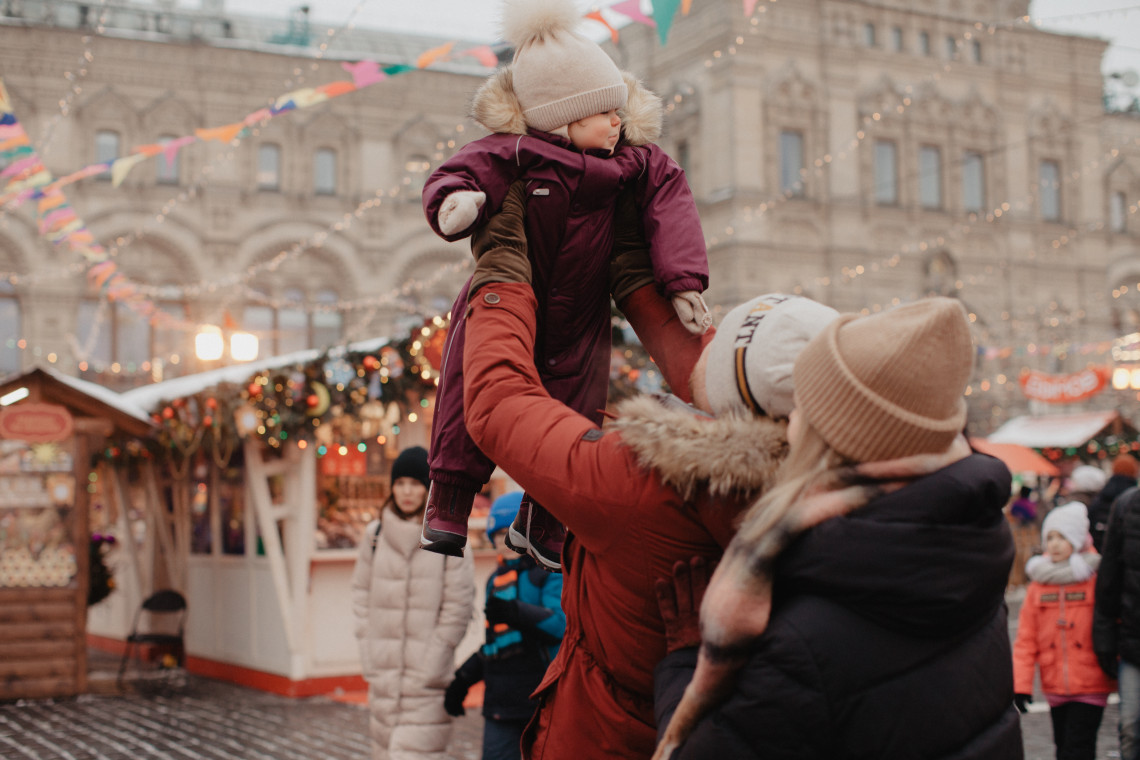
Europe in December is cold. This is the single biggest factor that determines whether travelers come home saying "worth it" or "regrettable."
Typical December temperatures:
- Alsace (Strasbourg, Colmar): -2°C to 6°C / 28°F to 43°F
- Munich, Nuremberg: -5°C to 5°C / 23°F to 41°F
- Vienna: -2°C to 5°C / 28°F to 41°F
- Prague: -3°C to 4°C / 27°F to 39°F
- Berlin, Cologne: 0°C to 6°C / 32°F to 43°F
- Copenhagen: -1°C to 5°C / 30°F to 41°F
- Tallinn: -8°C to -1°C / 18°F to 30°F
Snow is occasional (1 in 3 winters at most western markets), reliable at Tallinn and Alpine cities, rare at coastal Copenhagen.
The honest question to ask yourself: are you comfortable spending 4 to 6 hours a day outdoors at 0°C / 32°F, in mild snow or rain, walking on cobblestones? If yes, Christmas markets deliver. If no, you'll be miserable regardless of how beautiful the market is.
Factor 3: What you expect the market to deliver
The most common regret we hear from travelers who came home underwhelmed: they expected the market itself to be the destination. It isn't. The market is the atmosphere; the trip is the city, the food, the concerts, the wine, the walk between stalls.
Travelers who come home glowing describe:
- The Strasbourg cathedral light show at 6pm
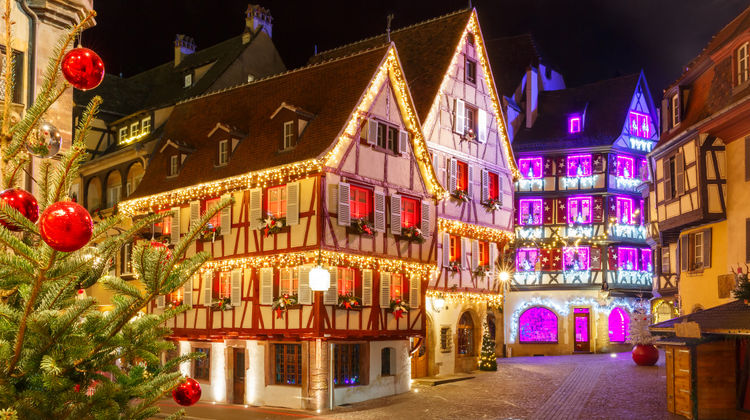
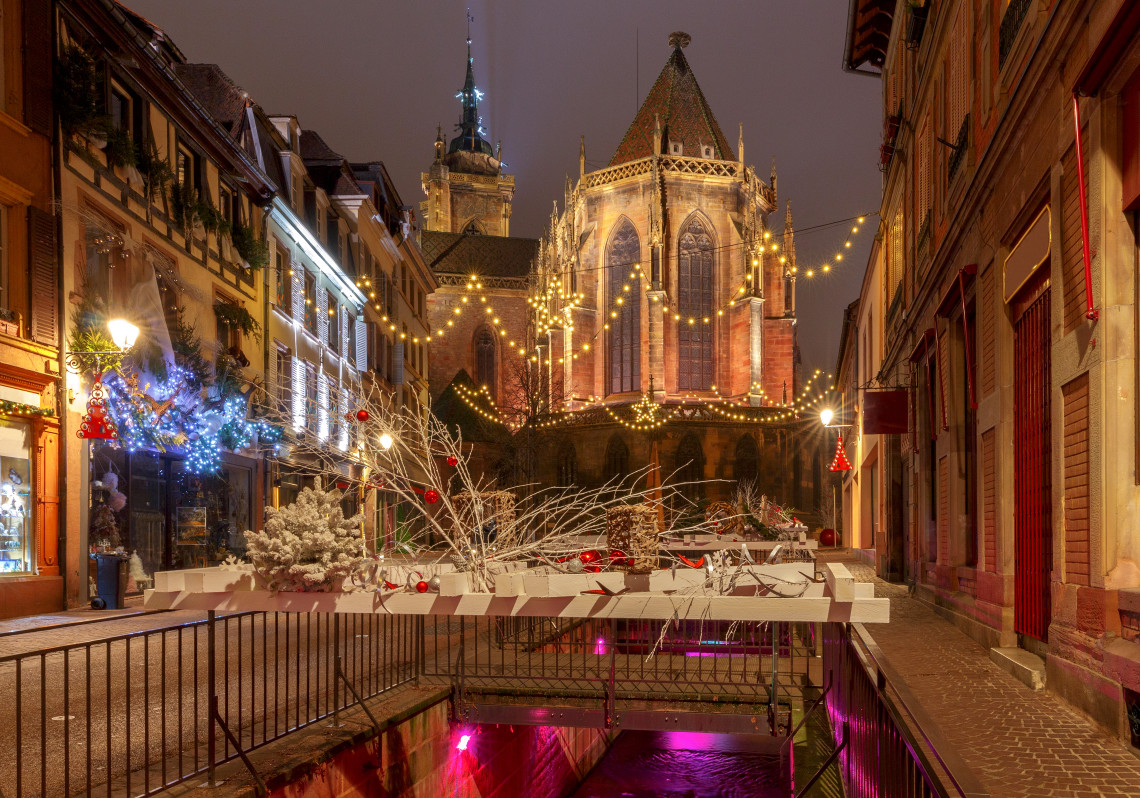
- Walking Colmar's Petite Venise at dawn with no crowds
- The thermal bath in Budapest after a day at Vörösmarty
- Christmas Vespers at Vienna's Karlskirche
- The Nuremberg Christkindl opening ceremony
- Standing under Cologne Cathedral at dusk with a cup of Glühwein
- The Alsace Wine Route drive in fog with mulled wine at each village
The market itself is the third best part. The setting is the first. The food is the second. The market is the reason you noticed the city in the first place.
Factor 4: When and how long you go
The wrong timing: weekend in mid-to-late December with a 3-night trip. Every top market is at peak crowd, hotel prices are peak, weather is coldest, and 3 nights isn't enough to justify the transatlantic flight.
The right timing: weekday arrival, 5 to 7 nights total, first two weeks of December. Meaningfully less crowded, hotel prices 20-40% lower, weather still cold but you have time to adjust.
The absolute minimum for a Christmas market trip from North America: 5 nights. Less than that and you spend as much time in the air and on airport buses as at the markets.
The sweet spot: 7 to 10 nights combining 2 to 3 cities.
How to increase your "worth it" odds
Practical tips for maximizing the trip's success rate:
1. Pick the right cities. For your first Christmas market trip, do the tier-1 combination: Strasbourg plus Colmar, or Nuremberg plus Munich, or Vienna plus Salzburg. Not one random small city.
2. Go for at least 5 nights, ideally 7. Anything less and the flight cost outweighs the experience.
3. Book by July for December. The top hotels sell out 6 to 9 months ahead.
4. Visit early to mid December, weekdays. Cheaper, less crowded, still fully atmospheric.
5. Add at least one non-market activity. Christmas concert (Vienna, Salzburg, Strasbourg). Thermal bath (Budapest). Wine tasting (Alsace, Champagne). Cathedral tour (Cologne, Strasbourg, Prague).
6. Prepare for the cold. Warm waterproof coat, layers, waterproof boots, hat, gloves.
7. Don't over-schedule. Christmas markets reward slow travel. Two markets a day is the max.
8. Try the local specialty. Nuremberg Lebkuchen, Dresden Stollen, Alsatian bredele, Hungarian kürtőskalács, Czech svařené víno. The regional food is the real memory.
Frequently asked questions
Are Christmas markets in Europe overrated? No, but they're often mis-visited. Travelers who go to the right city, in the right week, with the right expectations report exceptional trips. Travelers who go to a random smaller market on a peak December weekend for 3 nights often come home underwhelmed.
Which European Christmas market is the best? No single answer. Nuremberg for tradition, Strasbourg for scale, Colmar for atmosphere, Vienna for imperial setting, Prague for medieval magic, Dresden for depth of history. Most travelers combine 2 to 3.
Are Christmas markets worth flying transatlantic for? For most travelers who go with the right expectations, yes. For a 5+ night trip covering 2 tier-1 cities in early-to-mid December, on weekdays, with the right cold-weather gear, the trip regularly ends up in travelers' top 3 experiences.
Are Christmas markets crowded? Yes, especially on December weekends after 4pm. Weekdays in late November and the first two weeks of December are meaningfully less crowded. Smaller-city markets (Tallinn, Bratislava, smaller Alsatian villages) are quieter throughout.
Is it too cold to enjoy Christmas markets? For most travelers, no, with the right clothing. Daytime temperatures are typically -2°C to 6°C / 28°F to 43°F. Layer properly and cold becomes atmosphere, not a problem.
Are there Christmas markets that operate in warmer weather? Not really. European Christmas markets need cold to create the atmosphere. The Canary Islands, Portugal, and Cyprus don't have the tradition. The cold and the market are inseparable.
Which Christmas market has the best food? Alsace for the widest food variety (French plus German influence). Nuremberg for the specificity (Lebkuchen, Rostbratwurst). Budapest for the heaviest, spiciest food (langos, kürtőskalács). Dresden for Stollen.
How much does a Christmas market trip cost? For a 7-night trip covering 2 tier-1 cities, budget 2,500 to 4,500 dollars per person (excluding transatlantic flights). Includes mid-range hotels, food, transport, and activities.
When is the best time to book a Christmas market trip? By July for a December trip. Hotels in Nuremberg, Rothenburg, Colmar, Strasbourg, and Vienna sell out 6-9 months ahead.
Are Christmas markets family-friendly? Very. Most have dedicated children's markets or areas. Copenhagen's Tivoli is the best in Europe for kids. Colmar's Children's Market in Petite Venise has boats and carousels. Vienna's Rathausplatz has ice skating.
Which city has the best Christmas atmosphere? Colmar for the storybook village vibe. Vienna for the imperial-elegance vibe. Nuremberg for the traditional-German vibe. Prague for the medieval-cinematic vibe. All are worth a visit; most travelers pick one primary and combine with a second.
Should I go solo? Not the ideal solo trip. Christmas markets are meant to be shared over mulled wine. Solo travelers report enjoying the trip but describe it as more "beautiful to observe" than "immersive to participate in." Better as a couples or group trip.
Worth it, with the right plan.
Our travel experts have built Christmas market trips for thousands of North Americans. Tell us your preferences and we'll match you to the right cities.
See Christmas Packages Tailor-Made Trip