by Yes Getaways Team
May 26, 2026 • 18 min read
The Dolomites are the most photogenic stretch of the Italian Alps, and they are not the Italy you saw in school textbooks. There is no Colosseum, no gondola, no espresso at a sun bleached piazza. There are jagged limestone cathedrals rising out of green alpine meadows, villages where the menu is half Italian and half Austrian, and a kind of mountain silence you forget exists until you stand inside it.
A UNESCO World Heritage Site since 2009 and one of Europe's most rewarding mountain destinations, the Dolomites (or Dolomiti in Italian) pack 18 peaks above 3,000 meters, 1,200 km of ski slopes, hundreds of hiking trails, and a culture all of their own into one corner of northeastern Italy. This Italian Alps guide walks you through everything a first time visitor needs to know: where they are, how to get there, when to go, the best hiking and skiing, how many days you need, and where to base yourself.
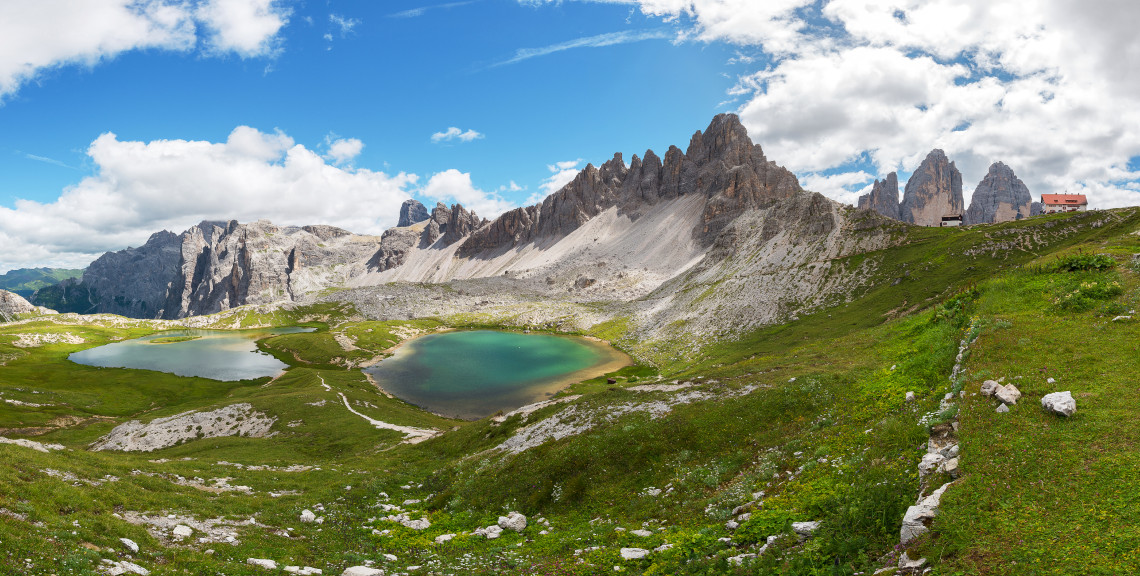
The short answer
The Dolomites sit in northeastern Italy, about 3 hours by car from Venice and 1 hour from Bolzano. The best months to visit are mid June to mid September for hiking (lakes thaw, refugios open, trails fully accessible) and mid December to mid March for skiing. Most visitors want at least 4 to 5 nights to do justice to even one valley, and the strongest first time bases are Val Gardena, Cortina d'Ampezzo, Alta Badia, or Val di Fassa.
Where are the Dolomites
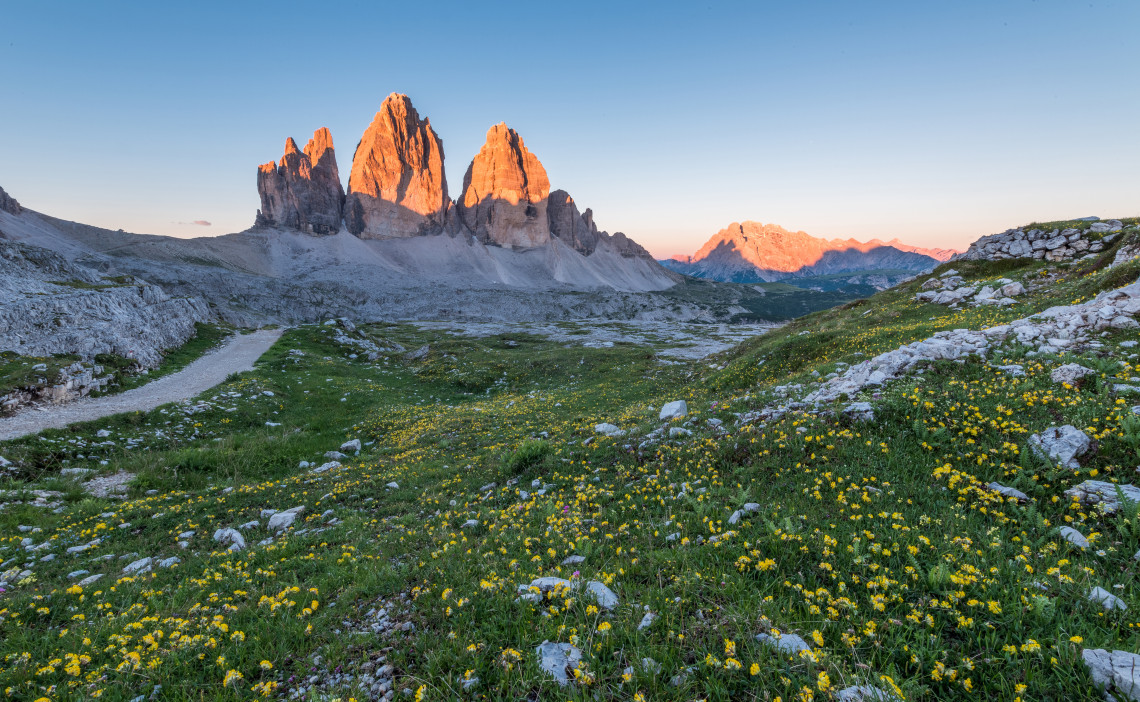
The Dolomites are a mountain range in northeastern Italy, part of the Italian Alps (specifically the Southern Limestone Alps), spread across three regions: Trentino, South Tyrol (Alto Adige), and Belluno. They run roughly between Bolzano in the west and Belluno in the east, covering about 16,000 square kilometers.
The range is named after the French geologist Déodat de Dolomieu, who in the late 18th century identified the unusual carbonate rock (dolomite) that gives the peaks their pale, dramatic appearance. At sunset that rock catches a deep pink glow the South Tyroleans call enrosadira, which alone is reason enough to make the trip.
The culture is as distinctive as the geology. South Tyrol was Austrian until 1919, and the older generation still speaks German as a first language. Menus list canederli (Italian) and knödel (German) for the same bread dumpling. Restaurants serve schlutzkrapfen and strudel alongside risotto and prosecco. The Ladin minority, descended from Roman era populations, still speaks its own language in five Dolomite valleys.
How to get to the Dolomites
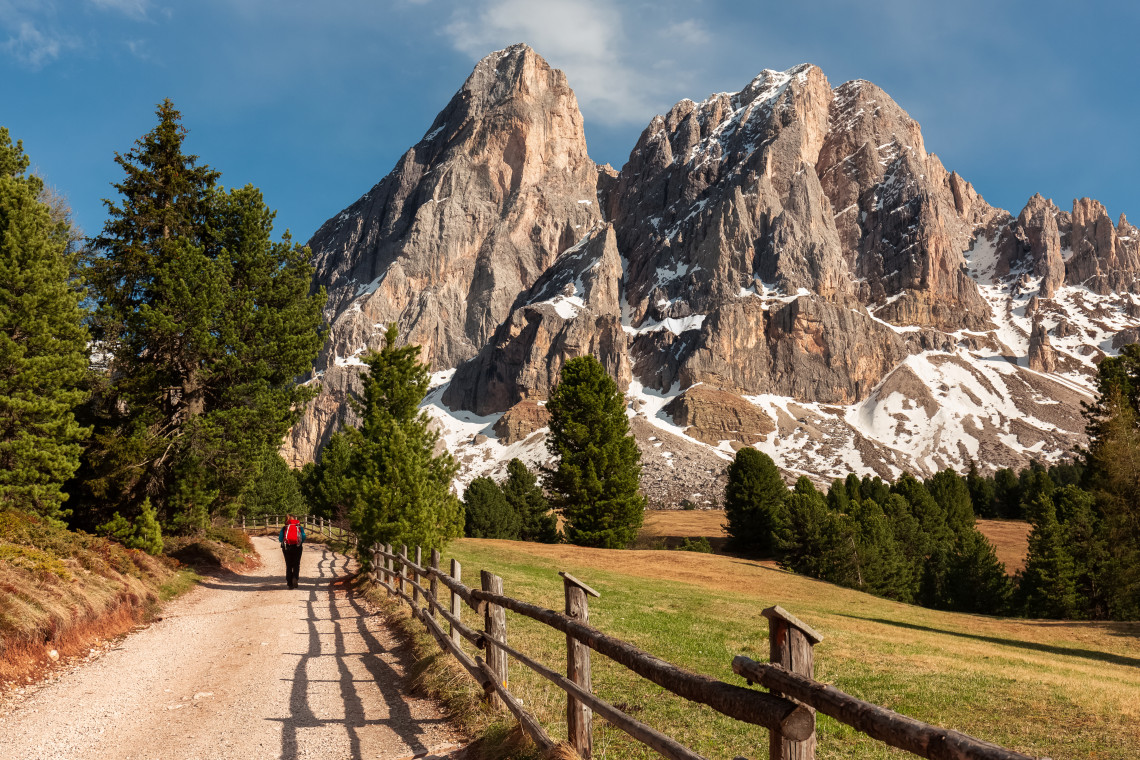
The Dolomites are not in the middle of nowhere, but they are not on the way to anywhere either. Most North American travelers arrive via one of four gateways:
By air: The closest international airports are Venice Marco Polo (2.5 to 3 hours by car to most Dolomite valleys), Treviso (slightly closer), Verona (3 hours), Innsbruck in Austria (1.5 to 2 hours, often the most scenic approach), and Munich (4 hours, but with the most flight options from North America).
By train: The main rail gateways are Bolzano (Bozen) and Trento, both on the Verona to Innsbruck line with frequent high speed connections to Venice, Verona, and Milan. From either station you change to a local bus or a rental car. Calalzo di Cadore is the closest rail station to Cortina d'Ampezzo.
By car: The A22 Brenner Motorway is the main artery, running north to south through the Adige valley from Innsbruck to Verona. From any major Italian city, the drive into the Dolomites is one of the most beautiful in Europe, especially the final stretch climbing from Bolzano up into the valleys.
By transfer: From Venice airport, scheduled shared shuttles run to Cortina d'Ampezzo and the Val Gardena resorts in summer and winter season. For groups of 4+ travelers, a private transfer often costs the same as the shuttle per person and saves 60 to 90 minutes.
If you are flying from the U.S. or Canada, the practical choice is usually fly into Venice or Munich, then rent a car for the rest of the trip. The Dolomites genuinely need a car: villages are connected by winding mountain roads, public transport is limited outside the main valleys, and the most rewarding spots (lakes, viewpoints, smaller villages) are not on bus lines.
When to visit the Dolomites
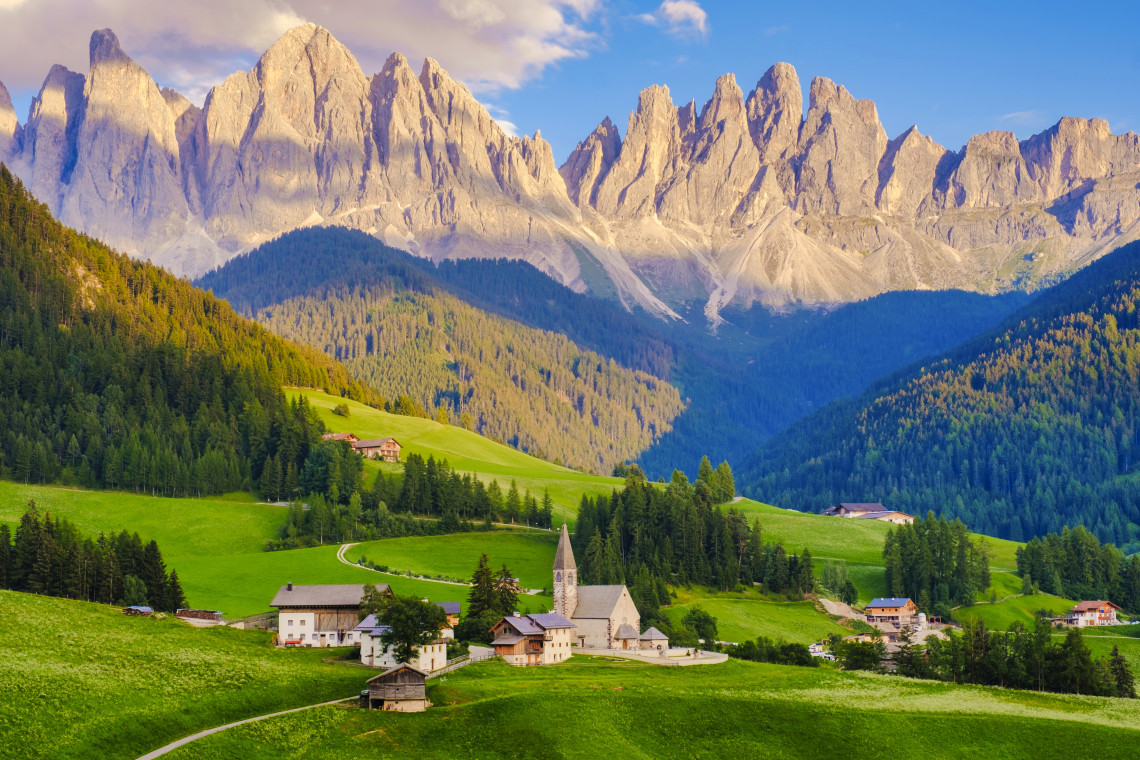
The Dolomites are a year round destination, but the season changes the trip completely.
Mid June to mid September (summer): Hiking, via ferrata, mountain biking, lake swims, refugio dinners under the stars. Lakes thaw fully by mid June. Most refugios (mountain huts that serve food and offer beds) open from late June and close mid to late September. July and August are peak: weather is warm (15 to 25°C / 60 to 77°F at valley level, 5 to 15°C / 41 to 59°F at altitude), trails are busy, refugios book up months ahead. September is often the sweet spot for serious hikers: smaller crowds, golden larch trees, stable weather, but a few high altitude refugios start closing for the season.
Mid December to mid March (winter): World class skiing across the Dolomiti Superski area (12 connected resorts, 1,200+ km of slopes on a single ski pass), plus snowshoeing, ski mountaineering, and the famous Sella Ronda circuit (a full day of skiing that loops around the Sella massif, hut to hut, across four valleys). The Italian school holiday Settimana Bianca in February is the most expensive and crowded week of the season. The two weeks straddling Christmas and New Year are also packed.
Late November to early January (Christmas markets): Bolzano, Bressanone, Merano, and Brunico host some of Europe's most atmospheric Christmas markets, all within an hour of the major Dolomite valleys.
April, May, and October to early December (shoulder seasons): The Dolomites largely close. Hiking trails are muddy or still under snow in spring; ski resorts run a short autumn closure. Most refugios and many hotels close. Unless you have a specific reason (e.g., shoulder season pricing in Bolzano), avoid these months for a Dolomite trip.
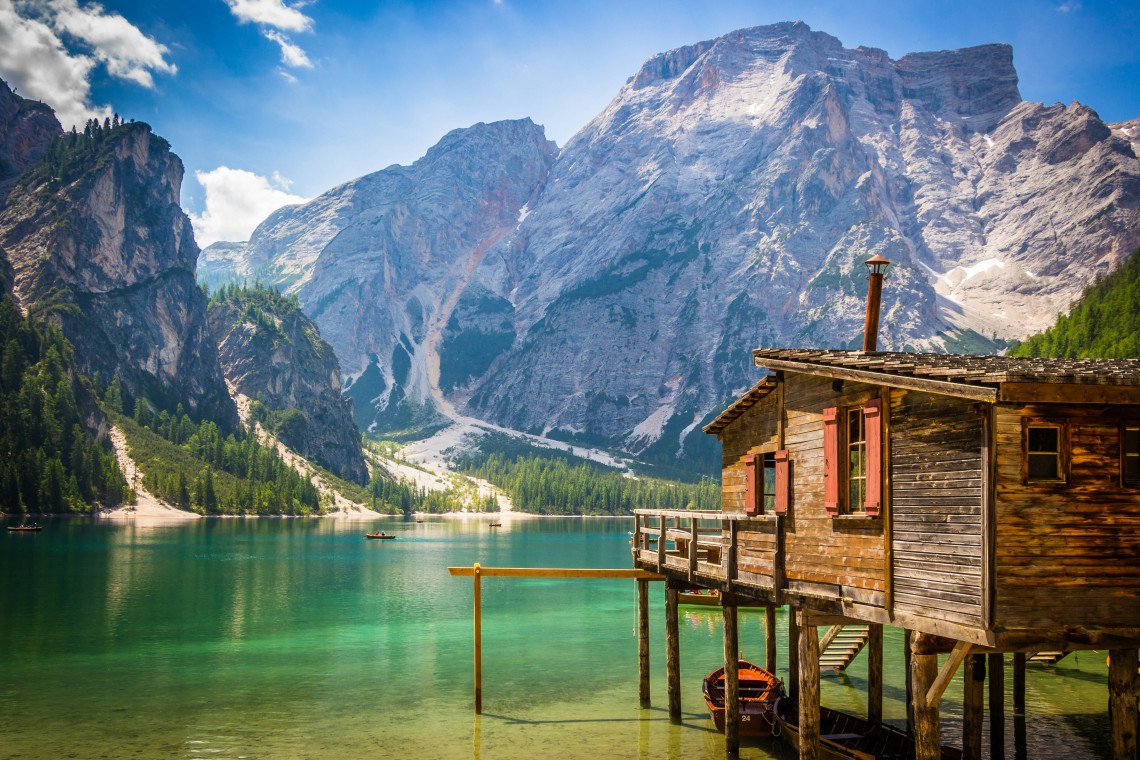
What to do in the Dolomites in summer
The Dolomites are not a place where you sit by the pool. The peaks pull you outside.
Hike the Tre Cime di Lavaredo. The three iconic limestone towers are the single most photographed feature in the Dolomites. The loop trail around them (10 km, 3 to 4 hours, moderate) is one of the most rewarding hikes in Europe and includes Rifugio Locatelli with the postcard view.
Trek the Alta Via 1. The most famous multi day hike in the Italian Alps runs 120 km from Lago di Braies to Belluno, taking 10 to 12 days hut to hut and crossing some of the most photographed terrain in the Dolomites: Lago di Braies, Croda da Lago, the Cinque Torri, the Civetta massif, and the Schiara group. Refugios provide bed and dinner each night (book 6 months ahead for July and August). For travelers without 10 days to spare, sections of 2 to 4 days deliver most of the magic. Popular shorter loops: Lago di Braies to Rifugio Lavarella (3 days, gentle), Cortina to Rifugio Coldai (4 days, moderate). The Alta Via 1 is hiking the Italian Dolomites at its purest form.
Or try the Alta Via 2. Quieter, longer (160 km from Bressanone to Feltre), and more technical than the Alta Via 1, with via ferrata sections that require harness, helmet, and Y lanyard. The hiker's hiker's route.
Take the cable car up Seceda. A 10 minute ride from Ortisei lifts you to one of the most cinematic ridge views in the world: the Seceda ridgeline, the Odle peaks behind, and meadows that drop a kilometer straight down. Plan for a half day at minimum.
Walk to Lago di Braies (Pragser Wildsee). The most photographed alpine lake in Italy, accessible by short walk from the parking lot. Best visited early morning or late afternoon. From July 10 to September 10 the road is closed to private cars during the day; pre book a shuttle.
Try via ferrata. The Dolomites invented the modern via ferrata: fixed cable routes through vertical rock, originally built for World War I infantry. Today they range from beginner friendly (Punta Anna, Ivano Dibona) to extreme (Eterna Brigata Alpina Tridentina). Always go with a certified guide on your first route.
Visit the high refugios for lunch. Mountain huts like Rifugio Lagazuoi, Rifugio Averau, Rifugio Locatelli, Rifugio Mulaz, and Rifugio Fanes serve full meals at 2,000+ meters with views you will not forget. Many are reachable by cable car plus a short walk.
Drive the Grande Strada delle Dolomiti. The 110 km road from Bolzano to Cortina d'Ampezzo via Passo Costalunga, Passo Pordoi, and Passo Falzarego is one of the most beautiful drives on Earth. Allow a full day.
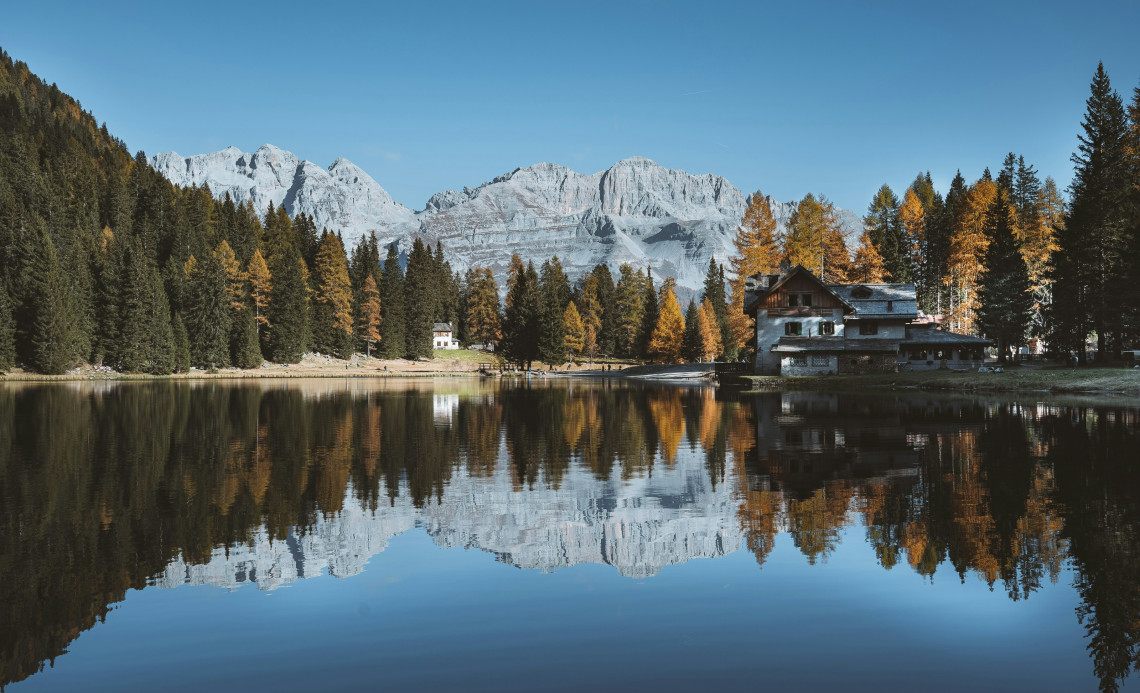
What to do in the Dolomites in winter
Ski the Dolomiti Superski. One ski pass, 12 resorts, 1,200+ km of pistes, 450 lifts. The largest connected ski area in the world. The most popular sub regions are Val Gardena, Alta Badia, Cortina d'Ampezzo, Val di Fassa, and Madonna di Campiglio.
Do the Sella Ronda. A full day of downhill skiing in a loop around the Sella massif, crossing four valleys (Val Gardena, Alta Badia, Val di Fassa, Arabba), accessible on one ski pass. Counter clockwise is more scenic; clockwise has shorter lift queues. Plan for 5 to 6 hours skiing plus lunch.
Snowshoe to a refugio. The hut to hut tradition continues in winter. Guided snowshoe trips up to Rifugio Brogles or Rifugio Genova give you the silence of the high Dolomites without needing to ski.
Watch the 2026 Winter Olympics legacy. Cortina d'Ampezzo co hosted the 2026 Winter Olympics with Milan in February. The Olympic venues (downhill, bobsled, curling, ice hockey) are now part of the public infrastructure and worth seeing.
Try the Sciliar / Alpe di Siusi area for gentler skiing and snowshoeing in Europe's largest high altitude alpine meadow.
Hiking, skiing, refugio dinners, or all three?
Tell us your bucket list and our Europe based team builds the trip around it.
Plan My Dolomites TripHow many days do you need in the Dolomites
The Dolomites do not reward short trips. The minimum that makes sense is 3 nights (gets you one full day of hiking or skiing plus a scenic drive), but you will leave wanting more.
For travelers combining the Dolomites with Venice or Verona, 3 to 4 nights in the Dolomites plus 3 in the city is a strong 7 day pattern.
Where to stay in the Dolomites
The Dolomites have no single capital. Each valley has its own character and you choose by what you want to do.
Val Gardena (Gröden) · Ortisei, Selva, S. Cristina. Strong all rounder for first time visitors: spectacular Seceda views, excellent skiing, good restaurant scene, easy access from Bolzano. Most cosmopolitan of the Dolomite valleys.
Alta Badia · Corvara, La Villa, Badia, San Cassiano. Foodie favorite: more Michelin stars per square kilometer than almost anywhere in Italy. Strong skiing on the Sella Ronda circuit. Slightly upscale.
Cortina d'Ampezzo (Belluno) · The most famous Italian alpine resort, glamorous in a 1960s movie way. Best for travelers who want a real town with shops, restaurants, and nightlife alongside the mountains. Closest to the Tre Cime di Lavaredo.
Val di Fassa · Canazei, Vigo di Fassa, Moena. More casual, more affordable, popular with Italian families. Strong Ladin culture. Central access to the Sella Ronda.
Alpe di Siusi / Castelrotto (Seiser Alm) · Best for hikers who want quiet: Europe's largest high altitude alpine meadow, with traditional South Tyrolean wooden farmhouses and the Sciliar massif as backdrop.
Bolzano · Not in the mountains, but the regional capital and the easiest base for car based exploration. Great for the cultural side of the trip (Ötzi Iceman Museum, Christmas market, food scene) plus day trips into multiple valleys.
For first time visitors with 5 to 7 nights, our most common recommendation is Val Gardena or Alta Badia in summer, Val Gardena or Cortina d'Ampezzo in winter.
The bottom line
The Dolomites are not a postcard. They are a working alpine culture that happens to come with the most dramatic mountains in Europe.
Plan for at least 5 nights, base yourself in one good valley, rent a car, and travel in mid June to mid September or mid December to mid March. Everything else (refugios, lakes, ski passes) follows from those four decisions.
For more on planning your Italian trip, see our Best Time to Visit Italy guide, How Many Days Do You Need in Italy, and Italy by Train vs Car.
Frequently asked questions
Are the Dolomites in Italy or Austria?
Italy. The Dolomites are in northeastern Italy, across the regions of Trentino, South Tyrol (Alto Adige), and Belluno. South Tyrol was Austrian until 1919, which is why German is still widely spoken and the cuisine has strong Austrian influence, but the region has been Italian for over a century.
How do I get to the Dolomites from the U.S.?
Most North American travelers fly into Venice, Verona, or Munich, then rent a car for the 2 to 3 hour drive into the valleys. Bolzano is the closest train station to the western Dolomites; Calalzo di Cadore is closest to Cortina d'Ampezzo. A rental car is strongly recommended once you arrive.
Do I need a car in the Dolomites?
Yes for most travelers. Public buses connect the main villages but service is limited outside high season, and most of the iconic spots (Lago di Braies, Seceda parking, the high passes) are far easier to reach by car. If you base yourself in a single ski resort in winter and never leave, you can manage without one.
Can I do the Dolomites as a day trip from Venice?
Technically yes, but it is not worth it. A full day round trip leaves only 2 to 3 hours actually in the mountains, which is not enough to see the most photographed spots properly. Plan at least 3 nights, ideally 5 to 7.
Are the Dolomites kid friendly?
Very. Many of the cable car accessible hikes are suitable for children, refugios serve hearty family meals, and ski resorts have excellent children's ski schools. South Tyrol consistently ranks as one of the most family friendly travel regions in Europe.
What language is spoken in the Dolomites?
It depends on the valley. In South Tyrol (Val Gardena, Alta Badia, Alpe di Siusi), German is the first language for most residents, with Italian as a second and Ladin as a third in the Ladin valleys. In Trentino and Belluno, Italian dominates. English is widely spoken in tourist facing businesses across all valleys.
What is the best month for hiking in the Dolomites?
Mid July to early September for the best balance of weather, trail conditions, and refugio access. September is the connoisseur's choice: smaller crowds, larches turning golden, stable weather. Avoid June and early July if you want to swim in the alpine lakes (water is still cold) or hike the highest routes (snow may linger).
Is Cortina d'Ampezzo worth it?
Yes, but go with realistic expectations. Cortina is the most famous Italian alpine resort, with strong restaurants, shopping, and Olympic infrastructure (it co hosted the 2026 Winter Olympics with Milan). It is also expensive. If you want a real town with mountain access, Cortina wins. If you want quieter alpine character, Val Gardena or Alta Badia are better.
What should I pack for the Dolomites?
Layers. Even in July the temperature at 2,500 meters can drop near freezing. Bring a waterproof jacket, hiking shoes with grip (not sneakers), a fleece, sunscreen (UV is intense at altitude), and a small backpack with a 1 liter water bottle. For via ferrata, helmet, harness, and Y lanyard are mandatory and rentable.
Is altitude a concern in the Dolomites?
Mild for most travelers. The valley floors sit at 1,200 to 1,500 meters; lifts and hikes routinely reach 2,000 to 3,000 meters. Most people feel mild shortness of breath on steeper climbs but no true altitude sickness. Hydrate, sleep at valley elevation the first night, and pace yourself.
Ready to Plan Your Dolomites Trip?
We do not sell pre-made Dolomites packages because the Italian Alps do not work that way. Every Dolomites trip we book is custom built around your dates, your valley, and whether you want hiking, skiing, refugio nights, or all three. Our Europe based experts handle every detail.
.jpg)