by Yes Getaways Team
July 24, 2026 • 11 min read
Budapest's Christmas markets are smaller in scale than Vienna's, less famous than Prague's, less traditional than Nuremberg's. And yet they consistently rank among the best in Europe for atmosphere. The reason is simple: Budapest offers something no other European Christmas market city can — the combination of Hungarian food (heavy, hearty, spice-forward), the Danube setting (river, bridges, illuminated parliament), and the thermal baths (retreat to Széchenyi or Gellért after a day at the market for a steaming outdoor thermal soak).
This guide covers the essential Budapest Christmas markets in 2026, the food, the thermal bath combination, and how to combine Budapest with Vienna and Prague for the "Three Capitals" Central European Christmas trip.
The short answer
2026 dates: Budapest's main Christmas markets typically run from mid-November 2026 to early January 2027. Specific dates confirmed 4-6 weeks before the season.
If you have one Budapest Christmas market day, do Vörösmarty Square + St. Stephen's Basilica. Both are 15 minutes' walk apart in central Pest.
The must-do combination: market during the day, thermal bath in the late afternoon, dinner in a ruin pub or a traditional Hungarian restaurant.
The essential Budapest Christmas markets
1. Vörösmarty Square (Vörösmarty tér): the traditional main market
2026 dates: Mid-November to early January 2027.
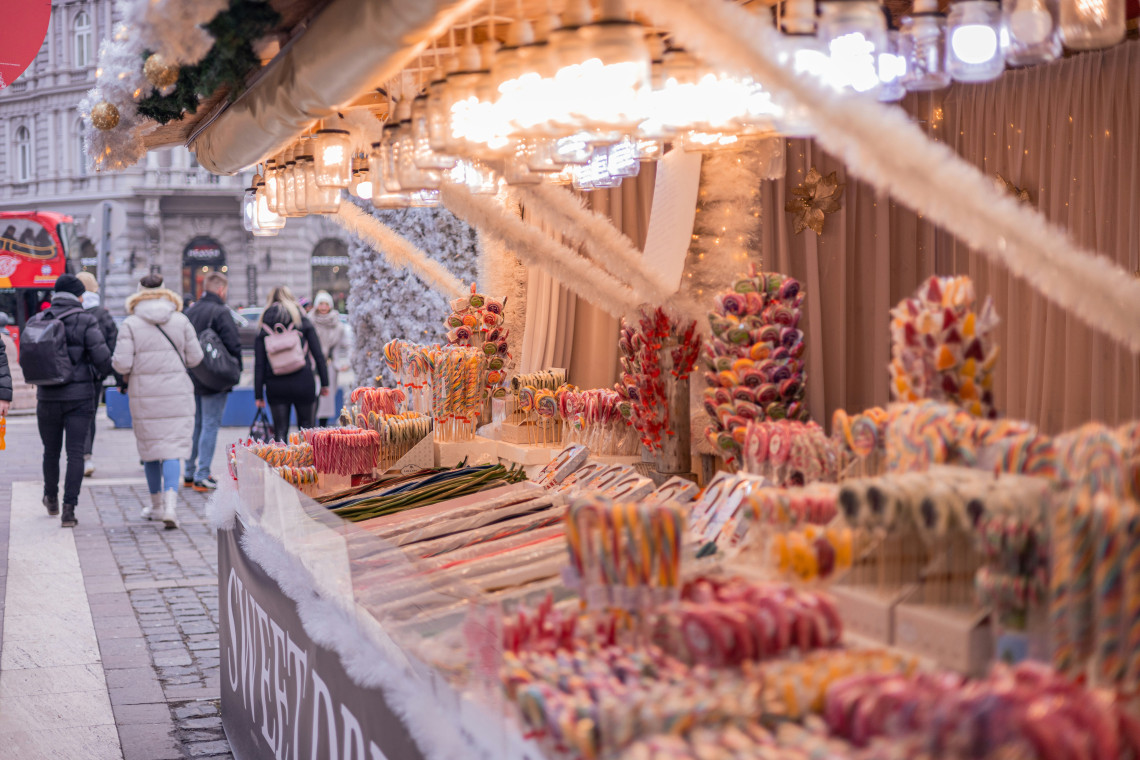
The Budapest Christmas Fair on Vörösmarty tér is Budapest's oldest and most traditional Christmas market. Set on the pedestrianized central square at the end of Váci Utca (Budapest's main shopping street). Around 100 wooden chalets, curated for quality — the market has an artisan review process, so almost everything sold is handmade Hungarian craft, not mass-produced imports.
The market has hosted the season since 1998, and its scale has grown into one of Europe's most respected. Live music runs from a central stage. The historic Café Gerbeaud sits on one side of the square, providing an indoor coffee-and-cake retreat between market stops.
Best for: Traditional quality-focused Christmas market shopping, first-time visitors, central Pest access.
2. St. Stephen's Basilica (Szent István-bazilika): the light show market
2026 dates: Mid-November to early January 2027.
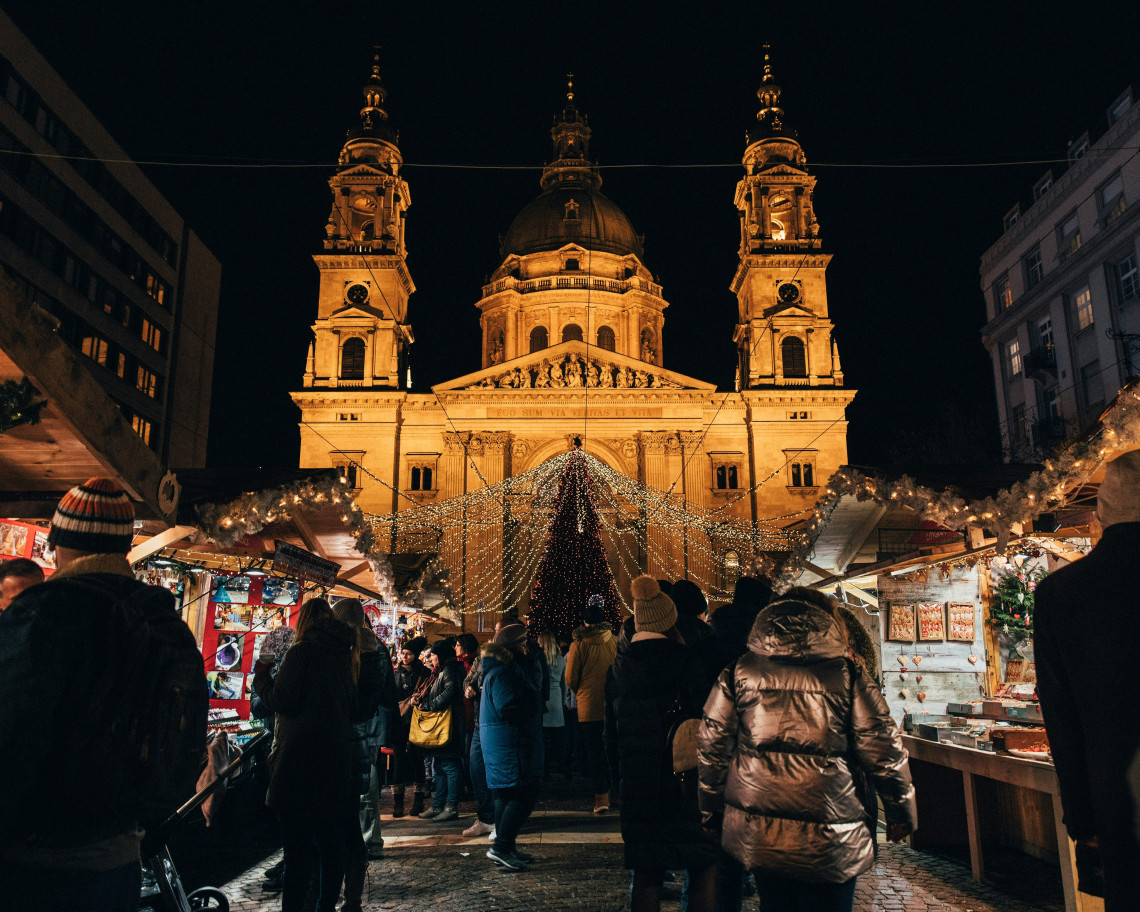
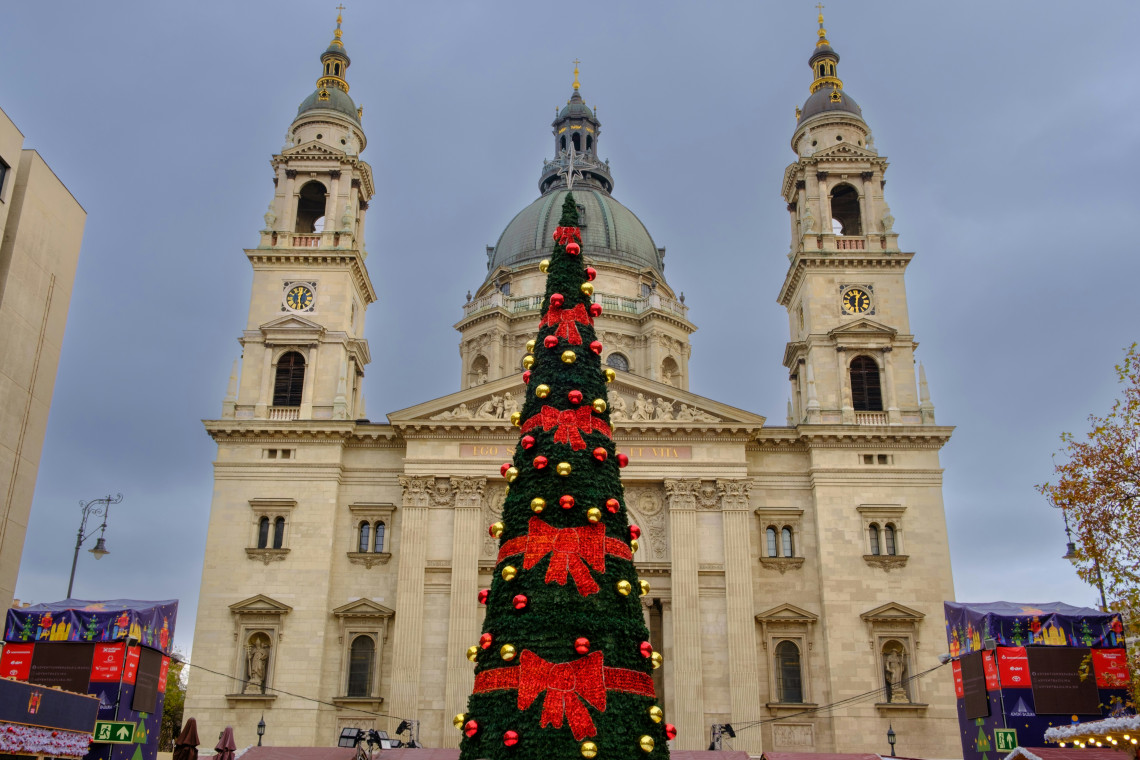
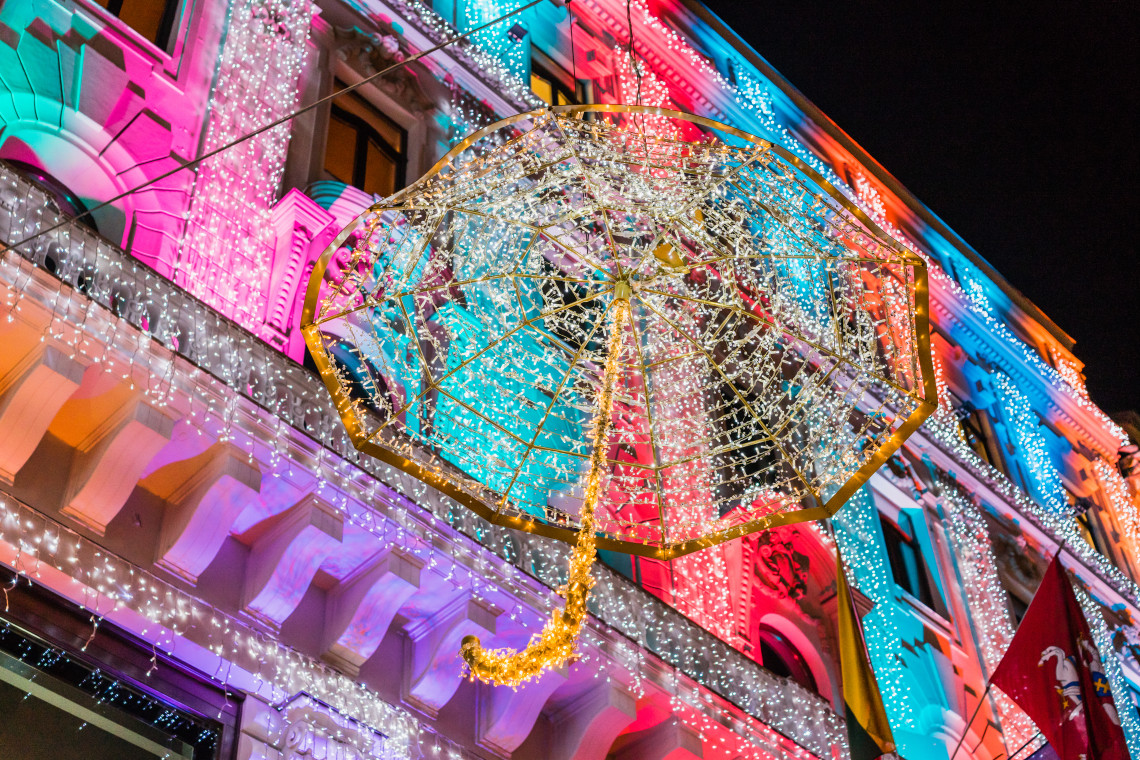
The Advent Feast at the Basilica wraps around Hungary's largest church. The square in front of the neoclassical Basilica hosts 50+ chalets, but the market's real signature is the free light show projected on the Basilica facade every evening from mid-November through early January. The show runs on a loop from 5:30pm to 10pm, with new choreography each year.
Food is the highlight here more than at Vörösmarty. Hungarian street food specialties served alongside international Christmas market fare.
Best for: Evening visits, food-focused travelers, the light show experience.
3. Városháza Park (City Hall Park): the modern boutique market
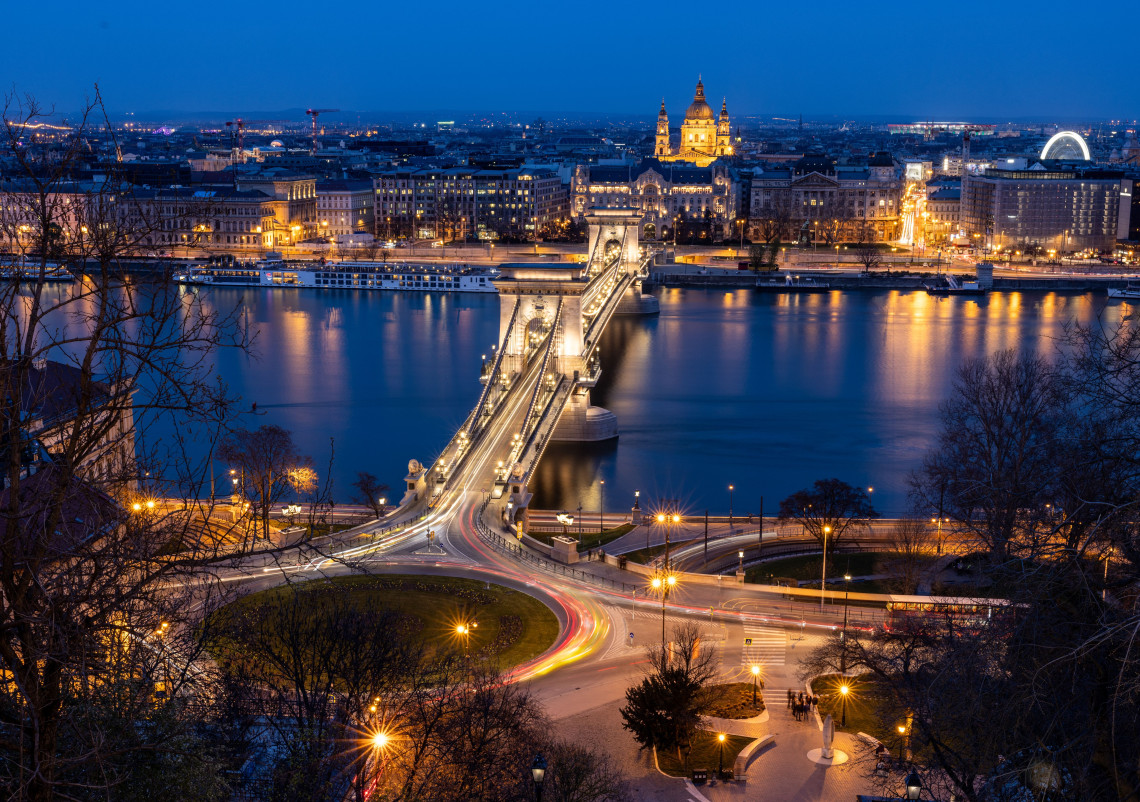
A smaller, boutique-focused Christmas market at Városháza Park. Features Hungarian designer craft, artisan chocolates, and unusual specialty items. Less crowded than Vörösmarty or the Basilica.
Best for: Second-day visits, boutique shopping.
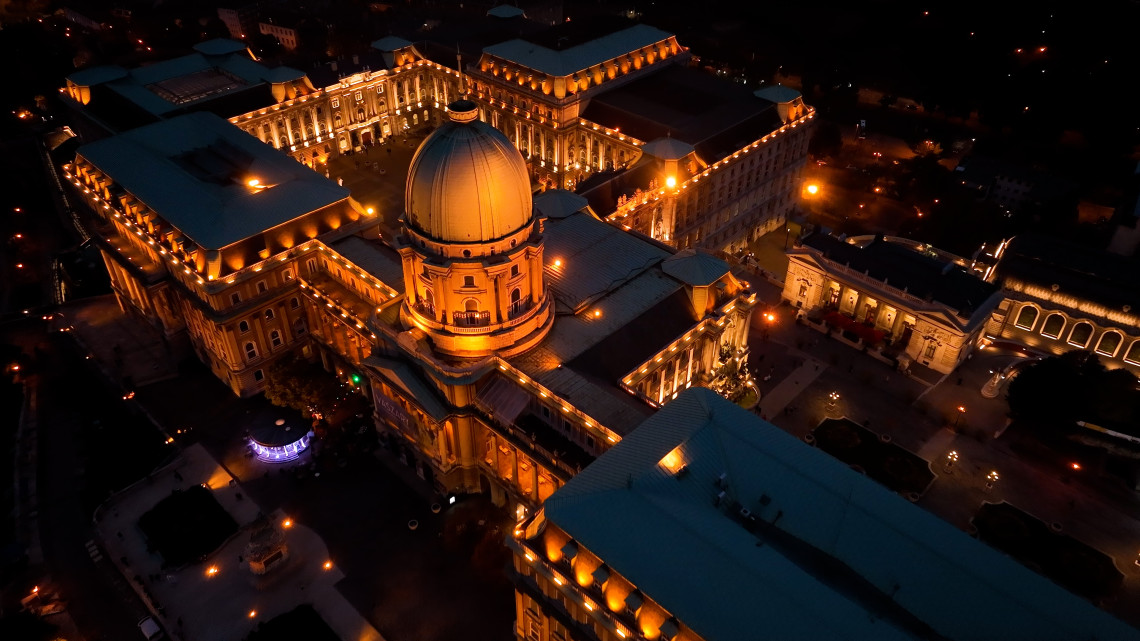
4. Buda Castle Christmas Fair
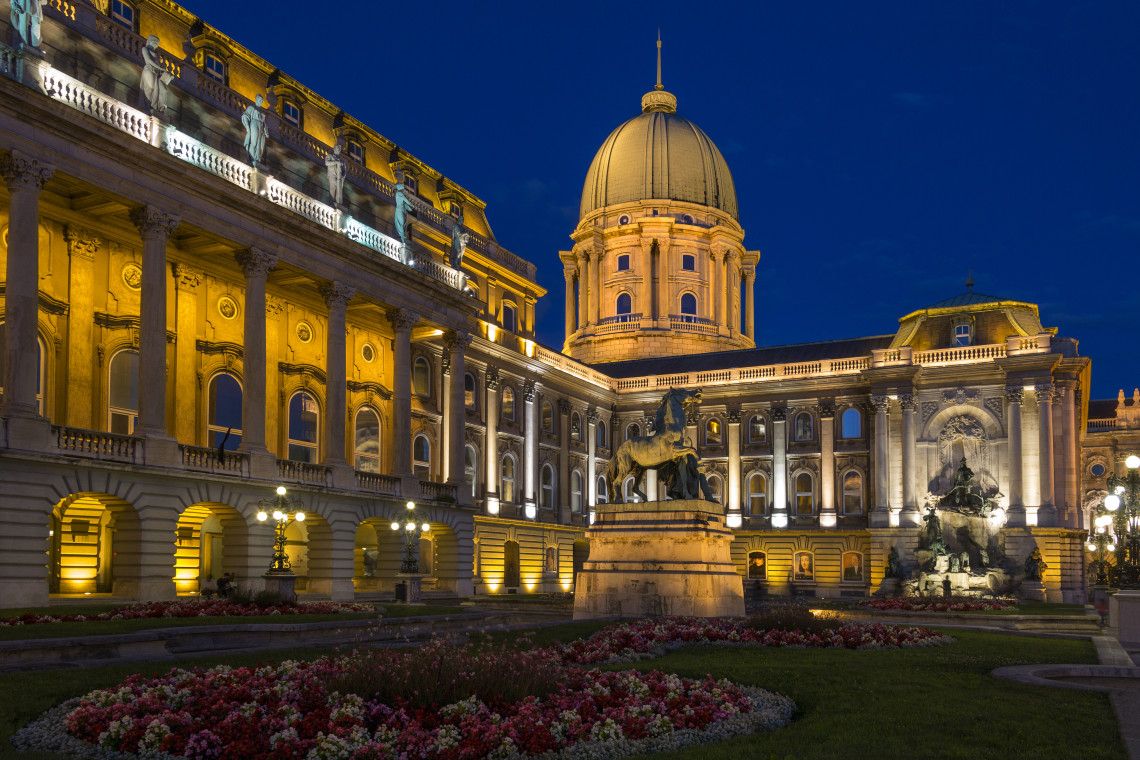
The Christmas Fair at Buda Castle (in the courtyard of the Royal Palace on Castle Hill) is smaller and more focused on Hungarian folk crafts and traditional food. Requires a walk or funicular ride up Castle Hill, but the views across the Danube to Pest are among the best Christmas market vistas in Europe.
Best for: Combining a Castle District visit with a market. Photo opportunities across the Danube.
Must-try Hungarian Christmas market food
Hungarian food is the great secret weapon of Budapest at Christmas. It is heavier, spicier, and more paprika-forward than most European cuisines.
- Kürtőskalács (Chimney Cake) — Hungarian rolled pastry cooked over open flame, coated in cinnamon-sugar, walnut, or cocoa. Warm, hollow, delicious. Actually Hungarian (unlike the Trdelník in Prague, which is Slovak).
- Lángos — deep-fried flatbread, traditionally topped with sour cream, garlic, and cheese. Hungarian street food classic.
- Töltött káposzta (Stuffed cabbage) — cabbage rolls stuffed with pork, rice, and paprika, cooked in tomato sauce with smoked pork.
- Gulyás (Goulash) — Hungarian paprika beef stew. The national dish.
- Sült kolbász — grilled Hungarian sausages (spicy paprika-forward variants).
- Hurka — Hungarian blood sausage (for the adventurous).
- Forralt bor — Hungarian mulled wine, typically red, with cinnamon and cloves.
- Krampampuli — flaming rum-based punch, a Hungarian Christmas market specialty.
- Bejgli — the traditional Hungarian Christmas cake: a rolled pastry filled with walnut or poppy seed paste.
- Pogácsa — small savory Hungarian pastry with cheese or crackling.
The thermal bath combination
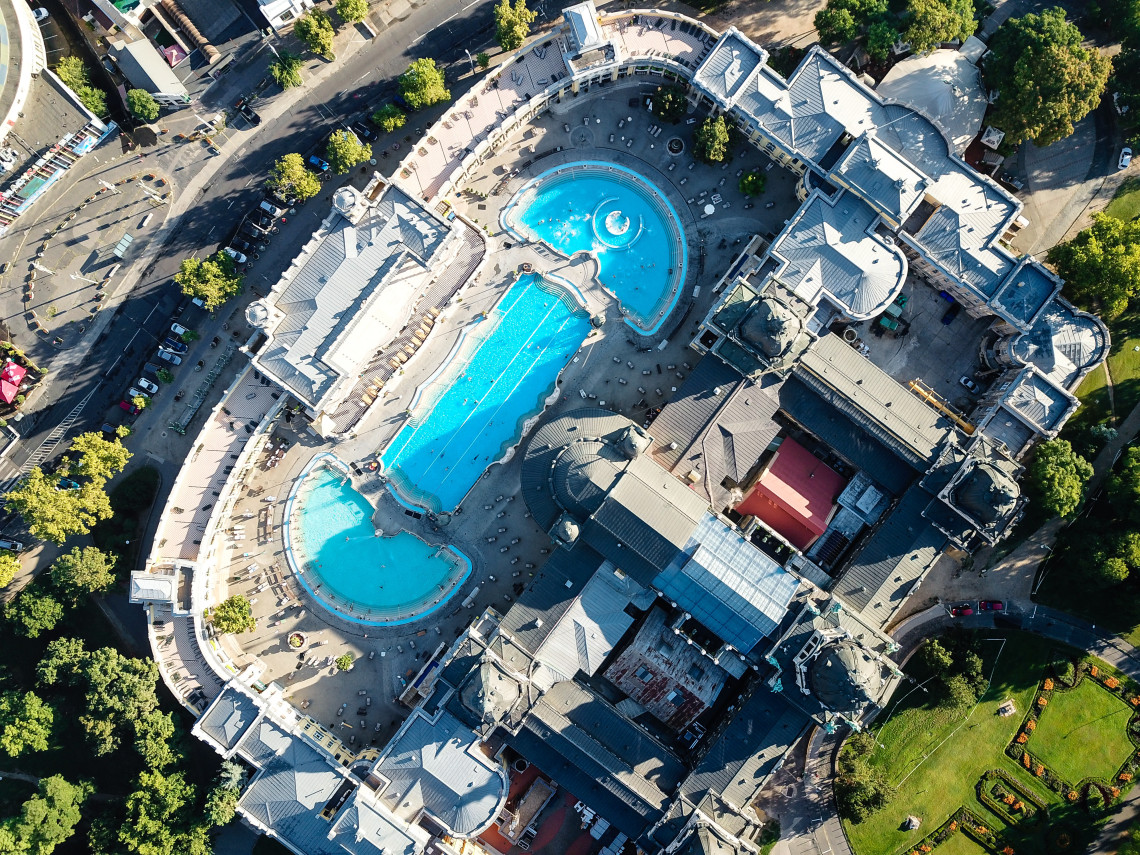
Budapest's superpower is the thermal bath. The city sits on 118 thermal springs, and the Habsburg-era grand bathhouses turn a Christmas market afternoon into something no other European city can match.
Three baths worth planning around:
Széchenyi Thermal Bath — The largest medicinal bath in Europe. The famous "chess players in the steam" photo. Neo-baroque yellow palace. Outdoor pools operate year-round — swimming in 38°C water while snow falls is one of Budapest's iconic experiences. Located in City Park, close to the Christmas market at Vörösmarty (metro M1).
Gellért Thermal Bath — Art Nouveau masterpiece. Attached to Hotel Gellért. Smaller than Széchenyi but architecturally more elaborate. On the Buda side of the river.
Rudas Baths — 16th-century Ottoman baths. The rooftop hot tub with panoramic views over the Danube and parliament is the best combination of tradition and view.
Recommended timing: Christmas market from morning until 3pm, thermal bath from 4pm to 7pm, dinner at 8pm. The bath resets you after a cold day walking.
When to go
Mid-November (opening): Markets open around the 15th of November. Weekdays are the quietest.
December 1 to 20 (sweet spot): All markets in full operation. Basilica light show at its best. Weekdays 30% less crowded than weekends.
December 21 to 26: Peak crowds. Markets remain open. Basilica light show continues.
December 27 to January 6: Markets continue at reduced scale. Locals return to the markets. Prices lower.
Sweet spot recommendation: Early to mid December weekdays.
How to get to Budapest
By air: Budapest Ferenc Liszt Airport (BUD) has direct flights from New York, Toronto, and connections through Frankfurt, Vienna, or Munich for other North American cities. Airport bus 100E to city center is 40 minutes.
By train: Excellent from Vienna (2h30m by Railjet), Prague (7h via Vienna), Bratislava (2h), Munich (7h30m via Vienna).
By boat: In summer, the Danube boat from Vienna (5h) is a classic. In winter, this doesn't run — take the train.
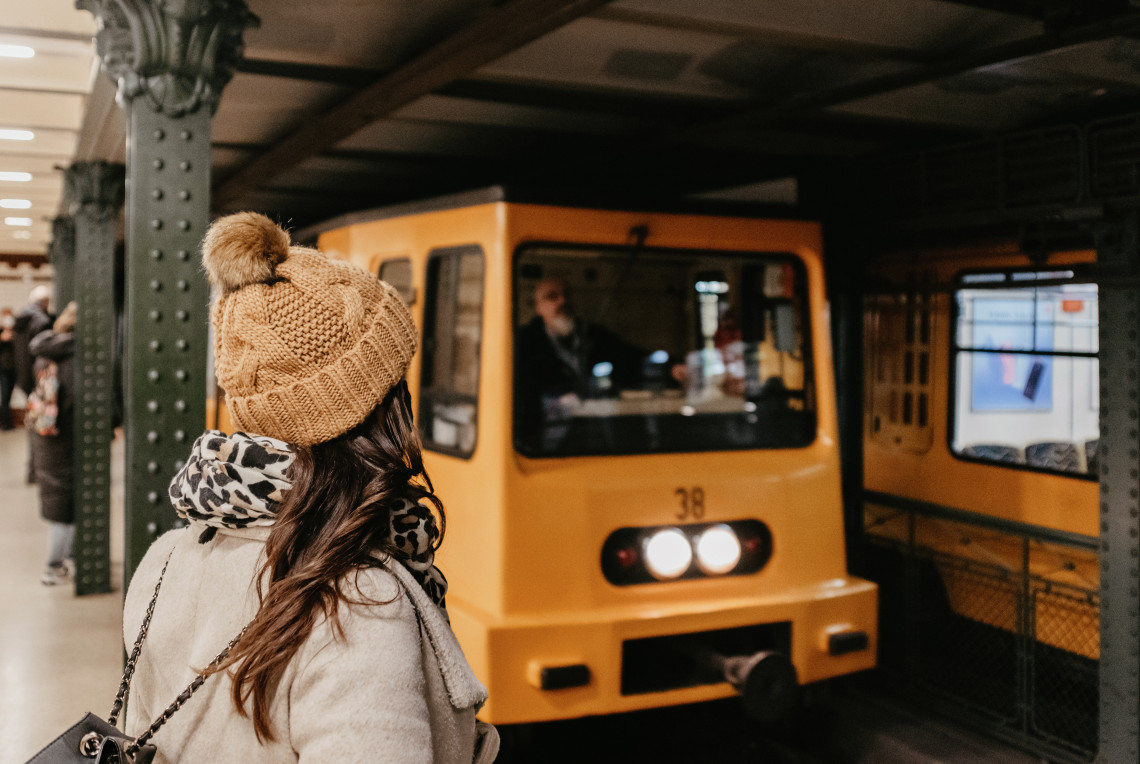
Within Budapest: The metro (M1, M2, M3, M4) covers most of the city. M1 (yellow line) is the oldest continental European metro and covers the tourist axis. Trams and buses fill the gaps.
Where to stay
Central Pest (near Vörösmarty and Basilica markets): Aria Hotel Budapest (5-star music-themed), Kempinski Hotel Corvinus, Marriott Budapest, Hotel Moments (boutique).
Along the Danube: Sofitel Budapest Chain Bridge, Four Seasons Gresham Palace (art nouveau grand hotel, opposite the Chain Bridge).
Buda side (Castle District): Hilton Budapest (built into the medieval castle walls), Baltazár Hotel (boutique in the Castle District).
Book 4 months ahead for December. Budapest is meaningfully cheaper than Vienna or Prague but its top hotels still sell out.
The "Three Capitals" Central European Christmas trip
The most-requested Budapest-Vienna-Prague itinerary:
- Vienna: 3 nights
- Budapest: 2 to 3 nights
- Prague: 2 to 3 nights
- Total: 7 to 9 nights
Trains connect all three:
- Vienna to Budapest: 2h30m by Railjet
- Vienna to Prague: 4h direct
- Budapest to Prague: 7h (via Vienna)
Order matters. Most travelers do Prague → Vienna → Budapest (west to east), ending in Budapest to fly out. Or Vienna → Budapest → Vienna → Prague, using Vienna as a hub.
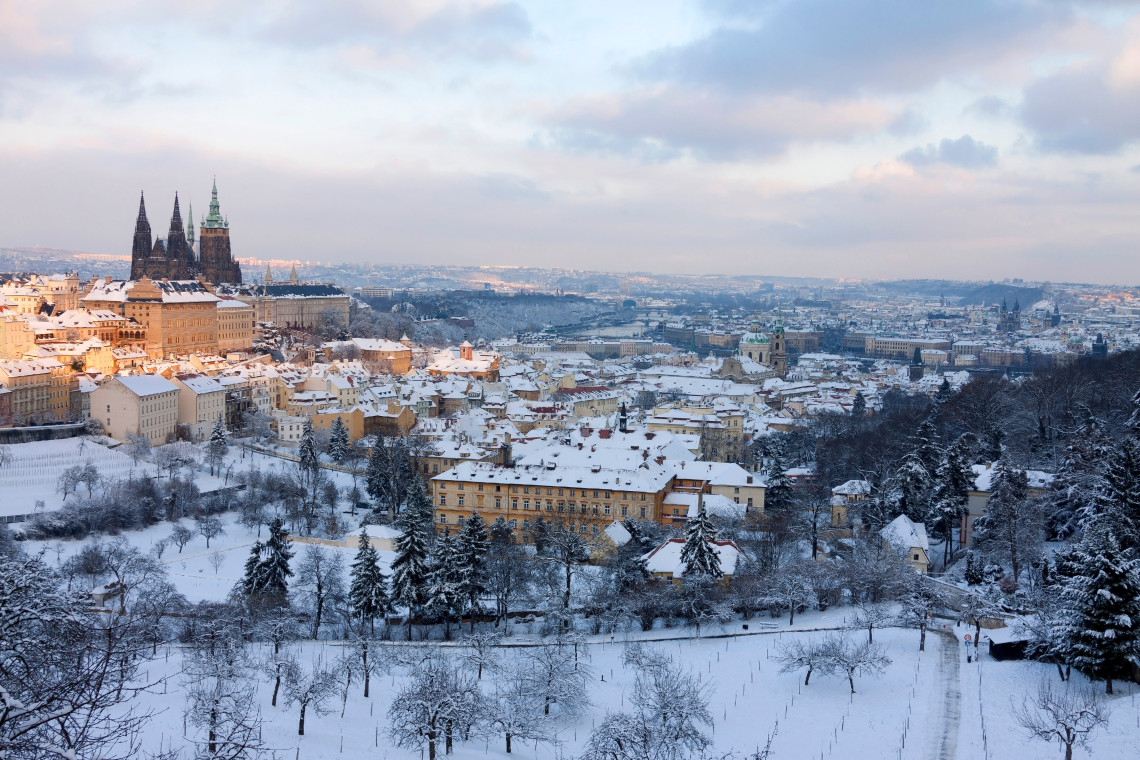
Plan it well: Prague vs Vienna vs Budapest: Which to Pick for the region overview.
Honest tradeoffs
The pros: Best food scene among the Central European Christmas markets (heavy, hearty, distinctive). The thermal bath combination is unique in Europe. Prices are meaningfully lower than Vienna or Prague. The Basilica light show is free. Post-Christmas openings run into early January.
The cons: Smaller scale than Vienna or Nuremberg. Cold December weather (regularly below freezing). Less English coverage than Vienna or Prague. Airport is farther from the city than Vienna's.
To get the best version: Base in central Pest. Plan at least one thermal bath afternoon (Széchenyi is closest to markets, Rudas has the best view). Try the food — Budapest is the wrong city to skimp on eating. Attend the Basilica light show at 6:30pm or 7pm (peak choreography). Consider a Danube dinner cruise for one evening — Budapest at night, illuminated, from the river, is unforgettable.
Frequently asked questions
When does Budapest Christmas Market open in 2026? Mid-November 2026 (typically the 15th to 20th of November) through early January 2027. Specific dates confirmed 4-6 weeks before the season.
How many Christmas markets are in Budapest? Four essential markets: Vörösmarty Square, St. Stephen's Basilica, Városháza Park, and Buda Castle. Additional smaller markets pop up across neighborhoods.
How many days do you need in Budapest at Christmas? 2 to 3 nights minimum. Add a fourth night if you want deep thermal bath time or the Buda side castle experience.
Is Budapest or Vienna better for Christmas markets? Different scale. Vienna has 20+ markets across an imperial capital. Budapest has 4 essential markets in a smaller, more compact old town. Vienna wins on volume; Budapest wins on food, thermal baths, and value.
Are Budapest Christmas markets crowded? Vörösmarty Square gets busy on December weekends after 4pm, but crowds are meaningfully less intense than Vienna's Rathausplatz or Prague's Old Town Square. Weekdays are calm.
How cold is Budapest in December? Cold. Daytime -2°C to 5°C / 28°F to 41°F. Snow is occasional. The Danube can produce cold winds. Layer heavily.
Is Budapest expensive at Christmas? Meaningfully cheaper than Vienna, Prague, or Berlin. Hotels in central Pest in December: 100-250 euros per night for mid-range. Christmas market food: 4-10 euros per portion. Thermal bath entry: 25-35 euros.
Can I visit thermal baths at Christmas? Yes. Széchenyi, Gellért, and Rudas are all open year-round, including December 24 and 25. Outdoor pools operate through winter.
Can I use euros in Budapest? Some hotels and tourist areas accept euros but the exchange rate is unfavorable. Use Hungarian forints (HUF) from an ATM. Cards are widely accepted.
Is Budapest safe for tourists at Christmas? Very safe. Standard urban precautions apply. Pickpockets work public transport and tourist zones.
What is the best light show in Budapest? The free Basilica light show projected on St. Stephen's Basilica facade during the Advent Feast at the Basilica market. Runs from 5:30pm to 10pm daily throughout the Christmas market season.
Is Kürtőskalács the same as Trdelník? Similar but different origins. Kürtőskalács is traditional Hungarian (specifically Transylvanian Székely). Trdelník is Slovak. Both are rolled cinnamon-sugar pastries cooked on a rotating spit over open flame. Try the Hungarian version in Budapest.
Markets, thermal baths, and the Danube.
Our travel experts route Budapest-only and Vienna+Prague combinations.
See Budapest Packages Tailor-Made Trip