by Yes Getaways Team
July 23, 2026 • 18 min read
Germany invented the Christmas market. The first documented Weihnachtsmarkt was in Dresden in 1434, and the Nuremberg Christkindlesmarkt has records back to 1628. Nearly 600 years later, Germany still runs the biggest, oldest, and most authentic Christmas market tradition in Europe. Every city has one. Some have several. In late November each year, the entire country transforms into a network of wooden chalets, mulled wine, gingerbread, and light-strung squares.
This guide covers everything a North American traveler needs to plan a German Christmas market trip in 2026: the 10 best cities, the 2026 dates, the food, the traditions, and how to combine them into a real trip.
Germany is the country that invented the Christmas market. Every other European Christmas market is, in some form, an interpretation of this one tradition.
The short answer
If you have one German Christmas market trip in your life, do Nuremberg + Munich + Rothenburg (the classic Bavarian triangle) or Cologne + Aachen + the Rhine markets (the western tradition). Both work as 5 to 7 night trips.
If you want the biggest and most theatrical: Nuremberg's Christkindlesmarkt (since 1628, the world's most famous Christmas market).
If you want the most beautiful setting: Rothenburg ob der Tauber (the medieval walled town that inspires half the "Christmas card" imagery in Europe).
If you want the largest scale: Berlin (over 100 Christmas markets across the city) or Cologne (7 markets in the historic center).
If you want to combine Christmas markets with Alpine scenery: Munich + Salzburg + Innsbruck (crossing into Austria).
The 10 best German Christmas markets
1. Nuremberg: the world's oldest and most famous
2026 dates: November 27 to December 24.
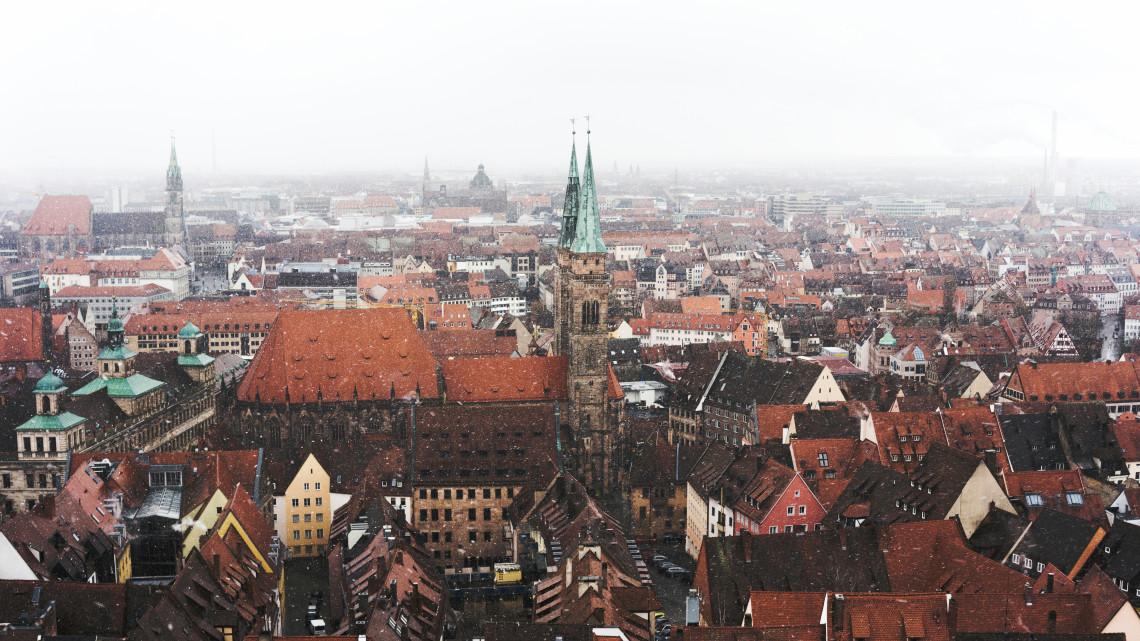
The Nürnberger Christkindlesmarkt is arguably the most famous Christmas market in the world. Documented since 1628, held every year since (with brief pauses for war) in the Hauptmarkt square in front of the gothic Frauenkirche. The market opens with the Christkind — a young woman in a golden gown and crown who recites the opening prologue from the church balcony.
Around 180 wooden chalets fill the square, selling Nuremberg-specific specialties: Lebkuchen (spiced gingerbread, protected by geographical indication), Nürnberger Rostbratwurst (small pork sausages, three to a bun), Zwetschgenmännle (prune-people figurines), tin angels, and hand-carved wooden ornaments.
Best for: Traditionalists, first-time Christmas market travelers, history lovers. The most photographed German Christmas market.
Honest tradeoffs: Very crowded on December weekends. Closes early — December 24 is the final day. Hotel prices peak. Some travelers find the scale smaller than expected.
Combines with: Bamberg (30 minutes north by train), Rothenburg (1 hour by regional train), Munich (1 hour by ICE).
2. Munich: Bavarian tradition and Alpine gateway
2026 dates: Late November to December 24 (main market on Marienplatz).
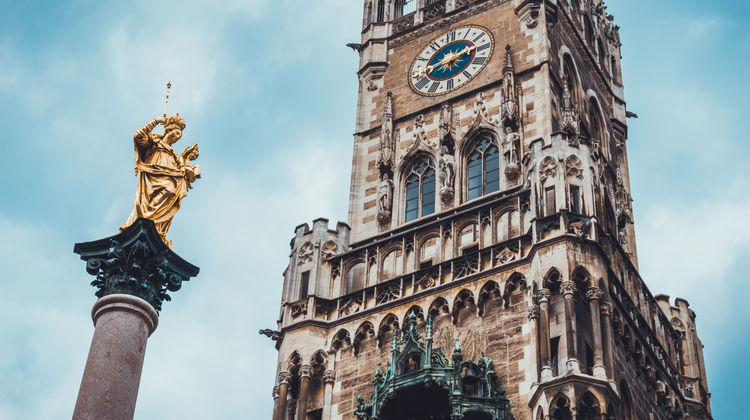
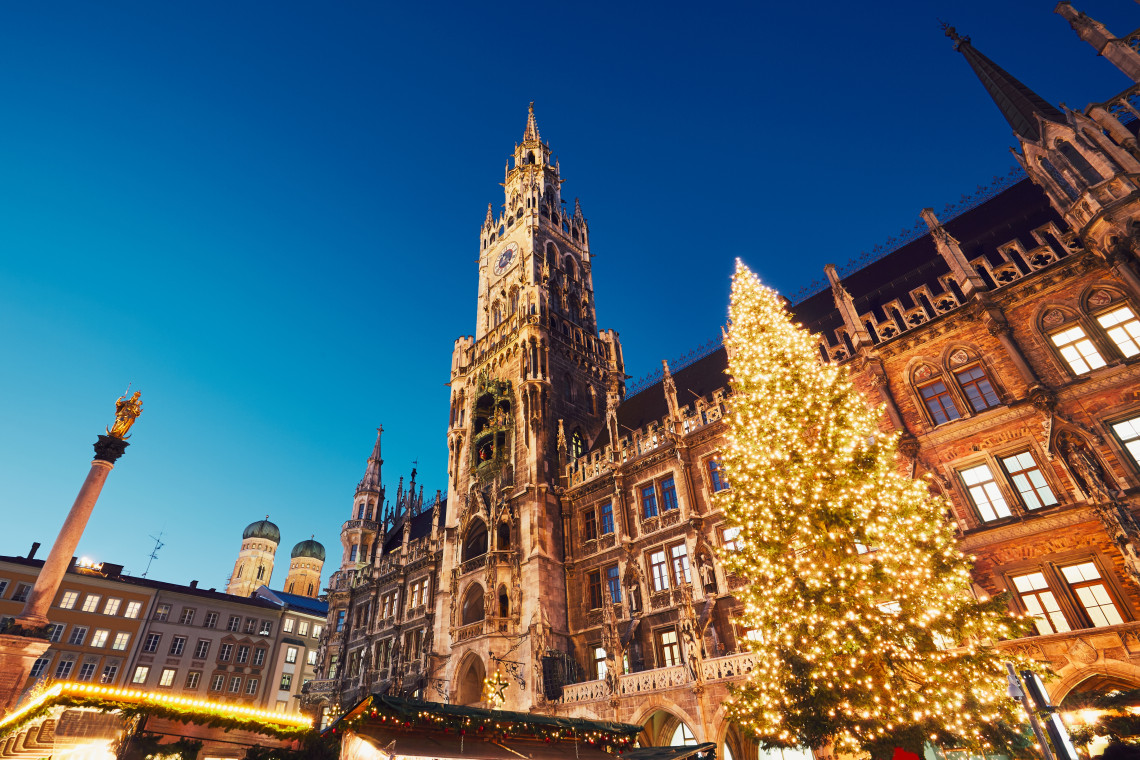
Munich runs about 30 Christmas markets, spread across the city. The main Christkindlmarkt on Marienplatz sits in front of the neo-gothic Neues Rathaus, with the giant Christmas tree at the center and the market chalets radiating out. The Kripperlmarkt near St. Peter's specializes in nativity scene figurines. The Medieval Christmas Market at Wittelsbacher Platz takes visitors back to the 14th century with straw fires, mead in ceramic mugs, and traders in period costume. The Sendlinger Straße Christmas Market is the modern boutique alternative.
Munich food specialties at markets: Weißwurst (white sausage), Brezn (pretzels), Feuerzangenbowle (rum-set alight over spiced mulled wine), Lebkuchen.
Best for: Travelers who want Bavaria plus proximity to the Alps. Combines seamlessly with Salzburg (1h30m by train) and Innsbruck.
Honest tradeoffs: Munich hotels in December book out fast. The Marienplatz market is the busiest — some smaller markets are more atmospheric.
Combines with: Salzburg, Nuremberg, Rothenburg, Innsbruck.
3. Cologne: seven markets in one weekend
2026 dates: Late November to December 23 (main markets; some to January 6).
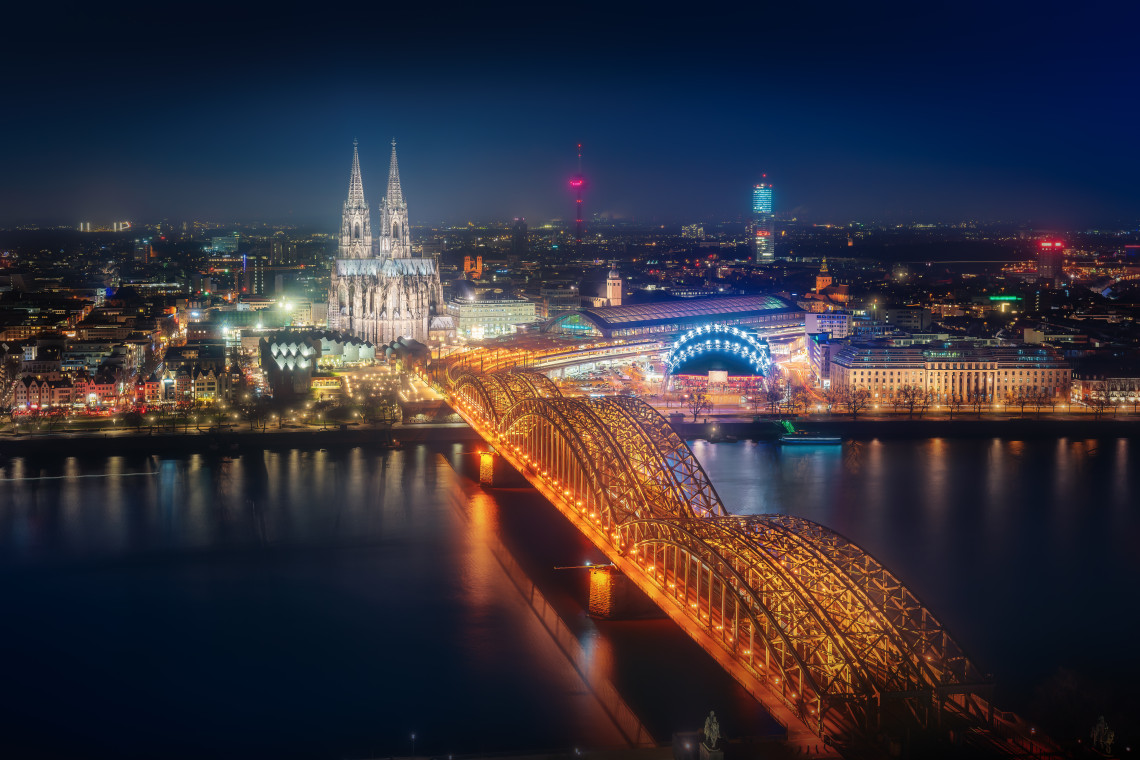
Cologne (Köln) runs seven distinct Christmas markets in the historic center, all walkable from each other. The main Weihnachtsmarkt am Kölner Dom sits directly in front of the twin spires of Cologne Cathedral (a UNESCO gothic masterpiece), with the cathedral illuminated as backdrop each evening. The Alter Markt and Heumarkt markets are traditional. The Angels' Market at Neumarkt goes for the fairy-tale aesthetic. The Harbour Christmas Market at Chocolate Museum offers the most unusual setting. The Nikolausdorf at Rudolfplatz is dedicated to St. Nicholas.
Cologne is a wine and beer city year-round, and the Christmas markets deliver: Glühwein (mulled wine) is served in dozens of variations, from classic red to white to blueberry.
Best for: Travelers who want maximum markets in minimum walking. First-time Christmas market travelers who want variety.
Honest tradeoffs: Cologne is grey and often rainy in December. Cathedral queues can be long during the market season.
Combines with: Aachen (1h by train, its own market plus the Aachener Printen gingerbread), Düsseldorf (25 minutes), Rhine river Christmas markets by boat.
4. Berlin: over 100 markets, every style
2026 dates: Late November 2026 to early January 2027 (varies by market).
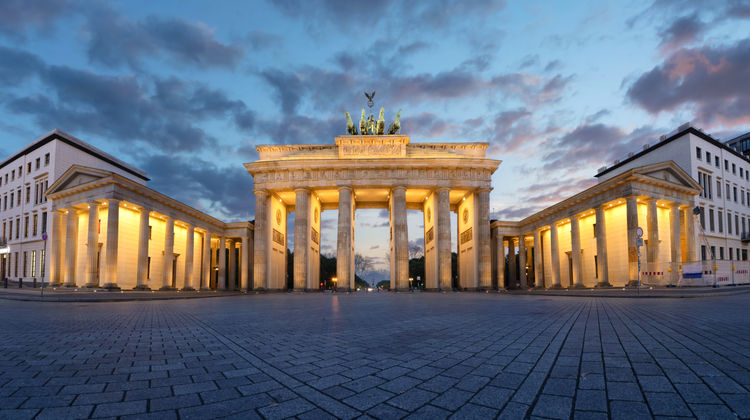
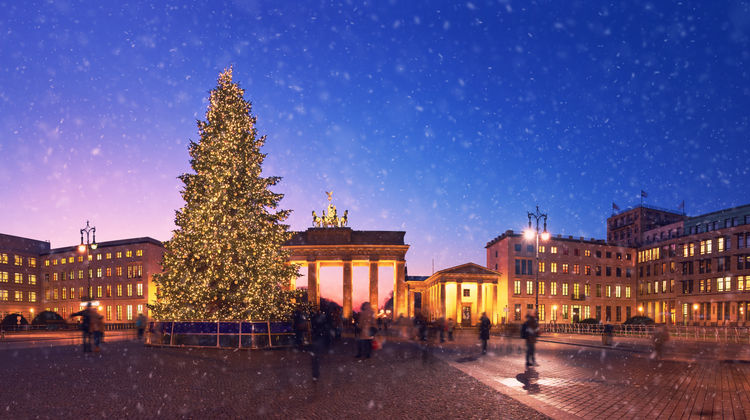
Berlin runs more Christmas markets than any European city — over 100. The famous ones: Gendarmenmarkt (the most elegant, between the French and German cathedrals, requires paid entry), Charlottenburg Palace Christmas Market (in the courtyard of the baroque palace, one of Europe's most beautiful settings), Alexanderplatz (the largest and most varied), Spandau Old Town (medieval, the most traditional), Rotes Rathaus (with a giant Ferris wheel).
For alternative Berlin: WeihnachtsRodeo at Markthalle Neun (hipster market with craft beer and modern food), Winterwelt am Potsdamer Platz (with an ice-skating rink), the Nostalgic Christmas Market at Opernpalais (18th-century themed).
Best for: Travelers who want variety and a major city to explore alongside markets.
Honest tradeoffs: No single Berlin market dominates. Requires planning: pick 4-6 markets in advance and route the days.
Combines with: Dresden (2h by train), Leipzig, Potsdam (1h by S-Bahn), Prague (4h by train).
5. Dresden: the oldest recorded Christmas market
2026 dates: Late November to December 24 (Striezelmarkt).
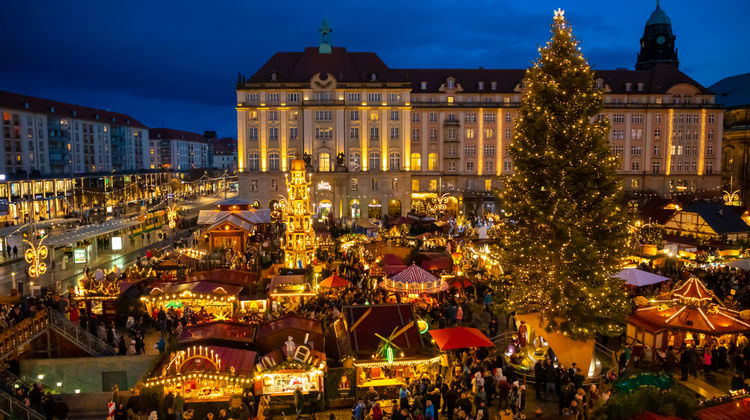
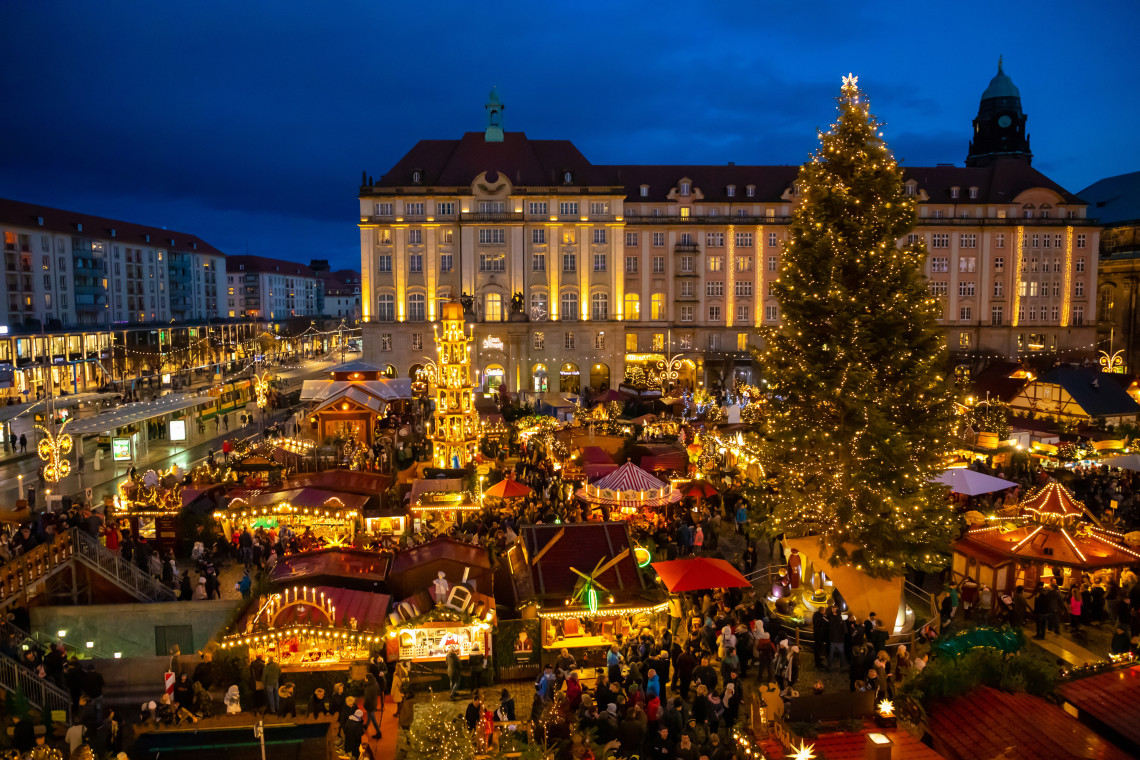
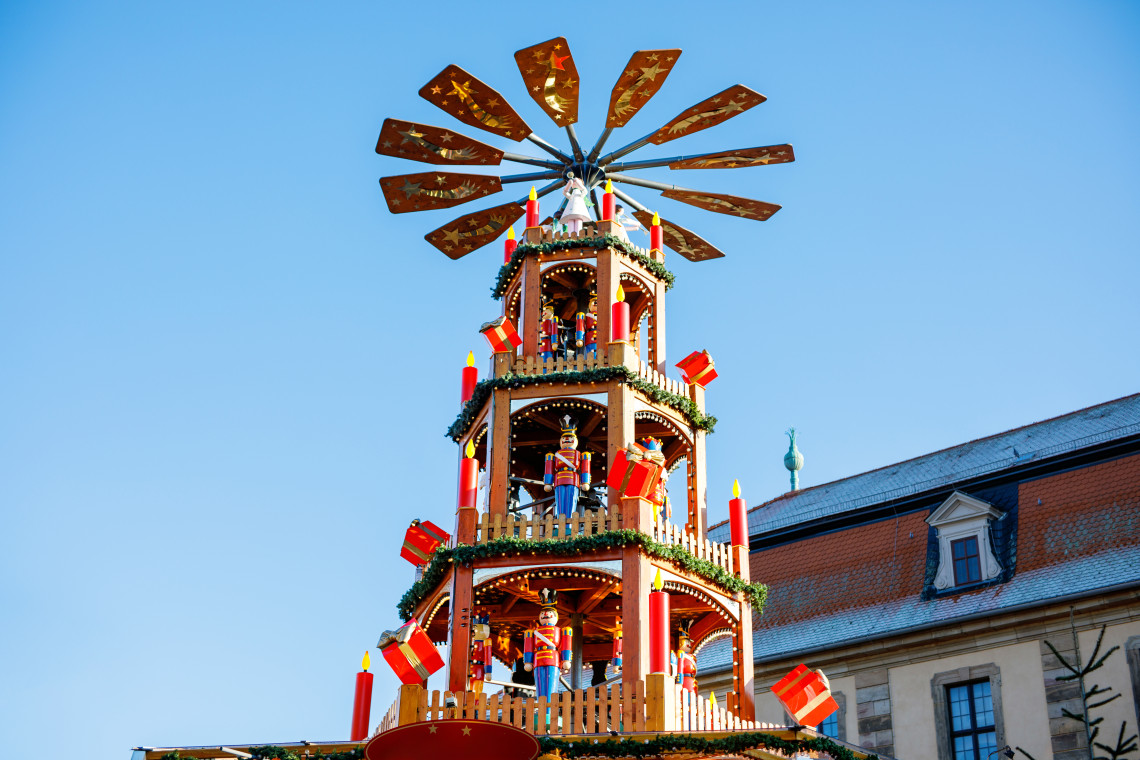
Dresden claims the oldest documented Christmas market in the world — the Striezelmarkt, first recorded in 1434. Set on the Altmarkt in the baroque old town (reconstructed after WWII bombing). The market's icon is the giant Erzgebirge pyramid — a multi-tiered wooden windmill decoration, the largest in the world at 14 meters. The traditional Christmas cake here is Dresden Stollen — the version protected by geographical indication and celebrated with its own Stollenfest parade on the second Advent Saturday.
Beyond the Striezelmarkt, Dresden has 10+ additional Christmas markets: at the Frauenkirche, at Neustadt (the alternative bohemian quarter), at the Royal Palace, at the Semperoper opera house.
Best for: Travelers who want the deepest historical tradition. Baroque architecture enthusiasts.
Honest tradeoffs: Dresden is a smaller city than Berlin or Munich. December weather is cold and often overcast.
Combines with: Leipzig, Berlin, Prague (2h by train — a natural Christmas markets combo).
6. Rothenburg ob der Tauber: the fairy-tale village
2026 dates: Late November to December 23 (Reiterlesmarkt).
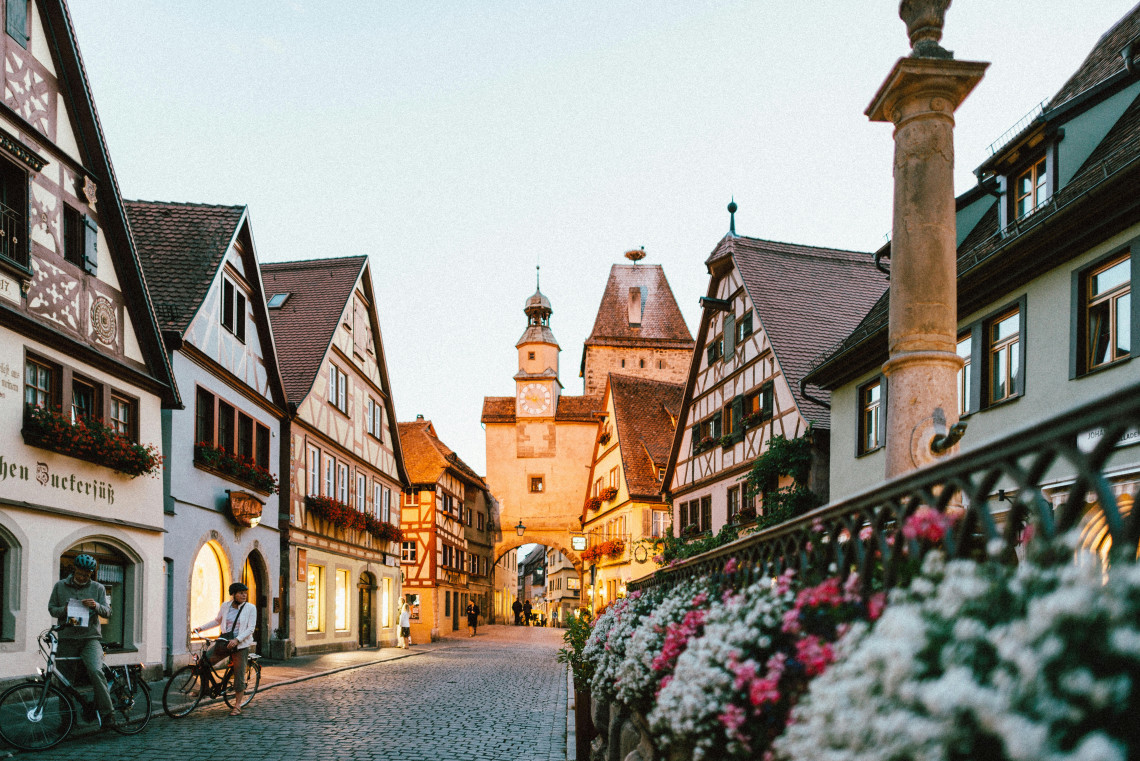
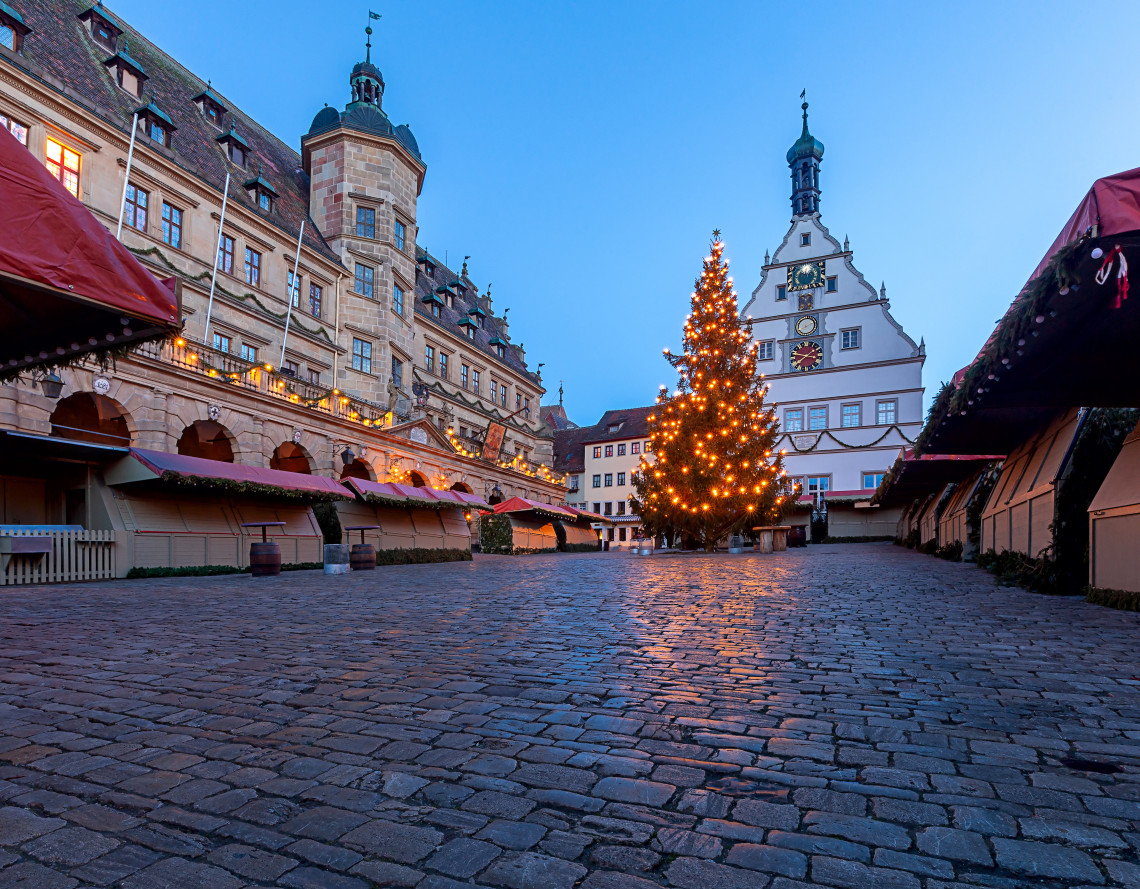
Rothenburg is what most people picture when they imagine a "German Christmas village": a fully preserved medieval walled town, cobbled streets, half-timbered houses draped in Christmas decoration, the town's famous Käthe Wohlfahrt Christmas store operating year-round. The Reiterlesmarkt sits on the Marktplatz in front of the Renaissance town hall.
Rothenburg is small (population 11,000) and the market is compact. But the setting — the walled town at Christmas, often with snow — is among the most photographed Christmas scenes in Europe.
Best for: Photographers, romantic couples, first-time visitors who want the "postcard" German Christmas.
Honest tradeoffs: Small scale (2 to 3 hour visit is enough). Very crowded on December weekends with day-trippers. Hotels are limited — book well ahead if staying overnight.
Combines with: Nuremberg (1h by regional train, no direct — usually change at Steinach), Würzburg (1h by train), Munich (2h30m).
7. Frankfurt: the modern-city Christmas market
2026 dates: Late November to December 22.
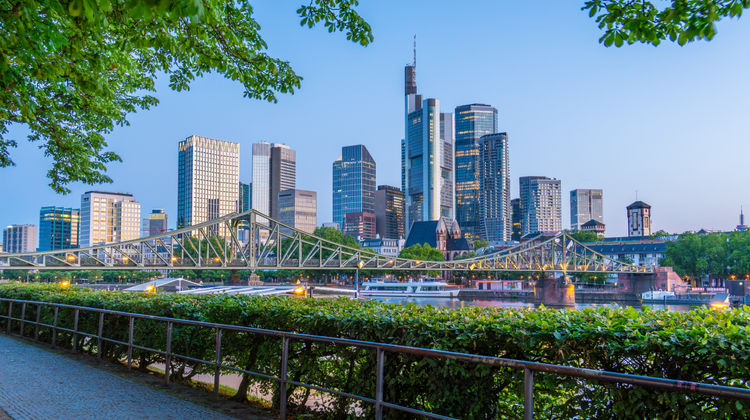
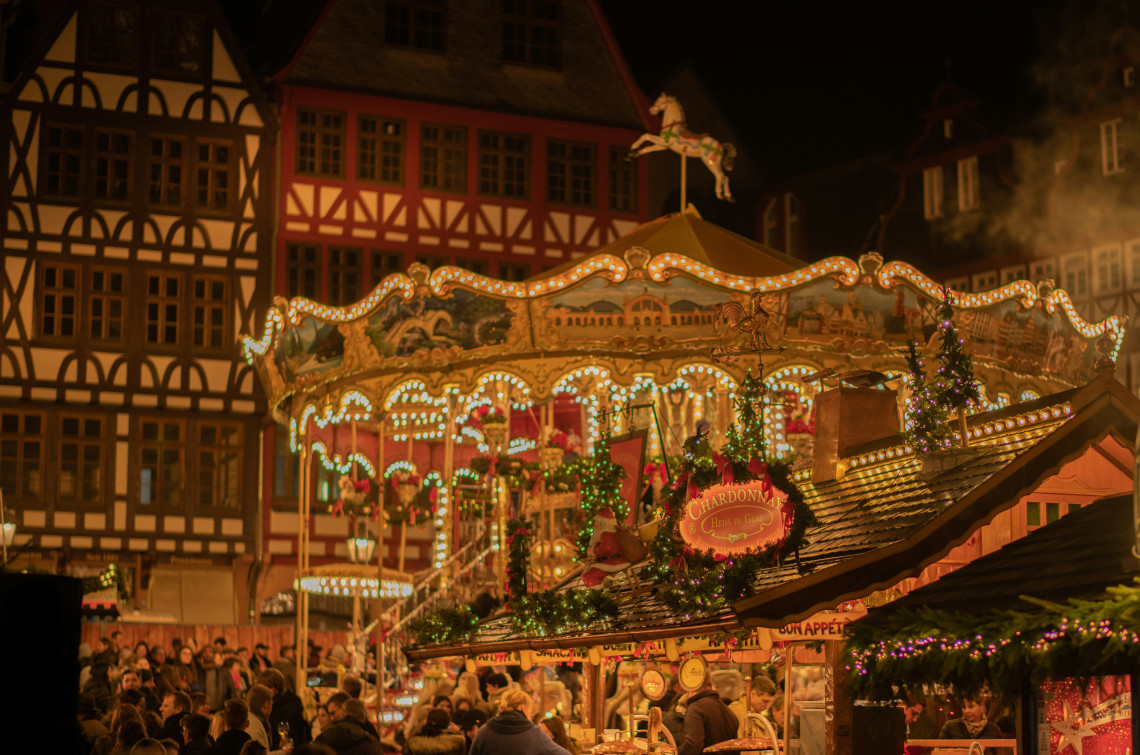
Frankfurt's Christmas market on the Römerberg (the historic square in front of the gothic town hall) is one of Germany's largest. The half-timbered facades of the Römer, the giant Christmas tree at the center, the mix of local food (Frankfurt sausages, apple wine specialties, Frankfurt kranz cake). The market extends along the Main river with additional stalls.
Frankfurt is Germany's finance capital, so it also has the corporate polish that some other German Christmas markets lack. Excellent for combining with a business trip, and the airport (FRA) is the main hub for U.S. and Canadian flights to Germany.
Best for: Travelers landing at Frankfurt airport who want a Christmas market experience immediately. Business-plus-leisure travelers.
Honest tradeoffs: Frankfurt is often described as Germany's least atmospheric major city. The Christmas market is excellent, but the surroundings feel modern-corporate.
Combines with: Wiesbaden, Heidelberg, Cologne (1h by ICE), Rothenburg (2h30m by train).
8. Aachen: the western border with the famous Printen
2026 dates: Late November to December 23.
Aachen's Christmas market on the Katschhof and Münsterplatz sits between the imperial cathedral (Charlemagne's chapel, a UNESCO World Heritage site since 1978) and the medieval town hall. The specialty here is Aachener Printen — a hard gingerbread cousin to Nuremberg's Lebkuchen, sold in dozens of shapes and flavors. The city sits at the border with Belgium and the Netherlands, so the market has a distinct Rhineland-Meuse character.
Best for: Travelers combining Germany with Belgium (Brussels/Bruges are 1-2h away by train). Food specialists interested in Printen.
Honest tradeoffs: Aachen is small and the market is small. Best as a day trip or 1-night stop.
Combines with: Cologne (45 min by train), Maastricht (30 min), Brussels (1h30m), Düsseldorf.
9. Stuttgart: one of Germany's largest
2026 dates: Late November to December 23.
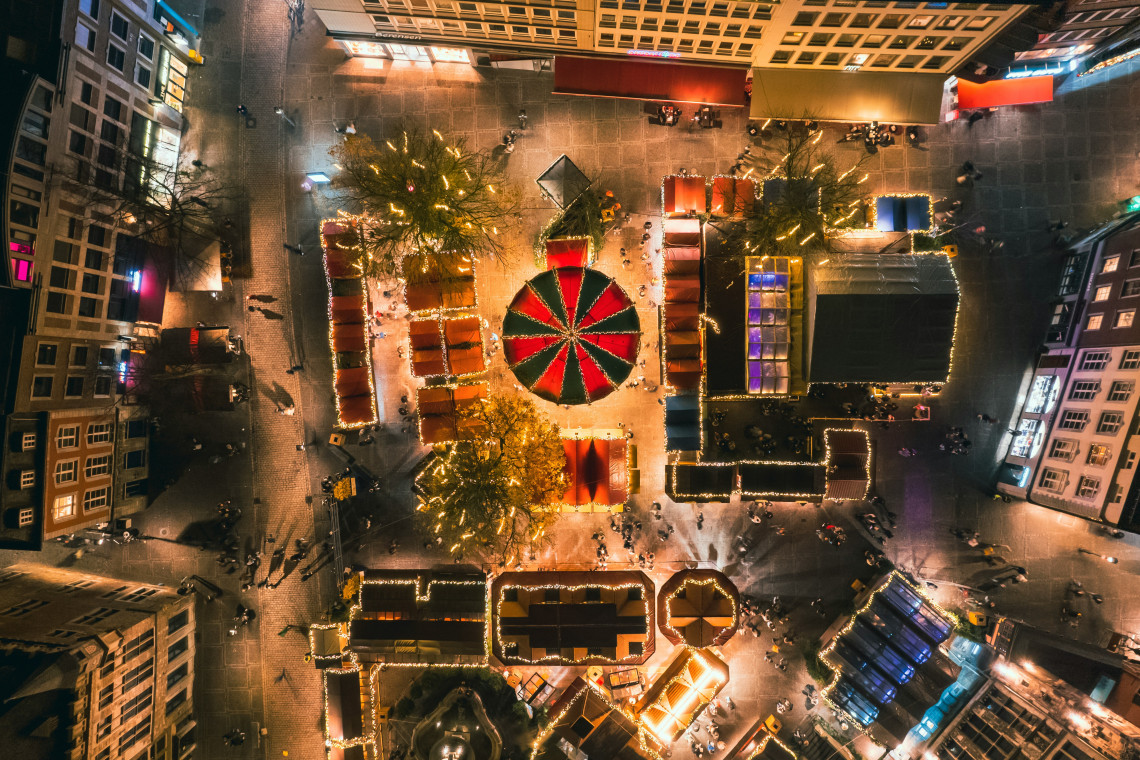
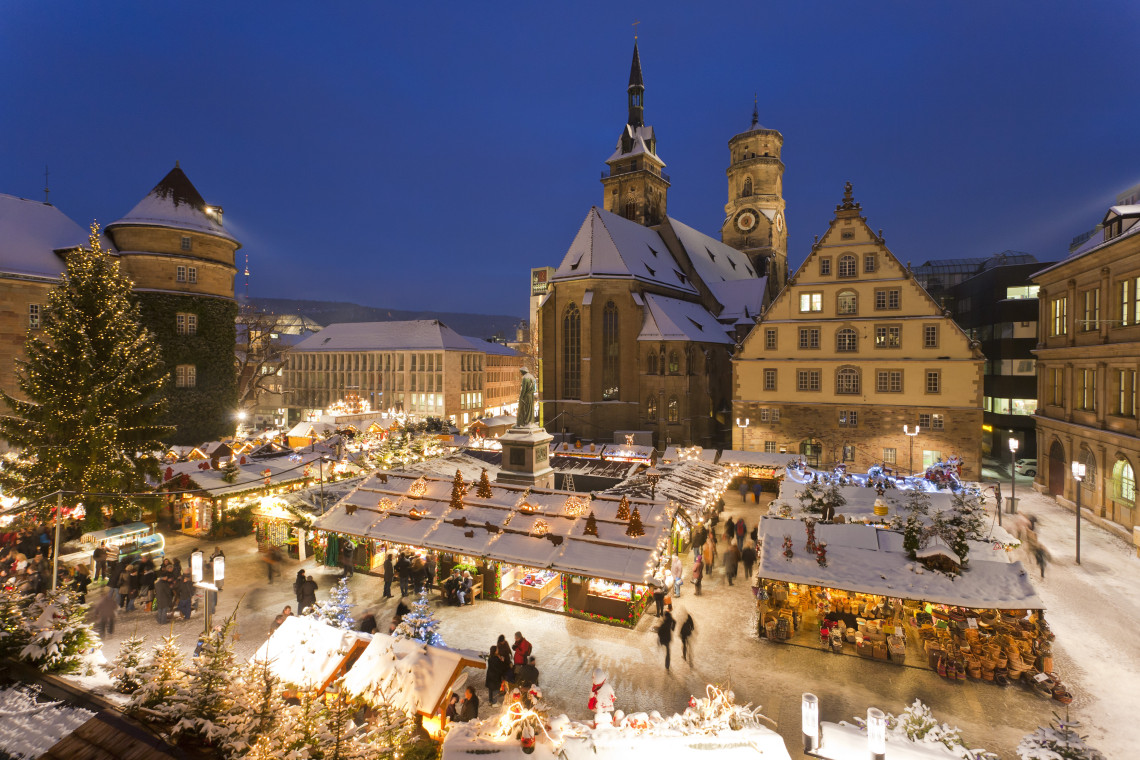
Stuttgart's Christmas market is among Germany's largest by chalet count (280+). Set across the historic center — the Schillerplatz, the Marktplatz, the Karlsplatz — in front of the gothic Stiftskirche and the Old Castle. The market's signature is the elaborately decorated roofs of the chalets — each one competes for the annual "most beautiful roof" prize, and the roofs become the visual highlight of the market.
Stuttgart is a wine city (the surrounding Württemberg region produces excellent Riesling and Trollinger), and the Christmas market features local vintners' Glühwein alongside the standard versions.
Best for: Wine travelers, travelers who want the classic German Christmas market without the crowds of Nuremberg or Munich.
Honest tradeoffs: Stuttgart is less internationally known than Munich, Berlin, or Cologne. Some travelers find the corporate car-industry atmosphere less atmospheric.
Combines with: Tübingen (1h by train, one of Germany's most beautiful small university towns), Ulm, Heidelberg, Rothenburg.
10. Leipzig: eastern Germany's cultural capital
2026 dates: Late November to December 23.
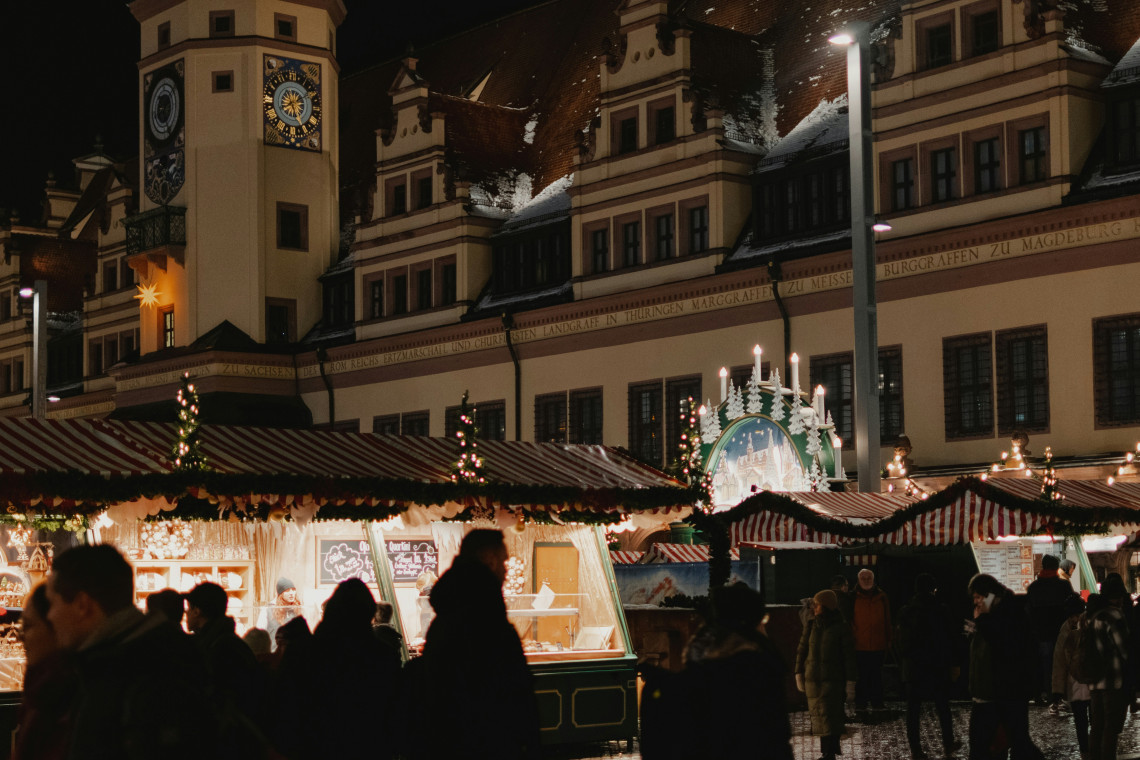
Leipzig's Christmas market on the Markt is Germany's second-oldest documented (1458). The market fills the historic center around the town hall and extends into the arcades and courtyards of the old trading city. Leipzig is Bach's city (he was cantor at the Thomaskirche for 27 years), so Christmas concerts here are exceptional. Alongside the main market, the Leipzig Medieval Christmas Market at the Nikolaikirchhof recreates a 14th-century atmosphere.
Best for: Music travelers (Bach's Thomaskirche hosts nightly Christmas concerts), history lovers, travelers combining Berlin and Dresden.
Honest tradeoffs: Leipzig is less famous internationally than Berlin or Munich. Weather is colder than western Germany.
Combines with: Berlin (1h by ICE), Dresden (1h15m), Erfurt (45 min).
How to combine German Christmas markets into a trip
The most rewarding German Christmas trips combine 2 to 4 cities. The natural pairings:
Bavarian classic (5 to 7 nights): Munich + Nuremberg + Rothenburg. The most-requested German Christmas itinerary. All connected by direct ICE trains. Combines the biggest city (Munich), the most historic market (Nuremberg), and the fairy-tale village (Rothenburg).
Western tradition (5 to 6 nights): Cologne + Aachen + Frankfurt. Or Cologne + Düsseldorf + Bonn. Rhineland Christmas markets with the Rhine river cruise as an optional add-on.
Eastern Germany (5 to 7 nights): Dresden + Leipzig + Berlin. The oldest documented Christmas markets combined with the largest Christmas market city. Naturally extends to Prague (2h from Dresden).
Small towns tour (5 to 7 nights): Rothenburg + Nuremberg + Bamberg + Würzburg. The medieval and Renaissance towns of Franconia, less international-tourist-heavy than the major cities.
Cross-border (7 to 10 nights): Munich + Salzburg + Vienna. Bavaria and Austria combined. Best for travelers who want both German and Austrian Christmas markets.
Alpine combo (7 nights): Munich + Innsbruck + Salzburg. The Alps at Christmas. Ski if you have time, market at the base of each mountain.
Plan it well: 10 Best Christmas Markets in Europe 2026 for the multi-country perspective.
What to eat at German Christmas markets
The German Christmas market food tradition is one of the deepest in Europe. Each region has its own specialties:
- Glühwein — mulled red wine with cinnamon, cloves, and orange. Every market. Served in souvenir mugs you can keep or return for a deposit. Regional variants: Feuerzangenbowle (rum-set alight over the wine), weißer Glühwein (white wine version).
- Lebkuchen — spiced gingerbread. Nuremberg's version is protected by geographical indication (Nürnberger Lebkuchen), traditionally with almonds, hazelnuts, orange peel, and honey.
- Printen — Aachen's harder version of Lebkuchen.
- Stollen — Dresden's fruit bread, marzipan-filled, dusted with powdered sugar. Also protected geographically (Dresdner Stollen).
- Nürnberger Rostbratwurst — small pork sausages, served three to a bun with mustard, protected by geographical indication.
- Weißwurst — Bavarian white sausage.
- Currywurst — pork sausage with curry ketchup, more of a Berlin street food but common at markets.
- Reibekuchen or Kartoffelpuffer — potato pancakes, served with apple sauce.
- Flammkuchen (also called tarte flambée) — thin-crust flatbread with cream, onions, and bacon. Alsatian in origin, common at markets in Baden-Württemberg and the west.
- Schmalzkuchen — small fried dough balls dusted with powdered sugar.
- Schokofrüchte — chocolate-covered fruit skewers.
- Käsespätzle — Bavarian egg noodles with cheese.
- Feuerbohne — spiced roasted beans, savory version of chestnuts.
- Gebrannte Mandeln — sugared roasted almonds, the smell of every German Christmas market.

When to go
The German Christmas market season splits into three phases:
Late November (the soft launch): Markets open the fourth Friday of November (the first Advent weekend). The first week is meaningfully less crowded, decorations are fresh, and hotel prices are lower than peak.
December 1 to 20 (the sweet spot): All markets in full operation. Weekdays are the calmest windows; weekends are the busiest. The first two weeks of December give the best atmosphere-to-crowd ratio.
December 21 to 24 (the closing sprint): The most crowded period. Many markets close on December 22 or 23, with a few running to December 24. Hotel prices peak. Book everything months ahead.
After December 24: Most German markets close. Some Berlin markets and the Cologne Weihnachtsmarkt am Chocolate Museum run through early January, but the majority are shuttered by Christmas Eve.
Sweet spot recommendation: Weekdays in the first two weeks of December.
How to reach and travel between markets
By air: Frankfurt (FRA) is Germany's main U.S./Canada hub. Munich (MUC) is the second, with excellent direct routes. Berlin (BER) has fewer transatlantic direct routes. Düsseldorf (DUS) and Hamburg (HAM) are options for Ryanair/budget connections via other European cities.
By train: Deutsche Bahn's ICE (InterCity Express) high-speed network connects the major cities in 3 to 5 hours. Sample times:
- Frankfurt to Cologne: 1h05m
- Munich to Nuremberg: 1h05m
- Munich to Frankfurt: 3h05m
- Cologne to Berlin: 4h20m
- Berlin to Munich: 3h55m
- Frankfurt to Berlin: 3h45m
Book on the DB Navigator app 60+ days ahead for the lowest prices (Sparpreis fares). A Deutsche Bahn Rail Pass (7 days flexible) makes sense for 4+ city trips.
By car: Autobahns are free of tolls. Distances are meaningful (Berlin to Munich is 590 km, 6 hours). For most Christmas trips, train is faster and less stressful.
Where to stay
German Christmas market season books out fast. In prime cities (Nuremberg, Rothenburg, Munich, Dresden), reserve 6 to 9 months ahead for the best hotels at the best prices.
Nuremberg: Hotel Elch (17th-century in the old town), Hotel Drei Raben (art-themed boutique), Le Méridien Grand Hotel (historic grand hotel).
Munich: Hotel Bayerischer Hof (5-star classic), Hotel Torbräu (Munich's oldest hotel, 1490), Hotel am Markt (budget-friendly, near Marienplatz).
Cologne: Hyatt Regency Cologne (across the river with cathedral views), Excelsior Hotel Ernst (grand hotel at the cathedral square), Hopper Hotel St. Antonius (boutique, quiet).
Berlin: Hotel Am Steinplatz (Charlottenburg, near the palace market), Hotel Adlon Kempinski (grand hotel at Brandenburg Gate), 25hours Hotel Bikini Berlin (design-focused, near the West Berlin markets).
Dresden: Hotel Taschenbergpalais Kempinski (baroque palace, next to the Royal Palace), Steigenberger de Saxe (opposite the Frauenkirche).
Rothenburg: Hotel Eisenhut (16th-century inn, in the walled town), Prinzhotel Rothenburg (quiet, on the ramparts).
Honest tradeoffs: what to expect
The pros: Germany is the country that invented Christmas markets. The tradition is real, the food is exceptional, the settings (Nuremberg, Rothenburg, Dresden, Cologne) are among Europe's most beautiful in December.
The cons: German December is cold and often grey. Snow is occasional in the west and center, more reliable in the south and east. Peak weekends are very crowded. Some markets are more commercial than others — Nuremberg and Dresden are traditional; some smaller-city markets feel more like street festivals with sausage stands.
To get the best version: Visit in early December on weekdays. Combine 2 or 3 cities rather than one. Book hotels 6 to 9 months ahead. Pack for real cold (temperatures often at -5°C to 5°C).
Frequently asked questions
What is the oldest German Christmas market? Dresden's Striezelmarkt is the oldest documented (1434). Leipzig's is the second (1458). Nuremberg's Christkindlesmarkt is more famous internationally, with records from 1628.
Which is the best German Christmas market for first-time visitors? Nuremberg for the traditional experience, Munich for size and Alpine proximity, Cologne for maximum markets in minimum walking. Most first-time travelers combine 2 or 3.
When do German Christmas markets open in 2026? Most open on the fourth Friday of November 2026 (November 27) and close on December 23 or 24. A few (mainly in Berlin) run into early January.
Are German Christmas markets crowded? Yes, especially December weekends after 4pm and the final week (December 18 to 24). Weekdays in late November and early December are meaningfully less crowded.
Is Nuremberg or Munich better for Christmas markets? Different scales. Nuremberg is a single-market focus (the world-famous Christkindlesmarkt), Munich has 30+ markets citywide. Nuremberg for tradition, Munich for variety. Both combine easily (1h by ICE).
How many days do I need in Germany for Christmas markets? 4 nights minimum for one city, 7 to 10 nights for a proper multi-city trip. The Bavarian classic (Munich + Nuremberg + Rothenburg) is the most-requested 7-night trip.
Is it cold at German Christmas markets? Yes. Daytime temperatures typically -2°C to 6°C / 28°F to 43°F. Snow is occasional in the west, more reliable in the south (Bavaria) and east (Saxony). Layer well.
How do I get around Germany for Christmas markets? By train. Deutsche Bahn's ICE network connects all the major markets in 1 to 5 hours. Book on DB Navigator 60+ days ahead for Sparpreis fares.
Can I combine German Christmas markets with Austria? Yes — very common. Munich to Salzburg is 1h30m by train, Salzburg to Vienna is 2h30m. A 7-night Munich + Salzburg + Vienna trip is one of the most-requested Central European Christmas itineraries.
Which German city has the best Christmas market food? Nuremberg for the traditional Christkindlesmarkt fare (Rostbratwurst, Lebkuchen). Cologne for the widest variety of Glühwein. Dresden for Stollen. Munich for Bavarian specialties.
Do German Christmas markets accept credit cards? Most larger city markets do. Smaller stalls in Rothenburg, Bamberg, or smaller towns are still cash-only. Bring 100 euros in cash.
Are German Christmas markets family-friendly? Yes. Most cities have children's markets or areas within the main market. Nuremberg's Kinderweihnacht is a dedicated children's area. Berlin has multiple family-focused markets (Winterwelt at Potsdamer Platz has an ice-skating rink and Ferris wheel).
The country that invented Christmas markets.
Our travel experts route the Bavarian classic, the Rhineland, and Eastern Germany trips.
See Germany Packages Tailor-Made Trip