August 11, 2026 • 13 min read
Rome, Florence, and Venice get 40 million visitors a year. But Italy is a country of 8,000 comuni, and some of the most extraordinary places are the towns that first-timers never hear about: cliff cities crumbling into ravines, cone-shaped houses of Puglia, pastel-painted islands off Naples, cave dwellings older than Rome.
Here are ten small Italian towns worth building a trip around, with where they are, how to reach them, and when to visit.
The short answer
If you love cliff-top drama: Civita di Bagnoregio, Ravello, Castelmezzano. If you love ancient rock architecture: Matera, Civita, Alberobello. If you love pastel coastal Italy: Procida, Bosa, Portovenere. If you love Renaissance small cities: Urbino, Orvieto, Trani. If you love UNESCO oddities: Matera (cave city), Alberobello (trulli), Urbino, Ravello.
Ten towns, all reachable in a day or on a road trip loop, none of them full of tour buses (yet).
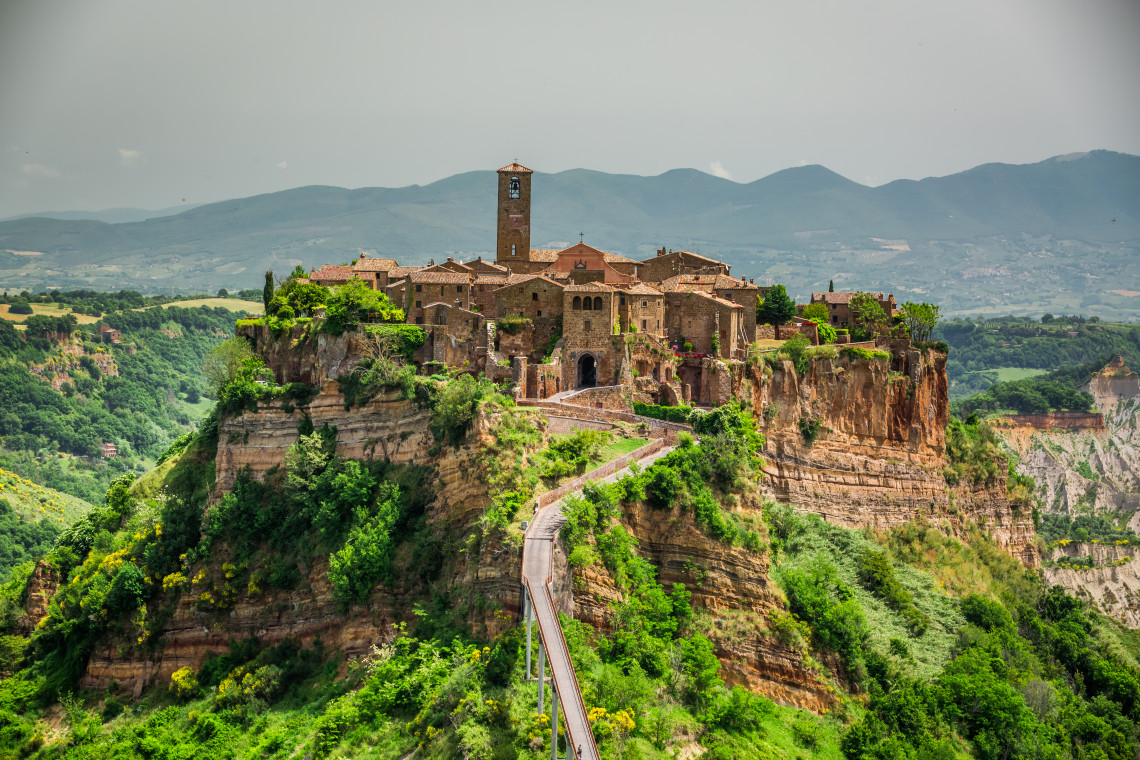
1. Civita di Bagnoregio (Lazio)
Where: Viterbo province, 2h north of Rome by car (via A1 and SS 74).
Why go: Known as "the town that is dying." A medieval hilltop settlement perched on eroding tuff that is slowly falling into the valley below. Access only by a 300m pedestrian footbridge. Barely more than a dozen year-round residents. Under consideration for UNESCO status.
What to see: The pedestrian bridge approach (best photo from the Belvedere di Bagnoregio in the neighboring town), the medieval piazza and Chiesa di San Donato, the cellars carved into the tuff below the buildings.
When to go: Year-round. Sunrise or golden-hour light on the bridge is the shot. Winter has drama with mist rising from the valley.
Where to stay: In Bagnoregio (the modern town next door): Hotel Divino Amore or Corte della Maestà (€100-€180). Sleep here to catch the town at dawn before day-trippers arrive.
Combine with: Orvieto (30 min drive), Rome (2h), the wine country of Montefiascone.
Entrance fee: €5 to cross the footbridge.
2. Matera (Basilicata)
Where: Basilicata region, southern Italy. 1h from Bari airport, 3h from Naples.
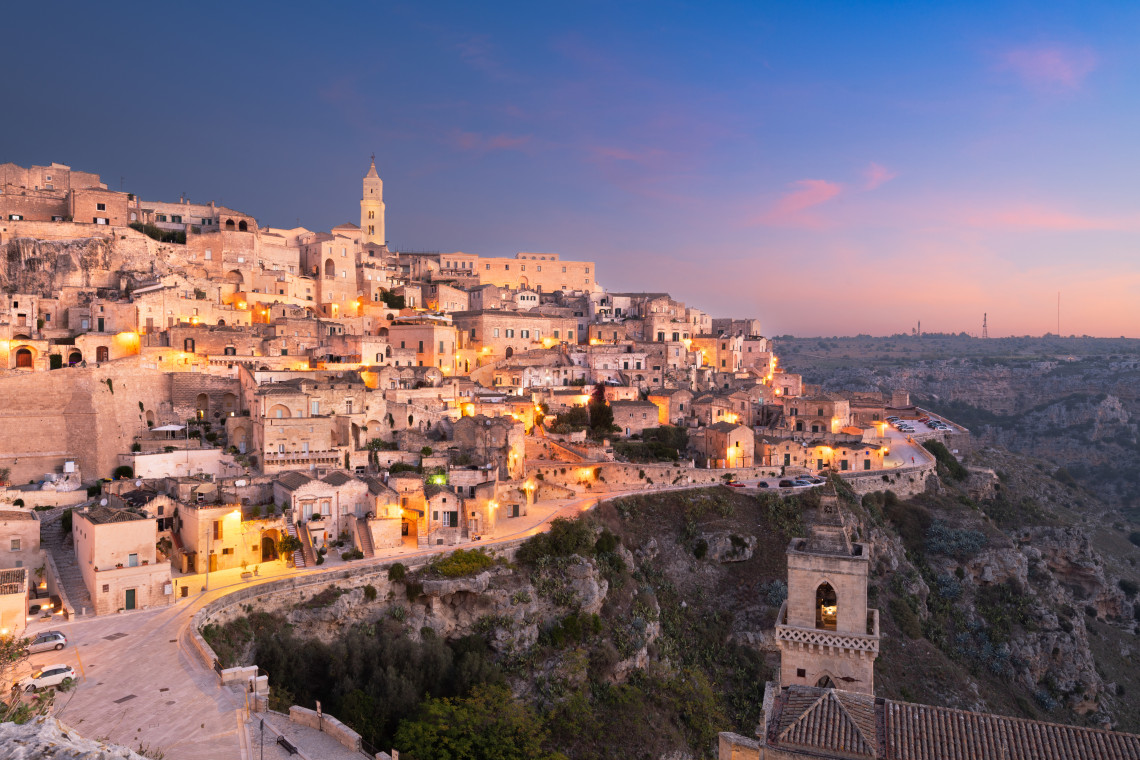
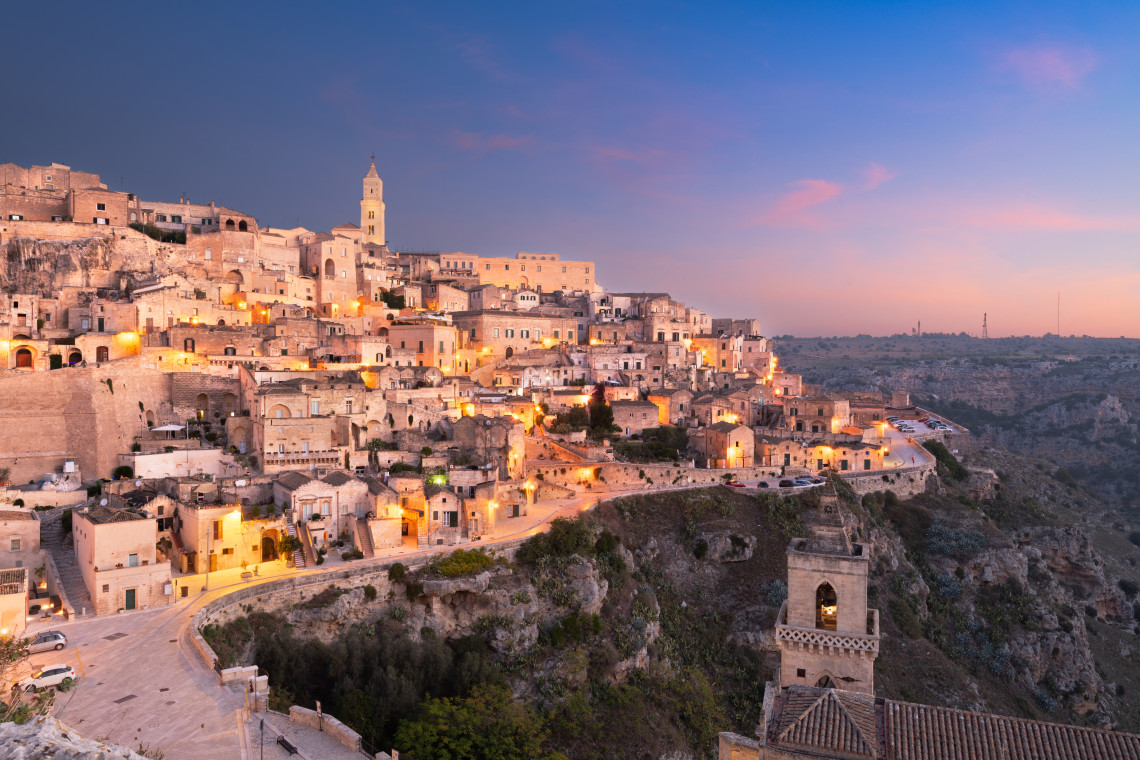
Why go: The Sassi di Matera are cave dwellings continuously inhabited for over 9,000 years, making Matera one of the oldest continuously lived-in cities in the world. UNESCO since 1993. Used as Jerusalem in The Passion of the Christ and as a Bond location in No Time to Die. Once known as "the shame of Italy" for the extreme poverty of the caves; now one of the country's most photographed towns.
What to see: The Sasso Caveoso and Sasso Barisano (the two districts of caves), the Cathedral, the rupestrian churches (rock-cut Byzantine churches), Casa Grotta di Vico Solitario (restored cave home showing how families lived).
When to go: April to June, September to October. Summer is hot. Winter is atmospheric with fog and empty streets.
Where to stay: In a cave hotel. This is the point. Sextantio Le Grotte della Civita is the boutique benchmark (€250-€500). Aquatio Cave Luxury Hotel & Spa (€200-€400). Locanda di San Martino (€150-€250).
Combine with: Alberobello (1h drive), Bari (1h), Ostuni (1h 30min), the entire Puglia road trip.
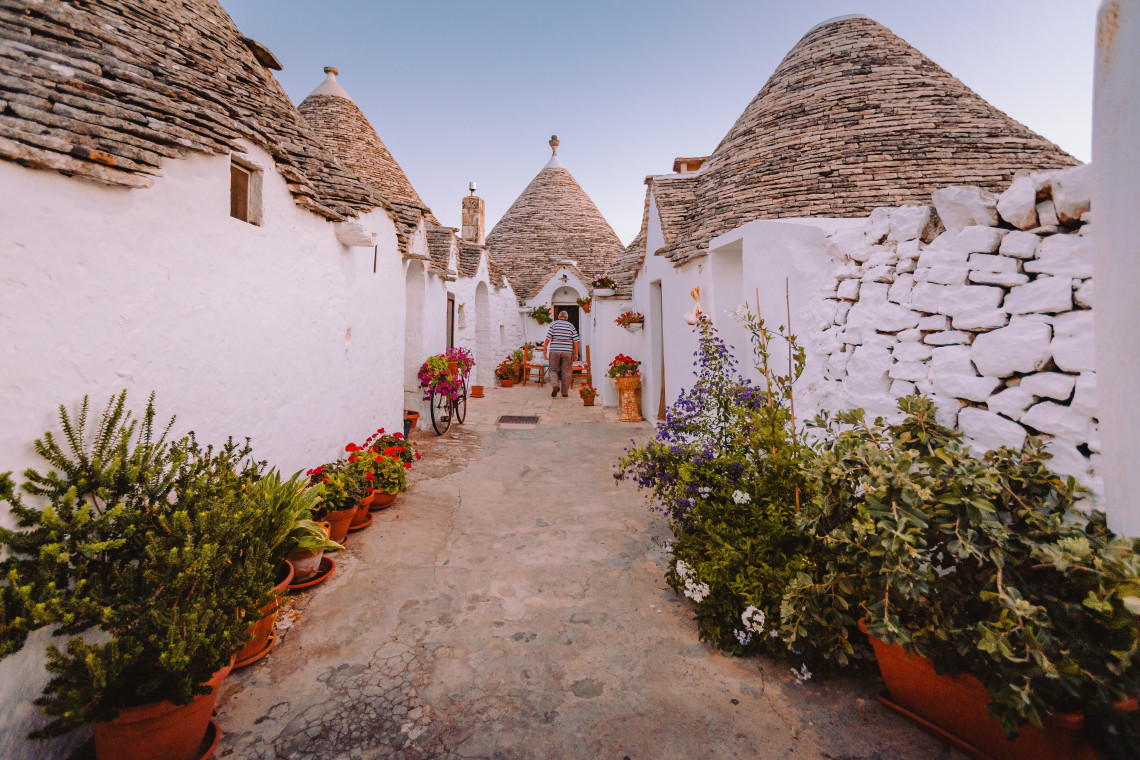
3. Alberobello (Puglia)
Where: Puglia, Bari province. 1h from Bari airport, 40 min from Ostuni.
Why go: The town of the trulli, whitewashed conical dry-stone houses unique to Puglia. UNESCO since 1996. Roughly 1,500 trulli still stand. Some are still lived in, others are shops or B&Bs. Nothing like it anywhere else in Europe.
What to see: Rione Monti (the larger trulli quarter with shops and restaurants), Rione Aia Piccola (the quieter, more authentic residential quarter), Trullo Sovrano (the only two-story trullo), the Church of Sant'Antonio (a trullo-shaped church).
When to go: April to June, September to October. Summer brings tour buses and heat. Christmas time has trullo lights.
Where to stay: In a trullo. Trulli Holiday Alberobello, Le Alcove, or Charming Trulli offer restored trulli as B&Bs (€100-€250/night).
Combine with: Ostuni (the white city, 30 min), Locorotondo, Cisternino, Polignano a Mare (1h), Matera (1h), the entire Puglia loop.
4. Orvieto (Umbria)
Where: Umbria region, hilltop city. 90 min north of Rome by AVE (Frecciarossa) or 1h 15min by car.
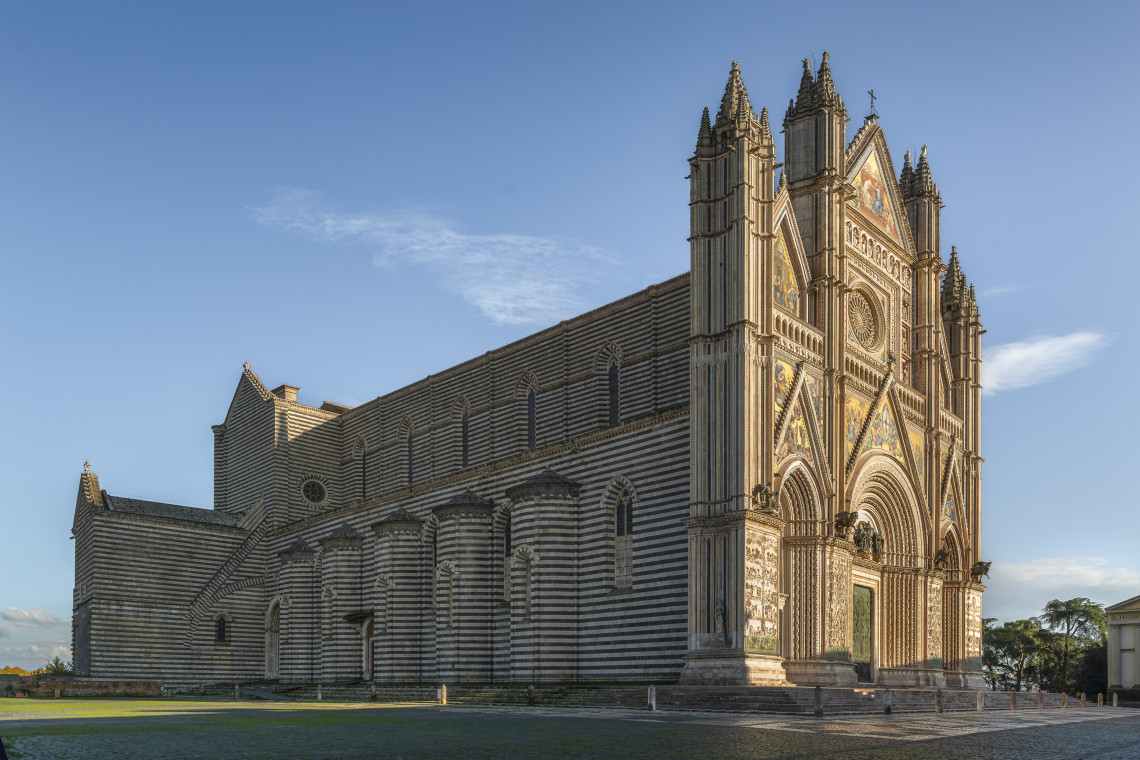
Why go: Volcanic-plateau city with one of Italy's greatest Gothic cathedrals and a functioning Etruscan underground. Often underestimated because it's a common highway stopover between Rome and Florence; it deserves a full day, not 20 minutes.
What to see: Duomo di Orvieto (façade equivalent to Siena's, and Signorelli's Last Judgment frescoes in the San Brizio Chapel rival Michelangelo's), the underground Etruscan Orvieto (Orvieto Underground tour), Pozzo di San Patrizio (a 62m spiral well with two staircases), the town walls.
When to go: Year-round. Best in autumn during the wine harvest (Orvieto Classico white wine is one of Italy's most historic).
Where to stay: Palazzo Piccolomini (€130-€200), Locanda Palazzone in the vineyards outside town (€200-€350), or Altarocca Wine Resort (€180-€300).
Combine with: Civita di Bagnoregio (30 min), Rome (90 min), Assisi (1h), Perugia (1h), Cortona (1h).
5. Urbino (Marche)
Where: Marche region, 3h north of Rome, 2h from Florence, 1h from Rimini beaches.
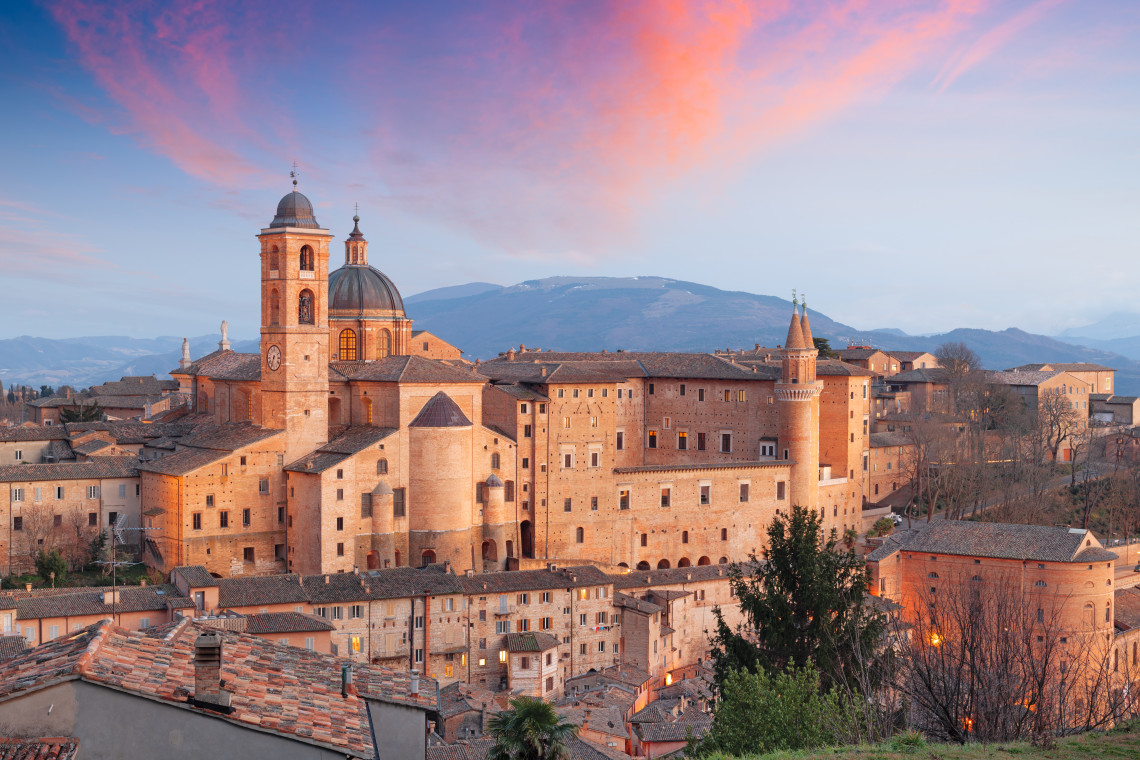
Why go: Renaissance ducal city, birthplace of Raphael, home to one of Italy's greatest ducal palaces. UNESCO since 1998. Nearly perfectly preserved as a 15th-century Renaissance urban ideal. Overlooked by 99% of Renaissance-focused visitors who stop at Florence.
What to see: Palazzo Ducale (the ducal palace with Piero della Francesca's Flagellation of Christ, one of the great puzzles of Renaissance art), Raphael's birthplace (Casa Natale di Raffaello), the Cathedral, the Oratorio di San Giovanni.
When to go: April to October. September brings the Festa del Duca (Renaissance festival) with costumed reenactments.
Where to stay: Hotel Bonconte (€130-€180), Albergo San Giovanni (€100-€150), or agriturismos in the surrounding hills.
Combine with: Ravenna (1h 30min), San Marino (30 min), the Marche coast (Fano, Pesaro), Assisi (2h).
6. Procida (Naples)
Where: Island in the Bay of Naples, 1 hour by ferry from Naples port.
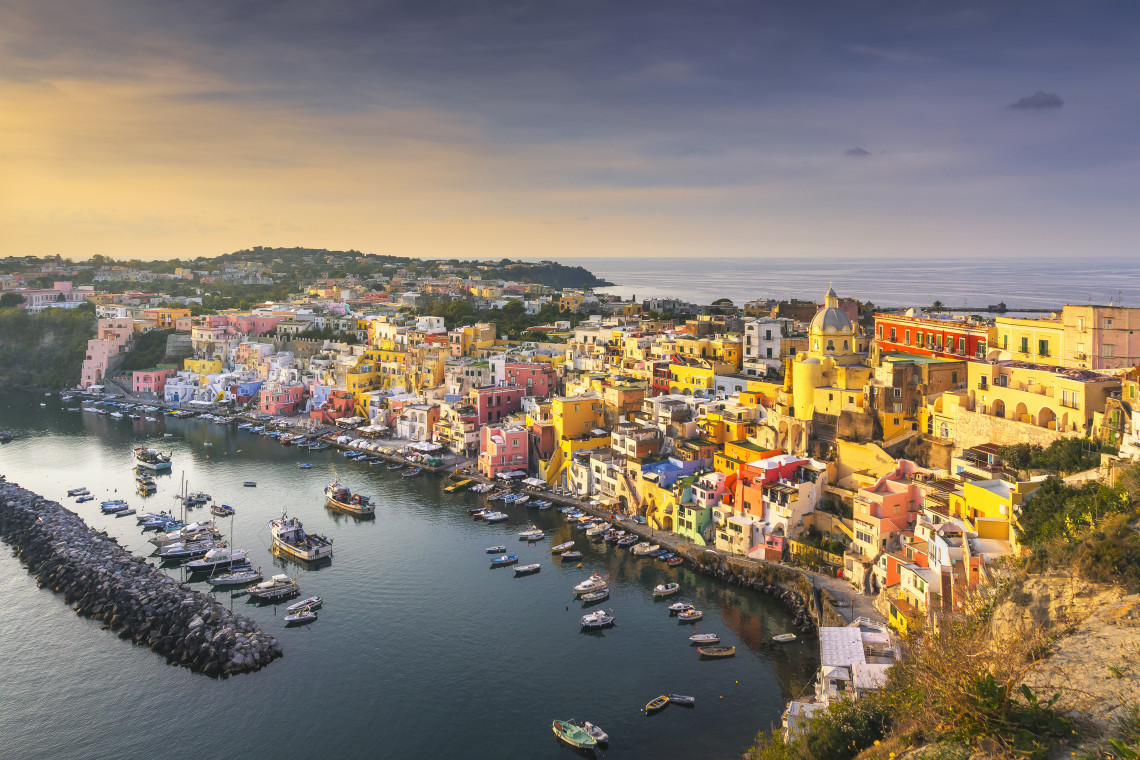
Why go: Italy's Capital of Culture 2022 and one of the Mediterranean's most colorful fishing towns. Marina Corricella is a rainbow of pastel-painted houses cascading down to a working harbor. Smaller and quieter than Capri or Ischia. Used as a filming location for The Talented Mr. Ripley and Il Postino.
What to see: Marina Corricella (the most photographed harbor in Italy), Terra Murata (the walled hilltop old town with the Abbazia di San Michele), Marina di Chiaiolella beach, the lemon groves.
When to go: May to June and September to October. Summer is beach season but adds tourist crowds. Winter is atmospheric but many restaurants close.
Where to stay: La Casa sul Mare (€150-€250), Hotel Riviera (€100-€180), or B&Bs in Corricella harbor.
Combine with: Naples (1h ferry), Ischia (30 min ferry), Capri (1h ferry via Naples), the Amalfi Coast.
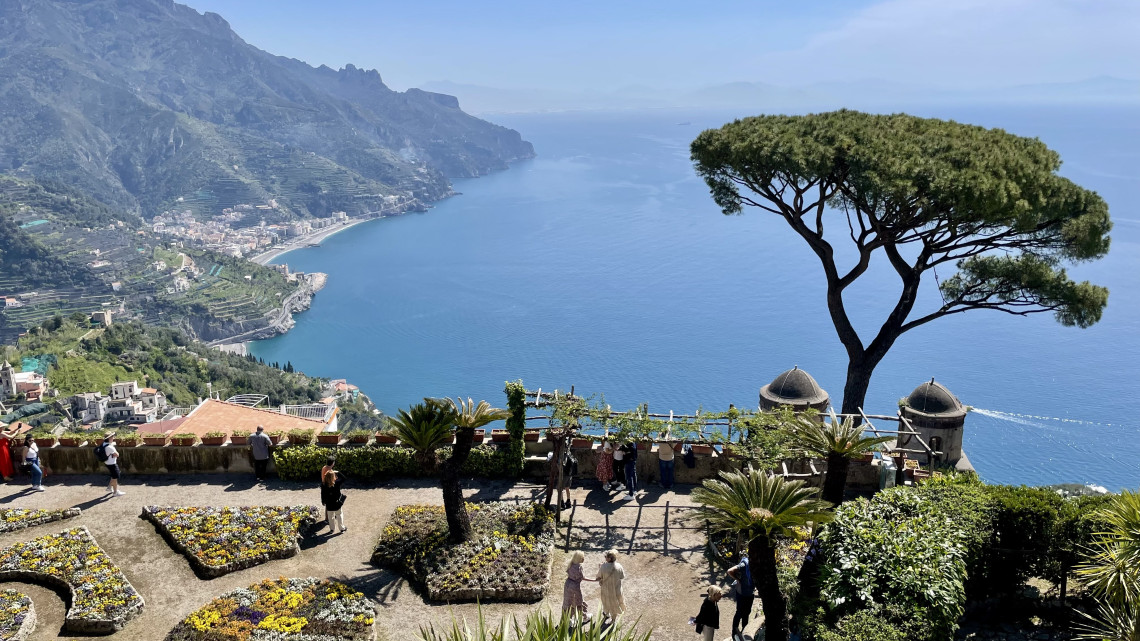
7. Ravello (Amalfi Coast)
Where: Above the Amalfi Coast, Campania. 20-min drive uphill from Amalfi town.
Why go: Perched 350m above the Mediterranean with the two greatest garden villas of the Amalfi Coast: Villa Rufolo and Villa Cimbrone. Sits above the coastal crowds. Home of Ravello Music Festival (July-September). Where the Beat writers (Kerouac, Ginsberg), Wagner, Gore Vidal, and Virginia Woolf came to escape.
What to see: Villa Rufolo (€8, terraces with the "infinity" view that inspired Wagner's Parsifal), Villa Cimbrone (€10, the "Terrazza dell'Infinito" statue-lined terrace over the sea), the Cathedral of Ravello, the Museo del Corallo.
When to go: May to June, September to October. July and August bring the Ravello Music Festival but also traffic bottlenecks on the Amalfi Coast drive.
Where to stay: Hotel Caruso (Belmond, one of Italy's iconic hotels, €800-€2,000+), Villa Cimbrone Hotel (€400-€800), Palazzo Avino (€500-€1,000), or budget-friendly B&Bs in the old town (€150-€250).
Combine with: Amalfi town (20 min down), Positano (45 min), Sorrento (1h), Pompeii (1h).
8. Bosa (Sardinia)
Where: Western Sardinia, 1h north of Oristano, 2h from Alghero.
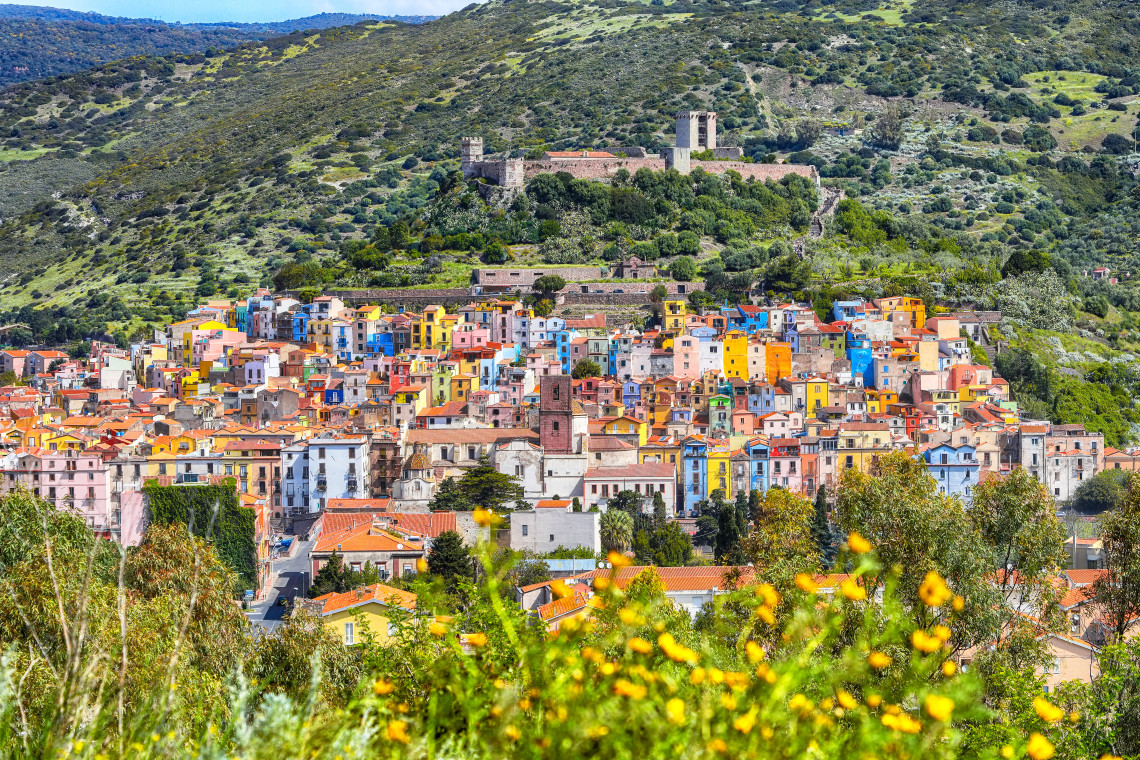
Why go: Pastel-painted riverside town of colored houses stacked on the hillside below the medieval Castello di Serravalle. The Temo river runs through the middle, making it one of Sardinia's few navigable rivers. Malvasia di Bosa is a rare sweet wine you find almost nowhere else.
What to see: The riverside pastel houses (from Ponte Vecchio bridge for the postcard shot), Castello Malaspina (walk uphill for panoramic views), Cattedrale dell'Immacolata Concezione, the tanning district (Sas Conzas, the old leather-working quarter along the river).
When to go: May to October for beaches. Autumn for wine harvest. Winter is quiet and photogenic.
Where to stay: Corte Fiorita Hotel (€130-€200), Sa Pischedda Hotel (€100-€170), or apartments along the river.
Combine with: Alghero (2h), Oristano (1h), the west coast beaches (Torre di Chia, S'Archittu), Cagliari (2h 30min).
9. Castelmezzano (Basilicata)
Where: Basilicata, deep inland. 2h from Bari, 2h 30min from Matera.
Why go: Village literally embedded into the Dolomiti Lucane rock spires. Houses cluster in the natural gaps between vertical rock towers. Home of Italy's most famous "Volo dell'Angelo" (Angel Flight), a 1,415m zipline from the neighboring village of Pietrapertosa across a valley at 120 km/h.
What to see: The village old town, the "Gradinata Normanna" (medieval stairs carved into the rock leading to Norman-era castle ruins), the Volo dell'Angelo zipline (€40 one-way, €65 both directions between the two villages), the paths through the rock spires.
When to go: April to October. Volo dell'Angelo is closed December to March.
Where to stay: La Locandiera (rooms and restaurant, €80-€130), Hotel Le Rocce (€90-€150), or agriturismos in the hills.
Combine with: Matera (2h 30min), Pietrapertosa (5 min drive via the zipline), the Basilicata interior.
10. Trani (Puglia)
Where: Northern Puglia, Adriatic coast. 45 min from Bari, 3h from Naples.
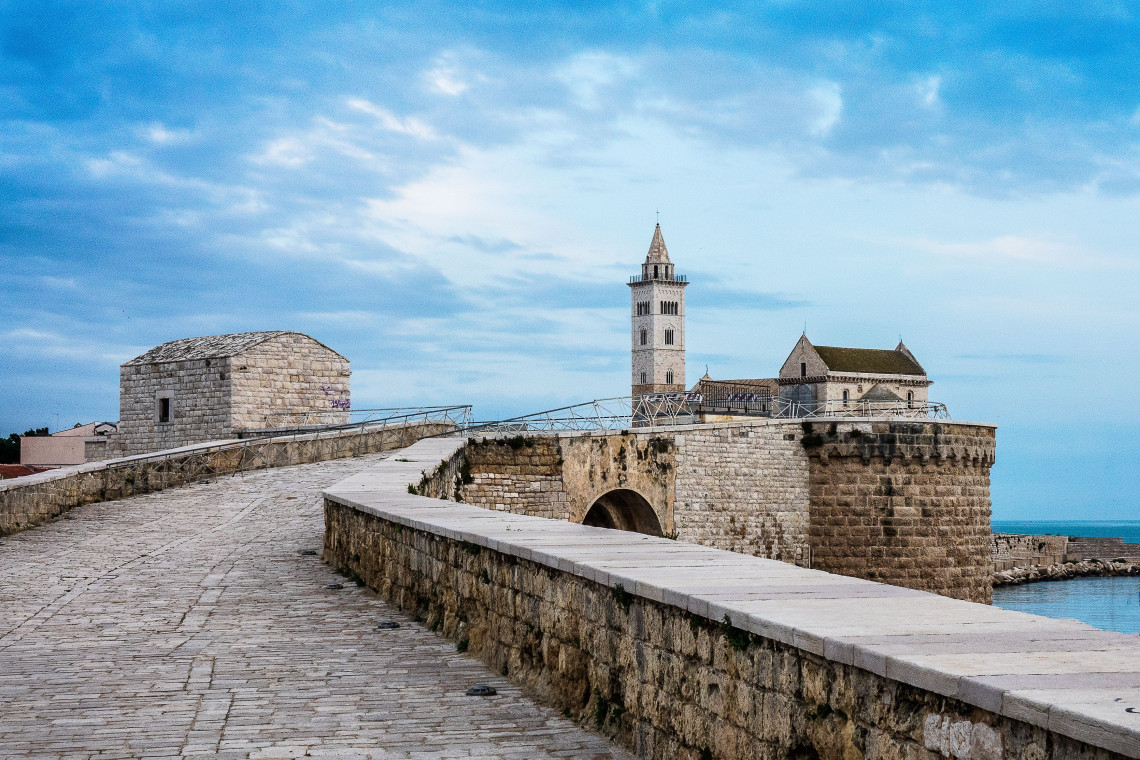
Why go: One of Puglia's most beautiful small cities, dominated by the Cattedrale di San Nicola Pellegrino, an 11th-12th century Romanesque cathedral rising directly from the sea. Small working port, honey-colored stone, medieval Jewish quarter, and some of Puglia's best seafood.
What to see: The Cathedral (particularly at sunset when the honey stone glows), Castello Svevo (Frederick II's castle right on the water), the medieval Jewish quarter (Giudecca), the port promenade, the bronze doors of the Cathedral (12th century).
When to go: April to October. May and June are quietest. July and August fill with Italian domestic tourists.
Where to stay: Hotel Regia (€120-€200 in a former palace next to the Cathedral), Palazzo Filisio (€150-€250), or B&Bs in the historic center.
Combine with: Bari (45 min), Polignano a Mare (1h 15min), Monopoli (1h 15min), Alberobello (1h 30min), the Gargano peninsula (1h 30min north).
Bonus honorable mentions
Bagnoregio (Lazio): The base town for Civita, worth a night on its own.
Portovenere (Liguria): The 6th Cinque Terre village nobody talks about. On the Gulf of Poets, quieter than the classic five.
Sperlonga (Lazio): Whitewashed coastal town 2h south of Rome, with Emperor Tiberius's cave-grotto villa on the beach.
Cividale del Friuli (Friuli-Venezia Giulia): Longobard UNESCO city near the Slovenian border.
Erice (Sicily): Medieval clifftop town above Trapani, always in mist.
Pitigliano (Tuscany): Tuff-cliff town in southern Tuscany, "the Little Jerusalem" for its medieval Jewish community.
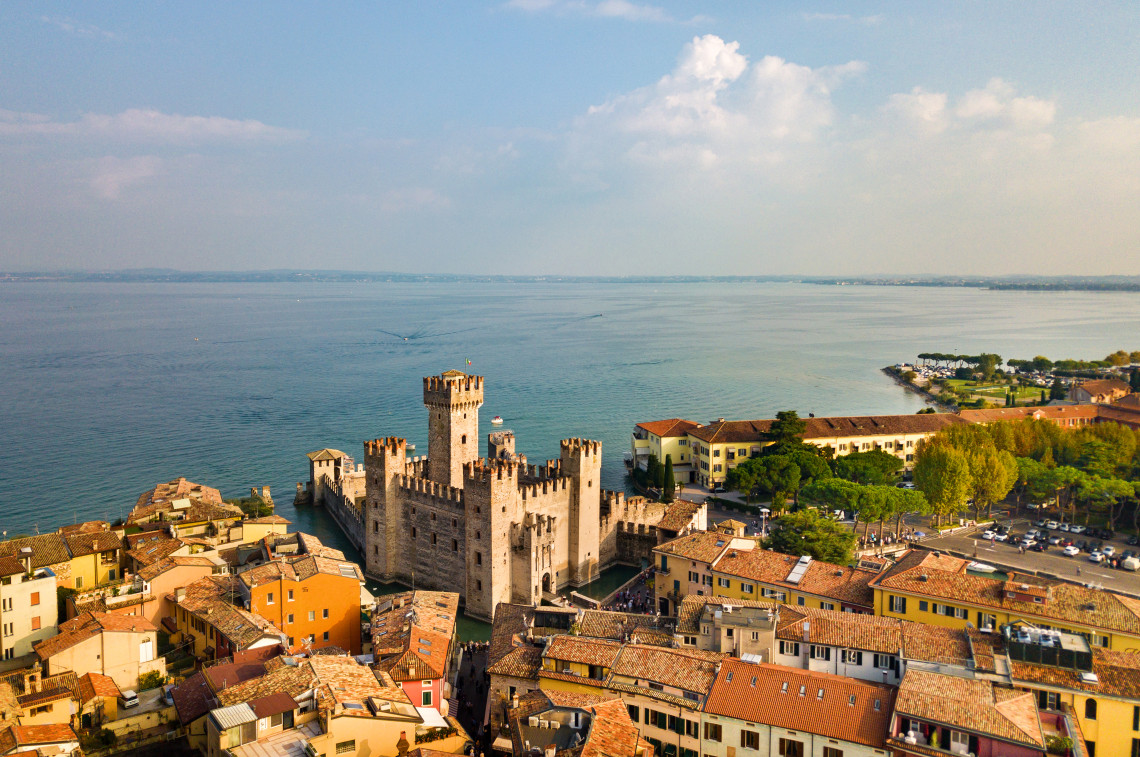
Sirmione (Lake Garda): Peninsula town with Roman ruins and thermal baths.
Vieste (Puglia, Gargano): Whitewashed clifftop old town on the Adriatic.
How to build a hidden Italy trip
A hidden Italy loop through Puglia and Basilicata (7 days): Bari airport → Alberobello (1 night) → Matera (2 nights, cave hotel) → Castelmezzano (1 night) → Trani (1 night) → Ostuni or Polignano a Mare (2 nights) → back to Bari.
A hidden central Italy loop (5-6 days): Rome → Orvieto (1 night) → Civita di Bagnoregio (1 night) → Urbino (2 nights) → Ravenna (1 night) → back to Rome or Bologna.
A hidden Sardinia loop (5-6 days): Alghero → Bosa (1-2 nights) → the west coast → Oristano (1 night) → Cagliari (2 nights).
A hidden Amalfi + island loop (5 days): Naples → Procida (2 nights) → Ravello (2 nights) → Positano or Sorrento (1 night) → Naples.
Practical tips for visiting Italy's small towns
Rent a car. Public transport to most of these towns is inconvenient or nonexistent. A rental car is essential for 8 of the 10 (exceptions: Orvieto by AVE from Rome, Procida by ferry).
Watch for ZTL (Zona a Traffico Limitato) zones. Almost every Italian historic center has a restricted-traffic zone. Fines are €50-€100 per infraction and cameras catch you automatically. Park outside the walls in designated lots.
Small-town restaurant hours are strict. Lunch 12:30-2:30pm, dinner 7:30-10pm. Off those hours you may find cafés and bars only.
Choose boutique local hotels where possible. Matera's cave hotels, Alberobello's trulli, Ravello's ex-villa hotels are experiences in themselves.
Cash is more useful in small towns. Most take cards but small trattorias and rural gas stations may prefer cash.
Language: English is less common here than in Rome, Florence, or Venice. Basic Italian helps.
Book cave hotels in Matera 3-6 months ahead for high season (spring and fall weekends).
Bottom line
Italy's small towns reward travelers who slow down. Rent a car, base in a boutique hotel or cave hotel, and drive between two or three of these across a week. You will come home with an Italy that most first-timers never see, and stories that most other tourists cannot tell.
Frequently asked questions
What are the most beautiful small towns in Italy? Civita di Bagnoregio, Matera, Alberobello, Ravello, Procida, Orvieto, Urbino, Bosa, Castelmezzano, and Trani are among the most photogenic small towns in Italy.
What is a trullo? A traditional dry-stone conical house from the Itria Valley in Puglia. Alberobello has the largest surviving concentration (1,500+). UNESCO since 1996.
Is Matera worth visiting? Yes. The Sassi di Matera are one of the oldest continuously inhabited settlements on Earth (9,000+ years) and one of Italy's most unique UNESCO sites. Two nights minimum, in a cave hotel.
Where can I see the Trulli? Alberobello has the largest concentration. Locorotondo, Cisternino, and the surrounding Itria Valley have thousands more spread through the countryside.
How do I visit Civita di Bagnoregio? Drive to Bagnoregio (2h from Rome). Park at the Belvedere. Walk across the 300m pedestrian footbridge to Civita. Entrance fee €5.
What is the "town that is dying"? Civita di Bagnoregio. The medieval hilltop town is losing ground to erosion of the tuff plateau below it. Only accessible by footbridge.
Are Italian cave hotels safe and comfortable? Yes. Matera's cave hotels are restored 9,000-year-old dwellings with modern plumbing, heating, and luxury amenities. Booking benchmarks: Sextantio Le Grotte della Civita, Aquatio.
How do I get to Procida? Ferry from Naples port (1h). Also from Pozzuoli (25 min). Regular hydrofoil and slower ferry services.
Is Ravello worth staying overnight? Yes. Ravello sits above the Amalfi Coast crowds. Villa Rufolo and Villa Cimbrone at sunset with no day-trippers is the reason to stay.
When is the best time to visit small Italian towns? Late April to June, September to October. Avoid August (Italian domestic holiday, many small restaurants closed) and Christmas week (limited services in rural areas).
Are there hidden towns near Rome? Civita di Bagnoregio (2h), Orvieto (1h 15min), Sperlonga (2h), Tivoli (30 min), Bracciano (45 min), and the Castelli Romani (30 min) are all reachable in a day.
What is the Volo dell'Angelo? The Angel Flight, a 1,415m zipline between Castelmezzano and Pietrapertosa in Basilicata. Reaches 120 km/h. Open April-October. €40-€65.
What is Urbino known for? Renaissance ducal city, birthplace of Raphael, home to Palazzo Ducale with Piero della Francesca's Flagellation of Christ. UNESCO since 1998.
How do I visit Bosa? Drive from Alghero (2h) or Cagliari (2h 30min). Sardinia's western coast, best paired with the Sinis Peninsula and Oristano.
What UNESCO sites are in this list? Matera (1993), Alberobello (1996), Urbino (1998), Ravello (as part of the Amalfi Coast UNESCO area since 1997). Civita di Bagnoregio is a candidate.
The Italy most tourists miss.
Our Italy travel experts route you through small towns with cave hotels, rental cars, and boutique rural stays.
See Italy Packages Tailor-Made Trip